Alexander Theroux - Darconville’s Cat
Здесь есть возможность читать онлайн «Alexander Theroux - Darconville’s Cat» весь текст электронной книги совершенно бесплатно (целиком полную версию без сокращений). В некоторых случаях можно слушать аудио, скачать через торрент в формате fb2 и присутствует краткое содержание. Год выпуска: 1996, Издательство: Holt Paperbacks, Жанр: Современная проза, на английском языке. Описание произведения, (предисловие) а так же отзывы посетителей доступны на портале библиотеки ЛибКат.
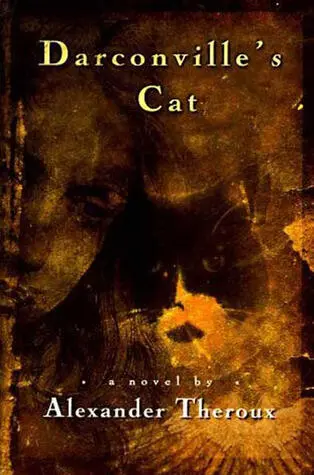
- Название:Darconville’s Cat
- Автор:
- Издательство:Holt Paperbacks
- Жанр:
- Год:1996
- ISBN:нет данных
- Рейтинг книги:3 / 5. Голосов: 2
-
Избранное:Добавить в избранное
- Отзывы:
-
Ваша оценка:
Darconville’s Cat: краткое содержание, описание и аннотация
Предлагаем к чтению аннотацию, описание, краткое содержание или предисловие (зависит от того, что написал сам автор книги «Darconville’s Cat»). Если вы не нашли необходимую информацию о книге — напишите в комментариях, мы постараемся отыскать её.
Darconville's Cat Its chapters embody a multiplicity of narrative forms, including a diary, a formal oration, an abecedarium, a sermon, a litany, a blank-verse play, poems, essays, parodies, and fables. It is an explosion of vocabulary, rich with comic invention and dark with infernal imagination.
Alexander Theroux restores words to life, invents others, liberates a language too long polluted by mutters and mumbles, anti-logic, and the inexact lunacies of the modern world where the possibility of communication itself is in question. An elegantly executed jailbreak from the ordinary,
is excessive; funny; uncompromising; a powerful epic, coming out of a tradition, yet contemporary, of both the sacred and the profane.
Darconville’s Cat — читать онлайн бесплатно полную книгу (весь текст) целиком
Ниже представлен текст книги, разбитый по страницам. Система сохранения места последней прочитанной страницы, позволяет с удобством читать онлайн бесплатно книгу «Darconville’s Cat», без необходимости каждый раз заново искать на чём Вы остановились. Поставьте закладку, и сможете в любой момент перейти на страницу, на которой закончили чтение.
Интервал:
Закладка:
“Welcome to Mother Sulphur’s bagnio,” said a tall and unat-tenuated shadow. It was Dr. Crucifer.
The form of the man, gradually, in little minor details, shaped to an outline in the emphatic darkness which immediately had something indecent about it.
“What do you want with me?”
“Will you sit down?” asked the voice in the darkness. The figure didn’t stir. “You won’t sit down? That’s as it is.”
“ Tell me.”
“Your visit is really most opportune, for I wanted badly to have a few minutes’ chat with you.” It was a voice unlike any other on earth. “You know I know you’re a Darconville. But hold thumbs on that. I admire your beautiful face.” Darconville could hear him smile. “I want to put on your coat. I believe Abelard had you in mind when he composed his Pari pulchritudine re present ans .”
Darconville gesticulated disgust.
“You’ll have heard that countless times, of course. But you haven’t heard it from me. I’m giving you a plain answer to a plain question, Al Amin.”
The voice was a soprano’s, with a little glub-glub sound in the throat like coffee boiling in a percolator, but there was a piping up higher in his birdlike syrinx, as if in a dry whistle it were fluting through a beak. It had no timbre, not at all what one would expect from such a big man, a hovering, elongated man. And, what, was that an accent? Mere phrasing? A glottal defect? As Dr. Crucifer continued speaking, the words in the darkness seemed disembodied, hanging in the air. “I have imagined us together having tea on dark afternoons with oatcakes and double Gloucester and then a late stroll on the misty common to give our swordsticks an airing.” He added a word. “Alone.”
Darconville said nothing.
“Now, what may I offer you? Some tobacco or tuck? Shall I chill a Muscadet? A glass of brown October?”
There was no reply.
“Sincerely yours?” asked Crucifer, earnestly. “Please. Let it fit gravity if it can’t friendliness?”
Still Darconville said nothing.
“I admire your work, mon fifils .”
“Do you.”
“I’ll try again: I believe you’re troubled.” Darconville moved toward the door, but Crucifer, stepping forward, made a swift vibra-tiuncle with his left hand. “Permit me, it takes two to tell the truth— one to speak, one to listen.” A wheeze of satisfaction followed. “How I should love to be your confessor! There, but enough. May I only hope to see you often?”
“You may hope,” said Darconville, “whenever you please.”
“Contentious,” muttered Crucifer.
Again, Darconville went to leave.
“Wait,” said Crucifer, his voice glimmering in fun. “I adore that. Why shouldn’t Stromboli dispute with Vesuvius? A mountain and a mountain cannot meet, of course — but individuals can. Your style is like mine. We are co-supremes.”
“Your flattery disgusts me.”
“I assure you,” said the voice, lowering significantly, “I don’t want to bother you, only advise. It is not in my interest to persuade men to virtue nor to compel men to truth — in that, I’m typical. You forget, I am a teacher in America. I have a faculty, that’s all, of seeing what I feel you should share. Call me a philosopher of error prevented if not of progress facilitated — you’re a writer, aren’t you curious about it? — and that being the case I am prompted only to wonder whether you believe that the true liberation of the spirit is to empty it of the thought of liberation, that one can legitimately espouse the destruction of nature, that your personality and its worldly obligations are no more than the sins you must absolve yourself from if you would remain an artist. I am compelled to declare that anyone — no, we don’t need the light just yet — that anyone who shall dissent must either be very foolish or very dishonest and will make me quite uncomfortable about the state of his mind.” Glub-glub: an attempt at laughter. “I’m like the Boeotian lynx. I can see under the skin.”
“What are you talking about?”
“Everything.”
“Everything,” said Darconville, “is a subject on which there is not much to be said.”
Dr. Crucifer took a step forward. “I mean by ‘everything’ the essential mistake you must avoid. A glorious love is created in the artist by the least sign of respect.” His dry lips smacked. “ Breviloquentem ,” he said, “I believe you intend to marry.”
So that was it.
“You know so much,” smiled Darconville ruefully, “who lives up here in obscurity.”
“I love cross-wits,” the creature whispered gleefully. “Pray sit down. You won’t sit down? That’s as it is, dear Darconville. Am I too solicitous? Yours to hand? Embrasse ta maman ? Forgive me, mothers and those without balls bleat with similar voices. But then would you understand that? I wonder, you see, for the more manly a man, the less, I’m afraid; he will understand women — whether beautiful or not.”
“She is beautiful,” shot back Darconville.
“You can’t admire what is beautiful,” said the grotesque voice, “without becoming indifferent to what is wrong.”
“And you confirm as you speak what I see I needn’t fear as I listen.”
“Blister upon heat!” said Crucifer, laughing. “Reverence to this. You have the gift of impudence. Enjoy it. Every man has not the like talent.”
Solid line played against stipple. Standing there in the darkness, Darconville at first scolded himself at putting up with this sudden familiarity, the forward remarks, but then thought if he bowed to the vexation he might somehow divert the force of it, so faint was the image of the implication of this passing visit upon his still as yet uninformed imagination.
“I must admit, I have always found it easier to understand women, frankly, than those who are interested in them. The which brings the meeting to order: why, may I ask, do you need a woman in your life? Give it over, Darconville, please. Women slacken the combustion of pure thought — they are analogous to nitrogen in pure air. Thinking and feeling are identical for them, whereas for men they are in opposition. I don’t mean to offend you. You must only emerge from an illusion,” he said, his tongue rasping around the word. “I am afraid for you.”
“Your sympathy touches me.”
“Sympathy? Sympathy is a non-logical sensation and has no claim to respect. It is a thing at the center of feminine ethics, a quasi-ethical phenomenon built on feelings like shame and pride. It’s ready-made. Don’t trust it. Surely you’ve read your great and revered ancestor on the subject?”
“Ah yes! Thus drops the other shoe!”
It was as if a veil had suddenly been torn away from a foolishness he’d called mystery: some perverse fealty owed to an ancient in his family was being paid to him in some kind of insane transferral or reciprocity centuries old.
“A Prince of the Church, murdered in the red of his robes,” said Crucifer, adding a reverence intercalated with an Italian phrase while in the same breath sniping at the woman who in killing that old man could kill again — such was the madness up there — in the proxy of Darconville’s bride-to-be.
“Be careful,” said Darconville coldly.
“I can see in the dark,” replied Crucifer.
“You don’t see enough, and you assume more than you see.” The foulness of it was indescribable but frightening. “You know nothing about her.”
“ Her ,” echoed Crucifer. “That word again. I haven’t heard it for a long time. The possessive case of she, you mean. Not ‘hirr! hirr!’—the international order urging a dog forward to attack.”
Darconville’s eyes blazed. “You—”
Читать дальшеИнтервал:
Закладка:
Похожие книги на «Darconville’s Cat»
Представляем Вашему вниманию похожие книги на «Darconville’s Cat» списком для выбора. Мы отобрали схожую по названию и смыслу литературу в надежде предоставить читателям больше вариантов отыскать новые, интересные, ещё непрочитанные произведения.







Обсуждение, отзывы о книге «Darconville’s Cat» и просто собственные мнения читателей. Оставьте ваши комментарии, напишите, что Вы думаете о произведении, его смысле или главных героях. Укажите что конкретно понравилось, а что нет, и почему Вы так считаете.