Alexander Theroux - Darconville’s Cat
Здесь есть возможность читать онлайн «Alexander Theroux - Darconville’s Cat» весь текст электронной книги совершенно бесплатно (целиком полную версию без сокращений). В некоторых случаях можно слушать аудио, скачать через торрент в формате fb2 и присутствует краткое содержание. Год выпуска: 1996, Издательство: Holt Paperbacks, Жанр: Современная проза, на английском языке. Описание произведения, (предисловие) а так же отзывы посетителей доступны на портале библиотеки ЛибКат.
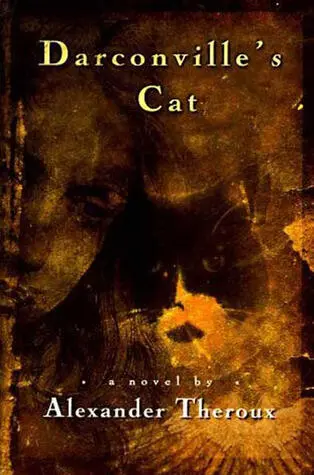
- Название:Darconville’s Cat
- Автор:
- Издательство:Holt Paperbacks
- Жанр:
- Год:1996
- ISBN:нет данных
- Рейтинг книги:3 / 5. Голосов: 2
-
Избранное:Добавить в избранное
- Отзывы:
-
Ваша оценка:
Darconville’s Cat: краткое содержание, описание и аннотация
Предлагаем к чтению аннотацию, описание, краткое содержание или предисловие (зависит от того, что написал сам автор книги «Darconville’s Cat»). Если вы не нашли необходимую информацию о книге — напишите в комментариях, мы постараемся отыскать её.
Darconville's Cat Its chapters embody a multiplicity of narrative forms, including a diary, a formal oration, an abecedarium, a sermon, a litany, a blank-verse play, poems, essays, parodies, and fables. It is an explosion of vocabulary, rich with comic invention and dark with infernal imagination.
Alexander Theroux restores words to life, invents others, liberates a language too long polluted by mutters and mumbles, anti-logic, and the inexact lunacies of the modern world where the possibility of communication itself is in question. An elegantly executed jailbreak from the ordinary,
is excessive; funny; uncompromising; a powerful epic, coming out of a tradition, yet contemporary, of both the sacred and the profane.
Darconville’s Cat — читать онлайн бесплатно полную книгу (весь текст) целиком
Ниже представлен текст книги, разбитый по страницам. Система сохранения места последней прочитанной страницы, позволяет с удобством читать онлайн бесплатно книгу «Darconville’s Cat», без необходимости каждый раз заново искать на чём Вы остановились. Поставьте закладку, и сможете в любой момент перейти на страницу, на которой закончили чтение.
Интервал:
Закладка:
1. The soul’s independence of the body
2. The soul’s superiority over the body
3. The worthlessness of the body
4. The immortality of the soul
5. The duality of man, i.e., the two-sided existence of body and soul ( rouma, psischon )
And what precisely have these tenets wrought? Stop up your mouth if you’d say little and say little if you’d say much. They raised everyone to indiscriminate equality. They effeminized society, leveled excellence, diluted the Greek ideal, and — our immediate concern in this chapter— put a megaphone into the hands of certain women whose hysterical neesings have deafened the ears of logic ever since in spite of the fact that the difference between the sexes happens to be a little matter Nature, I suggest, will never be so obliging as to alter.
Enter the feminists, however, gravid with this thesis, that if the body could be considered negligible, if physiological differences didn’t really matter, if men and women were equal where it really counted— inside , you see — why, clearly it was the sudden solution to their persistently gnawing feeling of inferiority! And how swiftly women snatched at the idea! Witchwives, whores, all womanity! For if the body was negligible, equality was assured and the struggle for domination and sovereignty was theirs to win! The logic was as simple as sophistry, for if woman, essentially and chiefly of the body, could now ignore her bodily role in society — and with lofty philosophical reasons! — she would be that much more elevated to the very positions to which she aspired but from which, by every other standard, she’d been judiciously and legitimately prevented from holding, the remarkable first step, this, in allowing them to disassociate themselves from the unilaterally despicable and patently unfair obligation, reactionary and patrivincialistic in intent, of bearing children, suckling them, and dutifully standing by them in trial and trouble. Thus do they act as acted Mother Eve whose unnatural and vaulting ambition for equality took her to the fruit and bade her eat, destroying every one of us in the sudden committing at once of all sin: disobedience, covet-ousness, pride, unbelief, mistrust of divine veracity, gluttony, vainglory, parricide, jealousy, theft, invasion, sacrilege, deceit, presumption to godly attributes, fraud, arrogance, and sloth of thought. Nothing is less different from a woman than the very woman herself. There is only one woman, though there are a million versions of her. Ask my mother.
Darconville read on in disbelief, quite wondering as he turned the profane pages whether the author of this thing were actually human!
Socrates’ philosophy at its very conception bore the seeds of its own corruption for it immediately gave birth to those whose existence rendered it worthless: he himself created his termagant wife — and in his pathetic defense of that marriage with his late espoused saint ( Xen . Symp. II, 10 ) proceeded to make of the married philosopher a music-hall joke. The little catosopher created millions of catosophresses who went on to catosophrize: the soul is the only essential part of a human being, the soul can have no sex, so the body shall no longer discriminate against the soul! Does a woman betray you, murder, deceive? Her excuses sit in the soul, pure, inviolate, a law unto itself. Her excuse is the soul, the one you had no reason to enjoin to that body you mistakenly assumed it animates.
Feminism inevitably arises out of a body-despising doctrine. To the envious, the bitchy, the grasping, the iniquitous, and the congenitally dissatisfied, Socraticism was a philosophy cut to measure. Indeed, in almost every example of the vile sisterhood, Goody Rickby and her noisy forges, the flight from domesticity and motherhood — never mind from one’s very self — is always aligned to the flight to a “higher sphere.” The Socratic doctrine, animating the impulse to emancipation which of course animates the mood to androphobia, becomes a free-ticket to Cloud Cuckoo Land where the mind/soul nexus relegates the distinguishing body to a pile of excess baggage.
The feminist of the radical stamp, however, is moved not by a concern for her own sex, public spirit, or female self-identity but rather, ironically, by the very grudge she bears against herself — the male element in her, perhaps, that lies at the actual source of her craving for emancipation— and yet if self-belittlement can be reduced by belittling what we compare ourselves to, it is not surprising to see to just what extent women act to belittle men. A nowt to catch a naught: it is advanced that to be anti-male is to be pro-ideal; sex becomes either the enemy of female virtue or, in war-like fashion, is used manipulatively to subject the weakest males to the female point of view which with the feminist, as it was with Socrates, turns out to be nothing more than self-loathing, the refusal to accept themselves as philosophically one, whole, complete — a calumny against themselves I find myself too ill-disposed to modern terminology to investigate here. A divided woman, simply, is a tautology.
Madness, thought Darconville, madness!
Socrates, often asked to absent himself from duplicity awhile, was soon accused by citizens Lycon, Meletus, and Anytus of corrupting youth; tried; and then sentenced to death by a majority far greater than diat by which he had been pronounced guilty — and this during a period of time when, sadly, almost as a sop to the contemporary mood, female statues were curiously becoming altered: the leg-torso ratio grew to resemble that of the male! Indeed, the whole of Greek art progressively began to reveal a gradual increase in the length of the female leg relative to the torso and the modification of the female form. Or was it satire? A sudden decadence? A last vigorous outcry for the old stability and order that became revenge? Or was it simply a general acquiescence to the upheaval that soon put paid to the glory that was Greece? Conjectures are welcome. The philosopher, in any case, was given his cup of hemlock, died, and three days later there wasn’t so much as a peep heard from the tomb!
But what of that hemlock on the skirt you paw at, reader? Beneath it a body, within it a soul, above it a head that titters? It is a Socratic labyrinth you have the choice of either entering or refusing to enter. I leave you this Pantagruelian advice, in any case, if enter you must:
When you dwell in Satan’s arms,
Should his wife prefer your charms
Taking it into her noodle
To enjoy your great whangdoodle
And accept a few fell stitches
From the awl inside your breeches,
Pluto surely will not wrangle
While you and his lady brangle.
So, live happy and fare well
In your marriage bed in hell.
On the other hand, you can escape that hell and manifest in a terrible freedom what you’d save yourself from, lest otherwise you become determined by the very value you are not indiffèrent to! To be attached is to depend on, and to depend on something is to have one’s freedom restricted. If women are the force that figuratively deny the body, perhaps he who literally denies it denies them and in so doing finds the freedom he’d seek. As in all ages of luxury, women usurp the functions of men and men take on the offices of women. Ours is a poor, weak age, with the sexes nearly assimilate and neither known by the knowledge of what they were. The epoch of viragoes was ever the epoch of eunuchs.
Irony, finally, used to interest me when I was younger and more impressed by the hollowness of the thing it castigates, but perhaps it should be pointed out that to become whole again man must take up a part: what depends, de-pend; what is attached, disattach. “ I hunted the beaver who, giving up, got away ,” once riddled a Skopt. (You see, I’m much more fun, may I say, than I seem?) The scriptural commonplace that has it that to find oneself one must lose oneself is true. I vouch for it myself. But I can go further. I can personally testify— O castigat ridendo mores ! — to what you surely rnust see is the only essential lesson Socrates ever left us: sacrifice is self-interest. Sacrifice must be self-interest!
Читать дальшеИнтервал:
Закладка:
Похожие книги на «Darconville’s Cat»
Представляем Вашему вниманию похожие книги на «Darconville’s Cat» списком для выбора. Мы отобрали схожую по названию и смыслу литературу в надежде предоставить читателям больше вариантов отыскать новые, интересные, ещё непрочитанные произведения.





Обсуждение, отзывы о книге «Darconville’s Cat» и просто собственные мнения читателей. Оставьте ваши комментарии, напишите, что Вы думаете о произведении, его смысле или главных героях. Укажите что конкретно понравилось, а что нет, и почему Вы так считаете.