Alexander Theroux - Darconville’s Cat
Здесь есть возможность читать онлайн «Alexander Theroux - Darconville’s Cat» весь текст электронной книги совершенно бесплатно (целиком полную версию без сокращений). В некоторых случаях можно слушать аудио, скачать через торрент в формате fb2 и присутствует краткое содержание. Год выпуска: 1996, Издательство: Holt Paperbacks, Жанр: Современная проза, на английском языке. Описание произведения, (предисловие) а так же отзывы посетителей доступны на портале библиотеки ЛибКат.
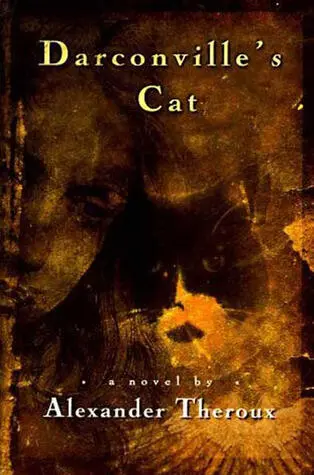
- Название:Darconville’s Cat
- Автор:
- Издательство:Holt Paperbacks
- Жанр:
- Год:1996
- ISBN:нет данных
- Рейтинг книги:3 / 5. Голосов: 2
-
Избранное:Добавить в избранное
- Отзывы:
-
Ваша оценка:
Darconville’s Cat: краткое содержание, описание и аннотация
Предлагаем к чтению аннотацию, описание, краткое содержание или предисловие (зависит от того, что написал сам автор книги «Darconville’s Cat»). Если вы не нашли необходимую информацию о книге — напишите в комментариях, мы постараемся отыскать её.
Darconville's Cat Its chapters embody a multiplicity of narrative forms, including a diary, a formal oration, an abecedarium, a sermon, a litany, a blank-verse play, poems, essays, parodies, and fables. It is an explosion of vocabulary, rich with comic invention and dark with infernal imagination.
Alexander Theroux restores words to life, invents others, liberates a language too long polluted by mutters and mumbles, anti-logic, and the inexact lunacies of the modern world where the possibility of communication itself is in question. An elegantly executed jailbreak from the ordinary,
is excessive; funny; uncompromising; a powerful epic, coming out of a tradition, yet contemporary, of both the sacred and the profane.
Darconville’s Cat — читать онлайн бесплатно полную книгу (весь текст) целиком
Ниже представлен текст книги, разбитый по страницам. Система сохранения места последней прочитанной страницы, позволяет с удобством читать онлайн бесплатно книгу «Darconville’s Cat», без необходимости каждый раз заново искать на чём Вы остановились. Поставьте закладку, и сможете в любой момент перейти на страницу, на которой закончили чтение.
Интервал:
Закладка:
There was a long silence.
“Who — are you?”
Dr. Crucifer heard the question with one eyebrow raised in a whimsical vertex. He paused, as if about to take measures almost fatal to himself, then suddenly his face changed to an expression that bespoke the obvious pleasure of perhaps adding a welcome touch of understanding between them.
“I am a man of principles, and one of my principles is expediency. But what did you come out to see?” he asked. Darconville only looked at him. “It’s not that I’m what nobody else in the world ever was,” he continued, “for you could say the same. Sit down, won’t you? You won’t sit down? That’s as it is, my dear.”
Darconville made to leave.
“Wait,” interjected Crucifer. “I shall be as cogent, to use the rhetoric of college examinations, as is reconcilable with completeness. But let’s have everybody christened before we begin, shall we?” He closed his eyes, and like some prehistoric fish, quite white from the aboriginal darkness, of enormous size, and stone blind, he pipped his lips. “I am, I’m told, of the ancient Egyptian family named Quirtassi, englished Crucifer. I am male. I am. a dark article. I am a human truffle which springs up and exists without any root, unstrengthened by fibers or filaments. (No one, incidentally, can actually tell whether truffles are alive or not, did you know that?) I am the Wanderer in the Wilderness, the solar glyph, a design on a Gnostic gem. I have huge great breeches full of sin and air and a face like a cutwaist: it buzzes. I sing hells. I fuck around with the black arts.” He smiled. His smile was the dimmest thing in nature. “I wants to make your flesh creep. But what did you come out to see? I am a gynophagite, a dragontamer, a simple fatiloquent. I sin doubly because I sin exemplarily and have never read a description of any heaven I would not have left upon the very instant of my arrival. I pray to Nodina, goddess of knots. My laughter is deceptive. I can bite wires. I have no goatstones, no sweetstones, no peepstones. I live in Middlesex. I am betwixt and between. But what did you come out to see? I am a pigment of your imagination, a lucifer to light your fag, a scream with breasts. I am a wicked pack of cards,” he hissed. “But, please, won’t you come into the library?” He waited.
Darconville didn’t move.
“There’s more to know, I’m afraid.”
LXVIII The Misogynist’s Library
This is the place must yield account for him.
— MIDDLETON and ROWLEY, The ChangelingBurton on Infidelity: Speeches in the Star Chamber (1637); Juvenal, Satire VI ; Rozanov’s Solitario; Der Krebs: A Study of Invertebrates and Monstrous Women by Dr. Crouch; André Gide’s Et Nunc Manet in Te ; The Works of Aeneas Silvius; Angus Wilson’s “Mother’s Sense of Fun”; The Pilgrim’s Scrip ; Sir John Suckling’s The Tragedy of Brennoralt ; Ploss and Bartels, Woman ; a pamphlet in boards called “Dr. Rondibilis on Cuckoldry, Wittols, and Gulls”; Kipling’s The Betrothed ; Görres’s Mystique naturelle et diabolique (Vol. V); The Influence of Women — and Its Cure by John Erskine; The Very Revs. Kraemer and Sprenger’s Malleus male fie arum ; Hans Baldung’s Hexenbilder; The Merry-Thought, or, the Glass-Window and Bog-House Miscellany (1731); The Gnomes of Zeeland by Rex Hout; Quevedo’s Pintura de la mujer de un abogado, abogado ella del demonic (1608); Tertullian’s De cultu feminarum ; St. Augustine’s Soliloquies ; Wedekind’s Death and the Devil ; The Ascetic Works of St. Basil.
Andrew the Chaplain’s De reprobatione amoris ; the fragment, Interludium de clerico et puella ; W. C. Brann’s Woman as Hypnotist ; The Epistulae of Pope Pius II; Esther Vilar’s The Manipulated Man ; Schopenhauer’s Parerga und Paralipomena (1851); Sherlock Holmes’s Practical Handbook of Bee Culture, With Some Observations Upon the Segregation of the Queen (privately printed, Sussex Downs, 1912); Oliver Brachfeld’s Die Furcht vor der Frau (1928); Pierre du Moulin’s Anatomie de la messe (1624); The Ribald Rib ; the fourteenth-century “Pucelle Venimeuse”; How to Tell Your Mother from a Wolf by Roland X. Trueheaxe; Talmudic She-Things ; George Shorb’s Mental Nuts to Crack; The Deceyte of Women (1490); The Works of Alexander Neckham; Calderon’s “El Mâgico prodigioso”; Thomas Dekker’s The Raven’s Almanac ; “La Légende des eaux sans fond” by A Gynakophobe; Max Beerbohm’s The Pervasion of Rouge ; Psellus’s De operations daemonum ; the tracts of La Société des Ré-Théurigistes Optimales ; The Bannatyne Ms.; N. M. Penzer’s Poison-Damsels ; John of Salisbury’s “Frivolities of Courtiers and Footprints of Philosophers” from the twelfth-century Policraticus; The Agenbite of Inwit (ca. 1340); Noel Coward’s The Kindness of Mrs. Radcliffe ; Xenophon’s Memorabilia and Oeconomicus ; Ovid’s Remedies of Love ; St. Paul’s Epistles; Sir Richard Burton’s Abeokuta and the Cameroons ; Gregory of Nyssa’s “On the Making of Man” (Nicene Fathers , Sermon 2, V); De nugis curialium (1200) by Walter Map; Adrian Beverland’s A Discovery of Three Imposters, Turd-sellers, Slanderers, and Piss-sellers ( 1709).
Bernard de Moraix’s De contemptu mundi ; the Sermons of Bishop Golias; Sigmund Freud’s Das Medusenhaupt ; the monkish chronicle Gesta romanorum ; “Das nervöse Weib” by Albert Moll; William H. Smyth’s Did Man and Woman Descend from Different Animals ? (1927); the Etymologiae of Isidore of Seville; The Jilts: or, Female Fortune Hunters (1756); Somerset Maugham’s The Moon and Sixpence ; “I Shall Teach Thee Terrible Things” by William Hallgarth; the Pseudo-Cyprian’s De disciplina et bono pudicitiae ; H. X. Route’s The Cliteroid Ladies; The Chinese Book of Odes ; “Alice, An Adultery” by Alistair Crowley; Djuna Barnes’s The Book of Repulsive Women ; The Opera of Pietro Aretino; Secretum secretorum: The Letters of Aristotle to Alexander the Great; I Own a Vagina Dentata by L. A. Burton; Arthur Schopenhauer’s Aphorismer zur Lebensweisheit; The Harlot’s Ledger by Kshemendra; Rev. Cotton Mather’s Memorable Providences ; Edward De Vere, Earl of Oxford’s “Fair Fools”; Frederick Rolfe (Baron Corvo), Women of a Woman Hater ; Wolfgang Lederer’s The Fear of Women; An Almond for a Parrot by Thomas Nashe; The Works of Cillactor; M. Titfist’s White and Pink Tyranny ; “Handlyng Synne” (1303) by Robert of Brunne; Erasmus’s Senatulus ; Hugh Walpole’s The Old Ladies ; the Songs of the Carmina Burana; Thorstein Veblen’s The Place of Women and Pets in the Economic System ; Thomas O’Brien’s, The Tarts of Medford .
Grimmelshausen’s Die Landstörzerin Courasche (1670); Saki’s “The Sex That Doesn’t Shop”; Crashaw, On Marriage ; The Decretals of Pope Soter (175–179 A.D.); Arabella Kenneally’s Feminism and Sex Extinction (1920); Platina’s Fire Is Not Sated with Wood ; the Gaelic poem “An Fear Brónach d’éis a Phosda; Die Schlusselgewalt der Hausfrau (Diss. zur Erlangung der Doctorwürde, Jena); Wallace Rayburn’s The Inferior Sex; Fiancées Financed by Lex and Xoe Heartrue, Ph.D.s; E. Belfort Bax’s The Fraud of Feminism ; The Works of Simonides; John Milton’s The Doctrine and Discipline of Divorce ; Hans Christian Andersen’s “The Swineherd”; Dr. Jacobus X’s Célibat et célibataires ; Mahieu le Bigame’s Lamentations ; Baudelaire’s “Mon Coeur Mis A Nu”; The Chastisement of Mansour by Hector France; Thomas Middleton’s Blurt, Master Constable ; Fra Domenico Cavalca’s Specchio de peccati (1340).
Читать дальшеИнтервал:
Закладка:
Похожие книги на «Darconville’s Cat»
Представляем Вашему вниманию похожие книги на «Darconville’s Cat» списком для выбора. Мы отобрали схожую по названию и смыслу литературу в надежде предоставить читателям больше вариантов отыскать новые, интересные, ещё непрочитанные произведения.







Обсуждение, отзывы о книге «Darconville’s Cat» и просто собственные мнения читателей. Оставьте ваши комментарии, напишите, что Вы думаете о произведении, его смысле или главных героях. Укажите что конкретно понравилось, а что нет, и почему Вы так считаете.