Alexander Theroux - Darconville’s Cat
Здесь есть возможность читать онлайн «Alexander Theroux - Darconville’s Cat» весь текст электронной книги совершенно бесплатно (целиком полную версию без сокращений). В некоторых случаях можно слушать аудио, скачать через торрент в формате fb2 и присутствует краткое содержание. Год выпуска: 1996, Издательство: Holt Paperbacks, Жанр: Современная проза, на английском языке. Описание произведения, (предисловие) а так же отзывы посетителей доступны на портале библиотеки ЛибКат.
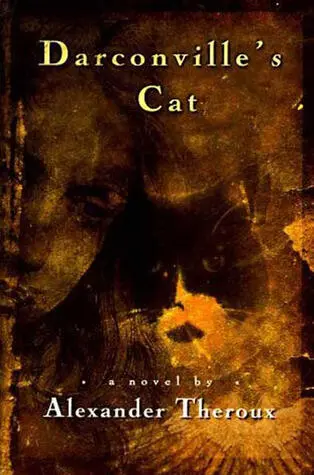
- Название:Darconville’s Cat
- Автор:
- Издательство:Holt Paperbacks
- Жанр:
- Год:1996
- ISBN:нет данных
- Рейтинг книги:3 / 5. Голосов: 2
-
Избранное:Добавить в избранное
- Отзывы:
-
Ваша оценка:
Darconville’s Cat: краткое содержание, описание и аннотация
Предлагаем к чтению аннотацию, описание, краткое содержание или предисловие (зависит от того, что написал сам автор книги «Darconville’s Cat»). Если вы не нашли необходимую информацию о книге — напишите в комментариях, мы постараемся отыскать её.
Darconville's Cat Its chapters embody a multiplicity of narrative forms, including a diary, a formal oration, an abecedarium, a sermon, a litany, a blank-verse play, poems, essays, parodies, and fables. It is an explosion of vocabulary, rich with comic invention and dark with infernal imagination.
Alexander Theroux restores words to life, invents others, liberates a language too long polluted by mutters and mumbles, anti-logic, and the inexact lunacies of the modern world where the possibility of communication itself is in question. An elegantly executed jailbreak from the ordinary,
is excessive; funny; uncompromising; a powerful epic, coming out of a tradition, yet contemporary, of both the sacred and the profane.
Darconville’s Cat — читать онлайн бесплатно полную книгу (весь текст) целиком
Ниже представлен текст книги, разбитый по страницам. Система сохранения места последней прочитанной страницы, позволяет с удобством читать онлайн бесплатно книгу «Darconville’s Cat», без необходимости каждый раз заново искать на чём Вы остановились. Поставьте закладку, и сможете в любой момент перейти на страницу, на которой закончили чтение.
Интервал:
Закладка:
[[3]Darconville lifted down this volume and, as he did so, a sheet of paper fluttered out of it — one he quickly saw was covered with a curious language. Unobserved, he put it in his pocket.]
Algernon Swinburne’s “The Triumph of Time”; J. J. Bachofen’s Das Mutterrecht ; T he Book of a Thousand and One Nights ; The Works of André Tiraqueau; Clement of Alexandria’s Paedagogus ; Coventry Patmore’s Religio Poetae; The Women Who Bark by A Cynophobe; Le Solitaire’s La Femme ne doit pas travailler ; Westermarck’s History of Human Marriage ; Nathaniel Ward’s The Simple Cobbler of Aggawam (1647); The Dutch Courtezan by John Marston; Tuteur and Glatzes’s “Murdering Mothers”; E. Jacobson’s The Wish for a Child in Boys ; E. J. Dingwall’s The American Woman ; Thomas Campion’s The Third and Fourth Book of Ayres; Les Prières des Picards ; The Works of Andreas Salernitanus; Hieroglyphic Tales by Horace Walpole; Modern Woman: The Lost Sex by Lundberg and Farnham; Women Beware Women by Thomas Middleton; Hans Magnus Enzensberger’s “Misogynie.”
Apollinaire’s The Debauched Hospodar ; F. Lee Utley’s The Crooked Rib ; The Lyrics of Archilochus; Gelett Burgess’s The Maxims of Noah and The Maxims of Methuselah; The School for Reform by Thomas Morton; Gascoigne’s The Steele Glas (1576); Dr. Magnus Hirschfield’s Welt als Wille und Vorstellung and Geschlechtskunde; Reveries of a Bachelor by Ik. Marvel; François Villon’s “La Belle Heaulmière aux filles de joie”; Karen Horney’s The Dread of Women; Sex Antagonism by Walter Heape; The Difference Between a Man and a Woman by Theodore Lang; Lord Bemers’s Six Requirements for a Happy Marriage ; Théodore Joran’s La Trouvée Féministe ; John Webster’s The White Devvil; The Chinese Book of Odes ; J. D. Unwin’s Sex and Culture ; Thomas Gisbourne’s An Enquiry into the Duties of the Female Sex (1797); Walter Besant’s The Revolt of Man ; H. Fuseli’s Aphorisms; Religio Medici by Thomas Browne; Correa M. Walsh’s Feminism ; John Betjeman’s An Oxford University Chest ; Dr. Heilborn’s The Opposite Sexes ; James Corin’s Mating, Marriage, and the Status of Women ; P. J. Proudhon’s La Pornocratie, ou Les Femmes .
Philip Wylie’s A Generation of Vipers ; John Lyly’s Euphues, the Anatomy of Wit ; Tertullian’s On Monogamy and On Pudicity; Why She Wouldn’t Marry (1948) by C. Linda; Thomas Otway’s The Orphan ; Rudyard Kipling’s Mary Postgate; The Enemies of Women by Vicente Ibanez; “Men and Women Speak Different Languages” by Col. Thomas Stott; George Farquhar’s Sir Harry Wildair (1701); L’Homme-femme by Alexandre Dumas, fils; Theodor Reik’s The Creation of Women; The Fundamental Error of Woman Suffrage by William Parker; Euripides’s Hippolytus ; L. Ron Hubbard’s Dianetics ; William Blake’s “How Sweet I Roam’d”; The Female Offender by Prof. Caesar Lombroso; Ford Madox Ford’s No More Parades; The Fear of Being a Woman by Joseph Rheingold; Dr. Fritz’s Wittels die sexuelle Not; The Seven Sages of Rome ; Karl Krause’s Werke ( 14 vols.); Remy de Gourmont’s L’Histoire tragique de la princesse Phénissa .
Thomas Dekker’s The Batchelars Banquet ( 1603); Stephen Gosson’s Quippes for Upstart Newfangled Gentlemen ( 1595); The Works of Barbey d’Aurevilly; W. S. Gilbert’s Gentle Alice Brown ; Heinrich Schurtz’s Urgeschichte der Kultur ; William Shakespeare’s King Lear ; Paul Theroux’s Girls at Play; Life with Women and How to Survive It by Joseph Peck, M.D.; Pierre Janet’s L’Automatisme psychologique ; William Prynne’s The Unlovelinesse of Love-Lockes (1628); Ben Jonson’s “Epigram on the Court Pucell”; Benjamin Constant’s Adolphe ; Plato’s Apology ; Oskar Vogt’s Altindische Dichtung und Weisheit ; John Fletcher’s Monsieur Thomas (1639); Alexis, the Attic Comedian’s “On the Numerous Beauty Aids Used to Fit Young Ladies Out as Shiny Snakes”; Rumplestiltskin ; The Complete Strindberg; Massinger’s The Duke of Milan ; Anonymous, The Praise and Dispraise of Women ; John Fowles’s The French Lieutenant’s Woman ; Ulrich Molitor’s De lamiis et phitonicis muliebribus (1489); J. S. Redfield’s Modern Women and What Is Said of Them ; Aeschylus’s Eumenides ; T. X. Hoeur’s Die schwarze Herzogin ; Thomas Otway’s The Orphan ; The Works of the Knight of La Tour Landry; the Topica Legalia of Claude Chansonnette.
Augustus Wolff’s Die Frauenfeindleichen Literatur; Some of the Reasons Against Women’s Suffrage by Francis Parkman; James McGrigor Allan’s “On the Real Differences in the Minds of Men and Women” (1869) and The Intellectual Severance of Men and Women ; T. W. H. Crosland’s Lovely Woman ( 1903); The Works of Chrysippus; Charles Reade’s The Woman-Hater; On Wives and Wiving by Alexander Nicchols; George Gilder’s Sexual Suicide; A Briefe Anatomie of Women (1653); “Viraginity and Effemination” by James Weir, Jr., M.D.; Edward Young’s The Universal Passion (1725); Adnil Notrub’s The Kept Woman Who Didn’t Keep Long ; Montherlant’s Les Jeunes Filles ; Aristotle’s Generation of Animals ; Douglas Jerrold’s Mrs. Caudle’s Curtain Lectures ; Washington Irving’s Rip Van Winkle ; The Works of Nevisanus; Sigmund Freud’s Civilization and Its Discontents .
P. J. Mobius’s “L’Inferiorità mentala délia donna”; Wolf Solent by John Cowper Powys; The Works of Jean Weir; James Thurber’s Men, Women, and Dogs ; The Works of Procopius; John Donne’s “Loves Alchymie”; Tolstoy’s Father Sergius ; Thomas Middleton’s Micro-Cynicon (1 599); Aristophanes’s Ecclesiazusae; Her Royal Highness Woman by Max O’Rell; P. J. Proudhon’s Amour et Manage ; G. J. Romanes’s Mental Differences Between Men and Women ; The Works of St. Bonaventure; Matrimony: A Novel Containing a Series of Interesting Adventures by John Shebbeare; Ben Jonson’s Epicoene, or The Silent Woman (1609); Alistair Crowley’s White Stains; The Corridors of Time by Poul Anderson; A. Conan Doyle’s John Barrington Cowles ; Ernest Dowson’s The Pierrot of the Minute ; Richard Sibbes’s Bowels Opened (1641). Francis Bacon’s “On Marriage and the Single Life.”
St. Bernardino of Siena’s Prediche Volgari; Darwin’s The Descent of Man ; The Poems of William Cartwright; On Sleeping with Women by Roger Lawson; The Epic of Gilgamesh; The Embattled Male in the Garden, or Why Women Are Queer in the Country by Dwight Farnham; G. E. Moore’s Celibates ; Philipp Mainländer’s Philosophie der Erlösing (1876); the thirteenth-century Coutumes du Beauvoisis ; Bronislaw Malinowski’s Sexual Life Among the Melanesians ; Semonides Amorgos’s Elegy and Iambus ; Axel, Thane O’Droxeur’s Love and Hate ; Francesco Barbara’s De re uxoria ; The Works of Paraeus; August Strindberg’s Giftas ; the Tomes of La Croix; De legibus connubialibus ; Les Opères de Cretin; the Doulaq Papyrus of 1400 B.C.; The Works of Palladis of Alexandria; Miroir de Manage by Eustace Deschamps; the Speculum of Vincent de Beauvois.
Читать дальшеИнтервал:
Закладка:
Похожие книги на «Darconville’s Cat»
Представляем Вашему вниманию похожие книги на «Darconville’s Cat» списком для выбора. Мы отобрали схожую по названию и смыслу литературу в надежде предоставить читателям больше вариантов отыскать новые, интересные, ещё непрочитанные произведения.





Обсуждение, отзывы о книге «Darconville’s Cat» и просто собственные мнения читателей. Оставьте ваши комментарии, напишите, что Вы думаете о произведении, его смысле или главных героях. Укажите что конкретно понравилось, а что нет, и почему Вы так считаете.