Kingsley Amis - Dear Illusion - Selected Stories
Здесь есть возможность читать онлайн «Kingsley Amis - Dear Illusion - Selected Stories» весь текст электронной книги совершенно бесплатно (целиком полную версию без сокращений). В некоторых случаях можно слушать аудио, скачать через торрент в формате fb2 и присутствует краткое содержание. Год выпуска: 2015, Издательство: New York Review of Books, Жанр: Современная проза, на английском языке. Описание произведения, (предисловие) а так же отзывы посетителей доступны на портале библиотеки ЛибКат.
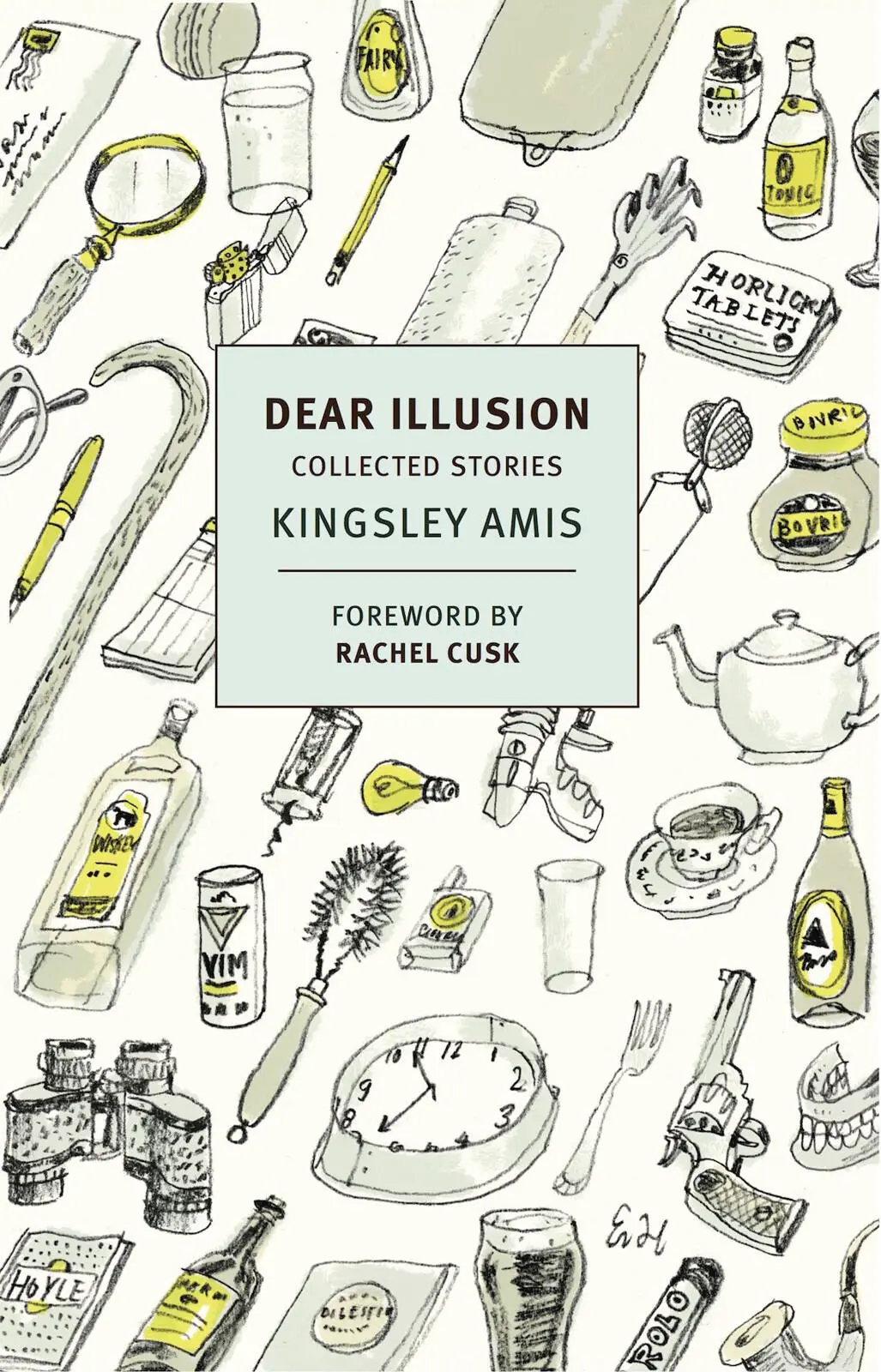
- Название:Dear Illusion: Selected Stories
- Автор:
- Издательство:New York Review of Books
- Жанр:
- Год:2015
- ISBN:нет данных
- Рейтинг книги:4 / 5. Голосов: 1
-
Избранное:Добавить в избранное
- Отзывы:
-
Ваша оценка:
Dear Illusion: Selected Stories: краткое содержание, описание и аннотация
Предлагаем к чтению аннотацию, описание, краткое содержание или предисловие (зависит от того, что написал сам автор книги «Dear Illusion: Selected Stories»). Если вы не нашли необходимую информацию о книге — напишите в комментариях, мы постараемся отыскать её.
Dear Illusion: Selected Stories — читать онлайн бесплатно полную книгу (весь текст) целиком
Ниже представлен текст книги, разбитый по страницам. Система сохранения места последней прочитанной страницы, позволяет с удобством читать онлайн бесплатно книгу «Dear Illusion: Selected Stories», без необходимости каждый раз заново искать на чём Вы остановились. Поставьте закладку, и сможете в любой момент перейти на страницу, на которой закончили чтение.
Интервал:
Закладка:
She greeted me amiably enough, though with something less than the warmth I had long grown to expect. ‘Dearest papa! Are you quite recovered from your disorder?’
I thanked her for her solicitude, assured her I was myself again, and thereafter came straight to the point. ‘I regret I must inform you, Elizabeth, that it will not after all be possible for you to spend the coming winter abroad.’
From her reception of that announcement, I could see easily enough that its drift came as no great surprise to her, though her disappointment was as evident. ‘May I know your reason for this decree?’
‘I am not bound to furnish a reason, but I will do so. My advice is that the discomfort and strain of the double journey would probably more than undo any beneficial effect of a few weeks in a warmer climate, not to speak of the various dangers attendant upon any foreign travel and sojourn.’
‘I am willing to take that risk.’
‘I am unwilling that a daughter of mine should do so.’
‘I am of age, papa.’
‘While you reside here and remain unmarried you will continue to be bound by your father’s wishes.’
‘Those conditions may not obtain for ever,’ she said with a show of resolution.
‘Indeed they may not. Is this a warning that they’re about to end?’
She hesitated, then shook her head firmly but with despondency. ‘No.’
‘In that case I’ll repeat that I sincerely wish things could have been otherwise touching your visit abroad, and I bid you good day.’
‘Oh, papa.’ With one of her nimble movements, Elizabeth barred my path to the door. ‘Please, dear papa, will you not be open with me and tell me the whole truth?’
Now I hesitated. ‘I very well remember,’ I said, ‘discussing with Mr Kenyon, your friend Mrs Jameson and yourself the possibility of your wintering on the Continent, this on more than one occasion, and your taking my side against the proposal, declaring you were just as well off in your own warm room, and the upheaval would not be worth while. Suddenly, the upheaval has become worth while. Why?’
She made no answer, but her cheeks flushed.
‘When you’re ready to answer that question,’ I said as gently as I could, ‘I will answer yours, and speak plain. I can only hope that day soon comes.’
I should never have given that promise. To keep it would have been to divulge my secret, and that I could never have done, not to Ba. Sometimes now I wish devoutly I could have brought myself to speak plain ; more often I thank my stars I had the sense to keep my own counsel. But I must not indulge in idle fancies.
To my surprise, far from being dashed by my steadfast performance of my duty in at least forbidding her Continental visit, Elizabeth seemed cheerful and philosophical, content as always with being at home, surrounded by her family. That at any rate was what I told myself; I told myself many falsely comforting things. I find it almost impossible to believe that over all those months nothing of significance took place; nothing, that is, of which I was directly aware, except the abduction of Flush by ruffians and his eventual expensive recovery. The threatened loss of a dog! To be sure, I should have been greatly dashed if the attempt had succeeded, but there was a disparity between this and what I eventually did suffer so great as to be almost comical.
III
Early in the following August, everything changed, or rather, much was brought to light. I had found Robert Browning’s continued regular visits to my daughter tolerable while they remained of specified duration. That day he overstayed his time and overstepped the mark. In a flash he shattered the protective shell in which I had encased myself. As soon as he had gone I hurried to Elizabeth’s room in a towering rage, but the rage was directed inwards. No truer word was ever spoken than that there is none so blind as he who will not see.
Without preliminary I exclaimed, ‘It appears, Ba, that that man has spent the whole day with you.’
‘But papa, there was a storm, as surely you noticed. Mr Browning stayed only until the rain had stopped.’
‘Confound the rain. To the devil with the rain. This reckless behaviour is insupportable. I will not have it. It must cease. Do you understand me?’
‘I’m not sure,’ said my daughter. ‘Is it your meaning that Mr Browning is never to visit me here again?’
With renewed warmth, and no hesitation, I retorted, ‘It is, it is. He is not to cross this threshold while I live, not for a hundred storms. He must never…’
‘Dearest papa, you are overwrought. Come, let me sit you down here and make you see you’re with one that loves you and will take care of you. Now what are these imaginings? For you seem to think Mr Browning is a sort of demon. Yet it’s not so long since you seemed to tolerate his visits quite willingly and even, I thought, to welcome his addresses to me. Something has happened to change your mind. I beg you, tell your Ba what it is.’
‘I cannot. Nothing has happened. But you are never to see that reprobate Browning again.’
‘Mr Browning is an honourable English gentleman with none but the highest notions of what is right and proper. Or have you heard some lying tale to the contrary?’
‘Nothing of that sort,’ I had to answer. ‘He is… he’s simply not fit.’
‘You refer presumably to his lack of a personal fortune.’
‘You know there’s very little that could be of less moment to me than any such consideration. In itself, that is. But the consequence of his lack of means must be that he lacks the sensibility required of him in his dealings with a personage such as yourself.’
‘I can assure you that Mr Browning yields to no one where sensibility is concerned.’
‘He attended no university.’
‘His wealth of knowledge would challenge any who have. And since when was attendance of a university a guarantee of sensibility?’
‘He is six years your junior.’
‘Oh, stuff. Mama was four years older than you. Tell me the truth, father; why have you taken so strongly and so suddenly against poor Mr Browning? I remember so well how happy you were on my account when he first appeared.’
‘That was before… I will no longer permit his visits. Oh, Ba,’ I burst out, ‘pay heed to what I say as never before. I beg of you, be guided by me. I don’t know what you and he are to each other, and I swear to you I don’t wish to know, but let there be no more of it.’ I stared at her and spoke with all the earnestness of which I am capable, ‘In the name of God, my daughter, banish the man Robert Browning from your life.’
Truth is so terrible, even in fetters, that for a moment I thought I had won. Then Elizabeth turned away from me and said in level tones, ‘I will not. Robert and I love each other. If God is to be brought into the matter, let Him part Robert and me, for nothing human will. If you try to prevent his entry into this house, I will leave it forthwith and trust to Mr Kenyon or Mr Boyd to help me. Now please go.’
So ended my last conversation with Elizabeth on this subject, in fact our last conversation worthy of the name in this world. On Saturday, 19th September, 1846, she left my house for ever, having a week earlier been married without my knowledge to Robert Browning at St Marylebone Parish Church. Soon the couple, taking Flush with them, were in Paris. Three weeks later they had reached Italy.
I suppose I had all along regarded it as inevitable, but to have such a thing happen, however clearly foreseen, is utterly different. But what else could I have done, knowing what I knew?
Let me set in order what I knew and if need be whence I knew and know it.
1. Robert Browning is of very dark complexion. (Kenyon’s phrase; my own observation.)
Читать дальшеИнтервал:
Закладка:
Похожие книги на «Dear Illusion: Selected Stories»
Представляем Вашему вниманию похожие книги на «Dear Illusion: Selected Stories» списком для выбора. Мы отобрали схожую по названию и смыслу литературу в надежде предоставить читателям больше вариантов отыскать новые, интересные, ещё непрочитанные произведения.









Обсуждение, отзывы о книге «Dear Illusion: Selected Stories» и просто собственные мнения читателей. Оставьте ваши комментарии, напишите, что Вы думаете о произведении, его смысле или главных героях. Укажите что конкретно понравилось, а что нет, и почему Вы так считаете.