Kingsley Amis - Dear Illusion - Selected Stories
Здесь есть возможность читать онлайн «Kingsley Amis - Dear Illusion - Selected Stories» весь текст электронной книги совершенно бесплатно (целиком полную версию без сокращений). В некоторых случаях можно слушать аудио, скачать через торрент в формате fb2 и присутствует краткое содержание. Год выпуска: 2015, Издательство: New York Review of Books, Жанр: Современная проза, на английском языке. Описание произведения, (предисловие) а так же отзывы посетителей доступны на портале библиотеки ЛибКат.
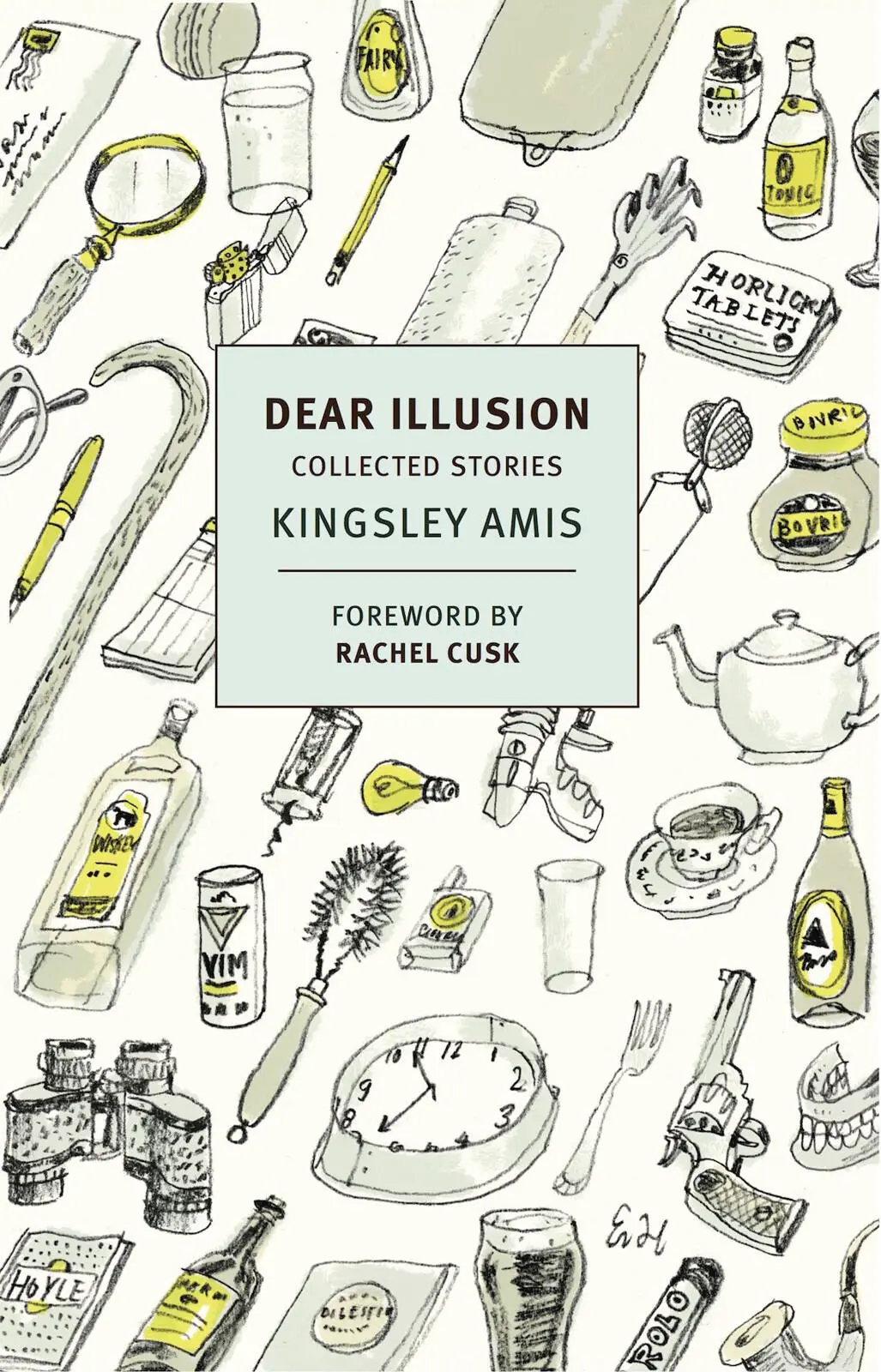
- Название:Dear Illusion: Selected Stories
- Автор:
- Издательство:New York Review of Books
- Жанр:
- Год:2015
- ISBN:нет данных
- Рейтинг книги:4 / 5. Голосов: 1
-
Избранное:Добавить в избранное
- Отзывы:
-
Ваша оценка:
Dear Illusion: Selected Stories: краткое содержание, описание и аннотация
Предлагаем к чтению аннотацию, описание, краткое содержание или предисловие (зависит от того, что написал сам автор книги «Dear Illusion: Selected Stories»). Если вы не нашли необходимую информацию о книге — напишите в комментариях, мы постараемся отыскать её.
Dear Illusion: Selected Stories — читать онлайн бесплатно полную книгу (весь текст) целиком
Ниже представлен текст книги, разбитый по страницам. Система сохранения места последней прочитанной страницы, позволяет с удобством читать онлайн бесплатно книгу «Dear Illusion: Selected Stories», без необходимости каждый раз заново искать на чём Вы остановились. Поставьте закладку, и сможете в любой момент перейти на страницу, на которой закончили чтение.
Интервал:
Закладка:
‘So you did. And now he sends you a whole poem by way of return.’
‘Well, there of course,’ said Ba merrily, ‘uncultured fathers and others of a sad literal disposition of mind will insist that the thing’s only a letter, you know, nothing but a rather long and flowery letter, dash it all, the work of some modish popinjay with a fancy for extravagant compliment’, and the dear girl’s voice and demeanour became for the moment a fanciful but truly comical travesty of my own. ‘But this is a letter with the beauty and tenderness of a poem, a true poem. Enough! — you shall see and judge for yourself’, and she made to hand me the closely written pages, but snatched them quickly back and read from them in a high thrilling voice, ‘“I love your verses with all my heart, dear Miss Barrett”, oh, and, “Into me it has gone, and part of me it has become, this great living poetry of yours”, and a little farther on…’
‘I shall never see to judge for myself,’ I laughingly protested, ‘if you persevere in your recitation’, but I believe she was too much engrossed in those pages to hear me.
‘Yes, he speaks here of, h’m, h’m,“the fresh strange music, the affluent language, the exquisite pathos and true new brave thought’, and again, “I do, as I say, love these books with all my heart — and I…”, but there I think he goes too far.’
A blush mantled her pale cheek. What had Browning written that she had not cared to let me hear? I know not, for I never saw that letter at last. But some of the phrases in it that I had been permitted to hear, the references to fresh strange music and to affluent language (affluent! a curious epithet, many would say, in this connection), remain lodged in my mind to this day. So did the general kind of expression employed therein. Once again, I felt I had received a warning or a premonition; once again, however, I may in saying so be looking ahead to what then lay in the future.
Certainly, at the time my strongest feelings were pleasure in my dear Ba’s pleasure, heightened by satisfaction that her gifts of versing had been recognized by one I knew to be a poet of sorts, and by a reasonable hope that there might lie distraction from the melancholy and low spirits that had afflicted her increasingly as she grew past her first youth — at this time she was approaching her thirty-ninth birthday. My main concern, however, was as always for her health. This had never been truly sound since, at the age of fifteen, she had fallen victim to a mysterious incapacitating ailment that also afflicted her two younger sisters. As it proved, they were able soon to cast it off, but Elizabeth perhaps never wholly recovered, and within three months she had developed measles. Thereafter she spent much time confined to her room, even her bed, and I have always thought that the resulting seclusion and immobility were what first led her to the writing of verses — a healthier remedy than the opium which she came to consume, sometimes, I fear, in distressingly large doses.
Elizabeth’s first letter to Browning further cheered me. I had been concerned lest, with all the refreshment of pleasure and interest in life the man’s words might have brought her, she had perhaps become over-excited thereby, brought to an unhealthy access of sentiment. The dry terms of her answer, composed without any assistance but confided to me, were greatly reassuring. She spoke of her high respect for Browning’s own ventures into poetic composition, saluted him as a fellow-craftsmen, told him that he would remain in her everlasting debt if he would draw her attention to faults in her manner of composition — nothing of the dreamy palpitating stuff in which he had evidently indulged himself. The correspondence continued. I had pressing concerns of my own at that time, in the City, relative to my affairs in the West Indies, and to be candid I was not sorry that my dearest Ba seemed to have found someone who might unwittingly share the burden of emotional obligation to her that I had inescapably (if gladly) acquired.
So matters stood for a couple of months and I was more than content. Elizabeth had acquired a companion who might prove more durable than her poor much-loved brother, known to her as Bro, lost sailing off the Devon coast at the age of thirty-three, and one who was nearer at hand than the excellent Hugh Stuart Boyd and John Kenyon, the latter known to me since our days at Cambridge and Elizabeth’s benefactor and distant kinsman. Her letters to and from Browning, of which I was told nothing of substance, grew more frequent, but I saw no harm in that.
Then, in May of the same year, 1845, the two were to meet; he was to visit her at two o’clock in the afternoon of the 20th. I raised no objection; at that time I had none to raise; at two o’clock that day I was engaged in the City of London. I had left my Ba in her room as usual reclining on her sofa, surrounded by her simple furniture, most notably her beloved books on shelves built by her brothers, and with her spaniel, the well-behaved Flush, close beside her. As her father I could say to myself that, for all her large brown eyes and splendid thick dark hair, she was not what the world would have called beautiful. The black silk she wore at this season accentuated the pallor of her ivory complexion. She looked small and defenceless (she stood only an inch over five foot), eagerly desiring and yet deeply dreading the advent of the scoundrel [1] who had so artfully insinuated himself into the very springs of her being.
Before I departed, I counselled Elizabeth to remember that this young man, six years her junior, must be as apprehensive as she of the coming encounter, and that, whatever might betide, he ardently desired her welfare, and doubtless more. What else could I have said or done?
‘I see that Mr Browning’s visit was a success,’ I remarked some hours later as I took tea with Elizabeth in her room.
‘Oh yes, it was most pleasant and valuable,’ she replied from her seat on the sofa. (I occupied the armchair by prescriptive right.)
‘How did he impress you?’
‘He was most affable, and from the beginning there were no constraints. We had lively talk for something above an hour.’
‘Upon what topics?’ I asked.
‘Oh, a great many, from poetry to politics.’
‘Very likely. I was hoping you might particularize a little.’
‘Oh… ah… he renewed his affirmations of regard for some of the things I’ve written, especially… especially “A Dream of Exile” and “The Rime of the Duchess May” and others. Truly, he was most… I could not have wished for a more…’
‘No lady,’ said I with a smile, my hands on my knees, ‘is on oath when her father questions her on her conversations with an eligible young gentleman; indeed, she need say nothing at all. But, my dearest Ba, you and I have always been closely attached; pray do a little to indulge the curiosity of an old man and a loving parent. No doubt Mr Browning did converse with you of this and that; but what did you make of him, in what frame of mind do you look forward to his next visit, if there is to be one, did you like him?’ And Flush, at her side as always, raised his dark liquid eyes to hers as if to say that he, too, would have welcomed some information upon this head.
She looked at me for a few moments in silence, and it was not hard to imagine something of the battle of emotions that raged within her. Then she rose to her feet and held out her arms to me, and we embraced; I remember thinking how thin her small frame was, like a sheaf of ropes. Urging Flush to make room, she drew me down to sit close to her on the sofa and took my hand in hers.
‘Dearest papa,’ she burst out in her high voice, almost as thin in its way as her figure, ‘Mr Browning is such an impressive, inspiring man, he has quite bowled me over with his ardour and strength. I swear that within a minute of his arrival I was in continuous suspense to see what he should say next — I learnt what it meant to be hanging on someone’s lips. He carried within him so passionate a flame that I felt almost scorched by it,’ etc., etc.
Читать дальшеИнтервал:
Закладка:
Похожие книги на «Dear Illusion: Selected Stories»
Представляем Вашему вниманию похожие книги на «Dear Illusion: Selected Stories» списком для выбора. Мы отобрали схожую по названию и смыслу литературу в надежде предоставить читателям больше вариантов отыскать новые, интересные, ещё непрочитанные произведения.







Обсуждение, отзывы о книге «Dear Illusion: Selected Stories» и просто собственные мнения читателей. Оставьте ваши комментарии, напишите, что Вы думаете о произведении, его смысле или главных героях. Укажите что конкретно понравилось, а что нет, и почему Вы так считаете.