Kingsley Amis - Dear Illusion - Selected Stories
Здесь есть возможность читать онлайн «Kingsley Amis - Dear Illusion - Selected Stories» весь текст электронной книги совершенно бесплатно (целиком полную версию без сокращений). В некоторых случаях можно слушать аудио, скачать через торрент в формате fb2 и присутствует краткое содержание. Год выпуска: 2015, Издательство: New York Review of Books, Жанр: Современная проза, на английском языке. Описание произведения, (предисловие) а так же отзывы посетителей доступны на портале библиотеки ЛибКат.
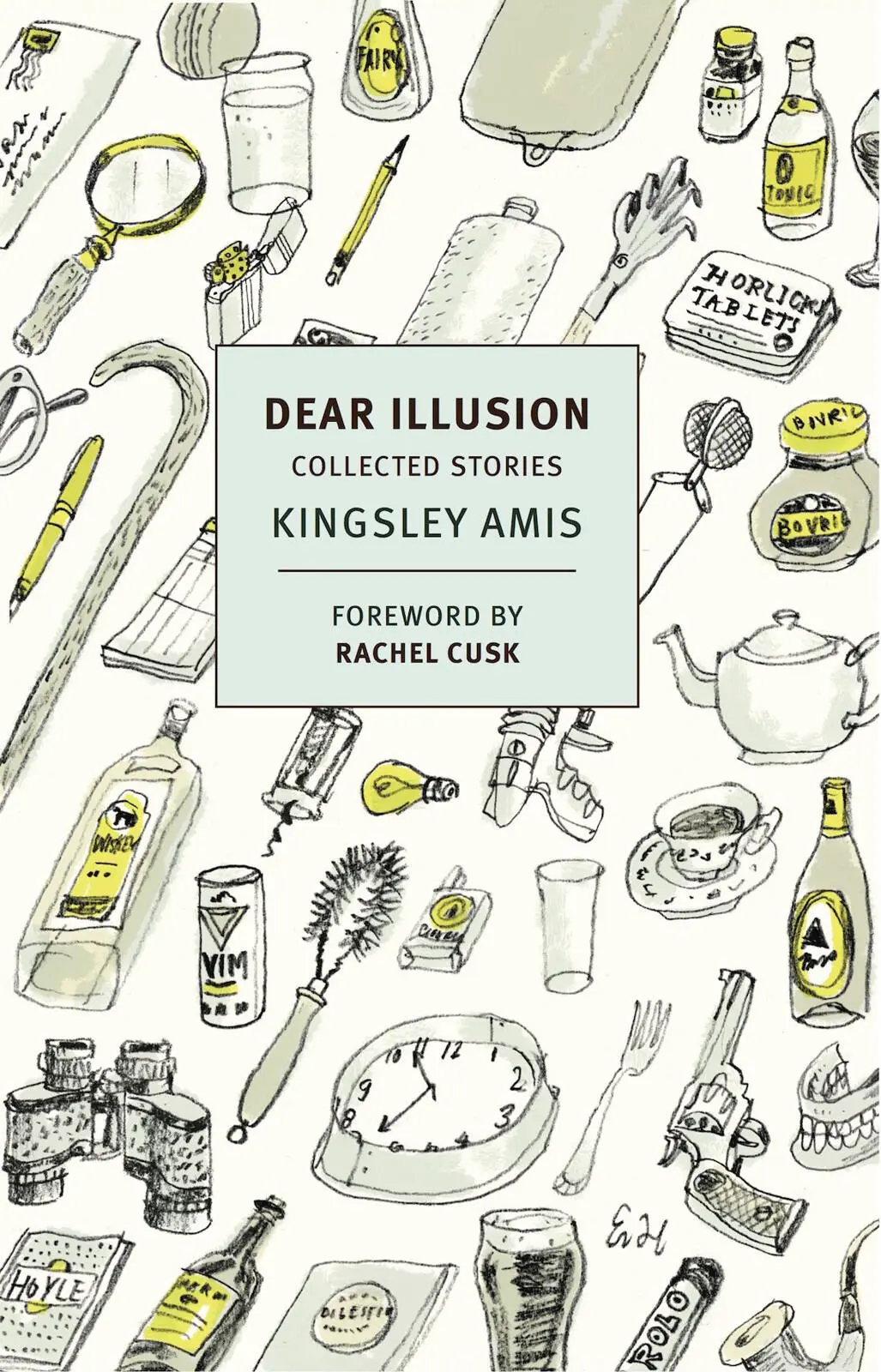
- Название:Dear Illusion: Selected Stories
- Автор:
- Издательство:New York Review of Books
- Жанр:
- Год:2015
- ISBN:нет данных
- Рейтинг книги:4 / 5. Голосов: 1
-
Избранное:Добавить в избранное
- Отзывы:
-
Ваша оценка:
Dear Illusion: Selected Stories: краткое содержание, описание и аннотация
Предлагаем к чтению аннотацию, описание, краткое содержание или предисловие (зависит от того, что написал сам автор книги «Dear Illusion: Selected Stories»). Если вы не нашли необходимую информацию о книге — напишите в комментариях, мы постараемся отыскать её.
Dear Illusion: Selected Stories — читать онлайн бесплатно полную книгу (весь текст) целиком
Ниже представлен текст книги, разбитый по страницам. Система сохранения места последней прочитанной страницы, позволяет с удобством читать онлайн бесплатно книгу «Dear Illusion: Selected Stories», без необходимости каждый раз заново искать на чём Вы остановились. Поставьте закладку, и сможете в любой момент перейти на страницу, на которой закончили чтение.
Интервал:
Закладка:
The news pleased and worried Sue. Potter deserved recognition as a — well, at least as someone who had devoted the better part of his life to writing poetry, even if, or even though, recognition of the sort in view might not appeal to him much. On the other hand, it did seem very likely that the pills from the hand of the young doctor had failed to do their job, that Potter was back on his self-administered version of occupational therapy and that he was again spending nearly all his time feeling bad.
Worry about others’ concerns, like pleasure on their account, needs regular renewal if it is not to fall away; the summer brought Sue fresh assignments and a falling-away of her worry and pleasure in the case of Potter’s prospective award/dinner. But, in due time, award/dinner became award-dinner in a real sense. A body claiming, in its title, to superintend our culture announced that Edward Arthur Potter was shortly to receive a special prize of £1,000 to mark the publication of his latest book, Off , and to attest to his status as premier lyrist in the English language. The cheque, together with an ornamental certificate designed by a leading designer, would be handed over in the course of a function at a Regent Street restaurant famous until only a few years back for its food and service. A week after seeing this report, Sue got an invitation to the award-dinner. Stapled to a corner of the lavish card was a strip of flimsy which bore, in smudged carbon, a bald statement to the effect that this favour had come her way at Mr Potter’s personal request — thus conveying, with masterly economy, the organizers’ helplessness in the circumstances to prohibit the attendance of somebody they themselves would never have dreamt of asking along.
On the night, Sue left her husband contentedly watching television and appeared at the restaurant, the main bar of which turned out to be given over to the Potter occasion. She had arrived early, but there was already a fair-sized group round the man of the hour. Experience of such gatherings suggested her first move: getting one drink down her and another into her hand. There were plenty of recognizable faces, perhaps too many, not more than half of them belonging to the world of letters in even the most charitably extended sense of the phrase. A sports commentator, a girl who made boots, a television bishop in mufti, a man who not long before had covered half a mile of cliff near Dover with paint of various colours — all sorts of people who surely could not be famous just because of what they did, who did nothing else but what they did and who were famous all the same. Not only that: when she began her career, what had slightly astonished Sue at affairs of this sort was the number of old contemptibles, of those whose claim to fame, if any, dated so far into the past that they could more than safely be dropped. Tonight she was struck by the number and contemptibility of new contemptibles, persons categorically unfit (on all but the most trend-crazed reckoning) to be invited along to see Potter honoured. Thirty-three next year, she said to herself.
Having beaten off an embryonic pass by an elderly small boy who turned out to be a concrete poet, Sue made her way over to a couple of journalist acquaintances. The Press had come along all right. So had its visual auxiliaries: cameras flashed every few seconds. Somebody who ought to have been flashing away with the very, very best of them, but who did no more than drink and chat, was Pat Bowes, to whom Sue turned. He kissed her genially and said,
‘You’re looking smashing, Macnamara. Great lot here tonight, aren’t they?’
‘You look all right too, Bowes. Where’s your camera?’
‘At home. I’m here because I’m so distinguished, not to work. Mr Potter’s personal request.’
‘Me too. No notebook, thank God.’
‘Nice of the old lad to ask me along. I mean it’s obvious why he got hold of you, with you making that hit with him, but he needn’t have asked me.’
‘Well, you were nice to him the day we went there.’
‘No I wasn’t, love. I’m always a right bugger with my sitters, you know that. No, he asked me because he didn’t like to think of me probably finding out you’d been here and thinking he hadn’t bothered to remember me. I call that really nice.’
Sue nodded.
‘What I don’t understand is about this book. He told you he’d packed it all in. End of the road kind of style. He didn’t strike me as the sort of bloke who’d change his mind about a thing as important to him as that.’
‘Nor me. I don’t know what’s happened.’
‘We won’t find out tonight. The chances of a quiet confidential word with the guest of honour are, I would say, remote in the extreme. Not because of him — he’d much rather have a good natter with you than talk to all these important sods, but they’ve brought him here and they’ll hang on to him. Anyway. Have the mag been on to you about Peduzzi?’
‘No, what about him?’
‘They will. Famed Macnamara — Bowes team spotlight yet another feature of the cultural scene. A pretty far-bloody-flung feature too. He’s filming in Ceylon till the end of the month, they said, then a short stop-over in Italy before he takes off I forget where. I’d sooner do him in Ceylon myself, of course. Could you work it?’
‘How long would it take?’
‘I’d say five days minimum all in. He isn’t sitting on his arse in Colombo, you see. There’d be ox-cart stuff before we could get to him.’
‘I’ll check and let you know.’
A vague plum-in-throat bawling emerged from the ambient uproar and resolved itself into, ‘Mrs Macnamara, please. Mr Bowes, please.’
‘Christ, we’re being paged,’ said Bowes. ‘Butlered, rather.’
‘Mr Potter,’ said the functionary, looking from one to the other with open incredulity, ‘would be obliged if you would join him for a few minutes.’
Her first real look at Potter that evening showed a small neat dinner-jacketed figure without any of the soup-stains or shave-traces that might have been expected; she guessed the reason when she recognized his agent close to his side. There were a great many introductions, starting with the cultural bureaucrat in overall charge and the leading literary critic booked for the main speech
— more leading, this one, than the leading designer of the certificate (who was also about the place) in the proportion of a knighthood to an OBE. There would have been still more introductions if Potter had not cut them off by taking a long time over saying how glad he was to see Sue and Bowes again.
‘Is Mrs Potter here this evening?’ asked Sue.
‘I’m afraid she’s not in the best of health.’
‘Sorry to hear that,’ said Bowes.
Potter moved closer to Sue and said quietly, ‘In fact there’s absolutely nothing wrong with her. I just thought it would be better if she stayed away. You’ll probably see what I mean by the time the evening’s over. It’s not her sort of thing at all.’
‘No, well…’
‘Have you seen my book yet, Mrs Macnamara? Have you, Mr Bowes? No, not a great many people have, outside the committee and so on. But there’s a copy for everybody beside their place at dinner for them to take home, if they still want to after they’ve heard me speak. Anyway, I hope they give it a glance. I shall be most interested to hear what people think of it, more interested than with any of my previous books.’
There was a nervous jocularity in his tone and manner that Sue found mildly strange, until she noticed the glass of whisky in his hand and reflected that, for him, large parts of the evening would be an ordeal, and of an unfamiliar kind. Then he said to her, again in an undertone:
‘Would you have a quick drink with me afterwards, Mrs Macnamara? Upstairs, in a little place called the Essex Room. I’ve spoken to one of these chaps about it. We’ll be breaking up quite early.’
Читать дальшеИнтервал:
Закладка:
Похожие книги на «Dear Illusion: Selected Stories»
Представляем Вашему вниманию похожие книги на «Dear Illusion: Selected Stories» списком для выбора. Мы отобрали схожую по названию и смыслу литературу в надежде предоставить читателям больше вариантов отыскать новые, интересные, ещё непрочитанные произведения.





Обсуждение, отзывы о книге «Dear Illusion: Selected Stories» и просто собственные мнения читателей. Оставьте ваши комментарии, напишите, что Вы думаете о произведении, его смысле или главных героях. Укажите что конкретно понравилось, а что нет, и почему Вы так считаете.