Kingsley Amis - Dear Illusion - Selected Stories
Здесь есть возможность читать онлайн «Kingsley Amis - Dear Illusion - Selected Stories» весь текст электронной книги совершенно бесплатно (целиком полную версию без сокращений). В некоторых случаях можно слушать аудио, скачать через торрент в формате fb2 и присутствует краткое содержание. Год выпуска: 2015, Издательство: New York Review of Books, Жанр: Современная проза, на английском языке. Описание произведения, (предисловие) а так же отзывы посетителей доступны на портале библиотеки ЛибКат.
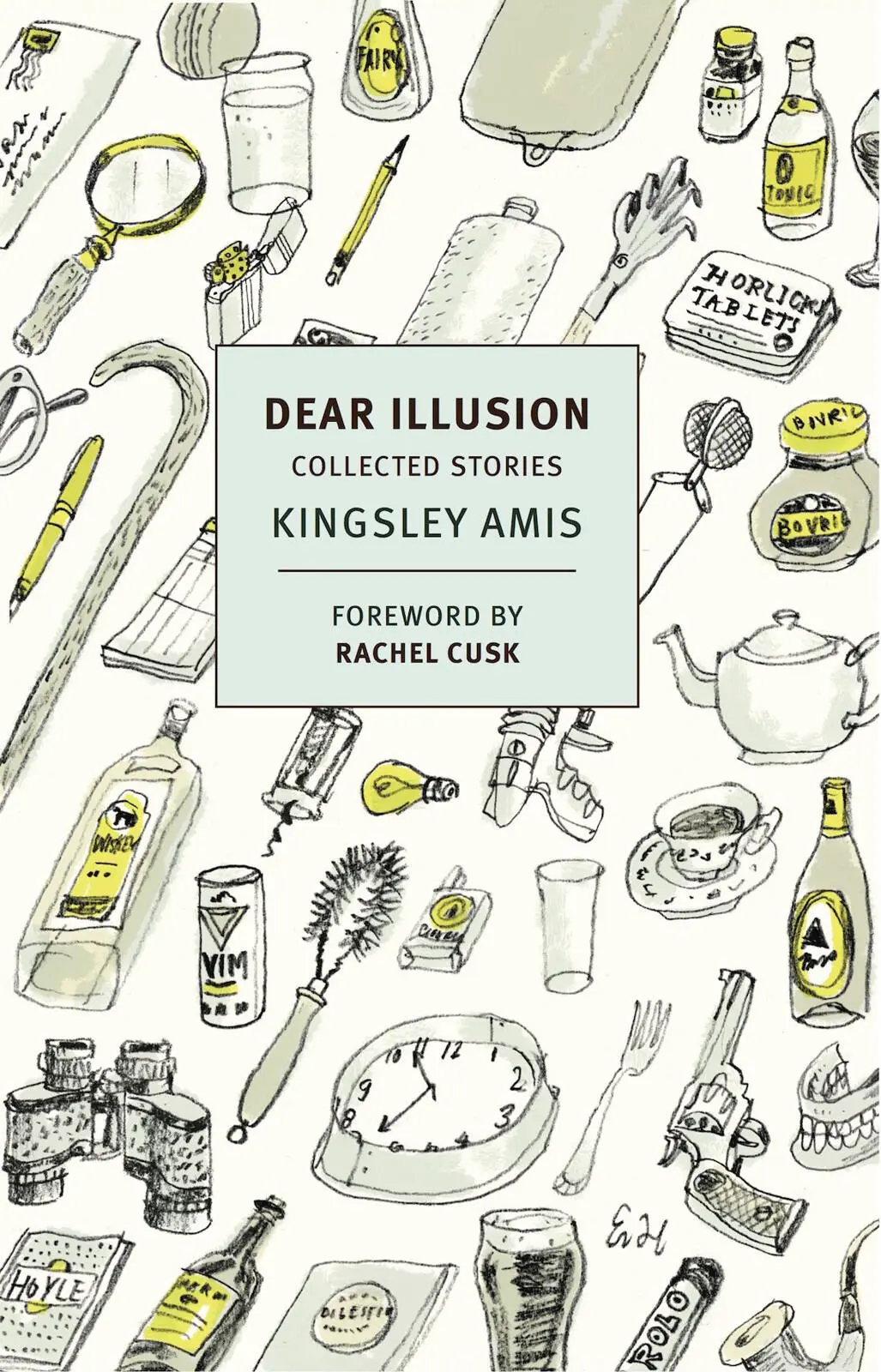
- Название:Dear Illusion: Selected Stories
- Автор:
- Издательство:New York Review of Books
- Жанр:
- Год:2015
- ISBN:нет данных
- Рейтинг книги:4 / 5. Голосов: 1
-
Избранное:Добавить в избранное
- Отзывы:
-
Ваша оценка:
Dear Illusion: Selected Stories: краткое содержание, описание и аннотация
Предлагаем к чтению аннотацию, описание, краткое содержание или предисловие (зависит от того, что написал сам автор книги «Dear Illusion: Selected Stories»). Если вы не нашли необходимую информацию о книге — напишите в комментариях, мы постараемся отыскать её.
Dear Illusion: Selected Stories — читать онлайн бесплатно полную книгу (весь текст) целиком
Ниже представлен текст книги, разбитый по страницам. Система сохранения места последней прочитанной страницы, позволяет с удобством читать онлайн бесплатно книгу «Dear Illusion: Selected Stories», без необходимости каждый раз заново искать на чём Вы остановились. Поставьте закладку, и сможете в любой момент перейти на страницу, на которой закончили чтение.
Интервал:
Закладка:
Both were silent for a time. Then she said,
‘Why did you put on this show tonight?’
‘That’s a good question — I quite see I could have conducted my test and then just privately refused the award. I suppose it was conceited of me. But it was fun. And I felt like getting a bit of my own back on some of the people who’d conned and flattered me into wasting all those years. And then — this is probably silly, but I might be remembered for a little while just because of this show. Potter? Oh yes, wasn’t he that lousy old poet who got together a lot of people who’d said he was good and told them to clear off? A sort of footnote in literary history. Perhaps poor old Phillips might not be completely forgotten if he’d climbed up on the stage at the end of the first night of his Paolo and Francesca and told the audience to go and fuck themselves.’
‘Yes. Do you want me to report this? Some of it? It could go in our daily.’
‘I really don’t mind either way. Would you like to report it?’
‘I don’t think so, Mr Potter.’
‘Don’t then. I wasn’t telling you with that in mind. I just wanted to tell someone who’d see what I meant. No, more than that. I wanted to tell you.’
‘Thank you. How have you been feeling since we met before? You said you were going to—’
‘Oh yes. You know, it worked like a charm. The very first lot of pills he tried on me. You can probably see. No more feeling bad. No more wanting to write poems, either. But that’s all right, isn’t it, in the circumstances? But what the pills didn’t take away was this curiosity about whether…’
Somebody knocked on the door and rattled its handle. A worried voice called,
‘Ted? Ted, are you in there?’
‘Hang on, Charles, will you? I’ll be out in just a minute.’ Potter lowered his voice again. ‘He must have used ten-pound notes. Or his intelligence and energy. He’s got plenty of all three.’
‘They might not have read the book, just going by all your previous—’
‘None of them? It’s unlikely.’
‘Or they might have thought this book was no good and not wanted to hurt your feelings, not wanted to stop you getting the award which they might have thought you’d earned with your previous work.’
‘All of them? All saying how it continued the great Potter tradition? Holding a secret mass meeting to agree on a Potter policy? Sir Robert for one would never dream of stooping to anything like that. He’s got far too much integrity. What he hasn’t got is the ability to tell the difference between a good poem and a bad one. Or even between one kind of bad poem and another. I don’t know, perhaps that’s harder. Yes. I think in my heart of hearts I must have known I was no good. Otherwise why wouldn’t I read my poems when I’d finished them? I’d have read them over and over again very carefully, to try and decide. And of course, I’d decided on the title and dedication of this lot before anybody else had ever seen it.’
‘You’ll feel differently about this tomorrow. You’ve given yourself a shock by this test thing of yours.’
They got to their feet as she spoke. Without drawing close to her he rested his hand on her shoulder, having to reach up slightly to do so.
‘Do I look shocked? Tonight was just setting the seal on it. I’ve known the result of the test for weeks now. Don’t worry about me, Mrs Macnamara. As I told you, I never feel bad about anything. Not any more.’
III
‘Why did he do it, do you reckon?’ asked Pat Bowes.
‘I don’t know. Are we going to make this plane?’
‘On our heads. Quit fussing, Macnamara.’
‘There’s all this stuff of yours…’
‘So there’s all this stuff of mine. Somebody’ll have to help me with it. There are men at the airport who earn their livings helping people with stuff.’
Bowes’s car, which had a certain amount of Sue’s stuff in it as well as a lot of his, hurried westwards down Cromwell Road.
‘You’re not going to get me off Potter, love. You were one of the last two or three people to talk to him. He must have said something. Or would you rather not talk about it? In which case tell me to shut my jumbo trap.’
‘No, I don’t mind. I’d have thought it was obvious enough anyway. He felt he’d found out he was no good.’
‘That wouldn’t make me knock myself off. I know, I’m an insensitive bastard, but there must have been more to it than that.’
‘I don’t think so. He’d made one gesture, telling his public to go and screw themselves, but that wasn’t enough. He wanted to apologize.’
‘Apologize? For being just a wee bit offensive to a lot of stuffed shirts who aren’t even—’
‘No, for being a bad poet, for having spent most of his life doing nothing but write bad poetry, or poetry he thought he’d proved was bad, and wasting everybody’s time. He wanted to show he minded. More than about anything else, more than about his wife, which was why he did it in a way that couldn’t possibly be mistaken for an accident.’
‘Bit rough on the old girl, that part of it.’
‘Very. It’s the only part of it I don’t sympathize with him about, but I can understand. Bad poets mind about poetry just as much as good poets. At least as much.’
‘I don’t see why it should be at least as much, but you’d know, I suppose. Well, it was a nasty shock. I thought he was a nice old buffer. It’s a shame being nice doesn’t mean you’re good. When I think of some of the talented sons of bitches I’ve run into…’
‘I know.’
‘You seem to have got on to a lot about him nobody else has. I reckon I read pretty well every word the papers had to say, and there was nothing anywhere near this apologizing stuff of yours, or minding about poetry. You ought to write it up some time.’
Immediately on getting home on the night of the award, Sue had written out everything she remembered — a very large proportion — of her last conversation with Potter. The account was now locked up in her keepsake drawer, with the manuscript of ‘Unborn’ clipped to it. Certainly she ought to write it up some time; not yet, not until after Mrs Potter was dead. By then, perhaps, it might be possible to see how to write it up, or write it: how best to serve Potter’s memory, how to interpret his intention in telling her what he had told her that night. For the present, she felt like somebody ineptly clutching a token of quite obscure significance, a gift with no recipient.
Sue and Bowes continued on their journey in the direction of Peduzzi, who at that moment, it being evening in Ceylon, was sitting in a hut drinking a sort of beer and congratulating himself on the (in fact both pretentious and technically incompetent) piece of film he had shot that day.
SOMETHING STRANGE
Something strange happened every day. It might happen during the morning, while the two men were taking their readings and observations and the two women busy with the domestic routine: the big faces had come during the morning. Or, as with the little faces and the coloured fires, the strange thing would happen in the afternoon, in the middle of Bruno’s maintenance programme and Clovis’s transmission to Base, Lia’s rounds of the garden and Myri’s work on her story. The evening was often undisturbed, the night less often.
They all understood that ordinary temporal expressions had no meaning for people confined indefinitely, as they were, to a motionless steel sphere hanging in a region of space so empty that the light of the nearest star took some hundreds of years to reach them. The Standing Orders devised by Base, however, recommended that they adopt a twenty-four-hour unit of time, as was the rule on the Earth they had not seen for many months. The arrangement suited them well: their work, recreation and rest seemed to fall naturally into the periods provided. It was only the prospect of year after year of the same routine, stretching farther into the future than they could see, that was a source of strain.
Читать дальшеИнтервал:
Закладка:
Похожие книги на «Dear Illusion: Selected Stories»
Представляем Вашему вниманию похожие книги на «Dear Illusion: Selected Stories» списком для выбора. Мы отобрали схожую по названию и смыслу литературу в надежде предоставить читателям больше вариантов отыскать новые, интересные, ещё непрочитанные произведения.




Обсуждение, отзывы о книге «Dear Illusion: Selected Stories» и просто собственные мнения читателей. Оставьте ваши комментарии, напишите, что Вы думаете о произведении, его смысле или главных героях. Укажите что конкретно понравилось, а что нет, и почему Вы так считаете.