Kingsley Amis - Dear Illusion - Selected Stories
Здесь есть возможность читать онлайн «Kingsley Amis - Dear Illusion - Selected Stories» весь текст электронной книги совершенно бесплатно (целиком полную версию без сокращений). В некоторых случаях можно слушать аудио, скачать через торрент в формате fb2 и присутствует краткое содержание. Год выпуска: 2015, Издательство: New York Review of Books, Жанр: Современная проза, на английском языке. Описание произведения, (предисловие) а так же отзывы посетителей доступны на портале библиотеки ЛибКат.
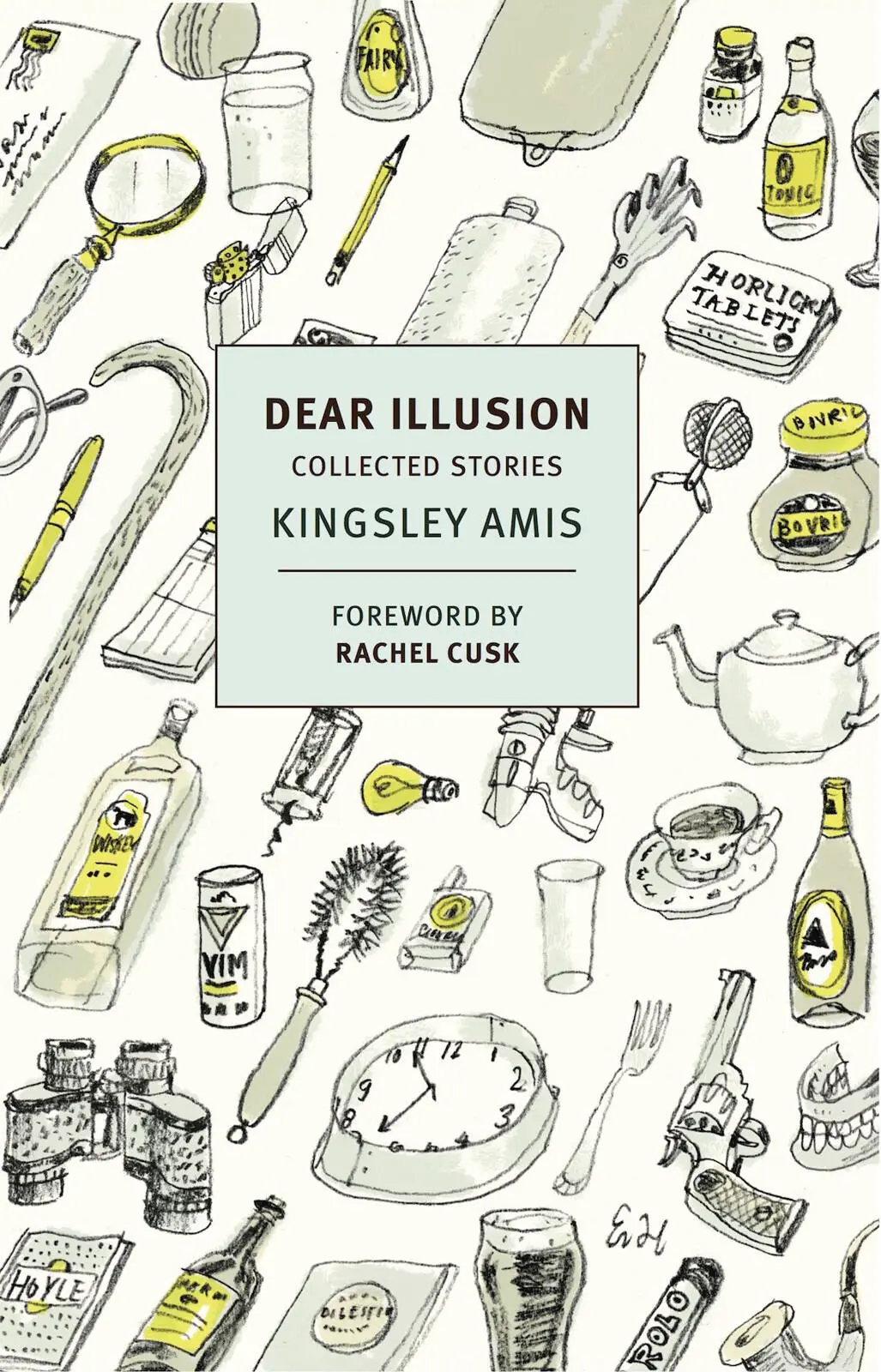
- Название:Dear Illusion: Selected Stories
- Автор:
- Издательство:New York Review of Books
- Жанр:
- Год:2015
- ISBN:нет данных
- Рейтинг книги:4 / 5. Голосов: 1
-
Избранное:Добавить в избранное
- Отзывы:
-
Ваша оценка:
Dear Illusion: Selected Stories: краткое содержание, описание и аннотация
Предлагаем к чтению аннотацию, описание, краткое содержание или предисловие (зависит от того, что написал сам автор книги «Dear Illusion: Selected Stories»). Если вы не нашли необходимую информацию о книге — напишите в комментариях, мы постараемся отыскать её.
Dear Illusion: Selected Stories — читать онлайн бесплатно полную книгу (весь текст) целиком
Ниже представлен текст книги, разбитый по страницам. Система сохранения места последней прочитанной страницы, позволяет с удобством читать онлайн бесплатно книгу «Dear Illusion: Selected Stories», без необходимости каждый раз заново искать на чём Вы остановились. Поставьте закладку, и сможете в любой момент перейти на страницу, на которой закончили чтение.
Интервал:
Закладка:
‘Thank you, Mr Potter, I’d love to.’
‘Good… Mr Bowes, I’m afraid I never thanked you for taking such magnificent photographs. I was going to write to you, but then I got bogged down with one thing and another, and then it seemed too late.’
‘Don’t worry about that. Glad you liked them.’
Here a Cabinet minister interposed himself between Sue and Potter, of whom she saw nothing further until the party, two hundred or more strong, was settling itself down at the couple of dozen large tables in the dining-room, a slow and lubberly process. Potter was among bureaucrats and critics and other poets and their wives halfway across the room from Sue. The first course, already in position, was pieces of tinned grapefruit apparently strung together on fine thread and adorned with a tattered cherry. She picked up the copy of Off that indeed lay by her plate and began, without eagerness, to glance through it.
The poems, she saw quite soon, did not really look like Potter poems, which, within wide limits, had always had a characteristic shape on the page, sprawling and staccato at the same time. The new ones did not much look like one another, either. From glancing through, she turned to reading. On an early page she found a piece in heroic couplets after the manner of Dryden — a long way after, she found, because it turned out to convey no meaning whatever at any point, could have been thrown off, dashed down as fast as his hand would travel over the paper by someone solely concerned with filling up iambic pentameters that rhymed. Beside it, ‘Unborn’ was a model of sober clarity. But ‘Unborn’ was not beside it, in the sense that it was not (she double-checked) in the book. Had it been one of a number of rejects, part of the whey thrown out when the cream was skimmed off for a new volume? In their interview, Potter had implied clearly that he reprinted in hard covers everything he wrote. Well, he might have omitted the poem in deference to a desire on his wife’s part not to see the immortalization of that rival-figure, the bright charmer with the… Sue tried to remember: dear charmer with the bright hair — no, not charmer. Dear something, though.
At this point she found that somebody had taken her grapefruit away and put some fish where it had been, while somebody else (probably) had poured her some wine. She tried to eat and easily succeeded in drinking. She also thought. This was made a little easier for her by her absorption until just now in Off : her neighbours’ attention had been pre-empted by their further neighbours, and throughout the meal she got away with saying almost nothing, either to the disc-jockey on her left or to the plain, horse-oriented jockey on her right. From time to time she looked at Off again. One poem, or ‘poem’, she encountered ran:
Man through different shell all over turns into sea swelling birth comes light through different man all over light shell into sea. Rock waits noon out of sky by tree same turns into rock by noon out of sky underneath tree out of same rock. Woman keeps flower beside leaves every time towards fruited earth keeps leaves every time towards flower fruited woman turns into earth beside leaves. Shell all over man waits rock out of noon towards earth every time beside woman. Man woman earth.
She found this about as digestible as the overcooked but lukewarm chicken à la Kiev that followed the fish. A glance over at Potter suggested that he was listening closely to whatever a bureaucrat or critic might have been telling him. Was he really listening, closely or not? Sue felt with uneasy certainty that there was something wrong or odd or out of place here. Where was here? In Off , to start with. For a final sample, she opened the book at its last page, and read,
I slash the formless web of hate,
I plumb the worked-out mine of love;
My wrist receives the birds that sate
Their lust engendered from above.
While rosy sunsets lurch and fade
Across the endless strife of seed,
The debt of living must be paid
To creditors who starve in need.
Whatever else that was or was not, it was not the voice of Potter as it had always been. Well, what of it? He was experimenting, looking for a new style; unusual and admirable at his time of life. Sue held on to that while the meal came to an end and the speeches got under way. The first of these began with a not very closely compressed account of the recent doings of the cultural body, retailed on a note of open and personal self-congratulation. Towards the end it bore round to the subject of poetry, and finally mentioned the name of Edward Arthur Potter. After a couple of entr’actes featuring minor characters, which brought the audience even nearer to the purpose of tonight’s occasion, the leading critic started his discourse.
Sue had to admit he did his job well. Long stretches of what he said rose appreciably above the general level — that of an academic lecture in ancient Sumerian — reached by his predecessors. He showed familiarity with Potter’s work and what must have seemed to everybody there, except perhaps Potter himself, a genuine love of it. He started his peroration by saying,
‘I should like everybody to notice three things about this volume. First, its title, Off . Does this mean that Edward Arthur Potter is off, about to quit the scene and be heard from no more? All of us here, and millions more in the English-speaking world and outside it, hope that this is untrue, and that his unique lyric genius, which has spoken so eloquently for nearly forty years, will continue to delight us for a long time to come. Secondly…’
There was a great deal of applause. Sue was good at distinguishing between the polite variety of this, however conscientious it might be, and the enthusiastic. What she heard was unmistakably of the second sort. Potter or his work, however curiously mutated in the process, had reached out beyond the small circle of poetry-readers and the rather larger one of poetry-lovers. She hoped he was pleased.
‘Secondly,’ went on the leading critic, ‘I ask you to look at the dedication. “To all those who have encouraged me to continue in my work as poet.” That, I think, is a reminder many of us need, a reminder of the essential loneliness of the creative artist and of his dependence on the understanding and support of his public. We, representatives of our honoured guest’s public, have in the past been shamefully negligent in showing that understanding and proclaiming that support. I hope very much that tonight’s words and deeds will go some little way to atone for our neglect.
‘Lastly, the content of Off , the poems that have been given us. They speak for themselves and need none of my poor help and all I will dare to do, on behalf of us all, is to salute in them, as in the whole of this great English poet’s work, the uniqueness of vision, the distinctive and utterly individual tone of voice that characterize the heart and mind of Edward Arthur Potter. Mr Potter, it is my—’
The ovation, which was what it turned out to be, went on for two and a quarter minutes by Sue’s watch. Its earlier moments accompanied the offer and acceptance of certificate and cheque, prolonged for the benefit of the photographers, and similarly prolonged handshakes involving Potter and several of those near him. After that, he stood with his knuckles on the table and his face lowered. Finally, he said in his thick, rather slow rustic cockney,
‘My lords, ladies and gentlemen. I’m going to make a short speech, even shorter than the one I’d prepared, because what Sir — Sir Robert has just said fits in so well with what I want to say. As regards those three things he wanted you to notice.
‘The title. It isn’t really complete. There ought to be another word in front of it. Something — off. A verb in I believe it’s called the imperative. It’s not my style to come out with the one I’m thinking of in public, but the whole phrase means, Go away. Clear off would be nearly good enough.
Читать дальшеИнтервал:
Закладка:
Похожие книги на «Dear Illusion: Selected Stories»
Представляем Вашему вниманию похожие книги на «Dear Illusion: Selected Stories» списком для выбора. Мы отобрали схожую по названию и смыслу литературу в надежде предоставить читателям больше вариантов отыскать новые, интересные, ещё непрочитанные произведения.







Обсуждение, отзывы о книге «Dear Illusion: Selected Stories» и просто собственные мнения читателей. Оставьте ваши комментарии, напишите, что Вы думаете о произведении, его смысле или главных героях. Укажите что конкретно понравилось, а что нет, и почему Вы так считаете.