Kingsley Amis - Dear Illusion - Selected Stories
Здесь есть возможность читать онлайн «Kingsley Amis - Dear Illusion - Selected Stories» весь текст электронной книги совершенно бесплатно (целиком полную версию без сокращений). В некоторых случаях можно слушать аудио, скачать через торрент в формате fb2 и присутствует краткое содержание. Год выпуска: 2015, Издательство: New York Review of Books, Жанр: Современная проза, на английском языке. Описание произведения, (предисловие) а так же отзывы посетителей доступны на портале библиотеки ЛибКат.
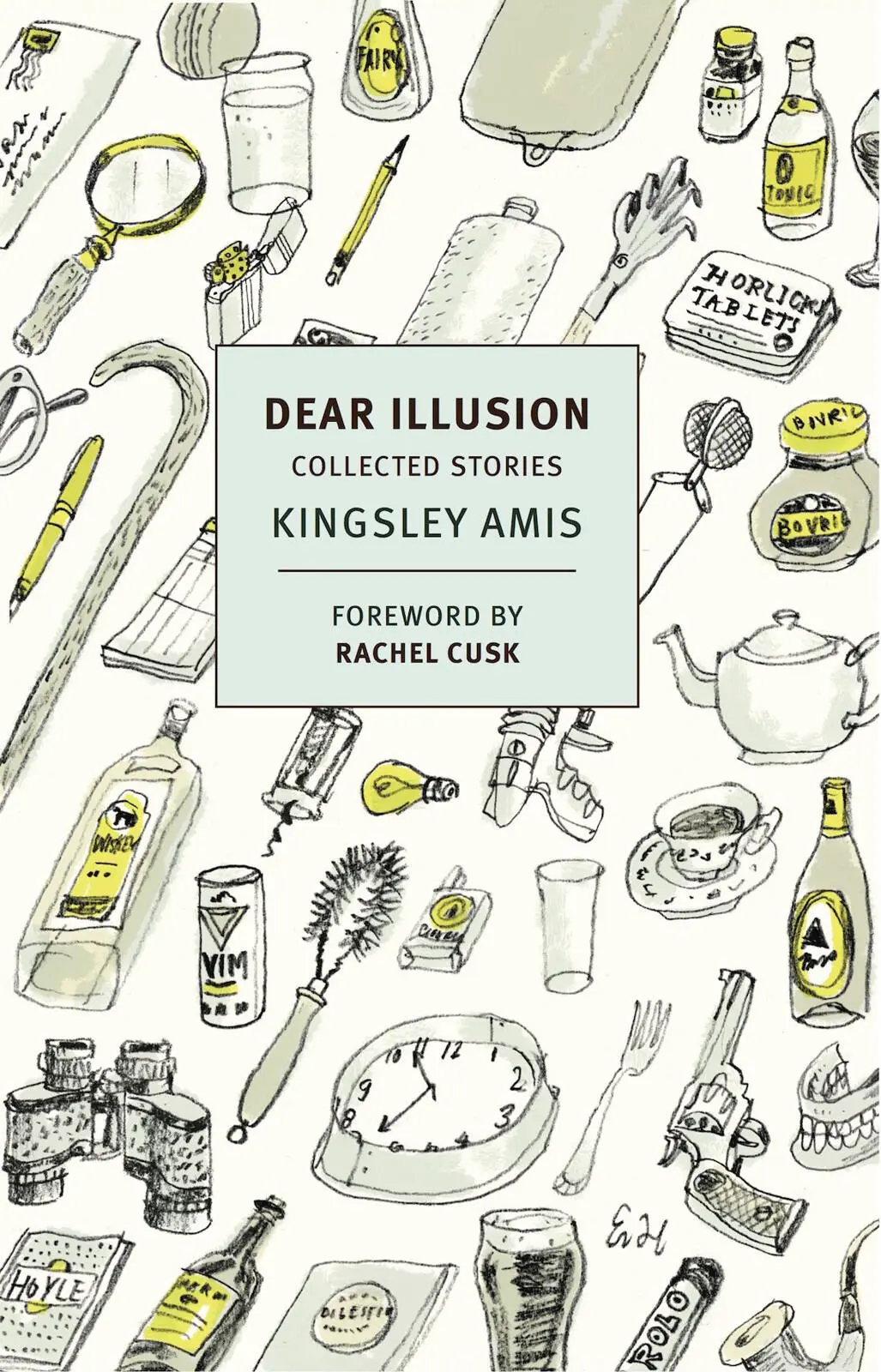
- Название:Dear Illusion: Selected Stories
- Автор:
- Издательство:New York Review of Books
- Жанр:
- Год:2015
- ISBN:нет данных
- Рейтинг книги:4 / 5. Голосов: 1
-
Избранное:Добавить в избранное
- Отзывы:
-
Ваша оценка:
Dear Illusion: Selected Stories: краткое содержание, описание и аннотация
Предлагаем к чтению аннотацию, описание, краткое содержание или предисловие (зависит от того, что написал сам автор книги «Dear Illusion: Selected Stories»). Если вы не нашли необходимую информацию о книге — напишите в комментариях, мы постараемся отыскать её.
Dear Illusion: Selected Stories — читать онлайн бесплатно полную книгу (весь текст) целиком
Ниже представлен текст книги, разбитый по страницам. Система сохранения места последней прочитанной страницы, позволяет с удобством читать онлайн бесплатно книгу «Dear Illusion: Selected Stories», без необходимости каждый раз заново искать на чём Вы остановились. Поставьте закладку, и сможете в любой момент перейти на страницу, на которой закончили чтение.
Интервал:
Закладка:
‘Then the dedication. With respect, Sir Robert wasn’t quite right in saying I’ve been neglected. If only I had been. Right from the start some people have been kind, or what they must have thought was kind, writing nice articles and sending me nice letters. If I had been neglected, I probably wouldn’t have wasted my time for thirty-eight years writing what’s supposed to be poetry; I’d have looked round for some other way of coping with the state of mind that made me write those things. That’s why I’m telling everybody who’s ever encouraged me to clear off.’
Potter was speaking now into a silence so total that the sound of individual vehicles in the street outside could be clearly heard. He went tranquilly on:
‘Then the third thing, the poems in the book. I wrote them all in a day, just putting down whatever came into my head in any style I thought of, and pretty well everybody thinks they’re good, the committee and all sorts of critics and other poets I had proof copies sent to. Or they said they thought they were good. But they aren’t good. How can they be? I ought to know, didn’t I? Well, that’s rather awkward, because if people think they are good, and what’s more good in the same way as my previous poems, which fairly beats me, I must say — in that case they don’t know what they’re talking about and never have known. And in that case, this diploma thing here is worthless, or even a bit of a cheat. You’d think it was a bit of a cheat if, well, if a lot of Eskimos said somebody was a very good cricketer, and we were all supposed to take them seriously. I know I would, anyhow.’
Potter’s glance moved in Sue’s direction, as if searching for her. She felt frightened and hoped nothing worse was to come. He picked up the certificate and the cheque and held them out in front of him, causing a fresh flurry among the photographers while everybody else sat quiet and still.
‘By rights I ought to tear up the diploma, but someone’s obviously been to a lot of trouble over it and I shouldn’t like to hurt his feelings, so I’ll just leave it here. I can’t do that with the cheque, because it’s a bad thing to leave cheques lying about, so that I will tear up.’ He tore it up. ‘I don’t need the money anyway. That’s all. Except I don’t want anyone to feel I’m telling him to clear off personally or in any bitter way. It’s just a sort of general attitude. Goodbye.’
He was out through the doorway in five or six seconds, yards ahead of the first reporter. Sue was quick off the mark too, but by the time she reached the vestibule she was among thirty or forty vocally bewildered people looking for a vanished Potter. But then, round the corner, she asked the lift attendant for the Essex Room. The man looked at her carefully.
‘What name, please, madam?’
‘Sue Macnamara.’
‘Mrs Macnamara?’
‘Yes.’
It was rather like that on the fourth floor, where a door was unlocked from the inside at the news that Mrs Macnamara was outside. Potter surprised Sue afresh by the smartness of his appearance. He said,
‘Splendid. What would you like to drink?’
‘Could I have a whisky and water?’
‘A large tumbler of whisky and water and a bottle of light ale, please.’ He relocked the door. ‘I thought if you didn’t want all the whisky you could always leave some.’
‘Aren’t you going to have any Cornflakes?’
He laughed heartily, showing most of the teeth he had. His manner in general had already struck her as much more confident now than at their previous meeting, almost jaunty. They sat down in a corner on padded straight chairs, face to face across a low table.
‘Fancy you remembering that,’ he said. ‘But then you’ve got a good memory for all sorts of things. Well, this disappearing act is a bit of fun, isn’t it? It’s amazing what a few five-pound notes will do. Now we’d better get on. There are some things I want to ask you, and tell you, and we mustn’t be too long, because poor Charles, that’s my agent, he’ll be in rather a state, I’ve no doubt. It’s the first time I’ve ever done a thing like this, disappear, I mean. Well, and tell people to clear off in public into the bargain. Was that all right, by the way? That was one of the things I wanted to ask you.’
‘The clear-off treatment? It was very effective, I thought, judging by the general reaction.’
‘Good, but I really meant I hope it wasn’t too offensive. You know, wounding. Malicious and all that.’
‘I don’t think so. You made it clear you hadn’t got it in for anyone in particular.’
‘Oh, that came over all right, did it? That’s a relief. Tell me, my dear, did you find time to look inside that silly old book they were making such a fuss about?’
‘Yes, I read some of it.’
‘Nothing in it, is there?’
‘The last poem made sense of a sort, or the last bit of it.’
‘Ah, it’s easy enough to make sense of a sort if you don’t care what sort. But the book… It is rubbish, isn’t it?’
‘I thought so, yes.’
‘I’ll take your word for it.’ He sighed and smiled. ‘That’s the most important thing of the lot. Imagine what it would have been like to find you could only write stuff that was any good when you were trying to write rubbish. What a lot of silly donkeys they are, though. Fancy that Sir Robert fellow going on about my individual tone of voice. When I’d purposely made every poem different from the rest of me and different from each other, too. And he’s quite clever, you know, that’s what frightens me. I’ve talked to him several times and he’s really a very interesting man. But they’re all the same. It does seem a pity. Ah, here we are.’
A minute later, locked in once more, they were drinking their drinks.
‘What was I saying?’ asked Potter.
‘About them all being the same.’
‘I should have said nearly all of them. There are just a few people, none of them very well known I’m told, who’ve always said I’m no good. When the publishers and everybody were sending proofs and advance copies round, asking all these critics and so forth for their comments, I made jolly sure those ones, the anti-me ones, all got a copy. Two of them answered, saying politely they were afraid the thing didn’t seem to them to merit any special recognition or something. The others didn’t answer at all. Another form of politeness. That was a sort of check. If any of them had said it was any good when I knew it wasn’t, then they might have been wrong when they said my other stuff was no good. But they didn’t. It all fits together. Yes, I think I’ve proved as conclusively as it can be proved that I’ve never been any good.’
This was said in the same cheerful tone as before. Sue tried to think instead of merely feel. It took a few seconds.
‘But, Mr Potter, that’s not the sort of thing that ever can be proved.’
‘Not like in geometry, no. Just a very strong presumption. Quite strong enough for me.’
‘But… you may still be good even though…’
‘You mean God or somebody may think I’m good. I’d certainly respect his opinion. But he’s not letting on, is he?’
‘You’ll be remembered. Your work will live on. You’ve been too famous and highly thought of for it not to.’
‘When I was a boy there was a very famous man who wrote tragedies in verse. They were very successful — produced by Beerbohm Tree and so on. And he was very highly thought of, too. The critics compared him with Sophocles and Shakespeare. He died during the war, the first war that is, just after I left school. He was called Stephen Phillips. Ever heard of him?’
Sue shook her head.
‘Neither had Sir Robert when I asked him. And he was born in the year Phillips died. Now isn’t that a funny coincidence?’
Читать дальшеИнтервал:
Закладка:
Похожие книги на «Dear Illusion: Selected Stories»
Представляем Вашему вниманию похожие книги на «Dear Illusion: Selected Stories» списком для выбора. Мы отобрали схожую по названию и смыслу литературу в надежде предоставить читателям больше вариантов отыскать новые, интересные, ещё непрочитанные произведения.



Обсуждение, отзывы о книге «Dear Illusion: Selected Stories» и просто собственные мнения читателей. Оставьте ваши комментарии, напишите, что Вы думаете о произведении, его смысле или главных героях. Укажите что конкретно понравилось, а что нет, и почему Вы так считаете.