Kingsley Amis - Dear Illusion - Selected Stories
Здесь есть возможность читать онлайн «Kingsley Amis - Dear Illusion - Selected Stories» весь текст электронной книги совершенно бесплатно (целиком полную версию без сокращений). В некоторых случаях можно слушать аудио, скачать через торрент в формате fb2 и присутствует краткое содержание. Год выпуска: 2015, Издательство: New York Review of Books, Жанр: Современная проза, на английском языке. Описание произведения, (предисловие) а так же отзывы посетителей доступны на портале библиотеки ЛибКат.
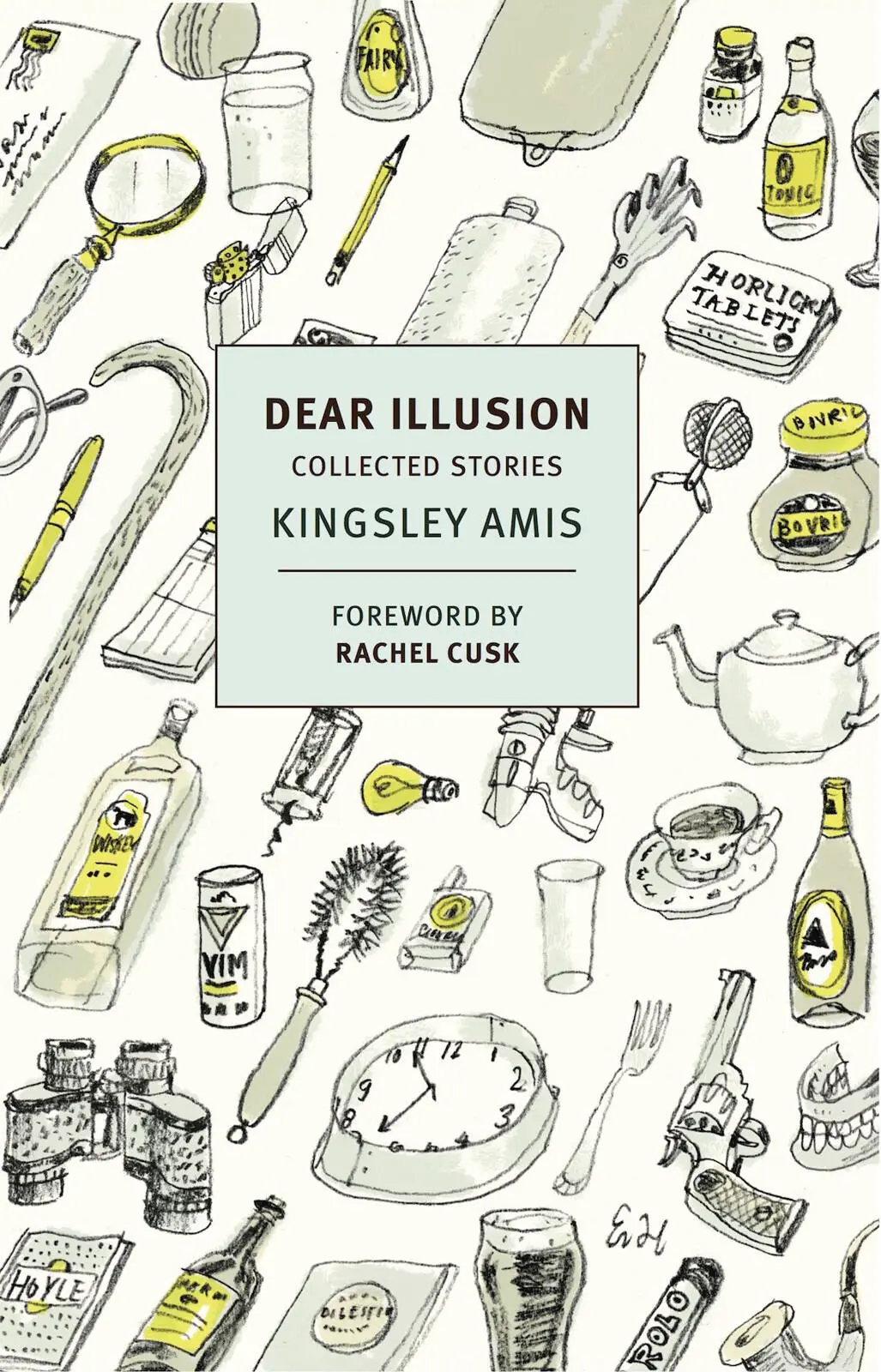
- Название:Dear Illusion: Selected Stories
- Автор:
- Издательство:New York Review of Books
- Жанр:
- Год:2015
- ISBN:нет данных
- Рейтинг книги:4 / 5. Голосов: 1
-
Избранное:Добавить в избранное
- Отзывы:
-
Ваша оценка:
Dear Illusion: Selected Stories: краткое содержание, описание и аннотация
Предлагаем к чтению аннотацию, описание, краткое содержание или предисловие (зависит от того, что написал сам автор книги «Dear Illusion: Selected Stories»). Если вы не нашли необходимую информацию о книге — напишите в комментариях, мы постараемся отыскать её.
Dear Illusion: Selected Stories — читать онлайн бесплатно полную книгу (весь текст) целиком
Ниже представлен текст книги, разбитый по страницам. Система сохранения места последней прочитанной страницы, позволяет с удобством читать онлайн бесплатно книгу «Dear Illusion: Selected Stories», без необходимости каждый раз заново искать на чём Вы остановились. Поставьте закладку, и сможете в любой момент перейти на страницу, на которой закончили чтение.
Интервал:
Закладка:
‘Ten minutes on a half gas’ll be enough.’
‘Just as it is. I see. Now I mustn’t keep you from your husband; I expect you’re late already. Where’s that young man got to?’
‘He’s waiting in the pub.’
‘Good, so you’ll be able to get back to London all right. It’s been a great pleasure meeting you, Mrs Macnamara. Goodbye.’
‘Goodbye, Mr Potter,’ she said as they shook hands on the doorstep.
At the gate she looked back, but the door had already shut. Four telegraph poles away in the direction of the town Bowes’s car was parked by an inn-sign. She began to walk slowly down the road towards it, wishing she had been able to think of some leave-taking message to Potter that would not have been either sickly or stilted, deciding to write him a letter the next day, then taking the sheet of paper from her handbag and unfolding it. The writing was in soft pencil, clear and commonplace. It read:
UNBORN
From summer evenings, gazing
heartrise always ahead, there,
book and dream,
reaching out,
ten miles of fields of raw daffodils
streets engines advertisement hoardings
all raw,
myself raw,
but certain.
Swept now, swept
book
dream
field
street
engines cheerfully off or rusted
hoardings ablaze or demolished
nobody there
Not unfound
not unreached, unborn
unfated
Dear illusion with the bright hair
all swept aired lit plain known listed
swept
At the foot were a couple of lines in the same hand, written upside down. She turned the sheet round and read,
To Sue Macnamara with the kindest regards possible
from Ted Potter
That last was the product of something like ten minutes’ thought, she said to herself, and written upside down to avert the risk of reading a single word of the poem.
II
The poem stayed in Sue’s mind for the rest of the evening and, though diminishingly, much longer, both as a poem and as an amalgam of less clearly definable things: a piece of self-revelation that might fall anywhere between compressed but pondered autobiography and record of a passing mood, a gift to herself offered out of considered or unconsidered politeness, desire to return a favour that might or might not have seemed unimportant. Typing it out next morning inevitably forced her to read it as a poem a good deal more closely than (she admitted to herself) she had ever read a Potter poem before.
It was probably this closeness that made its theme effortlessly plain to her — and this, in turn, suggested an unpalatable reason for Potter’s success with critics and public: he wrote in a way that looked and felt modern, or at any rate post-Georgian, but with a certain amount of effort could be paraphrased into something quite innocuously traditional, even romantic. And the reader’s self-satisfaction at having made his way through apparent obscurity could easily be transmuted into affection for poem and poet.
In ‘Unborn’, at any rate, Potter, or some version of Potter, was just saying that an ideal he had pursued since youth had turned out to be not unrealized but unrealizable, because its object had never existed. What that object might have seemed to be was less plain: ‘dear’ along with ‘bright hair’ certainly suggested a woman — or a man, though nothing in his other works, or in gossip, or in what she had seen of him bore out that interpretation, which she discarded promptly and for good. But then, the brief and unspecific image of the ‘dear illusion’ might so easily refer not to a person at all, but to some abstraction dimly seen as a person, and almost any abstraction of the nicer sort would fit: love, happiness, beauty, joy, adventure, self-respect, self-mastery, self-sufficiency, God…
With the typing done and checked against the original, Sue knew ‘Unborn’ well, and the knowledge was, again, unpalatable. For a moment she felt cross with it: taken out of its drunkard’s or dotard’s telegraphese and put into plain English, conventionally assembled instead of sprawling hither and thither over the page, it would have shown itself up, she suspected, as being not only traditional but trite. And in what sense might (or could) the daffodils be raw? And were the hoardings ablaze with colour or literally on fire? And were there not too many ‘-ings’ in the first half-dozen lines, and had ‘hair’ been intended to rhyme with ‘there’ in an otherwise rhymeless poem, and however that might be was it anything better than slack to let ‘aired’ in so soon afterwards? And ‘ heart rise’ (what a word, anyway) taken with ‘a head ’ was somehow… Was just the sort of thing poets got rid of in revision.
Sue felt bad about raising these objections, even though she would always keep them to herself, which made it odder that the nearest imaginable comparison to how she felt was, it turned out, how she would feel if she were to show up a child’s ignorance publicly. Had Potter not given her the manuscript there would have been no issue, but he had, and she had met him and listened to him, and so the poem took on the quality of a friend’s muffled cry of distress without, unfortunately, ceasing to be a poem in its own right and demanding to be read as one. The only course was to try to forget its text while remembering its existence. She locked it away in a desk drawer among other keepsakes, wrote covering letters to go with the copies for Potter’s agent and Mrs Potter, and then settled down to write to Potter himself. This final task proved less disagreeable than she had feared: she was thankful to be able to say with truth that she had been moved both by the gift and by reading what she had been given.
The following month, she sent Potter a proof of her piece. It came back unamended with a short handwritten note complimenting her on her accuracy — ‘though you make me sound more clear-headed than I am sure I can have been’ — and adding that the corned-beef hash had been delicious. About the same time, ‘Unborn’ was published in the Listener ; she did not read it. After several more months, more than she had been led to expect in the first place but fewer than she had in fact expected, the magazine printed her article; she did not read that either, merely scanning it for cuts and mutilations, a virtually separate activity in somebody of her experience. There were, for once, no cuts. Bowes had, as always, produced pictures that were technically excellent and artistically sub-modish, though there was one indoor shot of Potter at his table that recalled him sharply: well enough, anyhow, for the fuzzy-edged bulk of an Edwardian tea-caddy, looming in the extreme foreground, to seem no worse than irrelevant. The news — it was news, since he had revealed nothing of it in the interim — the news of Potter’s decision to put away his pen drew no public attention at the time. Those to whom it might have seemed important either ignored the interview altogether or failed to extricate such a disclosure from its context of travel advertisements and illustrated recipes.
Something else Sue omitted to read, or to reread, during this period was any of Potter’s other poems. She shied away from the strong possibility of finding that she felt as uneasy about them as she had about ‘Unborn’. In the winter, the magazine sent her to South America to do a series on what it called the cultural life of the chief cities there. With her went not Bowes, but a photographer of the alternative sort, the sort that took at most one photograph of every subject, and she slept with him a certain amount. Potter began to fade from her mind. Then, almost exactly a year after she had been to see him, she came across his name in an arts-page headline in a Sunday paper.
Edward Arthur Potter (she read), who according to rumour (in plain language, according to an authentic statement in another journal, she thought to herself) had taken a vow of poetic silence, must have gone back on it, for his publishers were to bring out in the coming autumn a collection of his recent verse. There seemed to be hopes of some commemorative event — an official dinner, an award — that might go a little way to offset the shameful lack of attention so far paid a man described as arguably Britain’s greatest living bard. The report closed with a passage of largely directionless rancour about the neglect of Potter in particular and almost everybody else in general.
Читать дальшеИнтервал:
Закладка:
Похожие книги на «Dear Illusion: Selected Stories»
Представляем Вашему вниманию похожие книги на «Dear Illusion: Selected Stories» списком для выбора. Мы отобрали схожую по названию и смыслу литературу в надежде предоставить читателям больше вариантов отыскать новые, интересные, ещё непрочитанные произведения.





Обсуждение, отзывы о книге «Dear Illusion: Selected Stories» и просто собственные мнения читателей. Оставьте ваши комментарии, напишите, что Вы думаете о произведении, его смысле или главных героях. Укажите что конкретно понравилось, а что нет, и почему Вы так считаете.