Kingsley Amis - Dear Illusion - Selected Stories
Здесь есть возможность читать онлайн «Kingsley Amis - Dear Illusion - Selected Stories» весь текст электронной книги совершенно бесплатно (целиком полную версию без сокращений). В некоторых случаях можно слушать аудио, скачать через торрент в формате fb2 и присутствует краткое содержание. Год выпуска: 2015, Издательство: New York Review of Books, Жанр: Современная проза, на английском языке. Описание произведения, (предисловие) а так же отзывы посетителей доступны на портале библиотеки ЛибКат.
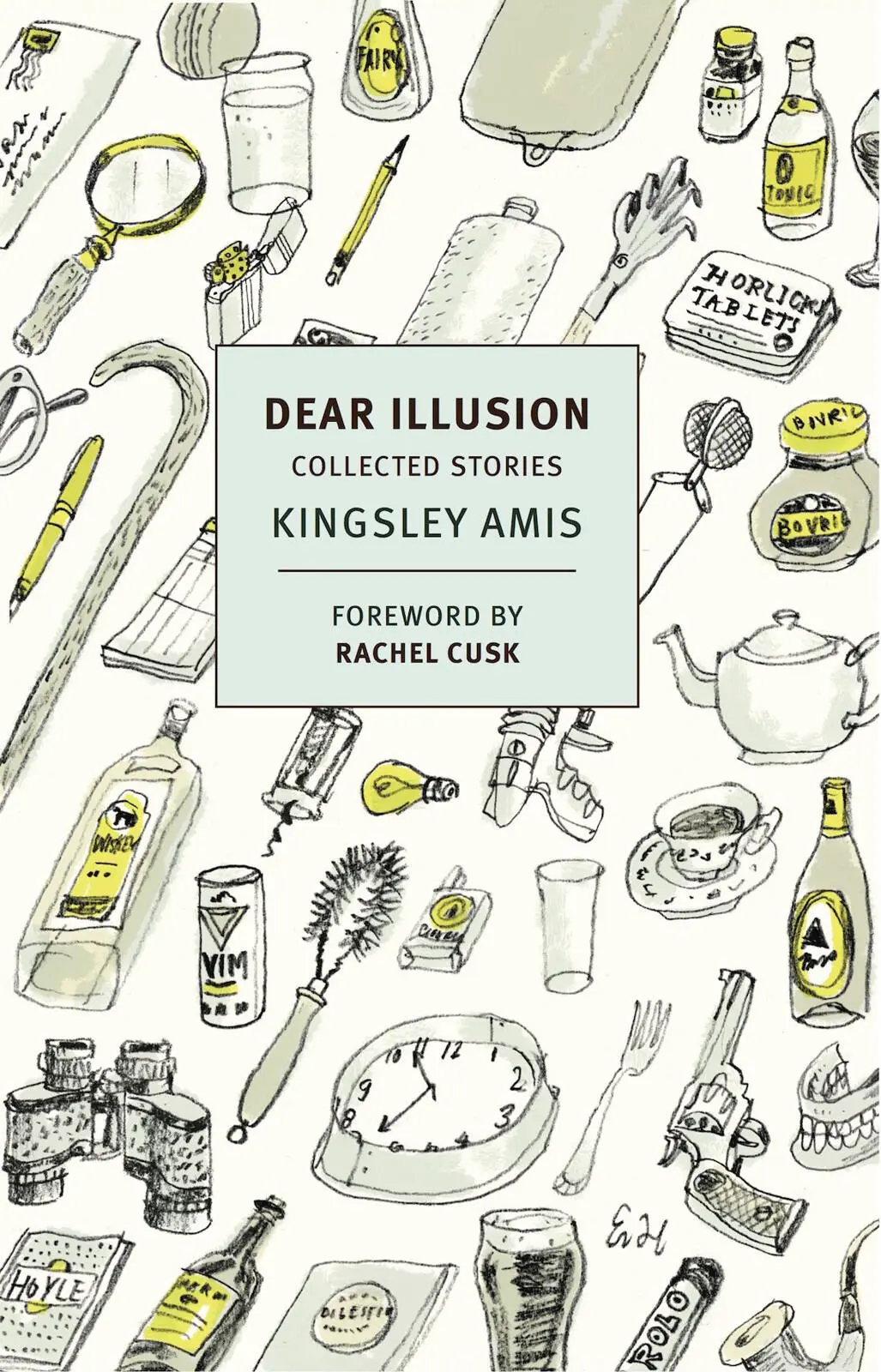
- Название:Dear Illusion: Selected Stories
- Автор:
- Издательство:New York Review of Books
- Жанр:
- Год:2015
- ISBN:нет данных
- Рейтинг книги:4 / 5. Голосов: 1
-
Избранное:Добавить в избранное
- Отзывы:
-
Ваша оценка:
Dear Illusion: Selected Stories: краткое содержание, описание и аннотация
Предлагаем к чтению аннотацию, описание, краткое содержание или предисловие (зависит от того, что написал сам автор книги «Dear Illusion: Selected Stories»). Если вы не нашли необходимую информацию о книге — напишите в комментариях, мы постараемся отыскать её.
Dear Illusion: Selected Stories — читать онлайн бесплатно полную книгу (весь текст) целиком
Ниже представлен текст книги, разбитый по страницам. Система сохранения места последней прочитанной страницы, позволяет с удобством читать онлайн бесплатно книгу «Dear Illusion: Selected Stories», без необходимости каждый раз заново искать на чём Вы остановились. Поставьте закладку, и сможете в любой момент перейти на страницу, на которой закончили чтение.
Интервал:
Закладка:
Annette stopped, not looking at Alec, who hugged his knees tighter to prevent them from trembling. ‘I didn’t realize you hated her,’ he said.
‘I didn’t hate her, Uncle Mac — been easier if I had, in a way. Oh, she was all right in lots of ways and she did enjoy a laugh. It was the way she wouldn’t ever leave me and my marriage and my kids alone made me mad.’ At the mention of anger, anger itself returned to her voice, which had softened in the last minute or so. ‘She liked baby-sitting when she came to stay because that gave her a chance to snoop around. She kept you on a pretty good string, didn’t she, too, all these years? I felt sorry for you. Dad told me about it once when they’d had one of their rows. He didn’t really mind because it gave her a bit of a kick. Mind you, according to him she let it slip once she thought early on you were going to ask her to go off with you, but then you never did. Why not?’
‘It wasn’t that sort of love,’ Alec said.
‘No, I know the sort. That’s the best sort, the sort you don’t have to do anything about or get to know the person, and it was fine for her. The way she used to put on a big tolerant act Sunday mornings when we came back from Mass when we stayed with them. Tolerant.’
Alec thought he saw tears of rage and grief in her eyes. He got up and put his arm diffidently round her shoulders. She went on standing in the same position with her weight on both feet, not stiffening or drawing away, but not relaxing against him either. What she had said had affected him chiefly with apprehension that she might lose all self-control. Whether or not her view of her mother was true, or truer than his, he still felt as if he had spent thirty-two years preparing a gift that had had, and could conceivably have had, no recipient. In return for his trouble he retained, safe against total erosion, Betty’s gift to him of a few ideas about what human nature was like; and the last two or three hours had taught him something of how envy and pride could appreciably distort his judgement of other people. All this amounted to more than a little, without being, of course, anywhere near enough. He dropped his arm to his side.
Annette said: ‘We’d better be getting back in. I’m sorry I came out with some of that. I didn’t want to hurt your feelings — it was just that—’
‘We’ve all been under a great strain.’
‘You come back with us, Uncle Mac, and have some supper, there’s plenty of stuff in. Frank’ll run you home.’
‘That’s very kind of you, but it’s right across London, you know.’
‘Doesn’t matter. We ought to see more of you. Seems silly not to.’
‘It’s a pity it’s such a long way.’
DEAR ILLUSION
I
‘He is good, is he?’ asked Pat Bowes, turning the car out of the main shopping street of the town into a lane that gave a glimpse of distant greenery. ‘I mean I know people go on about him, but who don’t they go on about these days? But he’s supposed to be good in the same way as, I don’t know, Keats and Milton and Christ, you’ll have to help me out, not Shakespeare, Gerald Manley Hopkins. Isn’t he?’
‘How do you know about Hopkins?’
‘I did him at school. I thought he came on a bit strong myself; you know, working himself up over not a hell of a lot. But the master was all for him. Great genius type of thing. I hope this is right.’
‘First left after the bridge.’ Sue Macnamara glanced at the typewritten sheet with the name of a national newspaper at the head of it. ‘Wind-pump on the left — that must be that thing. Then left again after two hundred yards. Yes, Milton would be putting him a bit too high, but he’s up with Keats and Hopkins all right, or so they say.’
‘So they say was what I said. What do you say yourself?’
‘I don’t say anything much. I don’t know.’
‘But that’s the sort of thing you’re paid to know, Macnamara. This must be the turning. You with a degree from Cambridge College and all.’
‘The works of Edward Arthur Potter weren’t in my syllabus, Bowes. Anyway, one big thing about those works is that they’re damned difficult. I was brought up on stuff you could make a bit of head or tail of. I suspect Potter of not being as good as he looks or sounds, but only suspect. And the critics are no help. They nearly all think he’s great, but then they nearly all think people I know are bloody awful are great too. Here we are.’
‘Edward Arthur Potter.’ Bowes pulled up the estate wagon outside a longish, low house of pale stone. ‘That’s a crappy name. Ted Potter’s what he’s called. Like that composer bloke, Richard Robert Rodney Robin Roger Ronald Rooney Bennett. He means Dick Bennett. You go and knock on the door while I start shifting the gear.’
Sue Macnamara, a long-legged girl of thirty, got down and opened a creaking iron gate in the middle of a fence made of tall loops of iron. There was strong July sunlight, a smell of already rotten fruit and the droning of unseen but what sounded like oversized insects. Nothing had been done about the grass and other vegetation in the short front garden for quite a time. Like the window-frames, the front door was painted a shade of light blue that somebody must have noticed a long way from this or any other part of Kent and decided was appropriate to a poet’s cottage. It — the front door — opened before it could be knocked on and a little old man appeared.
‘Miss Macnamara?’
‘Mrs. Sorry, I should have… You must be Mr Potter.’
She spoke without conviction. The face that looked hard but rather uninterestedly into hers — largely a matter of silvery-rimmed glasses, broad pointed nose and deep under-lip, the whole squashed on to very little in the way of a neck — did almost nothing to evoke the two or three standard photographs of Edward Arthur Potter she was used to seeing. Not quite nothing, though: there was just about enough likeness to suggest some doddering uncle or remoter connection supported out of charity, even a half-brother born of a feeble-minded kitchen-maid near the end of the last century. But anyone like that would probably be called Potter too, Sue thought to herself without urgency, shaking a small thick hand and responding to a smile that showed a few widely separated teeth.
‘Yes. Yes, that’s right.’ The reply showed apparent surprise, as at a lucky hit. ‘I thought the paper said you were bringing someone else with you, Mrs Macnamara. A photographer.’
He stressed the last word on its first and third syllables, giving it a downward social shove thereby, ranging it alongside piano-tuner and picture-framer. A handy one to use on Bowes when the moment came, thought Sue. She said,
‘Yes, he’s coming now. Fetching his stuff from the car.’
‘So he is. It’s these glasses. I can’t seem to find the other pair. Not that they’re much help. I must go and see the optician again.’
Bowes came bustling up the flagged path, hung about the shoulders with cameras and light-meters and clutching among other things a tripod of metallic tubing. With his squat body, round pale face and habitually open mouth, he looked to Sue as little competent to be a photographer, even in the degraded sense of one who photographed, as Edward Arthur Potter looked like a poet. She would have denied that she was one of those who expected a poet to look like an actor, or even like the kind of person the kind of actor that came to mind habitually acted: peasant revolutionary, dedicated scientist, early Christian martyr. And she knew well enough that poets were not supposed to talk like actors, like actors when acting, at least. Nevertheless, this poet’s total lack of physical poeticality was a let-down, along with his manner of speech: slow, faintly glutinous, and couched in a rustic cockney that got the worst of two semi-separable worlds. Sue missed the touch of the charlatan that, after six years of this sort of journalism for the papers and television, she had learnt to expect in people who had to any degree deserved their success: not counting actors and actresses, of course, who behaved like charlatans whether they were any good or not.
Читать дальшеИнтервал:
Закладка:
Похожие книги на «Dear Illusion: Selected Stories»
Представляем Вашему вниманию похожие книги на «Dear Illusion: Selected Stories» списком для выбора. Мы отобрали схожую по названию и смыслу литературу в надежде предоставить читателям больше вариантов отыскать новые, интересные, ещё непрочитанные произведения.







Обсуждение, отзывы о книге «Dear Illusion: Selected Stories» и просто собственные мнения читателей. Оставьте ваши комментарии, напишите, что Вы думаете о произведении, его смысле или главных героях. Укажите что конкретно понравилось, а что нет, и почему Вы так считаете.