Kingsley Amis - Dear Illusion - Selected Stories
Здесь есть возможность читать онлайн «Kingsley Amis - Dear Illusion - Selected Stories» весь текст электронной книги совершенно бесплатно (целиком полную версию без сокращений). В некоторых случаях можно слушать аудио, скачать через торрент в формате fb2 и присутствует краткое содержание. Год выпуска: 2015, Издательство: New York Review of Books, Жанр: Современная проза, на английском языке. Описание произведения, (предисловие) а так же отзывы посетителей доступны на портале библиотеки ЛибКат.
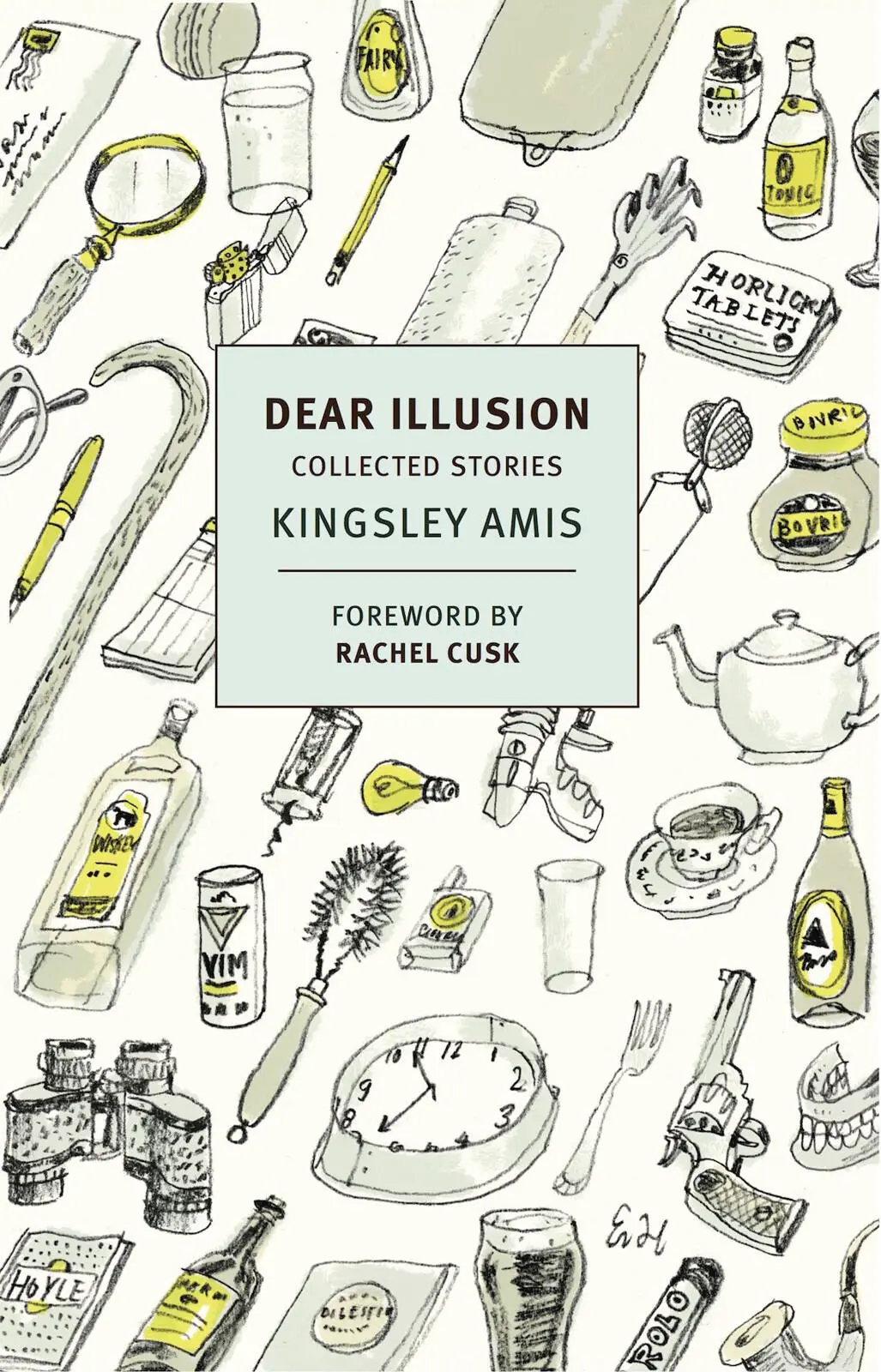
- Название:Dear Illusion: Selected Stories
- Автор:
- Издательство:New York Review of Books
- Жанр:
- Год:2015
- ISBN:нет данных
- Рейтинг книги:4 / 5. Голосов: 1
-
Избранное:Добавить в избранное
- Отзывы:
-
Ваша оценка:
Dear Illusion: Selected Stories: краткое содержание, описание и аннотация
Предлагаем к чтению аннотацию, описание, краткое содержание или предисловие (зависит от того, что написал сам автор книги «Dear Illusion: Selected Stories»). Если вы не нашли необходимую информацию о книге — напишите в комментариях, мы постараемся отыскать её.
Dear Illusion: Selected Stories — читать онлайн бесплатно полную книгу (весь текст) целиком
Ниже представлен текст книги, разбитый по страницам. Система сохранения места последней прочитанной страницы, позволяет с удобством читать онлайн бесплатно книгу «Dear Illusion: Selected Stories», без необходимости каждый раз заново искать на чём Вы остановились. Поставьте закладку, и сможете в любой момент перейти на страницу, на которой закончили чтение.
Интервал:
Закладка:
The next moment after Alec felt he was going to cry he started crying; he could no more have prevented it than he could have prevented himself from gasping if a bucket of icy water had been thrown over him. How did it help the dead to have made the living aware of certain things? What good to anyone were ideas about lovable qualities? What use was it to learn about tenderness? What could you do when you were illuminated about human possibilities, except go round telling yourself how illuminated you were? What was knowing in aid of? And what was it to have loved someone?
‘Here we go, old chap,’ Bob’s voice said. ‘Just let’s take a little stroll together. That’s right, steady as she goes. I was wondering when you were going to crack. I was saying to myself, I wonder when old Mac’s going to crack. That’s your trouble, if I may say so, old stick: you keep things bottled up too much. Far better let ’em come out, like this. Well, you’ve picked the right time. Just a minute.’
Alec became aware of the curious hooting noise he was making, and pressed his hands over his mouth. ‘Nuisance,’ he said. ‘Sorry.’
‘Don’t talk unmitigated piffle, old thing. Holler away for a couple of hours if you feel like it. Get rid of it . Emotion has got to come out. Sooner or later it’s got to come out. That’s human nature. Here. Go on, knock it back. Down in one. I’ll join you if I may. I knew these little beggars would come in handy. Expensive way of buying booze, but still.’
‘Thirty years for nothing,’ Alec said, coughing. ‘Wasted my time.’
‘Oh no you haven’t, Mac. People who’ve really done that don’t mind. Here’s the gate.’
‘No, pipe down, I’m doing this,’ Frank said loudly. ‘Mrs Allen — another grapefruit juice? Sure you don’t want anything stronger? Mrs Holmes, what about you? Are you quite sure? Mrs Higginbotham? Ah, that’s more like it. Another for you, darling? Right. Now, Rector… large Scotch… Bob… large brandy and soda… Mr Walton?’
Mr Walton, the undertaker, said he would have a pint of black-and-tan with Guinness and best bitter. A tall, vigorous young man in his middle thirties, he had the look of a woodcutter or hedger momentarily in town to get his implements sharpened. Part of this look derived from his heavy tan, which had been acquired, so he explained earlier, during a recent five-week holiday on the Costa Brava. Alec found he could imagine Mr Walton paying for an extra lavish sea-food dinner with one-sixth, say, of the profit on a moderately lavish funeral.
The party, some fifteen strong, was sitting or standing about in the lounge of the King’s Head. Alec had been relieved at this choice of venue, thinking that the saloon bar at the side of the building would have been too full of associations, but a glance inside soon after arrival had shown him that, since his last visit here, the room had been so remodelled that he had been unable even to locate the nook by the vanished fireplace where he and Betty and Jim had drunk their pink gins not five Saturdays ago. All the horse-brasses and sporting prints, the uneven dark woodwork and frosted-glass panels that had given the bar its character had been swept away, and the new bright plastics made it bare and unwelcoming. Alec recognized this as part of a pattern of change. The things with which his life had been furnished — the tennis club, the Liberal Association and its strong social side, keeping up with the new plays, music in the sense he understood it, even such numerically unimportant occasions as George V’s funeral and George VI’s coronation — were no longer there.
The young waiter in the smart white jacket carried his tray over to where Alec was standing in silence with Jim. ‘I wanted to say how sorry I am, sir. We shall all miss Mrs Duerden coming in here. We all liked her very much.’
‘Thank you, Fred, that’s very nice of you. I think this is yours, Mac.’
Alec took the whisky and soda. He had asked Frank for a small one, but its quantity, combined with the darkness of its colour, suggested that it was not very small. This would be his third double, not counting the brandy at the cemetery. Taking a hearty swallow, he tried for a moment to work out how much it was going to cost him to buy a round, then gave up. He could manage it, but it was a good job he had had the foresight to cash that three-quid cheque last night at his local. Much more important was the question of saying something meaningful to Jim, which he had not managed to do so far. He tried again: ‘I know this must seem like the end of everything, but it isn’t really, you must believe that.’
‘Isn’t it? Must I? I’m seventy years old, Mac. What am I supposed to start doing at my age? It’s just a matter of waiting now.’
‘Well, of course, that’s how it seems, but—’
‘No, that’s how it is. Probably in a few months, I don’t know, it’ll look different again, but how, I just can’t—’
‘You’ll find so many things you want to do.’
‘Look, you’re not going to waffle about developing new interests, are you? Spare me that. Did I tell you that part-time job of mine with those varnish and stain people packs up at Christmas? What do I take up then? Chess?’
‘There’s bound to be something.’ Alec was disconcerted by the violence of Jim’s tone and manner. He repressed an impulse to glance over his shoulder. Before he left he would mention to his friend the possibility of their joining forces in London, but now was clearly not the time.
‘Oh yes, I’m sure,’ Jim said bitterly. ‘Wherever you look there’s something. Oh, are you off, Rector? Haven’t you got time for another one?’
‘Unfortunately not.’ The clergyman spoke with feeling so intense as to be unidentifiable. ‘I have to be getting along.’
‘Well, you’ve been very kind and I’m most grateful.’ Jim turned aside to say goodbye to one of the local couples.
The clergyman looked at Alec. ‘Thank you for saying you liked my address,’ he said, blankly this time. ‘It’s the one I… You’re not family, are you?’
‘No, just a friend.’
‘It’s the one I use for those who have become members of my flock retroactively, so to speak — a proportion that increases every year.’
‘I see. It was you who—?’
The half-question hung in the air for a second or two while what was arguably a smile modified parts of the clergyman’s face. ‘Yes,’ he said, ‘alone and unaided I did it. But of course I was a much younger man then. Goodbye to you.’
Soon afterwards they went in to lunch, just the family and Alec, five adults and two children. They sat at the round table in the window well away from the alcove favoured by the Trio: another relief. Further, Alec considered, it looked as if he were going to get away with not having to go up to the house at all. He wanted never to see it again, marked throughout as it was by Betty’s personality — apart from such details as the oversized TV set Frank had had delivered on the Duerdens’ fortieth wedding anniversary.
Their waiter offered his condolences, then the head waiter and the wine waiter; Frank caught the last named by the sleeve before he could move away and ordered another round of drinks and two bottles of hock off him. The manager came over and chatted for a couple of minutes. He was a new man and had not known the Duerdens well, but, without pushing himself forward, he spoke the language of decent feeling. ‘I had hoped to get to the church this morning,’ he said, ‘but I just couldn’t, with the Business Circle lunch and a christening party out of the blue. But I was thinking about you.’ Before departing he added: ‘Mrs Duerden’ll be missed all over the town. It won’t be the same place without her.’
Читать дальшеИнтервал:
Закладка:
Похожие книги на «Dear Illusion: Selected Stories»
Представляем Вашему вниманию похожие книги на «Dear Illusion: Selected Stories» списком для выбора. Мы отобрали схожую по названию и смыслу литературу в надежде предоставить читателям больше вариантов отыскать новые, интересные, ещё непрочитанные произведения.











Обсуждение, отзывы о книге «Dear Illusion: Selected Stories» и просто собственные мнения читателей. Оставьте ваши комментарии, напишите, что Вы думаете о произведении, его смысле или главных героях. Укажите что конкретно понравилось, а что нет, и почему Вы так считаете.