Kenzaburo Oe - Death by Water
Здесь есть возможность читать онлайн «Kenzaburo Oe - Death by Water» весь текст электронной книги совершенно бесплатно (целиком полную версию без сокращений). В некоторых случаях можно слушать аудио, скачать через торрент в формате fb2 и присутствует краткое содержание. Год выпуска: 2015, ISBN: 2015, Издательство: Grove/Atlantic, Inc., Жанр: Современная проза, на английском языке. Описание произведения, (предисловие) а так же отзывы посетителей доступны на портале библиотеки ЛибКат.
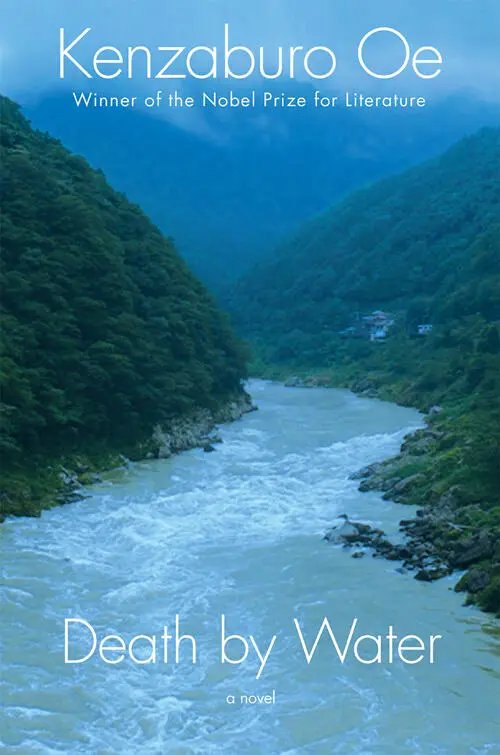
- Название:Death by Water
- Автор:
- Издательство:Grove/Atlantic, Inc.
- Жанр:
- Год:2015
- ISBN:9780802190871
- Рейтинг книги:3 / 5. Голосов: 1
-
Избранное:Добавить в избранное
- Отзывы:
-
Ваша оценка:
Death by Water: краткое содержание, описание и аннотация
Предлагаем к чтению аннотацию, описание, краткое содержание или предисловие (зависит от того, что написал сам автор книги «Death by Water»). Если вы не нашли необходимую информацию о книге — напишите в комментариях, мы постараемся отыскать её.
, his recurring protagonist and literary alter-ego returns to his hometown village in search of a red suitcase fabled to hold documents revealing the details of his father’s death during WWII: details that will serve as the foundation for his new, and final, novel.
Since his youth, renowned novelist Kogito Choko planned to fictionalize his father’s fatal drowning in order to fully process the loss. Stricken with guilt and regret over his failure to rescue his father, Choko has long been driven to discover why his father was boating on the river in a torrential storm. Though he remembers overhearing his father and a group of soldiers discussing an insurgent scheme to stage a suicide attack on Emperor Mikado, Choko cannot separate his memories from imagination and his family is hesitant to reveal the entire story. When the contents of the trunk turn out to offer little clarity, Choko abandons the novel in creative despair. Floundering as an artist, he’s haunted by fear that he may never write his tour de force. But when he collaborates with an avant-garde theater troupe dramatizing his early novels, Kogito is revitalized by revisiting his formative work and he finds the will to continue investigating his father’s demise.
Diving into the turbulent depths of legacy and mortality,
is an exquisite examination of resurfacing national and personal trauma, and the ways that storytelling can mend political, social, and familial rifts.
Death by Water — читать онлайн бесплатно полную книгу (весь текст) целиком
Ниже представлен текст книги, разбитый по страницам. Система сохранения места последней прочитанной страницы, позволяет с удобством читать онлайн бесплатно книгу «Death by Water», без необходимости каждый раз заново искать на чём Вы остановились. Поставьте закладку, и сможете в любой момент перейти на страницу, на которой закончили чтение.
Интервал:
Закладка:
Chikashi, who appeared to be enjoying her go-between role immensely, wrote those lines down and then showed them to me. She also filled me in on the origin story of the dog-tossing trope, including some details I hadn’t heard before.
It had begun accidentally, during the Caveman Group’s revival of a play dating back to the New Drama movement that had blossomed in Japan before the war. During the scene in question, a young wife played by Unaiko was sitting on a chair in a Western-style parlor holding a pet dog (represented by a stuffed animal) on her lap. The audience began heckling Unaiko’s character for some reason and, spurred on by the jeers and catcalls, she pretended to strangle the dog — acting up a storm and making the “murder” look very realistic. She tossed the “carcass” into the rowdy audience, whereupon the “dead dog” was immediately heaved back onto the stage.
Apparently it was a seminal moment in the evolution of Unaiko’s dramatic method, as she realized that while in reality most of the audience members were positively disposed toward her and her colleagues, in the context of the play those same spectators were clearly getting a tremendous kick out of razzing the actors on the stage. (As an aside, Chikashi mentioned having read somewhere about a psychiatric method called drama therapy, in which throwing stuffed animals is used to help patients work through various issues. Unaiko, it seemed, had serendipitously stumbled upon the same cathartic technique.)
The first, unscripted melee created a great deal of buzz, so in the next performance the bit with the stuffed dog was repeated, only this time with conscious intent. The dramatists added the confrontational give-and-take with the audience to the original script, and a rather staid prewar play was reinvented as Tossing the Dead Dogs. The interactive element turned out to be extremely popular, and it soon became the Caveman Group’s dramatic calling card.
The technique had grown ever more sophisticated, to the point where the stage directions now called for surreptitiously planting a number of shills or decoys throughout the audience — people whose sole purpose was to raise a choreographed ruckus while pretending to be ordinary members of the crowd. There were also quite a few fans who happily paid their own way and came to the show armed with stuffed animals, so there was no way of knowing how many “dead dogs” might fly back and forth on a given night. Over time, the art form evolved to the point where most (though not all) of the performances tended to end abruptly right at the apex of the dog-flinging pandemonium.
Unaiko told Chikashi that she was wondering, a bit nervously, what would happen during the upcoming presentation of the Caveman Group’s dramatization of Kokoro. Based on her prior experience, Unaiko sketched out her vision of how the evening might go, with the caveat that since audience participation was always a wild card, there was really no way to predict the outcome. Her innovative stagecraft could turn out to be a brilliant success or an unmitigated disaster; they would just have to wait and see.
Unaiko explained that the audience would be made up of students from junior high and high schools all over the prefecture, along with teachers and family members, and the event would take place in the circular auditorium, which had been converted for the occasion into a “theater in the round” (technically, a theater in a semicircle). The performance would begin with a straightforward dramatic reading. When that came to an end, the official thespians would congregate at stage left and the stealth participants (who had until then been sitting unobtrusively in the audience) would line up on the opposite side. These imposters would start directing questions and critical comments at the actors; the responses would quickly become heated, and the civil discussion would degenerate into a raucous argument. Up until then, everything would have been scripted in advance and the actors would be reciting lines they had already rehearsed. But when the ringers began quarreling with the actors, the audience members would soon realize that such interaction was not only allowed but encouraged, and would presumably follow suit. Then, if everything went according to plan, the scene would escalate into a near riot, with “dead dogs” being hurled back and forth with wild abandon.
5
Dear Kogii,
I’m happy to report that Unaiko’s play was a complete triumph! (As you know, it was performed at our local theater in the round on the last Saturday in September, as her first dramatic project targeted at an audience of junior high and high school students.) I hope you will share this letter with Chikashi, as I think you’ll both find it very entertaining.
I must confess that I’m writing partly to coax you, brother dear, into lending your long-distance assistance to Unaiko and me once more as we tackle a new challenge. I’ll save some energy for making that pitch, but first I want to tell you about Unaiko’s theatrical tour de force.
Picture this: you walk into a round building and see an empty stage in the shape of a half circle, with the other half of the sphere filled with curved tiers of seating. No curtain separates the stage from the spectators, and the audience members look down at a darkened stage that almost appears to be a hole or abyss in the center of the room. It’s still daylight outside, and while several high windows and domed skylights provide a small amount of natural light, inside the theater it’s quite dim.
Only one thing is visible at first: Unaiko’s slender form, standing motionless at the center of the stage. As the lights come up, we see that she is costumed and made up to look like the very model of a veteran teacher of Japanese language and literature at the high school level. (Incidentally, for the past three years Unaiko has been going around to junior high schools as a visiting instructor of drama, so she’s known and loved by hundreds of students, and the audience is packed with her fans.)
Unaiko is holding a small hardcover edition of Natsume Soseki’s Kokoro, in the familiar binding we associate with his collected works. The basic premise of the play is that Unaiko is delivering a lecture to the teenage students who are onstage and in the audience. Needless to say, both the words she addresses to this imaginary class and the way the second half of the play unfolds were shaped (and enriched) by our earlier discussions with you.
“The first time I read this book, I was just about the same age most of you are now,” she begins. “On that occasion, and subsequent readings as well, I wielded my red and blue pencils freely, underlining certain things and drawing circles around others. (These days I guess you would probably be using highlighters or marking pens, right?) Anyway, I read this book over and over. However, from the very beginning I had doubts and questions, and I’m going to start by talking about them.
“As preparation for this lecture, I gave you two homework assignments. One was a questionnaire asking you to list some of the words in this novel that strike you as significant. The second assignment was this: I asked all of you to read Kokoro by yourselves, just as I did many years ago. The story starts out as the narrator, a young man we know only as ‘I,’ enters into an unusual friendship with an older man whom he always refers to, respectfully, as Sensei.
“However, the Sensei character commits suicide, leaving behind nothing but a long note of explanation and farewell. The young narrator, in a state of shock, reads the note through to the end — and as we all know, that’s more or less the structure of the entire book. We’re going to begin by reading the part of the suicide note where Sensei is remembering the time when he initially opened up to the young narrator. The reader will be an actor from our theater troupe; he’ll be out here in a moment with the text. This time, his only job will be to read the one passage, but in our actual play a number of other actors will appear in a variety of roles. Some of them will remain onstage, while others will make a brief appearance and then vanish into the wings, but either way, there’s no need to applaud every time a new character appears. All right — here we go!”
Читать дальшеИнтервал:
Закладка:
Похожие книги на «Death by Water»
Представляем Вашему вниманию похожие книги на «Death by Water» списком для выбора. Мы отобрали схожую по названию и смыслу литературу в надежде предоставить читателям больше вариантов отыскать новые, интересные, ещё непрочитанные произведения.




Обсуждение, отзывы о книге «Death by Water» и просто собственные мнения читателей. Оставьте ваши комментарии, напишите, что Вы думаете о произведении, его смысле или главных героях. Укажите что конкретно понравилось, а что нет, и почему Вы так считаете.