Kenzaburo Oe - Death by Water
Здесь есть возможность читать онлайн «Kenzaburo Oe - Death by Water» весь текст электронной книги совершенно бесплатно (целиком полную версию без сокращений). В некоторых случаях можно слушать аудио, скачать через торрент в формате fb2 и присутствует краткое содержание. Год выпуска: 2015, ISBN: 2015, Издательство: Grove/Atlantic, Inc., Жанр: Современная проза, на английском языке. Описание произведения, (предисловие) а так же отзывы посетителей доступны на портале библиотеки ЛибКат.
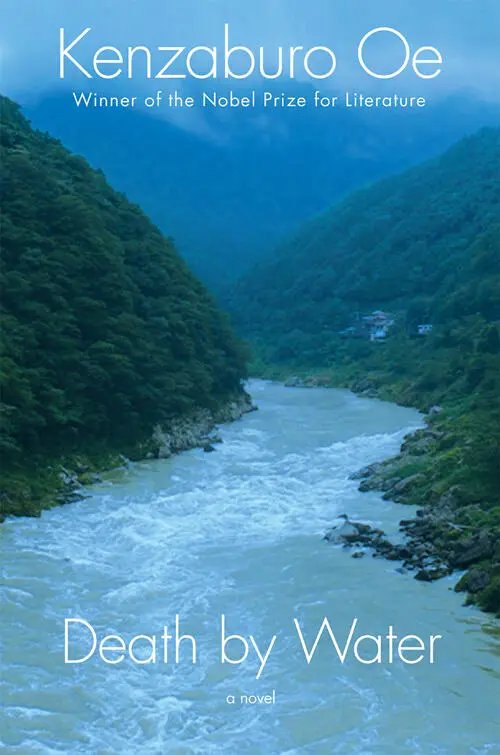
- Название:Death by Water
- Автор:
- Издательство:Grove/Atlantic, Inc.
- Жанр:
- Год:2015
- ISBN:9780802190871
- Рейтинг книги:3 / 5. Голосов: 1
-
Избранное:Добавить в избранное
- Отзывы:
-
Ваша оценка:
Death by Water: краткое содержание, описание и аннотация
Предлагаем к чтению аннотацию, описание, краткое содержание или предисловие (зависит от того, что написал сам автор книги «Death by Water»). Если вы не нашли необходимую информацию о книге — напишите в комментариях, мы постараемся отыскать её.
, his recurring protagonist and literary alter-ego returns to his hometown village in search of a red suitcase fabled to hold documents revealing the details of his father’s death during WWII: details that will serve as the foundation for his new, and final, novel.
Since his youth, renowned novelist Kogito Choko planned to fictionalize his father’s fatal drowning in order to fully process the loss. Stricken with guilt and regret over his failure to rescue his father, Choko has long been driven to discover why his father was boating on the river in a torrential storm. Though he remembers overhearing his father and a group of soldiers discussing an insurgent scheme to stage a suicide attack on Emperor Mikado, Choko cannot separate his memories from imagination and his family is hesitant to reveal the entire story. When the contents of the trunk turn out to offer little clarity, Choko abandons the novel in creative despair. Floundering as an artist, he’s haunted by fear that he may never write his tour de force. But when he collaborates with an avant-garde theater troupe dramatizing his early novels, Kogito is revitalized by revisiting his formative work and he finds the will to continue investigating his father’s demise.
Diving into the turbulent depths of legacy and mortality,
is an exquisite examination of resurfacing national and personal trauma, and the ways that storytelling can mend political, social, and familial rifts.
Death by Water — читать онлайн бесплатно полную книгу (весь текст) целиком
Ниже представлен текст книги, разбитый по страницам. Система сохранения места последней прочитанной страницы, позволяет с удобством читать онлайн бесплатно книгу «Death by Water», без необходимости каждый раз заново искать на чём Вы остановились. Поставьте закладку, и сможете в любой момент перейти на страницу, на которой закончили чтение.
Интервал:
Закладка:
Sensei: Sometimes, you used to look at me with a dissatisfied expression, and you even tried pressuring me to unfurl my past before you, like a picture scroll. That was the first time I really respected you, in my heart of hearts. I was moved by your determination, however audacious or unseemly it might have been, to try to grasp the essence of my being. At the time I was still alive. I didn’t want to die. That is why I refused to grant your request, choosing instead to postpone the revelations until some future date. That time has come, and I am about to cut open my heart and drench your face with my blood. And I will be satisfied if, when my heart stops beating, a new life is lodged in your breast.
After the actor finishes reading this vivid passage, Unaiko continues with her scripted lecture. “As I said in the beginning, when I first read this passage I was about the same age as you students are now. This will probably sound simplistic, but when the Sensei character agrees to allow the young man to start addressing him by that respectful term, he starts to seem like a sympathetic protagonist, so I thought this novel might be an attempt to teach my generation a thing or two about life.
“However, that turned out not to be the case at all. While there is a fair amount of direct dialogue between the two main characters, for the most part Sensei doesn’t really teach the young narrator anything. For example, the young man asks, ‘Is there really guilt in loving?’ and Sensei simply replies, ‘Yes, surely.’ He does offer his young friend some practical advice about steps he could take to be sure of receiving his rightful share of the family property when the time comes, but that’s about it. As we learn later, both of these topics — love and inheriting one’s fair share of worldly goods — created significant problems for Sensei and shaped his life.
“Then when I reached the point of reading the long note Sensei left behind, I realized that this book was probably just written to express the author’s own thoughts through the medium of Sensei’s letter. Sensei lived out his life in self-imposed seclusion, closed off from society, and I felt that he wrote the long suicide note knowing it was his one shot at sharing his story. You may ask, what was the basic message of the note Sensei left behind when he took his own life? As we will see, that note includes the lines I’d like you to remember something. This is the way I have lived my life. So for Sensei, writing a sort of regretful retrospective was apparently his only means of talking about his own conduct after decades of silence.
“But what was that conduct exactly? Well, when he was twenty years old, Sensei was swindled out of his inheritance by an unprincipled uncle. After that, he turned into a wary, guarded person who rarely opened up to another human being. When he was at university, Sensei did have one friend (identified only as ‘K’) to whom he had been so close that they had chosen to live in the same lodging house, and when Sensei learned that K was in love with the daughter of their landlady, Sensei went ahead and got engaged to the girl himself, without saying a word to his friend. K was so heartbroken by this betrayal that he committed suicide, and Sensei happened upon the bloody scene not long afterward. I’m going to read an abridged version to you now.”
Sensei: I stood up and went as far as the doorway. From there, I glanced quickly around his room, which was dimly lit by a single lamp. As soon as I realized what I was seeing, I stood rooted to the spot, unable to move, staring in horror through eyes that seemed to be made of glass. But the initial shock was like a sudden gust of wind, and it only lasted for a moment. “Oh no,” I thought. “This can’t be happening.” It was then that the great, luminous shadow — almost like a black light — that would irrevocably darken my life, forever, spread out before my mind’s eye. My whole body began to tremble.
As you know, Kogii, I’ll always be the first to acknowledge that Unaiko is enormously talented and endowed with a cutting-edge sensibility, but the truth is she wasn’t generally thought of as an outstanding performer. When I watched her putting on a small production like Tossing the Dead Dogs, it struck me that the way it started out so light and comical, then suddenly morphed into a display of unbridled aggression, was typical of her unique dramatic style.
However, when Unaiko stood onstage and read the agonized recollections that Sensei forces himself to recount, I saw something amazing. Apart from the stage lights, the theater was lit only by the natural light leaking in through the high windows (they were just open a crack) and the domed skylights in the ceiling. As Unaiko read those powerful lines, I seemed to see a flash of black light slashing across the stage. That’s how moved I was.
A later section in Kokoro talks about how even after his friend died Sensei went ahead and married the girl they had both been courting, without ever telling her what had driven their friend to suicide. But Sensei never stopped blaming himself, and he was so crippled by guilt that he was never able to venture out into society and work for a living. When Unaiko was reading that section, a short while later, I could have sworn I saw the black light again.
I even asked Masao about it after the play. I said, “Even though Unaiko is doing the directing this time around, you’re acting in the play and also somehow managing to handle the light board. (And I know that in the scene where the ‘dead dogs’ are being thrown, the lighting plays a very important role because it’s used to ramp up the excitement level.) So I was wondering whether what appeared to be a flash of black light cutting across the stage was an effect you deliberately engineered?” Masao laughed, the way he does, so I knew it must have been my imagination. Anyhow, here’s the excerpt that made me see the black light of despair for the second time:
Sensei: From then on, a nameless fear would assail me from time to time. At first, it seemed to come over me without warning from the shadows surrounding me, and I would gasp at its unexpectedness. Later, however, when the experience had become more familiar to me, my heart would readily succumb — or perhaps respond — to it; and I would begin to wonder if this fear had not always been in some hidden corner of my heart, ever since I was born.
Unaiko’s powerful dramatic reading made an indelible impression on me, and I’m now convinced that in addition to all her other talents she is a genuinely gifted actress. Of course, since she was standing on the stage in the guise of a schoolteacher, she had to offer some short explanations as she went along, but I guess the most effective way of showing how Sensei came to terms with his guilt and found a way to continue living was to have him recite a relevant quotation from the book.
Sensei: Although I had resolved to live as if I were dead, my heart would at times respond to the activity of the outside world, and would almost seem to dance with pent-up energy. But as soon as I tried to break through the cloud that surrounded me, a mysterious and terrifying force would descend upon me from I know not where, and the malign power would grip my heart so tightly that I could not move.
Unaiko, as Sensei, delivers those lines, then immediately switches back to schoolteacher mode and addresses the high school students. Under these circumstances, she explains, we can see that a life in which Sensei would venture out into society and hold down a normal job probably wouldn’t have been a realistic possibility. So, Unaiko goes on (I’m paraphrasing here), Sensei muddled along, living in quiet seclusion with his wife and supporting them both on what was left of his inheritance (a lifestyle that, as the vital and adventuresome Meiji Era neared its end, would have struck people as rather unusual). Then, after a chance meeting at the seashore, a young university student inserts himself into Sensei’s low-key, reclusive existence and a bond begins to develop between them. (This explanatory interlude was a truly masterful performance on Unaiko’s part, by the way.) Next Unaiko goes back to the suicide note, which (she explains) shows how Sensei finally reached the conclusion that ending his own life was the only option that made sense anymore.
Читать дальшеИнтервал:
Закладка:
Похожие книги на «Death by Water»
Представляем Вашему вниманию похожие книги на «Death by Water» списком для выбора. Мы отобрали схожую по названию и смыслу литературу в надежде предоставить читателям больше вариантов отыскать новые, интересные, ещё непрочитанные произведения.




Обсуждение, отзывы о книге «Death by Water» и просто собственные мнения читателей. Оставьте ваши комментарии, напишите, что Вы думаете о произведении, его смысле или главных героях. Укажите что конкретно понравилось, а что нет, и почему Вы так считаете.