Kenzaburo Oe - Death by Water
Здесь есть возможность читать онлайн «Kenzaburo Oe - Death by Water» весь текст электронной книги совершенно бесплатно (целиком полную версию без сокращений). В некоторых случаях можно слушать аудио, скачать через торрент в формате fb2 и присутствует краткое содержание. Год выпуска: 2015, ISBN: 2015, Издательство: Grove/Atlantic, Inc., Жанр: Современная проза, на английском языке. Описание произведения, (предисловие) а так же отзывы посетителей доступны на портале библиотеки ЛибКат.
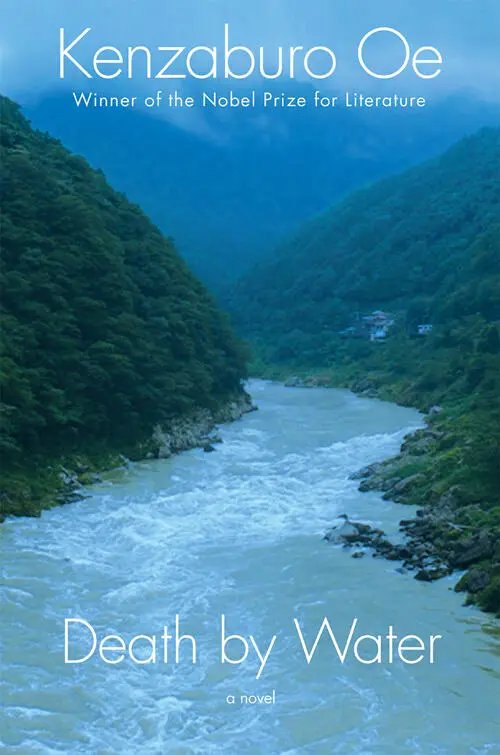
- Название:Death by Water
- Автор:
- Издательство:Grove/Atlantic, Inc.
- Жанр:
- Год:2015
- ISBN:9780802190871
- Рейтинг книги:3 / 5. Голосов: 1
-
Избранное:Добавить в избранное
- Отзывы:
-
Ваша оценка:
Death by Water: краткое содержание, описание и аннотация
Предлагаем к чтению аннотацию, описание, краткое содержание или предисловие (зависит от того, что написал сам автор книги «Death by Water»). Если вы не нашли необходимую информацию о книге — напишите в комментариях, мы постараемся отыскать её.
, his recurring protagonist and literary alter-ego returns to his hometown village in search of a red suitcase fabled to hold documents revealing the details of his father’s death during WWII: details that will serve as the foundation for his new, and final, novel.
Since his youth, renowned novelist Kogito Choko planned to fictionalize his father’s fatal drowning in order to fully process the loss. Stricken with guilt and regret over his failure to rescue his father, Choko has long been driven to discover why his father was boating on the river in a torrential storm. Though he remembers overhearing his father and a group of soldiers discussing an insurgent scheme to stage a suicide attack on Emperor Mikado, Choko cannot separate his memories from imagination and his family is hesitant to reveal the entire story. When the contents of the trunk turn out to offer little clarity, Choko abandons the novel in creative despair. Floundering as an artist, he’s haunted by fear that he may never write his tour de force. But when he collaborates with an avant-garde theater troupe dramatizing his early novels, Kogito is revitalized by revisiting his formative work and he finds the will to continue investigating his father’s demise.
Diving into the turbulent depths of legacy and mortality,
is an exquisite examination of resurfacing national and personal trauma, and the ways that storytelling can mend political, social, and familial rifts.
Death by Water — читать онлайн бесплатно полную книгу (весь текст) целиком
Ниже представлен текст книги, разбитый по страницам. Система сохранения места последней прочитанной страницы, позволяет с удобством читать онлайн бесплатно книгу «Death by Water», без необходимости каждый раз заново искать на чём Вы остановились. Поставьте закладку, и сможете в любой момент перейти на страницу, на которой закончили чтение.
Интервал:
Закладка:
However, since Chikashi mentioned that there’s no guarantee you’ll always be able to answer every letter I write, and since you’ve been jotting things down on index cards at a great rate — though not as part of any particular writing project — she kindly offered to make copies of any relevant notes (with your approval, of course) and send them to us down here. Unaiko and I will view those dispatches as your replies to our queries. As you know, I’ve already received the first batch of photocopied notes from Chikashi, and Unaiko and I have been perusing them with great interest — a task Unaiko approached with the same verve and intensity you’ll remember from your own interactions with her. During the process, one thing that jumped out at her was where you confess your feelings of love to the point of desperation (or words to that effect) for our father.
Unaiko said that while you were staying at the Forest House, she shared the story of what happened to her at Yasukuni Shrine. I gather she was hoping to get some reciprocal feedback from you, as a liberal peacenik who also happened to have idolized his right-wing-fanatic father, and who got carried away to the point of singing along with a German military anthem himself. Anyhow, she was apparently left with the sense that you had been less than forthcoming about your own emotions.
Unaiko wants to use the theater to express her feelings about ultranationalism, militarism, gender politics, and so on — feelings that seem to stem from some sort of long-ago personal trauma. I think it was because she feels so strongly about those issues that she took the rather extreme step of criticizing you for declaring your sudden, unexpected surges of love for our poor, misguided father.
That reminds me — the drowning novel may be totally kaput as far as you’re concerned, but the young people who have been hanging out at the Forest House seem to be clinging to some hope that you will tell the story eventually. They seem to be saying, in effect, “Hey, Choko, don’t think we’re going to let you off the hook so easily!”
Now I’d like to give you an update about what Unaiko is working on these days. Out of the entire group, Masao Anai was hit the hardest by your decision to abandon the drowning novel. Unlike me, he tends to take setbacks very much to heart.
When he first heard that you were coming back to Shikoku to finish writing the book, Masao was running around exclaiming, “At last! At last!” I’ve never seen him so excited, and even Unaiko stopped for a minute to laugh. Of course, we’re all aware that Masao is obsessed with the idea of dramatizing all your novels, so his childlike delight seemed entirely natural — as did his subsequent disappointment when the plan fell through.
Unaiko, on the other hand, is choosing to put a positive spin on things by focusing on the fact that you’ve finally been liberated from the drowning novel and can now move on. This seems a bit counterintuitive to me, but she seems to think that by being critical of you and your work she will somehow be able to entice you into further collaboration. (Reverse psychology, maybe?) In any event, I gather you’ve already heard about the Caveman Group’s program for teaching drama in secondary schools all over the prefecture, so you know that its current project is an adaptation of Natsume Soseki’s classic novel Kokoro. Unaiko and Masao lost no time in drafting a script, and they’ve already presented it at several schools. The early version was very well received, and the troupe has been inundated with requests and invitations from a number of additional schools.
But Unaiko isn’t someone who rests on her laurels after a handful of favorable reviews and just repeats the same performance over and over. No, she’s been busy tape-recording the students’ impressions of this special style of teaching and then giving careful consideration to their comments. For the dramatic reading of Kokoro , Unaiko is trying to make the piece evolve organically, one step at a time. And now, with Masao’s help, she’s attempting to distill the result of her preliminary labors into a finished work of art (or, more precisely, into a perpetually evolving work of art). All along, she’s been continually polishing the style and technique that emerged from the dog-tossing piece, and she’s been using the same lapidary process to enliven her drama classes as well. She has gotten the students at various schools to throw a great many symbolic “dogs.” At the moment, she’s busy compiling those responses, including a fair number of critical remarks, and synthesizing them into a revised script for the play.
The plan is for Unaiko and her colleagues to give a major public performance of Kokoro, showcasing their unique interactive approach, at the middle school’s cylinder-shaped auditorium, which will be converted into a theater for the occasion. (That rather daring structure has gotten a lot of criticism because it was very costly to build, and the middle school’s dwindling enrollment didn’t seem to warrant the investment.) They’re thinking that if the building could be given a catchy name like “theater in the round” and turned into an active cultural venue, it might revitalize the village. That’s why everyone is excited about this new idea.
But what does this have to do with you, up there in Tokyo? Well, I took the liberty of offering to ask whether you’d be willing to help Unaiko create the script for the upcoming play, which is something you could do without actually being here. (As you know, there was some tentative discussion about the possibility of your delivering a related lecture, but it isn’t going to happen, for obvious reasons.) At any rate, I’ll be very grateful if you would do this favor for me — or rather, for us.
You know, here in this tiny village I’ve been typecast for many years as the younger sister of an illustrious author and activist who has always been a lightning rod for all sorts of criticism. As a result of dealing with that sort of thing on a regular basis, I’ve had no choice but to evolve into a political animal myself!
4
I was already familiar with the Tossing the Dead Dogs project, but when I’m asked to commit to something I can’t help wanting to know exactly what is involved. That’s just the way I am. I was aware that the young members of the Caveman Group were working on turning Kokoro into a dramatic reading aimed at students, and I was happy to help, but I still had some questions.
For one thing, when it came time to actually mount a performance, I couldn’t see how they were going to turn Soseki’s subtle, understated novel into an interactive dramatic free-for-all. In Unaiko’s approach to drama, the spontaneous exchanges that can occur between the audience and the actors onstage become a major aspect of the production.
Granted, the so-called dead dogs that are her trademark props are just stuffed toys, but how would throwing them back and forth be integrated into a play about friendship, betrayal, existential malaise, and suicide? And in this instance (as opposed to the earlier performance piece, which was literally about dogs), what was the significance of the canine “corpses” supposed to be?
I tried to imagine various scenarios but I finally gave up and had Chikashi telephone Unaiko, on my behalf, to ask for additional details about how the Caveman Group was planning to pull this off. Unaiko replied (via Chikashi) that the practice script she was currently using was derived from recordings of comments by the students she had met through her dramatic presentations at various schools. Unaiko then proceeded to read some of the raw, unedited lines to Chikashi over the phone, saying she hoped I would share my thoughts about them.
Читать дальшеИнтервал:
Закладка:
Похожие книги на «Death by Water»
Представляем Вашему вниманию похожие книги на «Death by Water» списком для выбора. Мы отобрали схожую по названию и смыслу литературу в надежде предоставить читателям больше вариантов отыскать новые, интересные, ещё непрочитанные произведения.


Обсуждение, отзывы о книге «Death by Water» и просто собственные мнения читателей. Оставьте ваши комментарии, напишите, что Вы думаете о произведении, его смысле или главных героях. Укажите что конкретно понравилось, а что нет, и почему Вы так считаете.