Kenzaburo Oe - Death by Water
Здесь есть возможность читать онлайн «Kenzaburo Oe - Death by Water» весь текст электронной книги совершенно бесплатно (целиком полную версию без сокращений). В некоторых случаях можно слушать аудио, скачать через торрент в формате fb2 и присутствует краткое содержание. Год выпуска: 2015, ISBN: 2015, Издательство: Grove/Atlantic, Inc., Жанр: Современная проза, на английском языке. Описание произведения, (предисловие) а так же отзывы посетителей доступны на портале библиотеки ЛибКат.
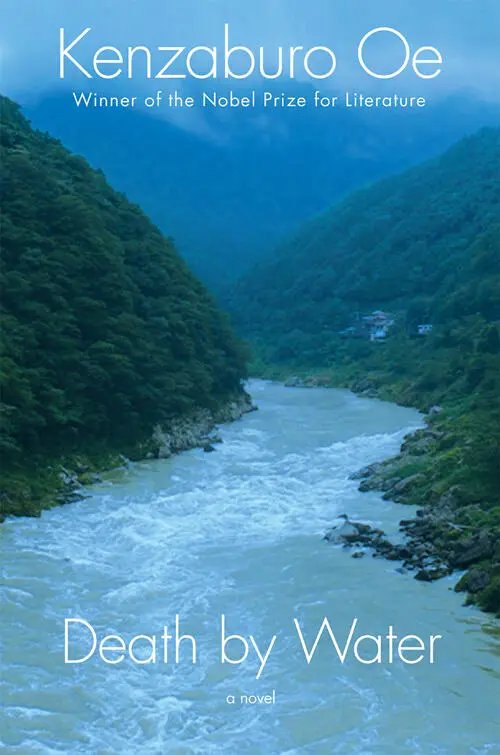
- Название:Death by Water
- Автор:
- Издательство:Grove/Atlantic, Inc.
- Жанр:
- Год:2015
- ISBN:9780802190871
- Рейтинг книги:3 / 5. Голосов: 1
-
Избранное:Добавить в избранное
- Отзывы:
-
Ваша оценка:
Death by Water: краткое содержание, описание и аннотация
Предлагаем к чтению аннотацию, описание, краткое содержание или предисловие (зависит от того, что написал сам автор книги «Death by Water»). Если вы не нашли необходимую информацию о книге — напишите в комментариях, мы постараемся отыскать её.
, his recurring protagonist and literary alter-ego returns to his hometown village in search of a red suitcase fabled to hold documents revealing the details of his father’s death during WWII: details that will serve as the foundation for his new, and final, novel.
Since his youth, renowned novelist Kogito Choko planned to fictionalize his father’s fatal drowning in order to fully process the loss. Stricken with guilt and regret over his failure to rescue his father, Choko has long been driven to discover why his father was boating on the river in a torrential storm. Though he remembers overhearing his father and a group of soldiers discussing an insurgent scheme to stage a suicide attack on Emperor Mikado, Choko cannot separate his memories from imagination and his family is hesitant to reveal the entire story. When the contents of the trunk turn out to offer little clarity, Choko abandons the novel in creative despair. Floundering as an artist, he’s haunted by fear that he may never write his tour de force. But when he collaborates with an avant-garde theater troupe dramatizing his early novels, Kogito is revitalized by revisiting his formative work and he finds the will to continue investigating his father’s demise.
Diving into the turbulent depths of legacy and mortality,
is an exquisite examination of resurfacing national and personal trauma, and the ways that storytelling can mend political, social, and familial rifts.
Death by Water — читать онлайн бесплатно полную книгу (весь текст) целиком
Ниже представлен текст книги, разбитый по страницам. Система сохранения места последней прочитанной страницы, позволяет с удобством читать онлайн бесплатно книгу «Death by Water», без необходимости каждый раз заново искать на чём Вы остановились. Поставьте закладку, и сможете в любой момент перейти на страницу, на которой закончили чтение.
Интервал:
Закладка:
When the piece had ended, Akari carefully put the compact disc away and stood up. When he met my eyes at last I said flatly, “You know what? You really are an idiot.”
I went upstairs, and after spending a long time staring into the depths of a darkness that wasn’t nearly as black as my mood, I switched on the bedside lamp. For the first time since returning to Tokyo, I groped around on the nearby bookshelf and grabbed the first paperback that came to hand. As I began to read a random page, the rectangle of tiny, tightly packed Japanese characters and the border of white space surrounding the dense block of type suddenly began to blur and whirl before my eyes.
(Incidentally, that reminds me of a gathering I once attended where I got into an animated discussion with an anthropologist, an architect, and several other friends about the fact that in English those borders are called margins, while scribbled comments and annotations in the blank spaces are known as marginalia — although our discussion was primarily focused on the more abstract idea of the intrinsically marginal nature of culture. Another dear friend, the composer Takamura, seemed to be lost in his own thoughts. I assumed he was only half listening to our conversation, so I was surprised when not long afterward he published an exquisite composition titled Marginalia. Now that I think about it, those days when all my brilliant friends were still alive were probably the most creative and stimulating time of my entire life.)
Anyway, as I was saying, my hands and wrists, which were holding the book out in front of me, suddenly collapsed and crashed into the bookshelf while the visible world began to spin so violently that my normally straight line of vision seemed to be tilted at a wildly exaggerated angle, as if I were on some out-of-control carnival ride.
That was the beginning of the second coming of the bouts of extreme dizziness that would become a chronic condition throughout my later years: an alarming series of breakdowns everyone in my family (except Akari) ended up calling “the Big Vertigo.”
PART TWO. Women Ascendant
Chapter 6. Tossing the Dead Dogs
1
After the Big Vertigo struck again, I developed some singular new habits. Once a dizzy spell had abated, I would tumble precipitously into a sleep of total, unrelenting darkness. If what followed the initial episode had been the sleep of death, I mused, then I must now be existing in a state beyond life. And yet my consciousness was still functioning, so according to the principle of Cogito, ergo sum, I was still present and alive in reality.
What, exactly, was my state of being? There were times when my eyes would pop open in the dark — it could have already been morning, but the curtains were drawn against the light — and I didn’t have the slightest idea who I was, or where. In my ears I would hear a nostalgic, songlike poem repeated over and over, and those lines seemed to offer a clue to my peculiar existential state: A current under sea / Picked his bones in whispers. As he rose and fell / He passed the stages of his age and youth / Entering the whirlpool. Yes, I would think, taking the sequence a step further. Buffeted by the deep-water current, he keeps rising and falling, floating and sinking, seconds away from being dragged into the maelstrom of the whirlpool.
I am I, and yet I’m something more, because I feel that I am he as well: in other words, I am my father. My father, who drowned in what I realize now was the prime of his life; my father, who died when he was twenty years younger than I was when the Big Vertigo ambushed me for the first time. That realization would often be followed by another half-conscious epiphany: I loved my father! I would usually wake up again then (more completely this time), awash in dueling emotions: an almost sheepish feeling of relief doing battle with soul-deep despair.
Another new behavior pattern had to do with the way I emerged from sleep. There were times when I would lie awake until the wee hours, assailed by an anxious premonition that another attack was on its way, and I would finally resort to taking the medicine prescribed for such emergencies, which (as a side effect) would cause me to wake up far too early the next morning. However, if I just lay quietly in bed, I often managed to fall into a completely natural sleep, and I would roll out of bed sometime before noon feeling abundantly well rested.
Those prescription meds were potent, so I tried not to take them too often. The side effects weren’t entirely negative, though. When I first resurfaced after a medicated sleep, long before dawn, I would be engulfed in what I thought of as hypermemory: wave upon wave of extraordinarily intense recollections. After I opened my eyes for the second time, usually just before noon, I would jot down some quick notes — rough and rudimentary, like an artist’s initial pencil sketches — about the memories that had washed over me. I couldn’t help wondering whether those remembrances might be connected somehow with the powerful force that ushered in the dizzy spells, and I had an unshakable feeling that the advent of those seizures must have some larger significance. Surely the Big Vertigo’s cataclysmic appearance in my life couldn’t be completely random and devoid of meaning?
I fell prey to another odd notion as well: a strong certainty that the serial attacks of vertigo (which were so much more powerful than anything I had ever experienced) must eventually, inevitably, result in permanent damage to my mental faculties. I wasn’t merely terrified by this bleak prospect; I also felt that — especially if my days of mental acuity were numbered — I ought to pay extra-close attention to the surges of remembrance, which were clearly trying to tell me something before it was too late. For the past fifty years, at least, I had started my daily work ritual by making notes on index cards about whatever had emerged during my dreams and the interstitial sessions of hazy, half-waking contemplation. Those jottings would often provide useful clues for my current writing, so I couldn’t very well let the waves of memory slide by unrecorded.
But I had made a firm decision to abandon the drowning novel, and I had also made up my mind that I would never write long-form fiction again. I simply didn’t feel I had another book in me. So why was I still compulsively transcribing those resurgent memories? There’s really no way to explain it except by saying that for me, scribbling on index cards was like a chronic disease, and there didn’t appear to be a cure.
2
During the bouts of hypermemory, I kept remembering the day the war ended.
Many writers of my generation have described the weather as cloudy and overcast, but in the forests of Shikoku it was a perfect blue-sky day. Just before noon, the local children were herded into a line. Then we followed our teachers up the hill behind the national school to the mansion of the village headman (in effect, the mayor), which stood on an elevated bluff overlooking the valley. Because no children were allowed inside, we congregated next to a hedge that surrounded the property. There had been some cloud cover in the early morning, but the sky had gradually cleared; the forest was glittering in the sunlight and the entire area was alive with the sound of cicadas. Even with all the ambient noise, we could still hear what was going on inside the mansion.
First there was a loud commotion among the adult males and then, after the headman had given a little speech to calm them down, the sound of the women’s quiet weeping rose to a wail. A moment later two of the teachers from our school appeared, ducking through the small wicket gate next to the main entrance. They told us the emperor’s broadcast had ended and ordered us to head back to the valley. As we were marching along in formation, with the road hot beneath our bare feet, we were informed by some of the older kids that Japan had lost the war, and then we split up and went our separate ways. When I passed my house I noticed that the tall, slatted-wood storm windows were closed, and I got the sense that my mother was probably doing some kind of handwork in the rear parlor. (After my father died, those windows would remain unopened for many years.) I took the narrow footpath through the fields next to my house and headed toward Myoto Rock.
Читать дальшеИнтервал:
Закладка:
Похожие книги на «Death by Water»
Представляем Вашему вниманию похожие книги на «Death by Water» списком для выбора. Мы отобрали схожую по названию и смыслу литературу в надежде предоставить читателям больше вариантов отыскать новые, интересные, ещё непрочитанные произведения.





Обсуждение, отзывы о книге «Death by Water» и просто собственные мнения читателей. Оставьте ваши комментарии, напишите, что Вы думаете о произведении, его смысле или главных героях. Укажите что конкретно понравилось, а что нет, и почему Вы так считаете.