Kenzaburo Oe - Death by Water
Здесь есть возможность читать онлайн «Kenzaburo Oe - Death by Water» весь текст электронной книги совершенно бесплатно (целиком полную версию без сокращений). В некоторых случаях можно слушать аудио, скачать через торрент в формате fb2 и присутствует краткое содержание. Год выпуска: 2015, ISBN: 2015, Издательство: Grove/Atlantic, Inc., Жанр: Современная проза, на английском языке. Описание произведения, (предисловие) а так же отзывы посетителей доступны на портале библиотеки ЛибКат.
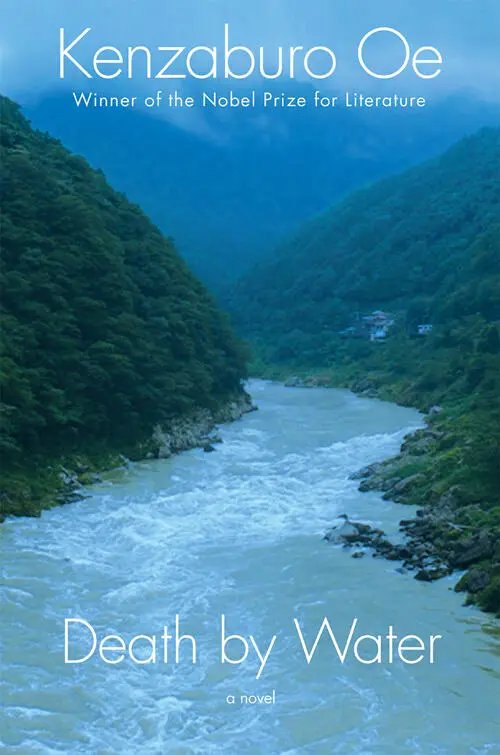
- Название:Death by Water
- Автор:
- Издательство:Grove/Atlantic, Inc.
- Жанр:
- Год:2015
- ISBN:9780802190871
- Рейтинг книги:3 / 5. Голосов: 1
-
Избранное:Добавить в избранное
- Отзывы:
-
Ваша оценка:
Death by Water: краткое содержание, описание и аннотация
Предлагаем к чтению аннотацию, описание, краткое содержание или предисловие (зависит от того, что написал сам автор книги «Death by Water»). Если вы не нашли необходимую информацию о книге — напишите в комментариях, мы постараемся отыскать её.
, his recurring protagonist and literary alter-ego returns to his hometown village in search of a red suitcase fabled to hold documents revealing the details of his father’s death during WWII: details that will serve as the foundation for his new, and final, novel.
Since his youth, renowned novelist Kogito Choko planned to fictionalize his father’s fatal drowning in order to fully process the loss. Stricken with guilt and regret over his failure to rescue his father, Choko has long been driven to discover why his father was boating on the river in a torrential storm. Though he remembers overhearing his father and a group of soldiers discussing an insurgent scheme to stage a suicide attack on Emperor Mikado, Choko cannot separate his memories from imagination and his family is hesitant to reveal the entire story. When the contents of the trunk turn out to offer little clarity, Choko abandons the novel in creative despair. Floundering as an artist, he’s haunted by fear that he may never write his tour de force. But when he collaborates with an avant-garde theater troupe dramatizing his early novels, Kogito is revitalized by revisiting his formative work and he finds the will to continue investigating his father’s demise.
Diving into the turbulent depths of legacy and mortality,
is an exquisite examination of resurfacing national and personal trauma, and the ways that storytelling can mend political, social, and familial rifts.
Death by Water — читать онлайн бесплатно полную книгу (весь текст) целиком
Ниже представлен текст книги, разбитый по страницам. Система сохранения места последней прочитанной страницы, позволяет с удобством читать онлайн бесплатно книгу «Death by Water», без необходимости каждый раз заново искать на чём Вы остановились. Поставьте закладку, и сможете в любой момент перейти на страницу, на которой закончили чтение.
Интервал:
Закладка:
When Chikashi opened the gate to let us in, Akari practically knocked her over in his headlong rush to get to his room. I put the envelope containing the three scores on the dining table and sat down on the nearest chair. Chikashi, with her finely tuned mother’s intuition, had immediately sensed something unusual about Akari’s behavior, and after sitting with me in silence for a few moments she got up and went into his bedroom.
Being careful not to look at the pages that had been permanently defaced with two different colors of ballpoint ink, I took the three scores out of the envelope and laid them on the table. Then I began to read the tiny words written in pencil on the back cover of the second score. I recognized those scribbles immediately as the words Jean S. had copied over in fountain pen and faxed to me. That fax had been pinned to the wall in front of my desk for the past several years.
What Said had written on the back of the Beethoven score, in English, was his supportive outpouring of sympathy upon learning that my longtime friend and brother-in-law, the film director Goro Hanawa, had committed suicide by jumping off a building in Tokyo. I had translated the note into Japanese and had later quoted it at the memorial service held in Tokyo for Edward W. Said himself after he finally succumbed to leukemia in 2003. (By that time, I had long since committed those eloquent condolences to memory, in both languages.)
I’ve just heard from Jean about the difficulties you’ve been having, and therefore thought I’d write and express my solidarity and affection. You are a very strong man and a sensitive one, so the coping will occur, I am sure.
Chikashi returned to the table. The desecrated sheet music lay spread out in front of me, but I wasn’t looking at it. With her eyes fixed on the three scores, Chikashi began to speak.
“Akari is very concerned about having inadvertently damaged the sheet music for the Beethoven piano sonata,” she said, “but he also told me that you called him an idiot? Nothing like that has ever happened before, not even once, and to be honest I’m in a state of shock. In the past, you’ve always gone to the opposite extreme. Surely you remember the time when you actually came to blows with someone who said those same cruel words to Akari when we were on the train coming home from Kita-Karuizawa, and you ended up being forced to get off the Takasaki? Then when the railway police decided the incident was too serious for them to handle, you were dragged to the municipal police station, and we all went there together. I told Akari that his father would never say such a thing to him, but he won’t listen. He just keeps repeating, ‘Papa said to me, “You’re an idiot.”‘
“Akari knows he did something wrong,” Chikashi continued, “but he seems to want to explain the reason behind his actions. He says he was only writing some notes about Beethoven’s second piano sonata, which I gather you had asked for, in ballpoint pen.”
“It’s true,” I interrupted. “I did call Akari an idiot.” (I was feeling immeasurably sad and sorry, of course, but I still wasn’t able to subdue the anger churning inside me, so I took refuge in self-serving rationalization.) “The thing is, the draft of the condolence message Edward Said wrote at Jean’s house right after Goro died was on the back of the sheet music for the second sonata. So you can see why that particular score is so precious to me.”
After I had shown Chikashi the cover of the booklet in question, I opened it to the defiled page — again, with my eyes averted because it would have been too painful to look at it directly. Chikashi took the opened score and went into Akari’s room. I could hear the conversation: Chikashi asking the same questions over and over in a gentle, restrained voice and then, after a long pause, Akari’s replies, in which he seemed somehow to be resisting his own resistance.
I went into the kitchen to get a drink of water, but soon changed my mind. Instead, I poured a mixture of dark beer and lager (one full bottle of each) into a giant goblet, then drained the entire glass in a single gulp and let out a deep sigh that somehow morphed into a loud belch. As I was about to return to the dining room, I saw Akari coming in through the other door, propelled from behind by Chikashi. Ignoring me completely, he took a CD off the shelf and handed it to his mother.
In the meantime, I had made a hasty U-turn and was in the kitchen refilling my goblet (this time only with regular beer) when I heard the sounds of a piano recording. As I stood there listening to the first strains of Gulda’s performance (he was playing the first movement of the second of the three sonatas Beethoven wrote and dedicated to Haydn in 1795), I was jolted once again by the thought that this was probably the same way Edward Said would have performed this composition.
The music ended, and a few seconds later the air was filled with the sound of Mozart’s Symphony no. 40 in G Minor, K. 550. I couldn’t tell who was wielding the baton, but the melody was an unmistakable echo of the theme of the passage we had heard a few minutes earlier. I downed my second glass of beer and went into the dining room, where Akari was in the process of carefully replacing the two CDs in their clear plastic cases.
“Akari keeps saying he was trying to use the sheet music he was looking at in the waiting room to show you what these two compositions have in common,” Chikashi said. “So he was shocked when you responded by screaming, ‘You’re an idiot!’”
I glanced reluctantly at the page of sheet music, hideously defaced by two colors of ballpoint pen, which Chikashi had laid out again on the dining-room table. No one spoke for several minutes, but there seemed to be some kind of crucial decision floating in the air. Then Akari, who appeared to have been waiting for me to make some sort of conciliatory gesture, gave up and shambled off to his room. I couldn’t help thinking, not for the first time, that his distinctive gait bore a startling resemblance to the way Goro Hanawa used to walk.
This all happened on a Saturday. A week passed, during which I hardly saw my son at all. I spent most of my time in my upstairs lair — a book-filled study equipped with a narrow bed — while Akari remained sequestered in his room. (This wasn’t a dramatic change from his usual behavior; he always spent a great deal of time in his bedroom, where he could listen to classical music programs on the FM radio next to his bed. When he got bored with the radio, he kept several of his favorite CDs cued up in his personal boom box and he enjoyed letting them play over and over on an endless loop.) In order to avoid running into Akari at breakfast or lunch I would creep downstairs in midmorning and eat a solitary brunch, then trudge back upstairs.
One day during this bleak period Chikashi brought me the mail as usual, along with a cup of coffee. While I was glancing over the letters she tidied up my bed and sat down on the newly smooth covers. Then she began to talk about the extra-large elephant in the room — a topic that hadn’t been touched upon since the tense, emotionally fraught session in the dining room.
“Akari says that when you were at the hospital the other day, you asked him to show you the musical similarities between the Beethoven piano sonata and the Mozart symphony,” she said slowly. “Evidently he was in the process of marking the pertinent passages in pencil when the lady who was sitting next to him lent him a ballpoint pen. Naturally, it’s hard for Akari to understand the subtle distinction whereby it’s perfectly fine to use pencil but switching to pen causes his father to have a major meltdown and call him names in public. Akari just happened to accept the seemingly innocuous loan of a pen. Really, wasn’t that his only mistake? He does seem to understand now that he shouldn’t have defaced the pristine sheet music, even though the damage he did was unintentional. But because of the extreme way you reacted, shouting, ‘You’re an idiot’—which, as you know, is the single most hurtful thing you could possibly say to him — he doesn’t feel inclined to return to the amicable relations the two of you enjoyed before this happened. For your part, you’re apparently unwilling to make the first move toward a peaceful settlement, so things seem to be at an impasse.
Читать дальшеИнтервал:
Закладка:
Похожие книги на «Death by Water»
Представляем Вашему вниманию похожие книги на «Death by Water» списком для выбора. Мы отобрали схожую по названию и смыслу литературу в надежде предоставить читателям больше вариантов отыскать новые, интересные, ещё непрочитанные произведения.




Обсуждение, отзывы о книге «Death by Water» и просто собственные мнения читателей. Оставьте ваши комментарии, напишите, что Вы думаете о произведении, его смысле или главных героях. Укажите что конкретно понравилось, а что нет, и почему Вы так считаете.