Kenzaburo Oe - Death by Water
Здесь есть возможность читать онлайн «Kenzaburo Oe - Death by Water» весь текст электронной книги совершенно бесплатно (целиком полную версию без сокращений). В некоторых случаях можно слушать аудио, скачать через торрент в формате fb2 и присутствует краткое содержание. Год выпуска: 2015, ISBN: 2015, Издательство: Grove/Atlantic, Inc., Жанр: Современная проза, на английском языке. Описание произведения, (предисловие) а так же отзывы посетителей доступны на портале библиотеки ЛибКат.
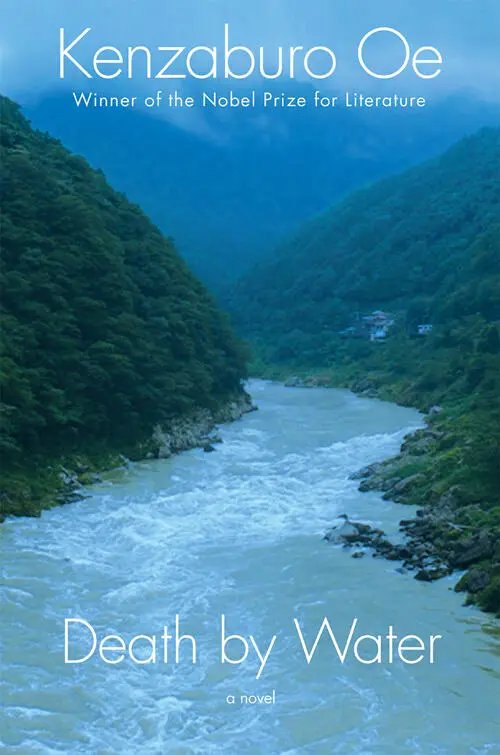
- Название:Death by Water
- Автор:
- Издательство:Grove/Atlantic, Inc.
- Жанр:
- Год:2015
- ISBN:9780802190871
- Рейтинг книги:3 / 5. Голосов: 1
-
Избранное:Добавить в избранное
- Отзывы:
-
Ваша оценка:
Death by Water: краткое содержание, описание и аннотация
Предлагаем к чтению аннотацию, описание, краткое содержание или предисловие (зависит от того, что написал сам автор книги «Death by Water»). Если вы не нашли необходимую информацию о книге — напишите в комментариях, мы постараемся отыскать её.
, his recurring protagonist and literary alter-ego returns to his hometown village in search of a red suitcase fabled to hold documents revealing the details of his father’s death during WWII: details that will serve as the foundation for his new, and final, novel.
Since his youth, renowned novelist Kogito Choko planned to fictionalize his father’s fatal drowning in order to fully process the loss. Stricken with guilt and regret over his failure to rescue his father, Choko has long been driven to discover why his father was boating on the river in a torrential storm. Though he remembers overhearing his father and a group of soldiers discussing an insurgent scheme to stage a suicide attack on Emperor Mikado, Choko cannot separate his memories from imagination and his family is hesitant to reveal the entire story. When the contents of the trunk turn out to offer little clarity, Choko abandons the novel in creative despair. Floundering as an artist, he’s haunted by fear that he may never write his tour de force. But when he collaborates with an avant-garde theater troupe dramatizing his early novels, Kogito is revitalized by revisiting his formative work and he finds the will to continue investigating his father’s demise.
Diving into the turbulent depths of legacy and mortality,
is an exquisite examination of resurfacing national and personal trauma, and the ways that storytelling can mend political, social, and familial rifts.
Death by Water — читать онлайн бесплатно полную книгу (весь текст) целиком
Ниже представлен текст книги, разбитый по страницам. Система сохранения места последней прочитанной страницы, позволяет с удобством читать онлайн бесплатно книгу «Death by Water», без необходимости каждый раз заново искать на чём Вы остановились. Поставьте закладку, и сможете в любой момент перейти на страницу, на которой закончили чтение.
Интервал:
Закладка:
For the first time that day Akari was showing an active interest in what I was doing, and he cast an expert eye on the sheet music as it emerged from the wrappings. “Those are the three sonatas dedicated to Haydn,” he announced. I knew from a long letter Jean S. had sent earlier that Said had been playing the second of those sonatas at her party. Looking through the score, I quickly located his distinctive penciled annotations, and then I stuck the slim booklets back in their folder.
I shepherded Akari to the nearest restroom, which was down on the first floor. Then, in the interest of efficiency, I quickly washed his hands and mine as well. This was another departure from the normal routine — he usually performed such simple functions by himself — and it clearly intensified his already disgruntled mood. On the way back upstairs we stopped in at the hospital gift shop, where I bought a plastic pouch containing two sharpened pencils: HB and B (medium soft and slightly softer, respectively).
When we returned to the seats where we’d left our things, I handed Akari the B pencil (the softer of the two) along with the sheet music for the sonatas. As he held out his hands to receive these unexpected gifts, my son’s formerly downcast face was transmogrified by joy.
Whenever Akari was reading sheet music he would always draw light circles around certain bars or measures with a pencil, exerting barely any force. For reasons unknown to me, he would also write an assortment of glyphlike symbols in the margins. I had already ascertained that the sheet music (which was, in effect, a posthumous bequest from my dear friend Edward W. Said) was printed on exceptionally thick, sturdy paper. My long-range plan was to transcribe any notations Akari might make on those pages onto the ordinary music-store sheet music for the same sonatas, which I knew we had at home. I figured if I wielded the eraser with particular care, no visible marks would remain on the originals.
Akari began reading the sheet music, holding one booklet at arm’s length in front of his chest, and I caught a whiff of the same intoxicating aroma of vintage ink and paper that suffused the innumerable volumes of European special editions in my library. Before long my son was completely immersed in the scores, and I hesitated to disturb him.
In a low voice, I ventured a question: “Is it interesting?”
“Yes, very interesting!”
“I’m glad. Could I take a quick peek at the sheet music for the second sonata?”
“Oh, that part is really interesting!” Akari replied, tapping his finger on the relevant section with an emphatic staccato rhythm.
“My friend Jean mentioned in an earlier letter that Edward Said played the first theme humorously, while the second one sounded sad and mournful,” I said. “At the time, I said to you, ‘Please choose your favorite CD of this piece from your collection.’ Do you remember?”
“Yes! And I put on the Friedrich Gulda recording,” Akari said eagerly. “He played it the same way, too.”
“You’re right,” I agreed. “It was just the same, and with the volume muted as well. Could you please circle the relevant sections to show me where those passages are? Then when we get home I’ll listen to the CD again, using your annotated score for reference.”
A huge grin spread across Akari’s face, and it occurred to me that this was the first time I had seen my son looking so happy since my return to Tokyo. He turned his attention back to the sheet music, and I felt a sense of relief as I watched him intently following the tempo of the written notes, while the imagined music welled up inside him. Then I remembered that as we were rushing out of the house earlier I had grabbed the first volume of The Golden Bough and brought it along. (I’d been randomly paging through those books since finding them in the red leather trunk.) I fished the book out of my bag and began to read.
Akari, meanwhile, had finished examining the second of the three booklets of sheet music and was now going through it again, starting with the first movement. I was sitting next to my son, of course, and the seat on his other side was occupied by a woman who looked as if she might be a schoolteacher. The sheet music was so large that it protruded into her space; I felt awkward and apologetic about the encroachment, but the woman didn’t seem to mind. On the contrary, she appeared to be intrigued by Akari’s fervent concentration.
By the time we were finally summoned to see the doctor, after waiting for a good three hours, Akari had placed the sheet music on his knees and was staring blankly at it, wearily cradling his head in his hands. It took me longer than expected to fit the booklets back into their envelope, and Akari, who was watching me anxiously out of the corner of his eye, became agitated and marched off to the exam room by himself.
At that point, the woman in the neighboring chair spoke. “Why don’t you just leave those things with me?” she suggested. “It doesn’t look as if my name will be called any time soon.”
After our session with the doctor, Akari and I returned to our seats in the waiting room. The woman handed me the envelope containing the sheet music, and Akari resumed his intensive perusal of the scores. Leaving him there, I ambled over to the cashier’s window and took my place at the end of the line. After I’d settled the bill and was returning to the seating area, I saw Akari handing something to the woman as she got to her feet (she had apparently been called in for her own appointment at last).
Our paths crossed in the middle of the room, and the woman laughingly brandished a fat ballpoint pen in my face. “This is really handy — it has two different colors!” she said. “The ink is easier to see, too, so Akari didn’t need to squint so much.”
It took an epic effort of will to control the borderline-violent feelings welling up inside me. I rushed back to where Akari was sitting with one booklet of sheet music open on his lap. He had drawn a heavy, dark circle around the passage we had discussed earlier, and in the blank space at the top of the page he had written “K. 550” in gigantic, indelible letters!
Akari glanced at me, beaming happily, but when he saw the grim expression on my face his smile was quickly extinguished. He stammered in a weak voice, “I–I don’t like to write with pale, thin letters, so …” The sentence trailed off, unfinished.
“You’re an idiot!” I shouted.
Akari’s face crumpled into a roiling mass of strong emotions. After a brief, frozen moment he raised both arms above his head and began to flap them violently against his ears, like flightless wings. There was only one way to interpret this behavior: clearly, he was trying to injure himself. It had been quite a while since I had seen Akari act out like this, but on the rare occasions when I had scolded him in the past, he had invariably reacted with sullen defiance accompanied by an attempt to punish himself physically, as he was doing now.
While the people around us stared openly — I couldn’t really blame them; at the very least, this behavior wasn’t the sort of thing you expect to see from a large man in his forties — I yanked Akari to his feet. I grabbed the sheet music booklets, which had fallen to the floor, and marched my distraught son downstairs and out of the building.
I couldn’t have imagined then how vast the repercussions of my thoughtless and intemperate speech would be, but I was already thinking, over and over again, YOU’RE the bloody idiot.
6
As we were riding home in the taxi, Akari kept his face turned away from me, and his body language conveyed a single unambiguous message: I reject you completely. He wasn’t rubbing his forehead against the window, as he sometimes did when he was upset; he simply sat and stared at the passing cityscape while keeping his back unnaturally straight.
Читать дальшеИнтервал:
Закладка:
Похожие книги на «Death by Water»
Представляем Вашему вниманию похожие книги на «Death by Water» списком для выбора. Мы отобрали схожую по названию и смыслу литературу в надежде предоставить читателям больше вариантов отыскать новые, интересные, ещё непрочитанные произведения.





Обсуждение, отзывы о книге «Death by Water» и просто собственные мнения читателей. Оставьте ваши комментарии, напишите, что Вы думаете о произведении, его смысле или главных героях. Укажите что конкретно понравилось, а что нет, и почему Вы так считаете.