Kenzaburo Oe - Death by Water
Здесь есть возможность читать онлайн «Kenzaburo Oe - Death by Water» весь текст электронной книги совершенно бесплатно (целиком полную версию без сокращений). В некоторых случаях можно слушать аудио, скачать через торрент в формате fb2 и присутствует краткое содержание. Год выпуска: 2015, ISBN: 2015, Издательство: Grove/Atlantic, Inc., Жанр: Современная проза, на английском языке. Описание произведения, (предисловие) а так же отзывы посетителей доступны на портале библиотеки ЛибКат.
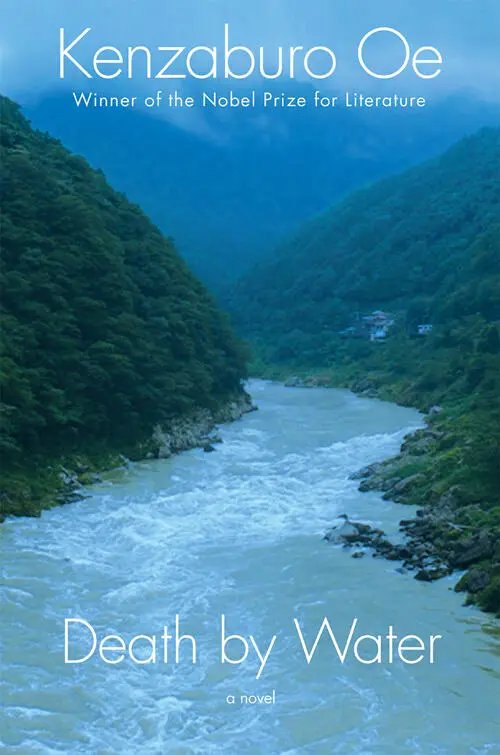
- Название:Death by Water
- Автор:
- Издательство:Grove/Atlantic, Inc.
- Жанр:
- Год:2015
- ISBN:9780802190871
- Рейтинг книги:3 / 5. Голосов: 1
-
Избранное:Добавить в избранное
- Отзывы:
-
Ваша оценка:
Death by Water: краткое содержание, описание и аннотация
Предлагаем к чтению аннотацию, описание, краткое содержание или предисловие (зависит от того, что написал сам автор книги «Death by Water»). Если вы не нашли необходимую информацию о книге — напишите в комментариях, мы постараемся отыскать её.
, his recurring protagonist and literary alter-ego returns to his hometown village in search of a red suitcase fabled to hold documents revealing the details of his father’s death during WWII: details that will serve as the foundation for his new, and final, novel.
Since his youth, renowned novelist Kogito Choko planned to fictionalize his father’s fatal drowning in order to fully process the loss. Stricken with guilt and regret over his failure to rescue his father, Choko has long been driven to discover why his father was boating on the river in a torrential storm. Though he remembers overhearing his father and a group of soldiers discussing an insurgent scheme to stage a suicide attack on Emperor Mikado, Choko cannot separate his memories from imagination and his family is hesitant to reveal the entire story. When the contents of the trunk turn out to offer little clarity, Choko abandons the novel in creative despair. Floundering as an artist, he’s haunted by fear that he may never write his tour de force. But when he collaborates with an avant-garde theater troupe dramatizing his early novels, Kogito is revitalized by revisiting his formative work and he finds the will to continue investigating his father’s demise.
Diving into the turbulent depths of legacy and mortality,
is an exquisite examination of resurfacing national and personal trauma, and the ways that storytelling can mend political, social, and familial rifts.
Death by Water — читать онлайн бесплатно полную книгу (весь текст) целиком
Ниже представлен текст книги, разбитый по страницам. Система сохранения места последней прочитанной страницы, позволяет с удобством читать онлайн бесплатно книгу «Death by Water», без необходимости каждый раз заново искать на чём Вы остановились. Поставьте закладку, и сможете в любой момент перейти на страницу, на которой закончили чтение.
Интервал:
Закладка:
Masao looked at me with reddened eyes (he wasn’t wearing goggles) and said teasingly: “You’ve written about teaching yourself to swim using instruction books written in French and English, and after seeing your stroke, I totally believe in the veracity of the story.”
“Yes, that method did help me refine my own naturally elegant style,” I replied, echoing his tongue-in-cheek tone.
“On the right side, if you go about a meter along the rock and then look underwater, you’ll see a large crack in the base,” Masao said, serious now. “You remember that, of course. Suke was saying that the crack is wide enough for a child’s head to fit through it quite easily. We know what happened the last time you tried, but how about today? Are you game to give it another go?”
“Sure,” I said. “Why not?” I began to creep slowly across the rock face, battling the current all the way. When I had tried to pull off the same maneuver as a child, I seemed to recall losing my grip and being swept away by the overwhelming force of the water crashing against the bifurcated rock. On this day, however, I was able to use a vigorous scissors kick to hold my own, and it occurred to me that I was now confronting the challenges of Nature with grown-up skills — notwithstanding the physical weakening that was a palpable reminder of the passage of years. When I reached the well-remembered spot, I dove underwater and tried to wedge myself between the two slabs of rock. My feet and body slipped through easily enough, but my adult-size head was simply too large. I did, at least, catch a glimpse of the shimmering water in the brightly lit grotto beyond the fissure. Mission unaccomplished, I thought as I allowed the dynamic swirl of the water to buffet my body for a moment. Then I planted my feet firmly on the river bottom, turned around, and returned to where Masao was waiting.
“Hey,” he greeted me, in his overly familiar, slightly sardonic way. “It was a foregone conclusion that your head wasn’t going to fit through the crack in the rock. But if you lower your expectations and just try to peer directly through the crack into the grotto, I can almost guarantee success.”
Focusing my efforts on that more modest goal, I made my way back to the crack in the rock. Peering through my prescription goggles (custom-made to remedy my severe myopia), I saw a nostalgic sight: in the shady grotto illuminated by pale blue-green light, dozens upon dozens of dace were futilely struggling to swim upstream against the current. The glossy black eyes on the sides of those lustrous silvery-blue heads seemed to rotate briefly in my direction, as if the fish were peripherally aware of my presence.
I stayed there, watching, until I ran out of breath. Then I pushed off from the edge of the rock I’d been holding on to, thrust my face above the water, filled my lungs with a deep draught of fresh air, and simply let my body drift, borne along by the kinetic current. After floating passively for a while, I swam back to the spot beside the rock where Masao had stationed himself.
Right away, he began talking. “In the first edition of The Child with the Melancholy Face, you wrote about seeing hundreds of those tiny fish here when you were ten years old,” he said. “You stuck your head through the underwater crack and you saw your child-self, Kogii, reflected in the eyes of the fish. And then as you were trying to get a better look you got your head wedged between the rocks, and if your mother hadn’t come to the rescue you would almost certainly have drowned. The fish you found so fascinating that day probably numbered only in the dozens, as opposed to hundreds. I was talking to some people who used to fish this river in the old days, and they said the dace population around Myoto Rock hasn’t really fluctuated much over the years. What I’m trying to say is you were probably looking at pretty much the same scene today as the one that made such an impression on you more than sixty years ago. There were only a few dozen fish today, right?”
“I didn’t really get a clear sense of how many there were,” I said. “The first time, when I got my head stuck between the rocks and was fading fast, I remember feeling as if I was somehow going to be magically transformed into a dace. And if that had happened, I thought, then I -as-fish would be looking back at the human me.”
“Wait, that doesn’t make sense. If you had drowned on that day, then the you who was peeping at the school of fish would no longer exist in this dimension at all.”
“You’re right,” I said dreamily. “I’m the old man who wasn’t able to become one of those fish (however many there may have been) swimming eternally in the bluish-green light of the grotto beyond the crack in the rocks.”
“Speaking of drowning,” Masao said. “You mentioned that you had never been able to imagine what it was like for your father — who was twenty years younger than you are now, at least — when he set out on the overflowing river, propelled by the powerful current, and was carried far downstream, where his lifeless body ended up rising and falling on the riverbed.”
“True,” I said. “And I can’t help thinking my father’s drowned body must have been moving exactly like one of those fish.” My eyes were suddenly wet in a way that had nothing to do with swimming in the river.
Masao paid no attention to my momentary lapse into grief. “Unaiko got mad at me when I told her I was planning to drag your old bones down here,” he remarked, speaking in a rather disrespectful manner. Along with the contrast between my elderly shoulders and his strong brown torso (we were both submerged in the river up to our sternums), his cocky tone seemed like a brutally explicit reminder of the difference in our ages. “She was worried you might catch a cold, or worse, from being in the water for such a long time.”
Masao turned around and looked downstream, where two concrete bridges — one old, one new — were suspended side by side. Atop the older of the two bridges (long since retired from active duty because it couldn’t handle the increased traffic) two women were wildly windmilling their arms in greeting. I immediately recognized one of them as Unaiko.
“Shall we head back now?” Masao said.
He and I let go of the rock we’d been clinging to, and after allowing the current to gently push us into place we commenced swimming, using the usual crawl stroke. Evidently showing off for the women — who continued to wave energetically in our direction and whom he could see every time he raised his head to take a breath — Masao made a visible effort to open up a lead on me. I wasn’t going to let that happen if I could help it, so I redoubled my own efforts.
In my childhood, we used to make our way home by riding the vigorous current that rippled out from the deep water next to Myoto Rock and then climbing up the cliff next to the road along the river, but Masao kept heading diagonally toward the shore until the water became so shallow that we had to stop swimming. By the time we both stood up on the sandy gravel of the river bottom, with the water barely covering our knees, we must have swum at least 150 meters. I didn’t think about it until afterward, but I was no longer in shape for serious competitive swimming and the long burst of intense exertion clearly took a toll on my body.
We made our way onto the riverbank where we had left our things, and as we were drying off with the towels we’d brought, I couldn’t help feeling apprehensive about the prospect of having Unaiko observe my legs, which were quivering with exhaustion. But when I glanced at the bridge after Masao and I had finished throwing on our clothes, I saw that she and her companion had been engulfed in a gaggle of junior high students on their way home from school, and the two older women were focused on dealing with their clamorous admirers. There was no way I was going to climb up to the bridge in my bedraggled state with an audience of teenage girls, so I stood at the mouth of the river with Masao, chatting desultorily.
Читать дальшеИнтервал:
Закладка:
Похожие книги на «Death by Water»
Представляем Вашему вниманию похожие книги на «Death by Water» списком для выбора. Мы отобрали схожую по названию и смыслу литературу в надежде предоставить читателям больше вариантов отыскать новые, интересные, ещё непрочитанные произведения.





Обсуждение, отзывы о книге «Death by Water» и просто собственные мнения читателей. Оставьте ваши комментарии, напишите, что Вы думаете о произведении, его смысле или главных героях. Укажите что конкретно понравилось, а что нет, и почему Вы так считаете.