Kenzaburo Oe - Death by Water
Здесь есть возможность читать онлайн «Kenzaburo Oe - Death by Water» весь текст электронной книги совершенно бесплатно (целиком полную версию без сокращений). В некоторых случаях можно слушать аудио, скачать через торрент в формате fb2 и присутствует краткое содержание. Год выпуска: 2015, ISBN: 2015, Издательство: Grove/Atlantic, Inc., Жанр: Современная проза, на английском языке. Описание произведения, (предисловие) а так же отзывы посетителей доступны на портале библиотеки ЛибКат.
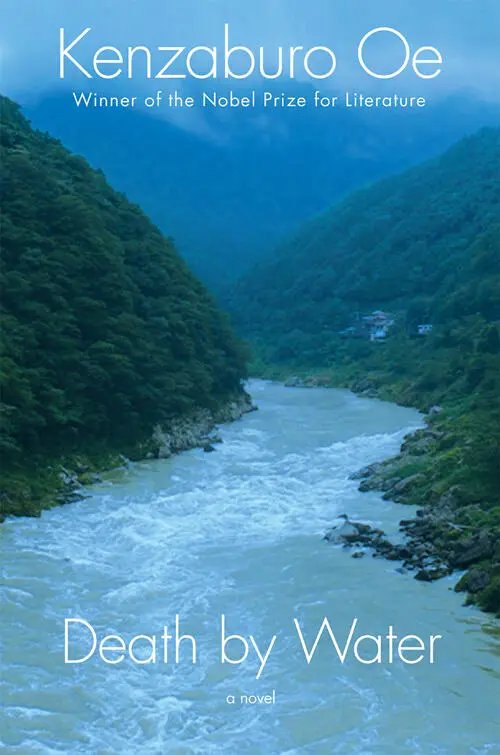
- Название:Death by Water
- Автор:
- Издательство:Grove/Atlantic, Inc.
- Жанр:
- Год:2015
- ISBN:9780802190871
- Рейтинг книги:3 / 5. Голосов: 1
-
Избранное:Добавить в избранное
- Отзывы:
-
Ваша оценка:
Death by Water: краткое содержание, описание и аннотация
Предлагаем к чтению аннотацию, описание, краткое содержание или предисловие (зависит от того, что написал сам автор книги «Death by Water»). Если вы не нашли необходимую информацию о книге — напишите в комментариях, мы постараемся отыскать её.
, his recurring protagonist and literary alter-ego returns to his hometown village in search of a red suitcase fabled to hold documents revealing the details of his father’s death during WWII: details that will serve as the foundation for his new, and final, novel.
Since his youth, renowned novelist Kogito Choko planned to fictionalize his father’s fatal drowning in order to fully process the loss. Stricken with guilt and regret over his failure to rescue his father, Choko has long been driven to discover why his father was boating on the river in a torrential storm. Though he remembers overhearing his father and a group of soldiers discussing an insurgent scheme to stage a suicide attack on Emperor Mikado, Choko cannot separate his memories from imagination and his family is hesitant to reveal the entire story. When the contents of the trunk turn out to offer little clarity, Choko abandons the novel in creative despair. Floundering as an artist, he’s haunted by fear that he may never write his tour de force. But when he collaborates with an avant-garde theater troupe dramatizing his early novels, Kogito is revitalized by revisiting his formative work and he finds the will to continue investigating his father’s demise.
Diving into the turbulent depths of legacy and mortality,
is an exquisite examination of resurfacing national and personal trauma, and the ways that storytelling can mend political, social, and familial rifts.
Death by Water — читать онлайн бесплатно полную книгу (весь текст) целиком
Ниже представлен текст книги, разбитый по страницам. Система сохранения места последней прочитанной страницы, позволяет с удобством читать онлайн бесплатно книгу «Death by Water», без необходимости каждый раз заново искать на чём Вы остановились. Поставьте закладку, и сможете в любой момент перейти на страницу, на которой закончили чтение.
Интервал:
Закладка:
Masao Anai flipped open his vade mecum: the giant notebook he never seemed to be without. He was also carrying a pocket-size Iwanami edition of Soseki’s Collected Works, and he opened that as well.
“Near the end of the novel,” Masao said, “we’ve hit a snag in the section about the death of Emperor Meiji. I’ll read it aloud, if that’s okay.
“Then, at the height of the summer, Emperor Meiji passed away. I felt as though the spirit of the Meiji Era that began with the Emperor had ended with him as well. I was overcome with the feeling that I and the rest of my generation, who had grown up in that era, were now left behind to live as anachronisms. I shared this epiphany with my wife, but she just laughed and refused to take me seriously. Then she said a curious thing, albeit in jest: ‘Well then, maybe you should go ahead and commit junshi, and follow the emperor to the grave.’
“Needless to say, the wife was referring to the fact that General Nogi had chosen to follow the emperor in death by committing suicide himself. As we’ve been mapping out the section featuring Sensei’s long suicide note — which basically relates his life story — Unaiko has been reading the lines, and then I repeat them for emphasis. At some point Unaiko started to fret, and she asked me this question, but I wasn’t able to give her a clear answer. That’s why she was going to request a second opinion from you last night, and now I’ve been tasked with following up. So here’s the question: If it was true that what Soseki calls ‘the spirit of the Meiji Era’ flowed through Emperor Meiji’s entire reign, then would every single person who lived during the era have been imbued with that spirit? This may seem like a rather simplistic question, but we haven’t been able to come up with a satisfactory answer on our own, so we wanted to ask you. For me, and for Unaiko as well, it seems to resonate with the type of transformation you’ve written about in the trilogy that began with The Changeling. Soseki’s character Sensei feels isolated from his era, and he has already decided to go on living as if he were dead. But even someone like that … I mean, could he really have escaped the influence of his own time — in other words, the spirit of Meiji?”
“That’s an excellent question,” I said. “As it happens, when I was young I often used to wonder about the exact same thing, but at the time I wasn’t really able to formulate a proper response. However, when you ask me now, the answer springs to mind with surprising clarity. It may sound paradoxical, but I think it is precisely the people who are trying to live in a way that’s detached from their own eras, and from their contemporaries as well, who end up being most influenced by the spirit of the time they were born into. In my novels, I usually portray characters who exist in very private worlds, but even so, my ultimate goal is to somehow express the spirit of the era I’m writing about. I’m not claiming there’s any special merit in my approach — and, as you’ve so kindly pointed out, my readership has nearly dried up as a result. This may seem like a stretch, but if I should die I can’t help thinking that it would almost be as if I were committing junshi myself: following my own era (and the principles I’ve fought for) into death. I’m speaking metaphorically, of course.”
“So are you thinking of your demise abstractly, as something that will take place in the distant future?” Masao asked lightly. “Or are you ready to predict a specific date, based on some psychic premonition?”
“Is that another of Unaiko’s questions, or did you come up with it just now?” I said, parrying Masao’s facetious inquiry with one of my own.
“Moving right along,” Masao said, changing the subject, “it looks as though you’re nearly finished with your packing, so what do you have planned for today? Asa was telling me that you’d been thinking about scouting locations for your book, before you decided to abandon it. I’ve already done quite a bit of research on the topic, so how would it be if we took a stroll down to the Kame River? The thing is, these days you’re more of a stranger around here than I am, so if you should come face-to-face with any of the local citizens, I think the surprise would probably be mutual! Even so, the other party would most likely know who you are, and if you were to ignore them when they spoke to you it could be kind of awkward. Here’s my plan: when someone calls out to you, I’ll respond to the greeting with the usual pleasantries, and you can just nod in their direction. Shall we stage a quick rehearsal? No? Okay, never mind. I’m sure it’ll be fine.” Clearly, Masao Anai had given serious thought to our proposed outing.
“Well then, Mr. Choko,” he continued, “how would you feel about going for a swim around Myoto Rock, where you once came close to drowning as a child after you’d stuck your head in a fissure in the rock to look at a school of dace and weren’t able to pull it out? Before you arrived from Tokyo, Suke & Kaku — you know, our resident comedy duo — said they wanted to check out the site of that famous story, so they went and dived off the rock. When they came back, they reported having seen quite a few of those little silver fish still swimming around!”
Masao and I went our separate ways for a few minutes while we changed into our swim trunks, worn under T-shirts and knee-length shorts. Then we met up again and set off walking down the slope into the river valley. The school term had started early because of a break in the farmers’ busy season, and there were no children to be seen on the road that snaked along beside the river or on the other road between the rows of houses lining the embankment above. No adults rushed to greet us, either. If I were to run into any old acquaintances from the area, they would most likely be in their sixties or seventies, if not older, but down in the valley on that sunny morning it appeared as if all the humans had simply vanished.
Masao and I took a rustic flight of stairs down to the banks of the river. There wasn’t a soul to be seen in the vicinity of Myoto Rock, which was normally the most popular swimming hole in the area. The famous rock was a pyramid-shaped boulder, and the part above the waterline was a good three meters high. There had once been a similarly shaped rock next to it, but some years ago, when building materials were scarce, that half of the “couple” had been dynamited and ground up to make cement for the construction of a now-abandoned bridge. In local lore, the sundered rocks were seen as a metaphor for marital separation, and by felicitous coincidence there were a great many widows living along the river (my own mother included). A deep pool had been created where the remaining rock blocked the flow of the current, and the natural cove was a popular destination. This was the same cove where I had watched the flooded river carry my father and his boat away on the night of the big storm.
Masao and I shed our tops and shorts and waded into the water until it reached our hips, then turned toward the rock. As the current bore us upstream, I gazed at the forest on the opposite bank. The towering trees were taller than I remembered, and the branches appeared to be healthy, mature, and nicely filled out. Overall, the landscape looked much healthier than it had in the years immediately following the end of the war when the forest surrounding the valley was in a sadly weakened state, probably due to neglect. Since then the forest had gradually recovered its vitality, in what struck me as inverse proportion to the mass exodus of young people.
When the water level reached our chests Masao and I began to swim, both using the overhand freestyle stroke known as the Australian crawl. My eyes were protected by the same goggles I had been using for years whenever I swam in the heavily chlorinated public pools in Tokyo. When we reached the big rock we latched on to the submerged part of the monolith, caught our breath, and rested for a while, just as I had done so many times during my childhood.
Читать дальшеИнтервал:
Закладка:
Похожие книги на «Death by Water»
Представляем Вашему вниманию похожие книги на «Death by Water» списком для выбора. Мы отобрали схожую по названию и смыслу литературу в надежде предоставить читателям больше вариантов отыскать новые, интересные, ещё непрочитанные произведения.



Обсуждение, отзывы о книге «Death by Water» и просто собственные мнения читателей. Оставьте ваши комментарии, напишите, что Вы думаете о произведении, его смысле или главных героях. Укажите что конкретно понравилось, а что нет, и почему Вы так считаете.