Kenzaburo Oe - Death by Water
Здесь есть возможность читать онлайн «Kenzaburo Oe - Death by Water» весь текст электронной книги совершенно бесплатно (целиком полную версию без сокращений). В некоторых случаях можно слушать аудио, скачать через торрент в формате fb2 и присутствует краткое содержание. Год выпуска: 2015, ISBN: 2015, Издательство: Grove/Atlantic, Inc., Жанр: Современная проза, на английском языке. Описание произведения, (предисловие) а так же отзывы посетителей доступны на портале библиотеки ЛибКат.
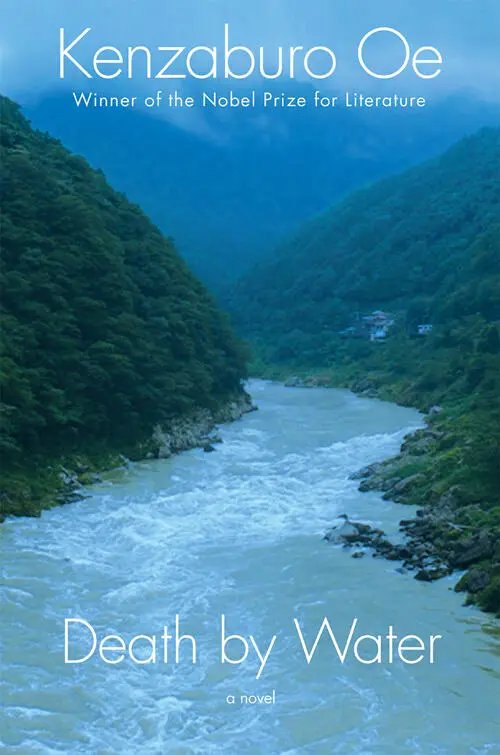
- Название:Death by Water
- Автор:
- Издательство:Grove/Atlantic, Inc.
- Жанр:
- Год:2015
- ISBN:9780802190871
- Рейтинг книги:3 / 5. Голосов: 1
-
Избранное:Добавить в избранное
- Отзывы:
-
Ваша оценка:
Death by Water: краткое содержание, описание и аннотация
Предлагаем к чтению аннотацию, описание, краткое содержание или предисловие (зависит от того, что написал сам автор книги «Death by Water»). Если вы не нашли необходимую информацию о книге — напишите в комментариях, мы постараемся отыскать её.
, his recurring protagonist and literary alter-ego returns to his hometown village in search of a red suitcase fabled to hold documents revealing the details of his father’s death during WWII: details that will serve as the foundation for his new, and final, novel.
Since his youth, renowned novelist Kogito Choko planned to fictionalize his father’s fatal drowning in order to fully process the loss. Stricken with guilt and regret over his failure to rescue his father, Choko has long been driven to discover why his father was boating on the river in a torrential storm. Though he remembers overhearing his father and a group of soldiers discussing an insurgent scheme to stage a suicide attack on Emperor Mikado, Choko cannot separate his memories from imagination and his family is hesitant to reveal the entire story. When the contents of the trunk turn out to offer little clarity, Choko abandons the novel in creative despair. Floundering as an artist, he’s haunted by fear that he may never write his tour de force. But when he collaborates with an avant-garde theater troupe dramatizing his early novels, Kogito is revitalized by revisiting his formative work and he finds the will to continue investigating his father’s demise.
Diving into the turbulent depths of legacy and mortality,
is an exquisite examination of resurfacing national and personal trauma, and the ways that storytelling can mend political, social, and familial rifts.
Death by Water — читать онлайн бесплатно полную книгу (весь текст) целиком
Ниже представлен текст книги, разбитый по страницам. Система сохранения места последней прочитанной страницы, позволяет с удобством читать онлайн бесплатно книгу «Death by Water», без необходимости каждый раз заново искать на чём Вы остановились. Поставьте закладку, и сможете в любой момент перейти на страницу, на которой закончили чтение.
Интервал:
Закладка:
“What I find most interesting are the subtle variations among the three versions: the English, the French, and the Japanese. (Of course, you primarily used Fukase’s version, but you also seem to have incorporated elements of the well-known translation by Junzaburo Nishiwaki.)
“Anyway, what I’m saying is that I make notes about such details as I go along. For example, take the Eliot line He passed the stages of his age and youth / Entering the whirlpool. In the Fukase translation, it becomes He passed through the stages of age and youth, while Nishiwaki renders the line considerably more loosely as One after another, he recalled the days of his youth and the days of his dotage.
“The whole time I was reading your manuscript, the Eliot lines kept running through my head: A current under sea / Picked his bones in whispers. As he rose and fell / He passed the stages of his age and youth / Entering the whirlpool. And I couldn’t help wondering how you would have gone about portraying the way your father’s life flashed before his eyes while he was drowning.”
“Oh, you mean in the drowning novel?” I asked absently. Masao’s recitation of the Eliot lines had momentarily transported me back in time.
“Yes, I gather the idea was to reprise the various stages of your father’s life, but I can’t help thinking it would have been difficult for you to pull that off, as a writer who was still quite young and inexperienced.”
“You’ve read the scrap of prose I call the drowning novel, so you know I had drafted the story only to the point where my father sets out in his little boat, heading right into the towering waves, with Kogii — my supernatural alter ego — manning the tiller in place of me. Fast-forward forty years or so, and here I am, or was, trying to pick up where I left off and finish the book. You seem to be asking how I was planning to proceed. Well, you’re right that creating the retrospective scene where my father’s entire past flashes before his eyes would have been a major challenge, but at any age. When I was younger, I lacked the necessary life experience, and now I — the narrator of that passage — have become an old writer myself and I can’t very well be projecting my own history onto my father, who died relatively young.
“At the time, I wanted to try to answer the question: As my father was drowning in the vortex of the raging river, how did he pass the last moments of his life? What was going through his mind just before he died? The other day when I was looking over the index cards I’d included in the packet with the pages I had written, decades ago, I saw that I’d started by composing a straightforward chronicle, including things I had heard from my grandmother and mother when I was a young child: local legends and folklore, bits of our family history, and so on. But how did my father fit into those accounts? Where did he come from, and what was his story before he met my mother? My only clues were a few vague memories of overheard conversations, but as a young writer I had the option of letting my imagination fill in the blanks. But what should I, the writer, have my drowning father remember — and in what sequence? At first I took an oblique approach to the problem, doing things like rereading ‘The Snows of Kilimanjaro.’ Before I embarked on the actual writing, I needed to find a way to incorporate bits of history and folklore into the narrative, one by one, without fretting about realism or verisimilitude. At the same time, I was trying to layer brief vignettes throughout the story.
“I wrestled endlessly with questions of technique. How should I have the drowning man remember his five decades of life, until the night it ended abruptly on a storm-tossed river? Should I begin with miscellaneous occurrences from his late adulthood? Or should I go all the way back to the beginning of my father’s life during the Sino-Japanese War in Manchuria, and use a combination of imagination and hearsay to create episodes from his infancy and youth?
“While I was simultaneously ruminating about such matters and mulling over the stories I’d heard, a few at a time, mostly from my grandmother, it occurred to me that it would be ideal if I could somehow find a way to establish certain biographical details. At one point I used Asa as a go-between to ask my mother how she and my father met, and also about the time, early in their marriage, when she went to China to visit her childhood friend, the Shanghai Auntie. My mother kept extending her stay, so my father finally followed her to China for the sole purpose of bringing her back, and I’ve thought more than once that if he hadn’t made that trip, I would never have been born. Anyway, even at that early date there were already signs that a rift was developing between my mother and me, and as you know the conflict eventually escalated and turned ugly. Now everything seems to have come to naught, so I guess this is the end of the road for the drowning novel. I remember, in those early days, the prospect of someday getting to sift through the contents of the red leather trunk seemed like some wild, impossible dream, and that’s exactly what it turned out to be.”
“I see,” Masao said. He sounded more peeved than sympathetic. “I suppose this is also the end of my current project as well. Oh well — easy come, easy go. After all, until your recent attempt to resurrect this book it had been lying dormant for nearly forty years, right?”
“Yes, that’s true,” I said. “But when I gave another listen to the tape Unaiko brought over last night, I realized what a fool I had been to think my mother would blithely help me write a novel about something that would have hit so close to home for her. Really, I must have been delusional, or at least absurdly optimistic, to assume she would eventually give her approval and hand over the red leather trunk so I could get back to work. Asa knew the truth all along, but until now I guess she didn’t see any reason to destroy my illusions about our father’s heroism. In the end, I was no match for my mother and sister. When those two females pooled their resources, they were really a force to be reckoned with.”
“That reminds me of something I said to Asa and Unaiko,” Masao said. “This was before you came to stay at the Forest House, and I was only reacting to what I’d heard about the various complications. Anyway, I remember saying, ‘I can’t help wondering whether it was Mr. Choko’s desire to write a revisionist version of history — creating an alternative reality in which his father was some sort of fallen hero — that doomed the project to failure from the start.’
“Of course, it’s water under the bridge now — no pun intended, and I don’t want you to think I’m taking this lightly at all. What I mean is, even though your drowning novel is never going to be finished I still think your younger self’s idea of telling your father’s story through the prism of T. S. Eliot’s ‘Death by Water’ poem is a beautiful thing. For me, it would have been very illuminating to see how you went about transmuting that into prose. Just in terms of methodology — a term you often used when you were in your forties, much to the amusement (or horror) of some of your lit-crit colleagues — I think it could have been quite a tour de force.”
“It’s true that when I was younger a lot of critics used to make fun of me for daring to discuss my writing in terms of methodology — and they were already down on me for my chosen method of transmuting my private life into fiction,” I said. “But the ‘I novel’ method was the reason I was staking my hopes on the red leather trunk, then and now. The year I started college in Tokyo also happened to be the tenth anniversary of my father’s death, and when I came home to attend the traditional Buddhist service my mother jokingly predicted that I might someday become a novelist and write a book based on the materials in the red leather trunk. But now it’s looking as though the joke was on me, in more ways than one.
Читать дальшеИнтервал:
Закладка:
Похожие книги на «Death by Water»
Представляем Вашему вниманию похожие книги на «Death by Water» списком для выбора. Мы отобрали схожую по названию и смыслу литературу в надежде предоставить читателям больше вариантов отыскать новые, интересные, ещё непрочитанные произведения.


Обсуждение, отзывы о книге «Death by Water» и просто собственные мнения читателей. Оставьте ваши комментарии, напишите, что Вы думаете о произведении, его смысле или главных героях. Укажите что конкретно понравилось, а что нет, и почему Вы так считаете.