Kenzaburo Oe - Death by Water
Здесь есть возможность читать онлайн «Kenzaburo Oe - Death by Water» весь текст электронной книги совершенно бесплатно (целиком полную версию без сокращений). В некоторых случаях можно слушать аудио, скачать через торрент в формате fb2 и присутствует краткое содержание. Год выпуска: 2015, ISBN: 2015, Издательство: Grove/Atlantic, Inc., Жанр: Современная проза, на английском языке. Описание произведения, (предисловие) а так же отзывы посетителей доступны на портале библиотеки ЛибКат.
- Название:Death by Water
- Автор:
- Издательство:Grove/Atlantic, Inc.
- Жанр:
- Год:2015
- ISBN:9780802190871
- Рейтинг книги:3 / 5. Голосов: 1
-
Избранное:Добавить в избранное
- Отзывы:
-
Ваша оценка:
Death by Water: краткое содержание, описание и аннотация
Предлагаем к чтению аннотацию, описание, краткое содержание или предисловие (зависит от того, что написал сам автор книги «Death by Water»). Если вы не нашли необходимую информацию о книге — напишите в комментариях, мы постараемся отыскать её.
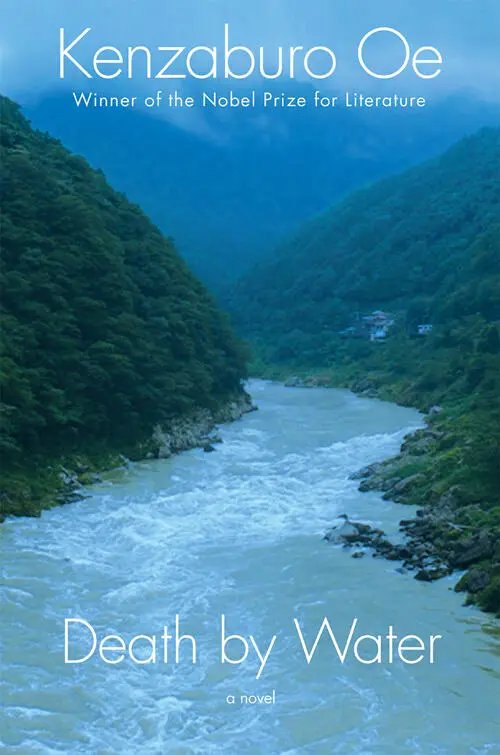
, his recurring protagonist and literary alter-ego returns to his hometown village in search of a red suitcase fabled to hold documents revealing the details of his father’s death during WWII: details that will serve as the foundation for his new, and final, novel.
Since his youth, renowned novelist Kogito Choko planned to fictionalize his father’s fatal drowning in order to fully process the loss. Stricken with guilt and regret over his failure to rescue his father, Choko has long been driven to discover why his father was boating on the river in a torrential storm. Though he remembers overhearing his father and a group of soldiers discussing an insurgent scheme to stage a suicide attack on Emperor Mikado, Choko cannot separate his memories from imagination and his family is hesitant to reveal the entire story. When the contents of the trunk turn out to offer little clarity, Choko abandons the novel in creative despair. Floundering as an artist, he’s haunted by fear that he may never write his tour de force. But when he collaborates with an avant-garde theater troupe dramatizing his early novels, Kogito is revitalized by revisiting his formative work and he finds the will to continue investigating his father’s demise.
Diving into the turbulent depths of legacy and mortality,
is an exquisite examination of resurfacing national and personal trauma, and the ways that storytelling can mend political, social, and familial rifts.
Death by Water — читать онлайн бесплатно полную книгу (весь текст) целиком
Ниже представлен текст книги, разбитый по страницам. Система сохранения места последней прочитанной страницы, позволяет с удобством читать онлайн бесплатно книгу «Death by Water», без необходимости каждый раз заново искать на чём Вы остановились. Поставьте закладку, и сможете в любой момент перейти на страницу, на которой закончили чтение.
Интервал:
Закладка:
I gave the high sign to Unaiko, who had been standing next to the recording equipment all this time, keeping a watchful eye on me. Then I told her I wanted to listen to the rest of the tape alone, at my leisure, adding by way of explanation that I felt like trying the liquor Asa had sent with the tape. Dexterously, Unaiko rewound the cassette to the beginning, so I would only need to press the play button.
I took the bottle and filled a large sake cup for myself, then pointed at another cup and looked inquiringly at Unaiko, who was in the process of pulling plastic water bottles out of the cloth-wrapped bundle and lining them up on the table. She declined, saying she would be leaving shortly to drive herself home. I quickly drained my cup, then refilled it.
Unaiko must have noticed how distressed I was by the contents of the tape; her body language seemed to suggest that she would be willing to take on the role of sympathetic listener, but I didn’t feel like talking things out with her (or anyone else) at that particular moment. She watched me thoughtfully as I continued to drink alone, in silence, and after a while she spoke.
“The story you’ve been trying to write about your father, who died more than sixty years ago — well, Asa was saying that your mother thought it was meant to be a novel of redemption, and she seems to have been right. I understand now why your mother was so opposed to the project.
“Before you came to the Forest House this summer, Asa kindly offered to let us use it. We did a major cleaning, since the house had been empty for quite a while, and then Masao Anai and I and some of the younger members of the troupe used it as both a training center and a place to stay. It was supposed to be for only a week, but the younger folks had obligations in Matsuyama, so I would often stay down here alone. Asa thought I might be lonely, and she would sometimes come over in the evenings to keep me company.
“I tried never to ask Asa any direct questions, but as the time approached for you to come down here and take possession of the red leather trunk (which, I gathered, had quite a bit of history), I got the distinct feeling that while she was looking forward to your arrival, at the same time she was also quite worried. Masao tends to be very perceptive about such things, and he said that he had a feeling it might turn out there was nothing packed away in the red leather trunk after all — or, at least, nothing that would provide you with the impetus (and the materials) you would need to finish your novel. That was worrying me, too, and one night as I sat here talking with Asa till the wee hours I inadvertently voiced my concerns. ‘Listen,’ I said, ‘if our worst fears are realized and the materials Mr. Choko is hoping to find aren’t in the trunk, maybe it would be a good idea to let him know as soon as he arrives.’
“I knew I had probably overstepped my boundaries, and I wasn’t surprised that Asa seemed a bit offended at first. When Masao is directing a play, he’ll sometimes say something like ‘You know, I’m deliberately restraining myself from getting angry at you guys,’ in order to keep the younger actors from ‘shrinking’ (that’s the term he uses). And I kind of got the feeling Asa was doing the same: reining in her annoyance. But after a rather tense couple of minutes I kind of sensed that she was saying to herself, Oh well, what the heck, I may as well go ahead and tell Unaiko about all the things I’ve been losing sleep over. She went back to her house beside the river to get her pajamas and other necessities, and after she returned we laid out our bedding side by side on the floor, crawled under the covers, and proceeded to talk the night away.
“The gist of what she told me is that the red leather trunk was recovered by the police a fair distance downstream from where they found your drowned father’s body and was subsequently delivered to your house. The trunk was initially put away unopened, but as the years went by, your mother started to sort through and dispose of the papers, and through that process she gradually came to have a clearer understanding of what her husband had been involved in.
“You probably know all of this already, but I’m going to repeat everything Asa told me, on the chance some of it might be helpful. In the beginning, apparently, your father just seemed to enjoy sharing drinks and conversation with the young officers from the regiment in Matsuyama who showed up one day bearing a letter of introduction from the Kochi Sensei, and soon became regular visitors to your house. Your dad would serve the visitors sake, along with various delicacies, such as sweetfish caught with nets during the months when their bodies have the most oil, then roasted, dried, and put aside to eat when those fish were out of season. I gathered that freshwater crabs and eels, plucked from the river by the village children, were another favorite delicacy. Your father even went so far as to serve meat, or jerky, from secretly slaughtered cows hung up to cure in natural caves in the mountains. You’ve written that the bloody tail of the cow would be delivered, wrapped in newspaper, and your father would then proceed to cook it, but according to your mother’s version of the same story, the guests were simply served the customary cuts of beef. In any case, the officers would dig into those lavish spreads, with their distinctively regional flavors, and your father would mostly sit quietly and listen as the animated conversation — lubricated by large quantities of locally brewed sake your family had somehow managed to obtain — swirled around him. That’s how it was, at first. “Gradually, those discussions began to take on an air of urgency, and the officers started talking about the necessity of doing something radical to change what they perceived as the disastrous course of Japanese history since the Meiji Restoration. From that point on, the local girls who had been working those banquets were no longer allowed in the house, and your mother had to do all the serving herself, unassisted.
“Apparently, according to what your mother told Asa about those get-togethers, at first your father’s role consisted mainly of making sure the sake was kept warm, but the way he listened to the officers’ conversations gradually became more attentive and more intense. Before long, he evidently allowed himself to be drawn into the intrigue, and he began to take an active part in the discussions about the insurgency the young officers were planning.
“And then they learned that a kamikaze aircraft base had recently been established on Kyushu, not too far away, and they got the delusional idea of stealing some of those planes, which were laden with bombs and filled with enough gas for their one-way missions. From then on, when one of the top secret planning sessions was in progress, your mother was only allowed to come into the main house to deliver trays of food. It was around that time, for reasons your mother didn’t understand, that your father got into the habit of burning the midnight oil in his cramped little study while he pored over an assortment of big, heavy books written in English. If those books were somehow significant, doesn’t it seem likely they would have been stashed in the red leather trunk, along with the letters?”
“You’re right,” I replied. “I discovered this only the other day, but the trunk did contain several volumes of Frazer’s classic work The Golden Bough. It was a kind of fad with my father’s generation to read (or at least carry around) the Japanese translation of the abridged version of those books, in the Iwanami paperback edition.”
“Why that particular book, I wonder?” Unaiko asked.
“I don’t have the foggiest idea,” I said, shaking my head.
“So your father drowned, and time passed,” Unaiko went on. “You became a published novelist, and it was when you declared your intention of having your next book focus on your father’s life and death that your mother started to get worried. She refused to give you access to the background materials you needed, and you ultimately decided to put the entire project on ice, even though the first chapter was already written. When you told your mother you wouldn’t be needing the materials from the red leather trunk after all, she was tremendously relieved. But then you wrote The Day He Himself Shall Wipe My Tears Away, and from what Asa told me, its publication changed everything. In that fever dream of a novella you portrayed your father as a grotesque figure riding in a funky wooden chariot who leads his ragtag disciples into Matsuyama to rob a bank in order to get money to finance his little band of insurgents, but ends up being fatally shot by the police. Your mother was appalled by what she saw as your betrayal of your family, and apparently she kept repeating over and over that your book was an affront to the memory of your drowned father, and saying things like ‘Who does Kogii think he is, anyhow — and what makes him think he has a right to publish this kind of garbage?’
Читать дальшеИнтервал:
Закладка:
Похожие книги на «Death by Water»
Представляем Вашему вниманию похожие книги на «Death by Water» списком для выбора. Мы отобрали схожую по названию и смыслу литературу в надежде предоставить читателям больше вариантов отыскать новые, интересные, ещё непрочитанные произведения.




Обсуждение, отзывы о книге «Death by Water» и просто собственные мнения читателей. Оставьте ваши комментарии, напишите, что Вы думаете о произведении, его смысле или главных героях. Укажите что конкретно понравилось, а что нет, и почему Вы так считаете.