Kenzaburo Oe - Death by Water
Здесь есть возможность читать онлайн «Kenzaburo Oe - Death by Water» весь текст электронной книги совершенно бесплатно (целиком полную версию без сокращений). В некоторых случаях можно слушать аудио, скачать через торрент в формате fb2 и присутствует краткое содержание. Год выпуска: 2015, ISBN: 2015, Издательство: Grove/Atlantic, Inc., Жанр: Современная проза, на английском языке. Описание произведения, (предисловие) а так же отзывы посетителей доступны на портале библиотеки ЛибКат.
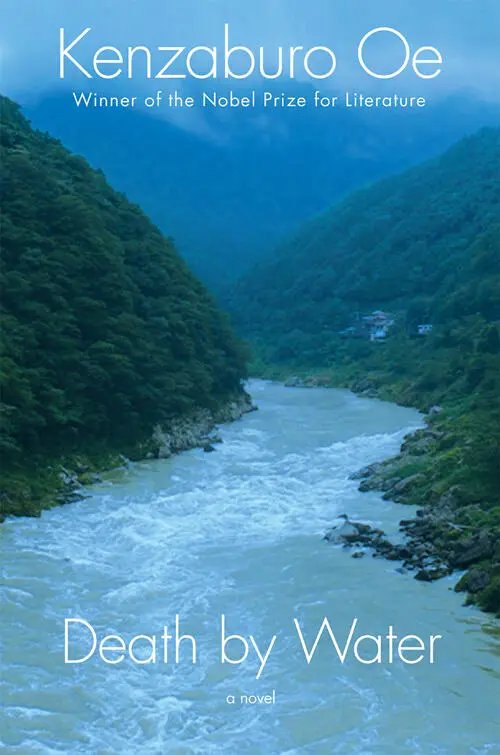
- Название:Death by Water
- Автор:
- Издательство:Grove/Atlantic, Inc.
- Жанр:
- Год:2015
- ISBN:9780802190871
- Рейтинг книги:3 / 5. Голосов: 1
-
Избранное:Добавить в избранное
- Отзывы:
-
Ваша оценка:
Death by Water: краткое содержание, описание и аннотация
Предлагаем к чтению аннотацию, описание, краткое содержание или предисловие (зависит от того, что написал сам автор книги «Death by Water»). Если вы не нашли необходимую информацию о книге — напишите в комментариях, мы постараемся отыскать её.
, his recurring protagonist and literary alter-ego returns to his hometown village in search of a red suitcase fabled to hold documents revealing the details of his father’s death during WWII: details that will serve as the foundation for his new, and final, novel.
Since his youth, renowned novelist Kogito Choko planned to fictionalize his father’s fatal drowning in order to fully process the loss. Stricken with guilt and regret over his failure to rescue his father, Choko has long been driven to discover why his father was boating on the river in a torrential storm. Though he remembers overhearing his father and a group of soldiers discussing an insurgent scheme to stage a suicide attack on Emperor Mikado, Choko cannot separate his memories from imagination and his family is hesitant to reveal the entire story. When the contents of the trunk turn out to offer little clarity, Choko abandons the novel in creative despair. Floundering as an artist, he’s haunted by fear that he may never write his tour de force. But when he collaborates with an avant-garde theater troupe dramatizing his early novels, Kogito is revitalized by revisiting his formative work and he finds the will to continue investigating his father’s demise.
Diving into the turbulent depths of legacy and mortality,
is an exquisite examination of resurfacing national and personal trauma, and the ways that storytelling can mend political, social, and familial rifts.
Death by Water — читать онлайн бесплатно полную книгу (весь текст) целиком
Ниже представлен текст книги, разбитый по страницам. Система сохранения места последней прочитанной страницы, позволяет с удобством читать онлайн бесплатно книгу «Death by Water», без необходимости каждый раз заново искать на чём Вы остановились. Поставьте закладку, и сможете в любой момент перейти на страницу, на которой закончили чтение.
Интервал:
Закладка:
When I didn’t respond, my younger sister began to cry. Her face was deeply flushed, and I was reminded that our mother used to cry in the same open, red-faced way, making no attempt to hide her vulnerability behind her hand. Asa paused for a long moment, then spoke through her tears.
“Kogii, the part of your drowning novel I returned to you after all this time — forty years! — begins by recounting a recurrent dream of yours, isn’t that right? As you wrote in those pages, the big question seems to be whether your dream is based on something you actually experienced, or whether you first dreamed about the scene you described, then came to believe it had actually happened and, later on, began to dream about it again in a new and different form. And, as you wrote in the early draft, you really weren’t sure where reality or memory ended and dreams began. Ever since I first read your account, after rushing home from Kyoto on the overnight train, I’ve always somehow thought you were only pretending not to know the answer to those questions. I mean, seriously, is there any doubt about what happened that night? I remember vividly how you sent me into the back parlor to see our father after they brought his body home. He was lying on a futon, and I reached out and touched his wet hair. I think the reason you keep saying you’re unsure whether the scene on the river was a dream or reality — and the reason you’ve been so obsessed with wanting to finish your drowning novel — is that you feel you should have been with Father when he rashly set out on the raging river in his little boat and ended up losing his life, and the guilt about what you see as a personal failure has haunted you ever since. As I recall, he had told you to come with him and steer the boat, but you took your own sweet time getting there and Papa, who was never a very patient man, got tired of waiting and took off without you. (Or maybe the boat just got tossed into the waves; we’ll never know for sure.)
“Mother swore me to silence about what I’m about to tell you, but here goes. That night, she walked over to the cornfield and stood on the stone wall looking down on the river, so she saw what happened. And she said to me, on more than one occasion, ‘I’m terribly glad Kogii didn’t go with his father after all.’ I guess she felt it would have been cruel to tell you she was watching, and that was why she never mentioned it to you. She must have realized that knowing there was a witness would have deprived you of your only refuge: pretending to be unable to distinguish between dream and reality.”
“I’m absolutely stunned,” I said. “I had no idea. Mother really thought it was a good thing I blew my assignment and literally missed the boat? The light from the full moon would have been shining through some breaks in the cloud cover, so if she was watching from above she must have witnessed my moment of shame. I mean, Father had put his trust in me — he even took the trouble to teach me how to use the tiller to steer the boat — and then when he needed my help the most I just stood there, totally useless, with the muddy water swirling around my chest, and watched the storm surf carry him away.”
“Anyhow,” Asa said, “Mother said that after Father’s boat was swept away you came slowly dog-paddling back to shore, and her heart was filled with indescribable joy. And now — were you thinking that if you could pick up where you left off with your drowning novel, you would somehow be able to make posthumous amends to our father and restore the good name of the little boy who swam sadly back to shore, feeling like a failure? And were you hoping you might be able to obtain some sort of magical absolution just by sorting through the materials in the red leather trunk?”
Though no longer red, Asa’s face was still contorted by emotion, and the tears continued to course down the deep furrows that ran from her cheeks to her mouth. I just sat there in a daze, feeling utterly annihilated. After some time had passed, my sister once again lifted her eyes and spoke to me. She’d stopped crying, but the expression on her face was markedly somber and subdued. She had evidently been wrestling with a difficult decision, but she now appeared to have made up her mind.
“Since I’ve already betrayed Mother’s trust by telling you something I promised not to share, I may as well go ahead and spill the rest of the beans,” she said. “Three years before she died, Mother recorded her account of what happened on that night when Father went out on the stormy river and lost his life. I have the cassette, and I want you to listen to it. You’re aware, of course, that after Mother’s eyesight began to fail and she wasn’t able to write letters, she started to use the tape recorder — which until then she had only been using to listen to Akari’s musical compositions — to create verbal thank-you notes, and she would send those tapes to people in lieu of letters. In fact, you even lifted her comments about the marvels of the forest from one of those tapes, and quoted them in a novel, as I recall.
“I was the one who oversaw the making of the tapes — who else, right? — but when Mother first said, ‘You know, I think I’d like to talk about that night,’ I didn’t fully understand her motives, and I couldn’t help thinking this material might just end up being something else for you to use in your books. I could tell it was important to her, though, so I did what I could to help. There were a number of Mother’s recordings stored in the red leather trunk, but I recently took that one out and set it aside.
“Okay then, I’m going to head home,” Asa said, getting to her feet. “Unaiko is staying at my house tonight, so I’ll send the tape over with her instead of bringing it myself. She has lots of expertise in using the sound system she set up earlier, but that isn’t the only reason I want her to be here. Given what’s on the tape, I really think it would be better if you weren’t alone when you listened to it.”
3
The minivan pulled into the front garden, and Unaiko stepped out. She was dressed, as usual, in casual work clothes. “I come bearing gifts from Asa,” she announced as she walked into the house and deposited a lumpy bundle, wrapped in a large furoshiki cloth, on the dining table.
The care package contained an unglazed vessel filled with some high-end shochu —fifty-proof distilled liquor some people describe as Japan’s answer to vodka, though I think it has an earthier flavor — that Asa had apparently received as a posthumous bequest from some connoisseur, along with three attractive ceramic sake cups. To this largesse Asa had added several Bizen ware dishes containing an assortment of her culinary creations, tightly covered with plastic wrap. In recent years I had been trying to keep my distance from strong drink, but I seemed to have a primordial muscle memory of how to handle the bottle.
While I was studying the label, Unaiko was busy setting up the playback equipment. “Would you like to listen to the tape while you’re eating dinner?” she asked as she tweaked an assortment of knobs and dials.
I nodded. “Asa was saying she wouldn’t normally have included an alcoholic beverage with the meal, but she had you bring this bottle of shochu because she thought I might need a drink after I’d finished listening to the tape. I’d like to do it while I’m still sober, though,” I said.
While Unaiko stationed herself at the board that controlled sound and lighting, I dragged one of the dining-room chairs to the south end of the great room (which resembled a small theater, with all the equipment). For a moment I let my gaze wander outside to the garden, where a sconce affixed to the wall was casting a pale glow on the Japanese birches.
Читать дальшеИнтервал:
Закладка:
Похожие книги на «Death by Water»
Представляем Вашему вниманию похожие книги на «Death by Water» списком для выбора. Мы отобрали схожую по названию и смыслу литературу в надежде предоставить читателям больше вариантов отыскать новые, интересные, ещё непрочитанные произведения.




Обсуждение, отзывы о книге «Death by Water» и просто собственные мнения читателей. Оставьте ваши комментарии, напишите, что Вы думаете о произведении, его смысле или главных героях. Укажите что конкретно понравилось, а что нет, и почему Вы так считаете.