Kenzaburo Oe - Death by Water
Здесь есть возможность читать онлайн «Kenzaburo Oe - Death by Water» весь текст электронной книги совершенно бесплатно (целиком полную версию без сокращений). В некоторых случаях можно слушать аудио, скачать через торрент в формате fb2 и присутствует краткое содержание. Год выпуска: 2015, ISBN: 2015, Издательство: Grove/Atlantic, Inc., Жанр: Современная проза, на английском языке. Описание произведения, (предисловие) а так же отзывы посетителей доступны на портале библиотеки ЛибКат.
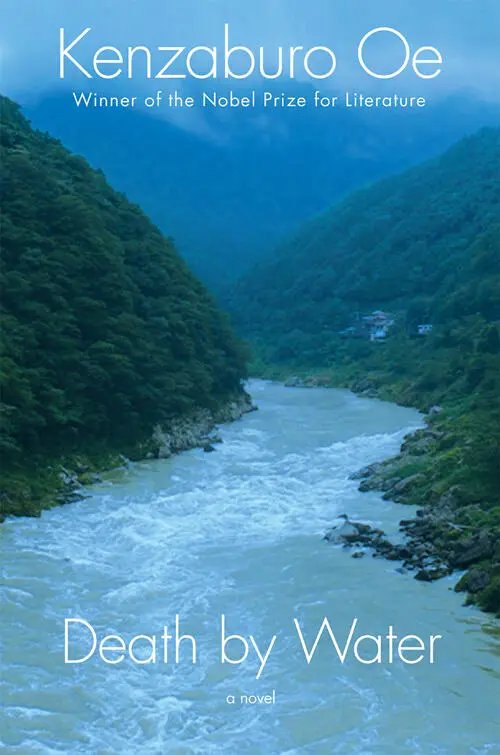
- Название:Death by Water
- Автор:
- Издательство:Grove/Atlantic, Inc.
- Жанр:
- Год:2015
- ISBN:9780802190871
- Рейтинг книги:3 / 5. Голосов: 1
-
Избранное:Добавить в избранное
- Отзывы:
-
Ваша оценка:
Death by Water: краткое содержание, описание и аннотация
Предлагаем к чтению аннотацию, описание, краткое содержание или предисловие (зависит от того, что написал сам автор книги «Death by Water»). Если вы не нашли необходимую информацию о книге — напишите в комментариях, мы постараемся отыскать её.
, his recurring protagonist and literary alter-ego returns to his hometown village in search of a red suitcase fabled to hold documents revealing the details of his father’s death during WWII: details that will serve as the foundation for his new, and final, novel.
Since his youth, renowned novelist Kogito Choko planned to fictionalize his father’s fatal drowning in order to fully process the loss. Stricken with guilt and regret over his failure to rescue his father, Choko has long been driven to discover why his father was boating on the river in a torrential storm. Though he remembers overhearing his father and a group of soldiers discussing an insurgent scheme to stage a suicide attack on Emperor Mikado, Choko cannot separate his memories from imagination and his family is hesitant to reveal the entire story. When the contents of the trunk turn out to offer little clarity, Choko abandons the novel in creative despair. Floundering as an artist, he’s haunted by fear that he may never write his tour de force. But when he collaborates with an avant-garde theater troupe dramatizing his early novels, Kogito is revitalized by revisiting his formative work and he finds the will to continue investigating his father’s demise.
Diving into the turbulent depths of legacy and mortality,
is an exquisite examination of resurfacing national and personal trauma, and the ways that storytelling can mend political, social, and familial rifts.
Death by Water — читать онлайн бесплатно полную книгу (весь текст) целиком
Ниже представлен текст книги, разбитый по страницам. Система сохранения места последней прочитанной страницы, позволяет с удобством читать онлайн бесплатно книгу «Death by Water», без необходимости каждый раз заново искать на чём Вы остановились. Поставьте закладку, и сможете в любой момент перейти на страницу, на которой закончили чтение.
Интервал:
Закладка:
“In your work to date, you’ve portrayed Father as a grotesquely exaggerated character, almost a cartoon — sometimes ludicrous, sometimes tragic, sometimes a bit heroic — but really, your take on him has been all over the map. In other words, for you, there was no clarity so there could be no absolution or closure, either. I think while Mother may have appeared to be systematically destroying your dreams, she was also trying to be true to her late husband, in her own way. I suspect that she burned a lot of papers after I moved out of her house. Maybe she was upset by the content of Father’s correspondence with some of his more eccentric cohorts, or perhaps she was just trying to protect her dead husband against any more of what she perceived as the defamatory caricaturing in Wipe My Tears Away.
“For me, right now, seeing you laid so low really does make me feel sorry for you, but at the same time it also confirms my belief that Mother did the right thing. The ten years since she passed away should have served as a sort of cooling-off period, and by now you ought to be able to deal with these things in a rational, levelheaded manner. Even if you’re in low spirits, you know what they say about people in our age group: ‘For an older person, there’s a thin line between reasonably copacetic and downright depressed.’ So I’m sure you’ll get over this disappointment before too long.
“When I gave Unaiko and her colleagues the partial manuscript of your drowning novel,” Asa went on, “I kept the index cards that were in the same bundle, and I’ve been reading them. As you probably remember, they contain little sketches or vignettes about incidents you witnessed, such as when the young officers came to our place for a get-together, or when the enlisted men (who were even younger) took you out in the boat and showed you how to operate the tiller. In the notes, you seem to have somehow conflated those memories with a vague recollection of what happened on the night of the massive flood. The section where you describe how Father’s boat gets swept away by the current seems to be written more or less realistically, and it’s entertaining the way those events are layered with your patented flights of fancy about seeing your doppelgänger and so on. But somehow it didn’t ring true, and I couldn’t help thinking how much Mother would have hated that sort of ungrounded narrative.
“Look, as long as we’re being candid, I’ll admit that I thought it was pretty willful of Mother to take such a radical approach to ‘tidying up’ the contents of the red leather trunk. But I honestly don’t believe she did it with malice aforethought, for the express purpose of destroying your plan to someday finish writing the drowning novel. If that had been her intention, she could have just told me to take the trunk and chuck it into the river at high tide, and that would have been the end of the story.
“Listen, I’m about to say something shamelessly sentimental, but I believe Mother really did love you. And as for the drowning novel you were always so preoccupied with, I think she ended up feeling that you should be free to complete it according to your own artistic vision. She wanted you to realize your perception of our father was mistaken, and she thought you should keep that in mind while you were writing the book. For her, those feelings were probably tantamount to love — which would mean she also loved our poor, misguided father as well. His life wasn’t exactly short on folly, but the thing Mother found the most foolish of all was the way he allowed himself to be led down the garden path of political extremism by his so-called mentor. Because of that connection, when the war finally came to an end our father got tangled up in the stupid, futile plot with the officers from Matsuyama. So it’s only natural that Mother would decide the most prudent course of action would be to eliminate the hard evidence pertaining to that particular bit of madness by throwing out any incriminating correspondence. Don’t you agree? It’s also possible that Mother burned those letters, over time, because she felt sorry for Papa for having been such a gullible fool. I mean, there were still lots of empty envelopes, right? When I was doing my summer housecleaning one year, I read one of those letters — just one. It was very friendly and congenial, with the writer teasing our father (whom he addressed as ‘older brother’) about being a member of the ‘elite mountain battalion’ and so on. Even if a plan for some sort of uprising to protest the end of the war really did exist, I suspect Papa might have been the only person who believed in it, and I can’t help feeling as if the only thing the plan produced was his dead body, drowned in the river.
“To Mother’s way of thinking (which seems quite reasonable to me), there was no point in your chronicling the ill-fated scheme in a book, but despite those strong feelings she at least hung on to the envelopes. As for me, I felt honor bound to take care of the red leather trunk and what was left of its contents, in accordance with Mother’s final wishes.”
“You’re right,” I said. “I’ve been nursing my own illusions and fantasies about our father for a very long time, and all this information you’re sharing now is news to me.”
“You know, during the three years after you published The Silent Cry you were writing constantly,” Asa said. “You made clean copies of the pages you’d drafted of the drowning novel and sent them to Mother along with the index cards we’ve been talking about. She wrote to me in Kyoto, where I was living at the time, saying basically: Please come home as soon as possible and help me read this stuff. I can’t make head or tail of it on my own!
“So I rushed home on the train that same night. When I wondered out loud why you would send our mother fragments of a book you had barely started writing, she said astutely you probably couldn’t proceed any further without the materials in the red leather trunk, and you must be hoping she would grant you access to the trove. I said to Mother, ‘I think you’d better refuse,’ and she replied that after reading the pages you’d sent, she had reached the same conclusion. Then when I wrote to let you know what we’d decided, you accepted our verdict so meekly I could hardly believe it. You even said that since your hopes of gaining access to the red leather trunk had been dashed, we should go ahead and burn the partial manuscript you had sent. That made Mother really happy, but as for burning your work, she said, ‘I will do no such thing — that would be a terrible waste! I’ll just stick those pages in the red leather trunk. They’ll be the first new additions in twenty years, at least.’ The only other time I can ever remember seeing her so cheerful was when Akari, in spite of his disabilities, managed to compose an amazing piece of music called ‘The Marvels of the Forest,’ and he sent her a recording of it.
“But anyhow, about a year later, you published The Day He Himself Shall Wipe My Tears Away. Mother was too shocked to put together a coherent sentence, but when I relayed her strong objections to the novella your response was to say that anyone who read the book would surely realize it was meant to be a work of fiction — and as I, Asa, should know better than anyone, you had written it without recourse to the materials in the red leather trunk. You followed up with an explanatory letter, admitting you’d turned Papa into a total caricature and pointing out that the book was equally merciless toward the character of the son, who represented you. ‘Self-critical to the point of exaggeration’ was how you put it, as I recall.
“As for the mother’s calm, critical observations, she was clearly being presented as the lone voice of sanity, but that cold comfort didn’t mitigate her extreme loathing for your book. Mother and I both had the distinct feeling that this glib, self-critical writer, who came across as a full-fledged Tokyoite, wasn’t the same person we used to call Kogii. We simply didn’t recognize you anymore. At any rate, that’s how we came to be estranged from you for such a long time. Mother suffered terribly when it happened, and for years afterward as well.”
Читать дальшеИнтервал:
Закладка:
Похожие книги на «Death by Water»
Представляем Вашему вниманию похожие книги на «Death by Water» списком для выбора. Мы отобрали схожую по названию и смыслу литературу в надежде предоставить читателям больше вариантов отыскать новые, интересные, ещё непрочитанные произведения.


Обсуждение, отзывы о книге «Death by Water» и просто собственные мнения читателей. Оставьте ваши комментарии, напишите, что Вы думаете о произведении, его смысле или главных героях. Укажите что конкретно понравилось, а что нет, и почему Вы так считаете.