Kenzaburo Oe - Death by Water
Здесь есть возможность читать онлайн «Kenzaburo Oe - Death by Water» весь текст электронной книги совершенно бесплатно (целиком полную версию без сокращений). В некоторых случаях можно слушать аудио, скачать через торрент в формате fb2 и присутствует краткое содержание. Год выпуска: 2015, ISBN: 2015, Издательство: Grove/Atlantic, Inc., Жанр: Современная проза, на английском языке. Описание произведения, (предисловие) а так же отзывы посетителей доступны на портале библиотеки ЛибКат.
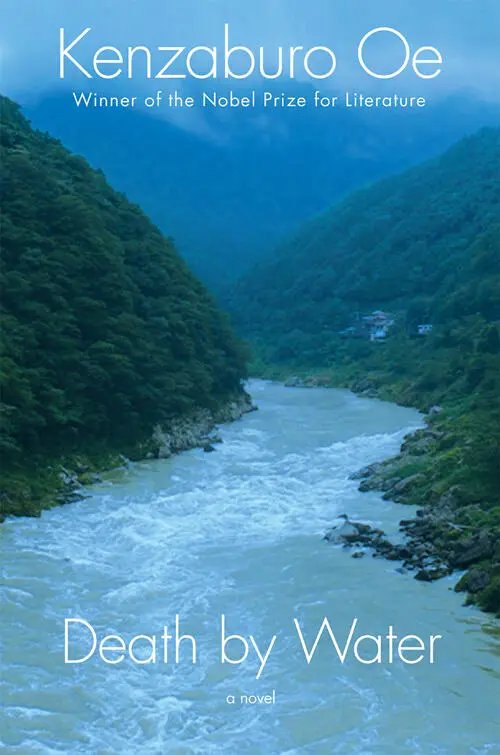
- Название:Death by Water
- Автор:
- Издательство:Grove/Atlantic, Inc.
- Жанр:
- Год:2015
- ISBN:9780802190871
- Рейтинг книги:3 / 5. Голосов: 1
-
Избранное:Добавить в избранное
- Отзывы:
-
Ваша оценка:
Death by Water: краткое содержание, описание и аннотация
Предлагаем к чтению аннотацию, описание, краткое содержание или предисловие (зависит от того, что написал сам автор книги «Death by Water»). Если вы не нашли необходимую информацию о книге — напишите в комментариях, мы постараемся отыскать её.
, his recurring protagonist and literary alter-ego returns to his hometown village in search of a red suitcase fabled to hold documents revealing the details of his father’s death during WWII: details that will serve as the foundation for his new, and final, novel.
Since his youth, renowned novelist Kogito Choko planned to fictionalize his father’s fatal drowning in order to fully process the loss. Stricken with guilt and regret over his failure to rescue his father, Choko has long been driven to discover why his father was boating on the river in a torrential storm. Though he remembers overhearing his father and a group of soldiers discussing an insurgent scheme to stage a suicide attack on Emperor Mikado, Choko cannot separate his memories from imagination and his family is hesitant to reveal the entire story. When the contents of the trunk turn out to offer little clarity, Choko abandons the novel in creative despair. Floundering as an artist, he’s haunted by fear that he may never write his tour de force. But when he collaborates with an avant-garde theater troupe dramatizing his early novels, Kogito is revitalized by revisiting his formative work and he finds the will to continue investigating his father’s demise.
Diving into the turbulent depths of legacy and mortality,
is an exquisite examination of resurfacing national and personal trauma, and the ways that storytelling can mend political, social, and familial rifts.
Death by Water — читать онлайн бесплатно полную книгу (весь текст) целиком
Ниже представлен текст книги, разбитый по страницам. Система сохранения места последней прочитанной страницы, позволяет с удобством читать онлайн бесплатно книгу «Death by Water», без необходимости каждый раз заново искать на чём Вы остановились. Поставьте закладку, и сможете в любой момент перейти на страницу, на которой закончили чтение.
Интервал:
Закладка:
I had more than one memory of catching a glimpse of my father in his little study — a cramped, narrow hideaway where he engaged in activities that had nothing to do with running our family business. He would pick up a large piece of paper covered with pictures and inscriptions, then lift it above his forehead with both hands in the manner of someone giving thanks to the gods, and I noticed that he always seemed to treat the missives from his mentor in Kochi with particular reverence.
“I wonder what sort of stuff is written on those pages,” I remember saying to my mother.
“Things that probably couldn’t be understood by the likes of you and me!” was her crisp response, but I thought I heard a distinct undertone of awe. Much later, when I’d all but forgotten about having mentioned the pages, my mother finally offered an explanation.
“There were some Chinese characters on those pages that even your father didn’t recognize, but he was able to find them in volume one of Morohashi Sensei’s kanji dictionary,” she said one day out of the blue, adding that once the renowned lexicographer had finished the other twelve volumes of his magnum opus there probably wouldn’t be a single character or word you couldn’t find in them.
My response was to say, “If every word anyone could think of writing is already listed in the dictionary, then nobody can ever say anything new. Where’s the fun in that?”
“When I told Papa what you said, he laughed,” she informed me later. “And then he joked, ‘Maybe someday our son will write something that can’t be found in any dictionaries!’”
As I understood it, all those artistic-looking letters were written on paper my father had made from paperbush bark the government’s official money-printing bureau had deemed substandard and returned to us. His decision to use the rejected bark struck me as alarmingly subversive, but my mother just said: “Of course, ‘substandard’ isn’t exactly the verdict we were hoping for, but your father turned it into a positive, saying happily, ‘Don’t worry, I think I can still make some good paper out of this!’” I got the sense that my mother had been a bit perplexed by my father’s cheerful reaction.
Every time my father would send a batch of the paper to his guru in Kochi, whom he held in the highest esteem, the Kochi Sensei (as he was known around our house) would turn those pages into works of art by covering them with paintings and calligraphy. He would then mail them back, often accompanied by letters written on the rougher paper, handcrafted from mulberry or pink mullein, which my father shared with his mentor from time to time along with the sheets he had made from rejected paperbush bark.
Sometimes those letters included little postscripts addressed to my mother. Once when I asked her what they said, she replied coolly, “Oh, he was just thanking me for the gifts of dried matsutake and goby and sweetfish.” Her tone seemed to suggest she wasn’t the Kochi Sensei’s biggest fan, for reasons that (I’m speculating in retrospect here) probably had to do with his far-right political views.
I stuck the big envelopes Masao had given me on a bookshelf, still feeling shocked that they hadn’t contained a single copy of the letters my father had received — just copies of the envelopes those letters had arrived in. All my father’s replies were missing as well. His usual routine when he received a letter was to scribble a draft of his response, which he then attached with a rubber band to the envelope containing the relevant correspondent’s missive. (My mother used to praise him for this efficient filing system.) Those drafts had somehow vanished along the way, along with the letters.
Oh well, I thought, making an effort to look on the bright side. I’ll just try to make the best of what I have. I dragged a chair over to the shelves and continued perusing the contents of the envelopes, one photocopied page at a time. As the afternoon light flooding the mountain valley began to fade, I could feel the enthusiasm I’d felt when I first started working, shortly before noon, ebbing away as well. I struggled to remain hopeful and upbeat, but as the sun sank out of sight at the end of the disappointing day my spirits plummeted at an equally rapid rate.
* * *
2
By the time Asa stopped by to deliver my evening meal, the last shreds of optimism had been replaced by full-blown melancholia. One quick glance at my gloomy expression was all it took for my sister to suss out my state of mind, and she observed me closely as I picked up my chopsticks and, without a word, dug into the food she had placed on the table in front of me.
After a while, in a tone of voice that was neutral rather than sympathetic, Asa began to speak. “While Mother still had her eyesight, she used to like to tidy up the clutter in her life from time to time,” she said. “And whenever she embarked on that task, I would watch while she attacked our father’s archived correspondence with a vengeance. It seemed to be a matter of particular concern to her, and I would think, At this rate it won’t be long until all the letters have been destroyed and there’s nothing left but the envelopes …”
“Well, I suppose it was inevitable that Mother’s bouts of intensive housekeeping would have a few casualties,” I said, trying to sound nonchalant. “I’ve been thinking a lot about it, and honestly, I really don’t feel as though I can complain about the choices she made. I mean, by rights all those things belonged to her, and we knew that she’d gotten appraisals from antiques dealers and used-book stores and had learned they had no value to speak of. It’s just that for the longest time I’ve been wanting to check out the contents of the trunk, and it’s become a bit of an obsession, to tell the truth. I was hoping against hope that if I could examine Father’s correspondence, journals, and so on (assuming such things even existed), those materials might provide some concrete evidence about the things I’ve been speculating about for decades — and might even resolve the lingering questions and ambiguities, once and for all.”
“Really, though,” Asa said, “doesn’t it seem likely that Mother knew you wouldn’t be able to write the book without some kind of spark to jump-start your imagination? At the end, after she had thrown away the letters, maybe the only reason she kept some of the envelopes was because the senders’ names rang a nostalgic bell for her.”
“From what I’ve seen, you’re right; this batch of papers doesn’t contain a single document that could be used to jump-start my imagination, as you put it,” I said. “I’ve already accepted that, reluctantly, and I’m even finding it rather odd that I still haven’t managed to give up daydreaming about Father after all these years. I’ve indulged in conjecture about what might have been going on while Father was alive, up through the events I chronicled in my partial draft of the drowning novel. (The truth is, there have been times when I’ve wondered whether what happened in the middle of that stormy night might just be a figment of my imagination.) As you know, I put some of the wilder scenarios into The Day He Himself Shall Wipe My Tears Away. I think for Mother, choosing to burn the letters was her way of smashing my wishful imaginings to bits, as if she were saying, See? Your ridiculous theories about your father being a hero really don’t have a leg to stand on. And now I’ve finally been forced to give up for the simple reason that I don’t have a single clue or scrap of evidence to support my position. If this had been a court case, it would have been a decisive victory for our mother.”
“Well,” Asa said, “from my point of view the strange thing is that it’s taken you so long to reach this realization. Better late than never, I suppose. The fact is, I’ve completely ignored the red leather trunk during the ten years since Mother’s death because I was dreading the Pandora’s box effect opening the trunk might have on you, and I didn’t want to do anything to cause you pain. However, while Mother was still alive I did have a few chances to read bits and pieces of the papers stored in the trunk. There were times when she would suddenly open the trunk and fish something out, as if she were possessed by some ancient memory, and I was always standing nearby, peeking over her shoulder. That’s how I knew she had started burning the papers to ashes on an old compost heap behind the house. She never told me what she was tossing into the flames, or why, but if I showed the slightest concern she would say something like ‘Oh, this is just some rubbish I don’t need to hang on to anymore.’ I thought it was perfectly reasonable that Mother would continue those periodic purges as she embarked on the second half of her very long life. And it was clear those weren’t spur-of-the-moment decisions by any means; she was obviously determined to tidy up the past, a few chapters at a time.
Читать дальшеИнтервал:
Закладка:
Похожие книги на «Death by Water»
Представляем Вашему вниманию похожие книги на «Death by Water» списком для выбора. Мы отобрали схожую по названию и смыслу литературу в надежде предоставить читателям больше вариантов отыскать новые, интересные, ещё непрочитанные произведения.

Обсуждение, отзывы о книге «Death by Water» и просто собственные мнения читателей. Оставьте ваши комментарии, напишите, что Вы думаете о произведении, его смысле или главных героях. Укажите что конкретно понравилось, а что нет, и почему Вы так считаете.