Kenzaburo Oe - Death by Water
Здесь есть возможность читать онлайн «Kenzaburo Oe - Death by Water» весь текст электронной книги совершенно бесплатно (целиком полную версию без сокращений). В некоторых случаях можно слушать аудио, скачать через торрент в формате fb2 и присутствует краткое содержание. Год выпуска: 2015, ISBN: 2015, Издательство: Grove/Atlantic, Inc., Жанр: Современная проза, на английском языке. Описание произведения, (предисловие) а так же отзывы посетителей доступны на портале библиотеки ЛибКат.
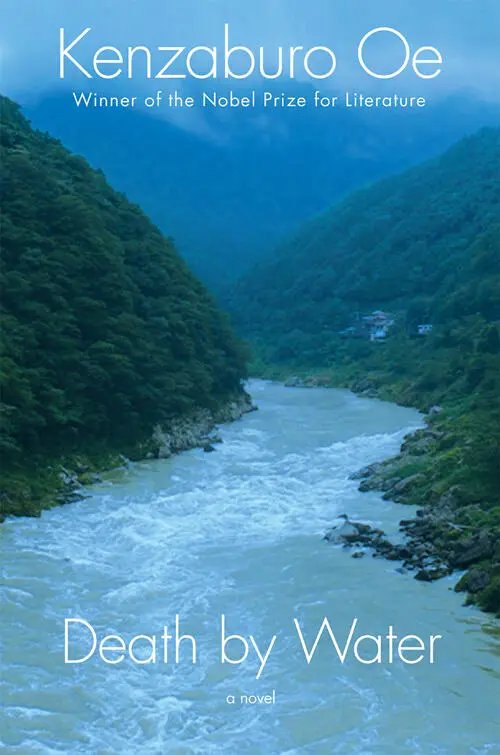
- Название:Death by Water
- Автор:
- Издательство:Grove/Atlantic, Inc.
- Жанр:
- Год:2015
- ISBN:9780802190871
- Рейтинг книги:3 / 5. Голосов: 1
-
Избранное:Добавить в избранное
- Отзывы:
-
Ваша оценка:
Death by Water: краткое содержание, описание и аннотация
Предлагаем к чтению аннотацию, описание, краткое содержание или предисловие (зависит от того, что написал сам автор книги «Death by Water»). Если вы не нашли необходимую информацию о книге — напишите в комментариях, мы постараемся отыскать её.
, his recurring protagonist and literary alter-ego returns to his hometown village in search of a red suitcase fabled to hold documents revealing the details of his father’s death during WWII: details that will serve as the foundation for his new, and final, novel.
Since his youth, renowned novelist Kogito Choko planned to fictionalize his father’s fatal drowning in order to fully process the loss. Stricken with guilt and regret over his failure to rescue his father, Choko has long been driven to discover why his father was boating on the river in a torrential storm. Though he remembers overhearing his father and a group of soldiers discussing an insurgent scheme to stage a suicide attack on Emperor Mikado, Choko cannot separate his memories from imagination and his family is hesitant to reveal the entire story. When the contents of the trunk turn out to offer little clarity, Choko abandons the novel in creative despair. Floundering as an artist, he’s haunted by fear that he may never write his tour de force. But when he collaborates with an avant-garde theater troupe dramatizing his early novels, Kogito is revitalized by revisiting his formative work and he finds the will to continue investigating his father’s demise.
Diving into the turbulent depths of legacy and mortality,
is an exquisite examination of resurfacing national and personal trauma, and the ways that storytelling can mend political, social, and familial rifts.
Death by Water — читать онлайн бесплатно полную книгу (весь текст) целиком
Ниже представлен текст книги, разбитый по страницам. Система сохранения места последней прочитанной страницы, позволяет с удобством читать онлайн бесплатно книгу «Death by Water», без необходимости каждый раз заново искать на чём Вы остановились. Поставьте закладку, и сможете в любой момент перейти на страницу, на которой закончили чтение.
Интервал:
Закладка:
I gave an encouraging nod.
“My aunt was married to a man who had spent his entire career as a civil servant in the Ministry of Education,” Unaiko began. “I don’t know whether she was influenced by her husband, or vice versa, but by early middle age they were both right-wing zealots. My aunt’s grandfather was a lieutenant colonel in the navy who died in the war, and that’s probably why she took me with her to Yasukuni Shrine, seventeen years ago. It wasn’t as if she had been invited there for a scheduled ceremony to honor the war dead, though; when we got to the gates we had to stand in a long line with all the other people who had come to pay their respects, or sightsee, or whatever, and we slowly shuffled through the precincts of the shrine like everybody else. After a while we came to the main altar, and my aunt started ringing the bell and clapping her hands to attract the attention of the gods. Then she started praying for the soul of her grandfather, the departed war hero. This ritual went on for an inordinately long time, and I stood next to her, bored out of my teenage mind, staring at the ground. I was startled by the sound of a loud voice, and when I looked up I saw that the area, which had been flooded with people, was rapidly emptying out. Even now, all these years later, the memory of the scene that unfolded before my eyes is totally vivid, as if it had happened this morning.
“The biggest flag I had ever seen was waving wildly right before my eyes; a vast expanse of white cotton with a bloodred rising sun in the center. I recognized it immediately as the Japanese national flag, of course, but it was so abnormally large that I was frightened. The person who was manipulating the gigantic flag, holding the flagpole in front of his body with both hands, was a young man dressed in the black uniform of a student. As he waved it back and forth, the humongous rectangle of white cotton with the bright red sphere in the middle was the only thing I could see. The flag never stopped moving, and I caught a glimpse of a second man behind the flag waver. He was dressed in an old-style military uniform and soldier’s cap (the kind they wear in the desert, with hanging flaps to protect the neck from the sun), and he was brandishing a long sword above his head. Both men seemed to be reciting some sort of vow or pledge, but even though they were slowly chanting the same words, over and over, I couldn’t figure out what they were saying.
“At that moment I suddenly began to throw up all over the place. My aunt pulled something — maybe a handkerchief — out of the folds of her kimono and tried to cover the lower half of my face, but I just went on endlessly spewing vomit in every direction, with tremendous velocity. My aunt took off the short jacket she was wearing over her kimono and draped it around my upper body, which was covered with the partially digested remains of my breakfast. And then (rather coldly, I thought) she frog-marched me toward the exit. The soldiers must have thought that I’d shown extreme irreverence by being sick on sacred ground, even involuntarily, because they followed close behind us with their long swords drawn. My aunt and I ended up running away from our pursuers at full speed, as if our very lives depended on it. And I know I didn’t imagine this melodramatic scene, because my aunt seems to remember it the same way.
“So that’s my story about Yasukuni Shrine. We made it home safely, more or less, and I won’t go into what happened afterward, but for the past seventeen years I haven’t been able to stop thinking about that bizarre and frightening experience.
“After graduating from high school I got an insignificant little job, and then I sort of bounced around from one entry-level position to another. It was a coworker at one of those forgettable jobs who took me to see a stage performance by the Caveman Group, and it came as a total revelation. Is it really possible to live like this? I asked myself. I knew I had to try, so I began to study drama in my spare time while continuing to work at my boring day job.
“But even during that busy and exciting period in my life I kept on thinking about the incident at Yasukuni Shrine, which was still festering in my memory like a psychic cancer. The truth is, Mr. Choko, at the time I wasn’t very familiar with your work. However, Masao was in the ongoing process of creating plays based on your fiction, and as I began to get drawn into the productions myself, I decided it was time to read your novella The Day He Himself Shall Wipe My Tears Away. And that, more than anything, was my first real encounter with the realm you’ve created in your books.
“I think you have a pretty good idea of what’s transpired since then,” she went on. “As you know, in his late teens Masao was taken under the creative wing of your late brother-in-law, Goro Hanawa. I gather he also met your wife through that connection. According to Masao, Goro Hanawa used to tell him he ought to familiarize himself with your novel Adventures in Everyday Life , because when Goro eventually turned that book into a screenplay, the only actor who could possibly play the part of the picaresque protagonist would be Masao. As you know, the film never got made, but the upshot was that Masao has been constantly reading and rereading your books ever since, while a more typical member of his generation might have dismissed you as an irrelevant fossil from the past. (No offense.) Masao’s immersion in your work ended up bearing fruit in the form of his award-winning production of The Day He Himself Shall Wipe My Tears Away, and now he’s busy trying to create a compressed retrospective of your novels in dramatic form. He even moved our theater troupe’s base of operations from Tokyo to Matsuyama, to be closer to the area where so many of your books take place.
“No sooner had we moved down here than Masao started visiting Asa, and he often took me along. Asa was very welcoming, and she totally got what we were doing. She let us hold workshops at the Forest House, and that was when she told us you would be coming to spend some time here. She didn’t have a lot of details, but she did say you’d be sorting through a bunch of materials your mother had left behind, as part of the research for a partially written book that might turn out to be the final chapter of your life as a fiction writer.
“When Asa shared the news, Masao was super excited. ‘Aha!’ he said. ‘That must be the long-lost drowning novel!’ Asa hadn’t mentioned the project by name, but Masao seems to have developed a sort of sixth sense when it comes to you and your work.
“As for me, I couldn’t help thinking how great it would be if the author of the original Wipe My Tears Away were living nearby. I had this idea that if I could talk to you and hear your thoughts about Yasukuni Shrine and ultranationalism in general, then maybe I would be able to figure out what significance that whole ideological can of worms has for me. Since I’m the type of person who likes to translate thought into action right away, I decided to plead with you directly to join us down here as soon as possible. That’s how I came to be lying in wait to ambush you the other day in Tokyo. Of course, due to totally unforeseeable circumstances, my ploy was more successful than I could ever have imagined!”
Yes, I thought. Early one morning on the cycling path beside the canal near my house, I suddenly swooned and started to fall backward, only to be caught from behind by an unseen Good Samaritan. A moment later I found myself in a sitting position, with my entire weight supported by one of this invisible stranger’s strong, resilient thighs. I have to confess that I’ve thought more than once about how odd the tableau would have appeared to a passerby who didn’t understand the situation. I didn’t say any of this out loud, though.
Читать дальшеИнтервал:
Закладка:
Похожие книги на «Death by Water»
Представляем Вашему вниманию похожие книги на «Death by Water» списком для выбора. Мы отобрали схожую по названию и смыслу литературу в надежде предоставить читателям больше вариантов отыскать новые, интересные, ещё непрочитанные произведения.


Обсуждение, отзывы о книге «Death by Water» и просто собственные мнения читателей. Оставьте ваши комментарии, напишите, что Вы думаете о произведении, его смысле или главных героях. Укажите что конкретно понравилось, а что нет, и почему Вы так считаете.