Kenzaburo Oe - Death by Water
Здесь есть возможность читать онлайн «Kenzaburo Oe - Death by Water» весь текст электронной книги совершенно бесплатно (целиком полную версию без сокращений). В некоторых случаях можно слушать аудио, скачать через торрент в формате fb2 и присутствует краткое содержание. Год выпуска: 2015, ISBN: 2015, Издательство: Grove/Atlantic, Inc., Жанр: Современная проза, на английском языке. Описание произведения, (предисловие) а так же отзывы посетителей доступны на портале библиотеки ЛибКат.
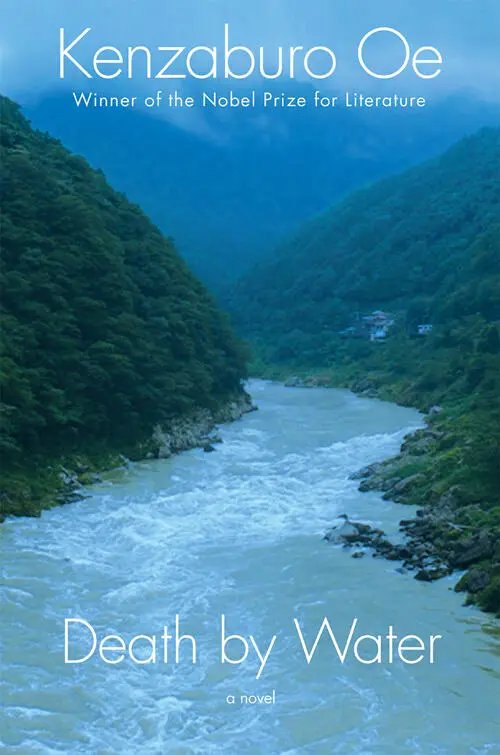
- Название:Death by Water
- Автор:
- Издательство:Grove/Atlantic, Inc.
- Жанр:
- Год:2015
- ISBN:9780802190871
- Рейтинг книги:3 / 5. Голосов: 1
-
Избранное:Добавить в избранное
- Отзывы:
-
Ваша оценка:
Death by Water: краткое содержание, описание и аннотация
Предлагаем к чтению аннотацию, описание, краткое содержание или предисловие (зависит от того, что написал сам автор книги «Death by Water»). Если вы не нашли необходимую информацию о книге — напишите в комментариях, мы постараемся отыскать её.
, his recurring protagonist and literary alter-ego returns to his hometown village in search of a red suitcase fabled to hold documents revealing the details of his father’s death during WWII: details that will serve as the foundation for his new, and final, novel.
Since his youth, renowned novelist Kogito Choko planned to fictionalize his father’s fatal drowning in order to fully process the loss. Stricken with guilt and regret over his failure to rescue his father, Choko has long been driven to discover why his father was boating on the river in a torrential storm. Though he remembers overhearing his father and a group of soldiers discussing an insurgent scheme to stage a suicide attack on Emperor Mikado, Choko cannot separate his memories from imagination and his family is hesitant to reveal the entire story. When the contents of the trunk turn out to offer little clarity, Choko abandons the novel in creative despair. Floundering as an artist, he’s haunted by fear that he may never write his tour de force. But when he collaborates with an avant-garde theater troupe dramatizing his early novels, Kogito is revitalized by revisiting his formative work and he finds the will to continue investigating his father’s demise.
Diving into the turbulent depths of legacy and mortality,
is an exquisite examination of resurfacing national and personal trauma, and the ways that storytelling can mend political, social, and familial rifts.
Death by Water — читать онлайн бесплатно полную книгу (весь текст) целиком
Ниже представлен текст книги, разбитый по страницам. Система сохранения места последней прочитанной страницы, позволяет с удобством читать онлайн бесплатно книгу «Death by Water», без необходимости каждый раз заново искать на чём Вы остановились. Поставьте закладку, и сможете в любой момент перейти на страницу, на которой закончили чтение.
Интервал:
Закладка:
Maybe the rapid series of flashbacks would provide a possible structure for my novel: an organic way to recount my father’s life story, stage by stage. And when he was finally sucked into the whirlpool, the stirring anthem would be ringing in his ears:
Da wischt mir die Tränen mein Heiland selbst ab.
Komm, O Tod, du Schlafes Bruder,
Komm und führe mich nur fort….
As I was envisioning the scene I found myself singing along in German — sotto voce and, at least to my ears, not screechily at all.
3
The next day as I was sitting in my study, surrounded by the contents of the red leather trunk, Masao Anai detached himself from the younger members of his troupe (they were hard at work again, moving furniture from place to place) and poked his head through the door.
“I don’t mean to put any pressure on you,” he said puckishly, “but I can’t help wondering whether you’ve found anything interesting so far.”
“Your curiosity is only natural,” I replied in the same playful tone. “I mean, you have a stake in this, too. But I’m afraid I’m still mired in sorting through the materials and trying to put them in order.”
Masao grinned. “The guys and I have been doing hard physical labor since early this morning, while our female counterparts were cooking up some new strategies,” he said. “Speaking of which, Unaiko mentioned that she’s hoping to be able to steal a few minutes of your time later today. She was originally planning to go back up to Matsuyama and take care of some business after dropping off her colleagues, and then come back here. But apparently when she called the stationery shop to check on the pages we’d left to be copied, she ended up getting into a dispute over the unexpectedly high prices they wanted to charge for color, so it looks as if I’ll have to go there myself to straighten out the misunderstanding. I’ll take the young ladies with me, but Unaiko will stay behind.”
A short while later, I went downstairs and found Unaiko waiting for me in the newly rearranged great room. We sat down in a couple of armchairs and then, wasting no time on the usual formulaic pleasantries, she cut right to the chase. “It’s about the rehearsal you were kind enough to watch the other day,” she said. “I’ve been wondering what you thought about it, and Asa said I should ask you directly, so here I am! I gather Asa already spoke to you about some of her concerns?”
“Yes, she did,” I answered. “But it’s not as if she grilled me about my impressions or anything. I mostly just listened to what she had to say.”
“I see,” Unaiko responded with a vigorous nod of her head. Her samurai-child ponytail bobbed up and down. “Actually, Asa seems to think the best approach might be to start by sharing my own thoughts. She was saying that over the years you’ve grown accustomed to having people listen to you while you hold forth at great length, so it can be difficult to get you to stop talking long enough for anyone else to get a word in edgewise.
“But seriously, look at Masao Anai — he’s totally wrapped up in your novels, to the point where he’s in the process of trying to dramatize your entire canon. At the same time, he’s able to view your work with the critical eye of a member of the younger generation. His admiration for your books seems to be tempered by an awareness of their flaws, and I think that’s part of his reason for wanting to convert them into theater, using his own methodology.
“When I speak about Masao’s ‘critical admiration,’ the same ambivalence has characterized my own feelings about you, Mr. Choko, but there’s a degree of divergence there as well. Like the other day I was immersed in the dramatization of The Day He Himself Shall Wipe My Tears Away, but on another level I still felt detached and somewhat skeptical. To be honest, during the rehearsals and afterward, too, those conflicted feelings just kept on getting stronger. In the scene where the soldiers are setting out from the mountain valley, heading toward their doomed insurrection, the child is singing along with the grown-ups. After the song ends, the person who’s playing the role of the child in his adult form shrieks the father’s Japanese interpretation of those lyrics like a crazy person — which, of course, he is.
“The emperor will wipe away my tears with his own hand / Come quickly, O death, death that is the sibling of sleep / Come quickly / The emperor himself will wipe away my tears with his own hand.
“To tell you the truth, I really don’t care for that kind of overwrought verbiage. In fact, it really creeps me out. And when we were prepping for our first rehearsals, months ago, I asked Masao a bunch of questions. ‘Shall we perform this with a critical edge? What about the various characters: the young boy with his high, childish voice; the soldiers, singing the boisterous chorus; and the leader, who’s in the throes of terminal cancer and riding in the funky wooden chariot? Should they all project an aura of comical grotesquerie, or should we play it straight?’
“Masao answered my questions with a question of his own: ‘Well, what about when you’re playing the boy’s mother?’ I wasn’t sure what he was getting at, so I asked, ‘Do you mean that I should just put the emphasis on her sarcastically critical words?’
“And then Masao (who tends to be a bit volatile at times) suddenly got angry and went off on a seemingly unrelated tangent. ‘Why do I have to be the messenger boy for Choko’s infatuation with the whole concept of postwar democracy?’ he demanded. He calmed down after a moment, as he always does, and then he went out of his way to help me understand his feelings. He said, ‘For Choko, along with a kind of doctrinaire embracing of the postwar strain of anti-ultranationalism, there’s also a deeper, darker, more nuanced Japanese sensibility. That’s why I’ve taken such an interest in The Day He Himself Shall Wipe My Tears Away, and I have a hunch the same duality will show up in the drowning novel as well, once it’s finished.’
“As for me,” Unaiko went on, “when we were performing Wipe My Tears Away for you the other day, I found myself unexpectedly moved. I could tell from Asa’s response that she and I were experiencing similar feelings. If you asked me what I found most affecting I would have to say it was when you suddenly started to sing along with the German song so passionately. It’s not as if I was suddenly swept away by a wave of emperor-worshipping nationalism through the medium of Bach’s cantata. No, I’m coming from a place of fundamental aversion to that type of thinking, so my activities with the Caveman Group are actually an ongoing way of dealing with my antipathy. (You’ll understand this better in a moment, after I tell you my own little story.)
“I was aware that you’ve taken a strong public stand against the resurgence of ultranationalism, especially through your essays and other writings. Even so, for you to undergo such an intense emotional experience as a child, and to revisit it now through the medium of a stage play … that must have had a major impact on you. I know it did on me, because it led me to an interest in you and your work that was different from the feelings I had before — and I think that’s also because Masao’s dramatization of your book has so much raw power.
“As I mentioned earlier, there’s a relevant story I’d like to share with you today, about an experience that made a profound impression on me. It happened at Yasukuni Shrine. Don’t get me wrong; I’m not some big authority on the place. It’s just … when I was seventeen years old my aunt happened to take me along when she went to pray at that famous (and, needless to say, controversial) shrine. That was my first visit and my last. I’ve never gone back there, but that one experience turned out to be a rather momentous event in my life. I’d like to tell you what happened, if you don’t mind.”
Читать дальшеИнтервал:
Закладка:
Похожие книги на «Death by Water»
Представляем Вашему вниманию похожие книги на «Death by Water» списком для выбора. Мы отобрали схожую по названию и смыслу литературу в надежде предоставить читателям больше вариантов отыскать новые, интересные, ещё непрочитанные произведения.




Обсуждение, отзывы о книге «Death by Water» и просто собственные мнения читателей. Оставьте ваши комментарии, напишите, что Вы думаете о произведении, его смысле или главных героях. Укажите что конкретно понравилось, а что нет, и почему Вы так считаете.