Kenzaburo Oe - Death by Water
Здесь есть возможность читать онлайн «Kenzaburo Oe - Death by Water» весь текст электронной книги совершенно бесплатно (целиком полную версию без сокращений). В некоторых случаях можно слушать аудио, скачать через торрент в формате fb2 и присутствует краткое содержание. Год выпуска: 2015, ISBN: 2015, Издательство: Grove/Atlantic, Inc., Жанр: Современная проза, на английском языке. Описание произведения, (предисловие) а так же отзывы посетителей доступны на портале библиотеки ЛибКат.
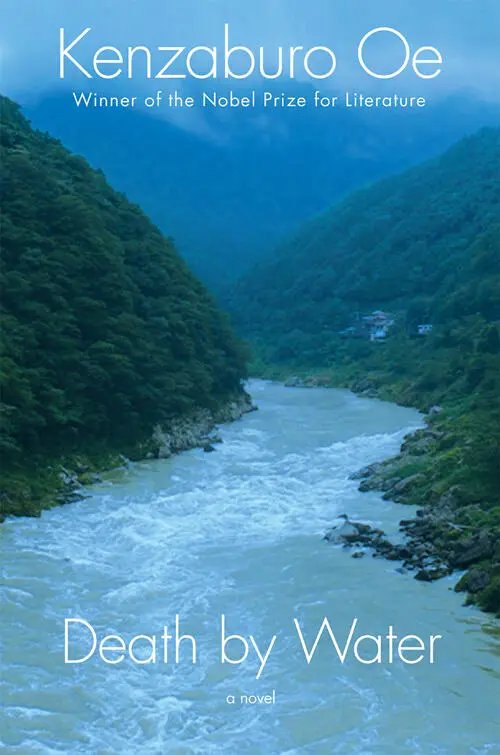
- Название:Death by Water
- Автор:
- Издательство:Grove/Atlantic, Inc.
- Жанр:
- Год:2015
- ISBN:9780802190871
- Рейтинг книги:3 / 5. Голосов: 1
-
Избранное:Добавить в избранное
- Отзывы:
-
Ваша оценка:
Death by Water: краткое содержание, описание и аннотация
Предлагаем к чтению аннотацию, описание, краткое содержание или предисловие (зависит от того, что написал сам автор книги «Death by Water»). Если вы не нашли необходимую информацию о книге — напишите в комментариях, мы постараемся отыскать её.
, his recurring protagonist and literary alter-ego returns to his hometown village in search of a red suitcase fabled to hold documents revealing the details of his father’s death during WWII: details that will serve as the foundation for his new, and final, novel.
Since his youth, renowned novelist Kogito Choko planned to fictionalize his father’s fatal drowning in order to fully process the loss. Stricken with guilt and regret over his failure to rescue his father, Choko has long been driven to discover why his father was boating on the river in a torrential storm. Though he remembers overhearing his father and a group of soldiers discussing an insurgent scheme to stage a suicide attack on Emperor Mikado, Choko cannot separate his memories from imagination and his family is hesitant to reveal the entire story. When the contents of the trunk turn out to offer little clarity, Choko abandons the novel in creative despair. Floundering as an artist, he’s haunted by fear that he may never write his tour de force. But when he collaborates with an avant-garde theater troupe dramatizing his early novels, Kogito is revitalized by revisiting his formative work and he finds the will to continue investigating his father’s demise.
Diving into the turbulent depths of legacy and mortality,
is an exquisite examination of resurfacing national and personal trauma, and the ways that storytelling can mend political, social, and familial rifts.
Death by Water — читать онлайн бесплатно полную книгу (весь текст) целиком
Ниже представлен текст книги, разбитый по страницам. Система сохранения места последней прочитанной страницы, позволяет с удобством читать онлайн бесплатно книгу «Death by Water», без необходимости каждый раз заново искать на чём Вы остановились. Поставьте закладку, и сможете в любой момент перейти на страницу, на которой закончили чтение.
Интервал:
Закладка:
Da wischt mir die Tränen mein Heiland selbst ab.
Komm, O Tod, du Schlafes Bruder,
Komm und führe mich nur fort….
After the chorus had faded away, the ostensibly male patient (played, at that juncture, by Unaiko), who had been lying on his side in the bed and narrating the scene, stood up. The character’s previously nonchalant style of narration suddenly changed radically, and he began to speak in a powerful declamatory voice that dominated the stage.
“I’ll die fighting in the little army my father is leading into this noble insurrection! As I was thinking this, a fighter plane appeared from the direction of the provincial city, coming in low over the pass, and the soldiers began shouting:
“‘Look how recklessly he’s flying. He doesn’t care what happens anymore!’
“‘We’d better get the planes we need fast, before those bastards crash them!’
“‘We need at least ten airplanes, then we can crash them into the Imperial Palace and go out in a kamikaze blaze of glory!’
‘“Our goal is junshi — suicide in the emperor’s name — it’s junshi for us all!’
“‘It’s junshi for us all’—the hot thorns in those words pierced my small heart, then lodged there and continued to burn. Before long I, too, had begun to sing along with the officers and enlisted men in my high, shrill voice.”
After that Unaiko, now playing the role of the young boy, stepped forward to the front of the stage and started to lead the chorus. And as the stirring cantata approached a crescendo even I began to sing along from my seat in the peanut gallery!
“Wow, Kogii — I never expected to hear you singing in such a loud voice, and in German to boot!” Asa exclaimed after the music had died down. “Of course, I don’t know whether your pronunciation is any good. Seriously, though, at least you were able to make your voice blend with those of the actors, and they’ve been practicing the piece for a while. Even after knowing you for all these years, it isn’t something I ever expected to see, or hear! I’ve attended some formal productions by the Caveman Group, and they have always been very well done, but I was never as moved as I am right now.”
Asa had returned from her quick run to the train station, and as she delivered this little speech she was standing next to me, staring out at the deepening darkness enveloping the mountain valley. “Unaiko has told me about the meaning of the words of the cantata you were singing,” she went on, “and while I can’t sympathize with the ideology, that didn’t keep me from being moved by the music, and the voices.”
“Well,” I replied, “in my novella those lines are rendered just as Father explained them to me. Heiland selbst means the savior or rescuer himself, which in this case is the emperor, even though obviously there’s no way the actual ruler would be involved in this scenario. I remember that the young officers who were always drinking sake at our house used to bellow the German anthem every night at the top of their lungs while listening to the RCA Victor Red Seal recording on the phonograph. When I was starting work on that book, I sang the chorus (which I recalled only vaguely) for Goro, and he knew right away which Bach composition it was.
“Afterward he even went out and tracked down a copy of the LP. One day he brought it by and we proceeded to sing the song together, with Goro stopping from time to time to explain the meaning of the German lyrics, and the words gradually came back to me. That’s the background, but when the actors began to sing and I heard the magnificently loud, theatrical sound, I couldn’t help but join the chorus. I must say, singing along with that ultranationalist anthem has left me with a strangely ambivalent aftertaste. But this troupe certainly knows how to put on a play, don’t they?”
“You can say that again,” Asa said. “There I was, watching the rehearsal, with half my mind on other things, when suddenly in the seat next to me my brother began to sing! Sixty-odd years have passed since your voice changed, but it still sounds kind of screechy, and when I heard it fervently raised in song, I thought to myself, Yikes, this feels like something genuine.” (Asa used the unflattering word “screechy” to describe my voice, and that might have been accurate since I had renewed my acquaintance with the song through the Dietrich Fischer-Dieskau recording Goro found for me. Still, I was tempted to say that I would have preferred to hear my singing voice described as a mellow baritone or even a pleasant countertenor, rather than a prepubescent screech.)
“I felt as though your singing was coming from a deep well of emotion,” Asa continued, evidently unable to stop marveling at my unusual behavior. “It seemed, at that moment, as if the intense emotions of childhood were being rekindled in your heart, so I just sat perfectly still, letting the sound wash over me. Honestly, I’ve never heard you sing with such passion, not even when you were in school. Maybe the song has been hibernating in your memory — or your soul — all this time, and was somehow reawakened when you heard it here today.
“But also, I keep going back to the original book this dramatization is based on. I remember The Day He Himself Shall Wipe My Tears Away very well, because it caused so much suffering for Mother and me. The ultranationalist uprising described in the novella supposedly takes place on August sixteenth, but in actuality there was never a single guerrilla uprising, anywhere in Japan, involving soldiers who were disgruntled about Japan’s surrender. As a young novelist, you were probably afraid of being raked over the coals by the older generation of critics. They tended to be rigorous about matters of historical verisimilitude, so you found a way around that by portraying the surreal shootout as the delusion of a patient in a mental hospital. The institutionalized patient — who, as a child, was along for the ride — is remembering the voices of the soldiers, singing in the truck as they headed to their doomed insurrection … and that’s when he begins to sing the German song.
“However, if you delve deeply enough into your memories, there’s a real-life incident you experienced long before you ever thought of writing the novella. As you’ve mentioned, during the four or five days before Father’s death, officers from the Matsuyama regiment kept stopping by our house to drink sake, and some of them even slept over in the storehouse next door. At the time, you heard the drunken young officers singing the song, and it would have stuck in your mind. The song itself is a Bach cantata, so of course it has nothing whatsoever to do with the Japanese emperor, but it must have somehow tugged at your heartstrings, don’t you think? And even if you didn’t come right out and say so in the novella, you must have been feeling a visceral connection to the fervor and excitement of the officers.
“I’m pretty sure you came in here today planning to watch the rehearsal with a coolly critical eye, but when the rousing chorus began your face turned bright red and you started to sing along in that high, squeaky voice. While I was watching you in amazement, I couldn’t help thinking, This is so intense it’s almost scary. But as I said earlier, I was feeling deeply moved myself, so the whole thing is rather complicated for me.”
I wasn’t sure what Asa had found so “scary” and “complicated,” and I paused for a moment to ponder her choice of words. We were still sitting there in the gathering dark while outside, Chikashi’s tiny rose garden and the valley beyond it were barely illuminated by the last remains of daylight. The heavily overcast sky, which had been threatening to rain since morning, was almost imperceptibly tinted by traces of a pale, diluted sunset.
Читать дальшеИнтервал:
Закладка:
Похожие книги на «Death by Water»
Представляем Вашему вниманию похожие книги на «Death by Water» списком для выбора. Мы отобрали схожую по названию и смыслу литературу в надежде предоставить читателям больше вариантов отыскать новые, интересные, ещё непрочитанные произведения.








Обсуждение, отзывы о книге «Death by Water» и просто собственные мнения читателей. Оставьте ваши комментарии, напишите, что Вы думаете о произведении, его смысле или главных героях. Укажите что конкретно понравилось, а что нет, и почему Вы так считаете.