Kenzaburo Oe - Death by Water
Здесь есть возможность читать онлайн «Kenzaburo Oe - Death by Water» весь текст электронной книги совершенно бесплатно (целиком полную версию без сокращений). В некоторых случаях можно слушать аудио, скачать через торрент в формате fb2 и присутствует краткое содержание. Год выпуска: 2015, ISBN: 2015, Издательство: Grove/Atlantic, Inc., Жанр: Современная проза, на английском языке. Описание произведения, (предисловие) а так же отзывы посетителей доступны на портале библиотеки ЛибКат.
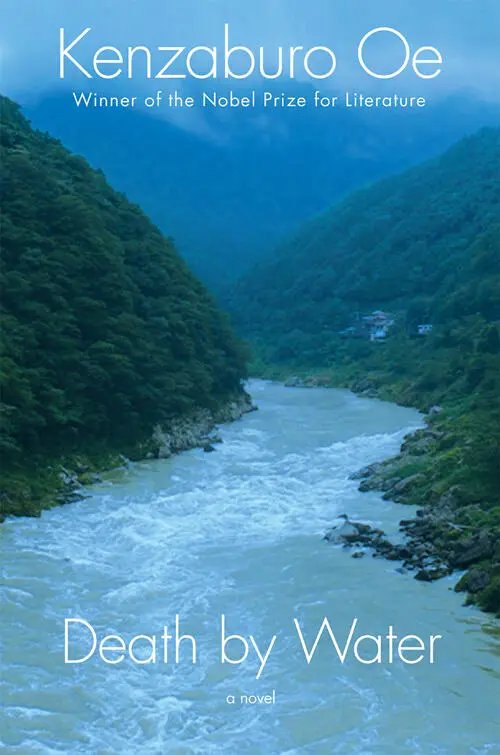
- Название:Death by Water
- Автор:
- Издательство:Grove/Atlantic, Inc.
- Жанр:
- Год:2015
- ISBN:9780802190871
- Рейтинг книги:3 / 5. Голосов: 1
-
Избранное:Добавить в избранное
- Отзывы:
-
Ваша оценка:
Death by Water: краткое содержание, описание и аннотация
Предлагаем к чтению аннотацию, описание, краткое содержание или предисловие (зависит от того, что написал сам автор книги «Death by Water»). Если вы не нашли необходимую информацию о книге — напишите в комментариях, мы постараемся отыскать её.
, his recurring protagonist and literary alter-ego returns to his hometown village in search of a red suitcase fabled to hold documents revealing the details of his father’s death during WWII: details that will serve as the foundation for his new, and final, novel.
Since his youth, renowned novelist Kogito Choko planned to fictionalize his father’s fatal drowning in order to fully process the loss. Stricken with guilt and regret over his failure to rescue his father, Choko has long been driven to discover why his father was boating on the river in a torrential storm. Though he remembers overhearing his father and a group of soldiers discussing an insurgent scheme to stage a suicide attack on Emperor Mikado, Choko cannot separate his memories from imagination and his family is hesitant to reveal the entire story. When the contents of the trunk turn out to offer little clarity, Choko abandons the novel in creative despair. Floundering as an artist, he’s haunted by fear that he may never write his tour de force. But when he collaborates with an avant-garde theater troupe dramatizing his early novels, Kogito is revitalized by revisiting his formative work and he finds the will to continue investigating his father’s demise.
Diving into the turbulent depths of legacy and mortality,
is an exquisite examination of resurfacing national and personal trauma, and the ways that storytelling can mend political, social, and familial rifts.
Death by Water — читать онлайн бесплатно полную книгу (весь текст) целиком
Ниже представлен текст книги, разбитый по страницам. Система сохранения места последней прочитанной страницы, позволяет с удобством читать онлайн бесплатно книгу «Death by Water», без необходимости каждый раз заново искать на чём Вы остановились. Поставьте закладку, и сможете в любой момент перейти на страницу, на которой закончили чтение.
Интервал:
Закладка:
“So how did my father propose to deal with the food shortage he was anticipating? Well, he had observed that every summer the riverside slope I mentioned a moment ago would turn a deep scarlet as the red spider lilies growing wild among the chestnut trees began to bloom. From the autumn of the year before Japan lost the war until the following summer (in other words, until a few months before he drowned), my father became involved in spearheading a public works project — an uncharacteristically social undertaking for a rather private person like him. He began by asking the principal of the local high school whether some students could be assigned to dig up the bulbs of the red spider lilies. He even offered to pay the child laborers a small wage. The high school kids threw themselves into the task with tremendous enthusiasm, and before long the storehouse normally used for chestnuts and persimmons was overflowing with bulbs.
“My father commandeered a portion of my mother’s vegetable garden and built a sort of minifactory in our backyard,” I went on. “He used bamboo pipes to funnel running water from the nearby river, and he built a mechanism to pulverize the bulbs. This type of amateur-engineering challenge was right in his wheelhouse. He put in some wide stone steps leading down to the river, and then he lined up a large number of barrels on a concrete slab he had installed on the riverbank and secured them with ropes. (It’s likely that my father found his pals in the military very useful when it came to getting hold of these materials.)
“The next task was to soak the pulverized spider lily bulbs in water. There was a wide, sandy beach downstream from our house, and that’s where my father placed a row of racks covered with straw mats, to use for drying the pulp. After the processed bulbs were dry, the final step in his master plan was to convert them into an edible form.
“Now, even children knew spider lily bulbs were poisonous, but there was a time, long ago, when the bulbs were turned into a flourlike powder and used as an emergency foodstuff in case of famine. People would grind the bulbs, then neutralize the toxicity by adding some medicinal herbs they’d gathered in the forest. Everyone, including my father, knew about this custom; there were even some old botanical illustrations on display in the local historical archives. My mother and grandmother were both locally renowned amateur herbalists, and they knew the forest couldn’t possibly provide enough of the medicinal herbs needed to detoxify the poisonous bulbs. Luckily, someone had developed a chemical agent that could be substituted for the elusive herbs, and my father obtained a supply from a friend who worked at a university on Kyushu. The idea was that if he could get the bulb-conversion factory up and running, he would be able to provide an ample quantity of high-quality starch.
“My mother and the other folks from the neighborhood who were helping out in the factory weren’t totally convinced the man-made chemical agent would detoxify the bulbs, but nonetheless the work went on. I remember seeing a long row of barrels filled to the brim with pulverized spider lily bulbs at the top of the riverbank. Things seemed to be moving along quite well until the rainy season began.”
“That’s very interesting,” Masao said, but he sounded a trifle impatient. “If we could just get back to the subject at hand, we know the full moon shone through a break in the clouds during a lull in the storm, right around midnight, and that was when your father set off on the flooded river in his little boat and ended up being drowned. Asa has confirmed that timeline as well. But to be honest, I have a feeling the cold, hard truth ends there. Perhaps you really were left behind because you got distracted and didn’t manage to climb aboard in time. But the bit about seeing Kogii standing in the boat, staring back at you? I can’t help thinking that part of the story was a dream and nothing more. Either way, the dream definitely gives the reality a deeper dimension.
“Needless to say, we aren’t trying to make a documentary here,” Masao went on, “so I would like to stage the scene not as a dream sequence but as reality, in accordance with your insistence that the ten-year-old boy really did see his doppelgänger, Kogii, against the backdrop of a giant wall of water. But how can we re-create that tableau onstage? I’m hoping we can figure out the logistics as we proceed with these interviews. I’d like very much to conjure up a scene where the Kogii I’m envisioning — who, as we’ve discussed, is a kind of supernatural being — takes the form of an ordinary child. If we can pull this off, I think it could be fantastic!”
2
This was on a Sunday. The original plan had been to stage a rehearsal, right there at the Forest House, of the condensed version of the troupe’s prize-winning dramatic adaptation of my novella The Day He Himself Shall Wipe My Tears Away, in order to show me the kind of work it was doing. However, two young actors who were slated to participate had gotten a gig (as they called it) to perform elsewhere in the guise of their sketch-comedy personas, Suke & Kaku. As a result, the rehearsal was rescheduled for the following week. I already had a good feeling about the dynamic of the Caveman Group, based on what I had seen so far of Masao Anai’s strong but fair leadership style (or rather shared leadership, with Unaiko), and this latest development only strengthened my sense that the group was run as a sort of collegial democracy.
And so it was that a week later, on the following Sunday morning, a caravan of assorted vehicles came bumping down the private road and pulled up in front of the Forest House. Within minutes the young actors were hard at work on the preparations for the rehearsal, under the supervision of Masao and Unaiko.
As for me, I had willingly surrendered the first floor to this energetic group (whose members were so focused on their work that they hadn’t even taken the time to greet me one by one) and had retired to my second-floor study. After a while, Masao called to me from the bottom of the stairs. I emerged from my lair to find that Asa, too, had joined the party.
As soon as Asa and I — a command performance audience of two — had seated ourselves with our backs to the partition, Masao strode onto the makeshift stage and began to speak. (The “stage” was furnished with a narrow soldier’s bed his young helpers had carried down from the second floor, along with a chair from the dining room.)
To set the scene for his little audience, Masao led off with a general explanation, but the complex timbre of his voice — simultaneously natural, robust, and precise — seemed to offer a glimpse of his particular brand of theater.
“After having read our copy of the prologue of the drowning novel, Unaiko and I were thinking we would like to open the play with a monologue by the person who is visited by the recurrent dream described in the opening passage,” Masao began. “A small boat is moored in a riverside cove, and our narrator’s father is standing in the bobbing boat and facing away from the audience, with the overflowing river as a dramatic backdrop. In the foreground stands a young boy, immersed in muddy water up to his chest. He, too, is facing away from us. Floating high above the boat is the solitary figure of Kogii, and he’s the only one facing the audience. So that’ll be the tentative staging of the opening scene.
“However, the part of the story where the writer sifts through the contents of the red leather trunk as the entire drowning novel unfolds before us is just a vague concept. Right now we’re in the process of rereading your complete works, Mr. Choko, with the goal of making our allusions as powerful as possible, so today we’ll only be presenting a few scenes from our already completed adaptation of The Day He Himself Shall Wipe My Tears Away.
Читать дальшеИнтервал:
Закладка:
Похожие книги на «Death by Water»
Представляем Вашему вниманию похожие книги на «Death by Water» списком для выбора. Мы отобрали схожую по названию и смыслу литературу в надежде предоставить читателям больше вариантов отыскать новые, интересные, ещё непрочитанные произведения.






Обсуждение, отзывы о книге «Death by Water» и просто собственные мнения читателей. Оставьте ваши комментарии, напишите, что Вы думаете о произведении, его смысле или главных героях. Укажите что конкретно понравилось, а что нет, и почему Вы так считаете.