Kenzaburo Oe - Death by Water
Здесь есть возможность читать онлайн «Kenzaburo Oe - Death by Water» весь текст электронной книги совершенно бесплатно (целиком полную версию без сокращений). В некоторых случаях можно слушать аудио, скачать через торрент в формате fb2 и присутствует краткое содержание. Год выпуска: 2015, ISBN: 2015, Издательство: Grove/Atlantic, Inc., Жанр: Современная проза, на английском языке. Описание произведения, (предисловие) а так же отзывы посетителей доступны на портале библиотеки ЛибКат.
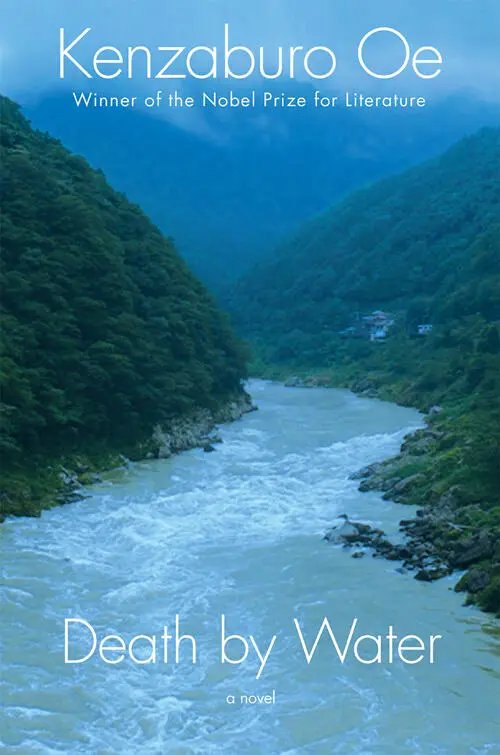
- Название:Death by Water
- Автор:
- Издательство:Grove/Atlantic, Inc.
- Жанр:
- Год:2015
- ISBN:9780802190871
- Рейтинг книги:3 / 5. Голосов: 1
-
Избранное:Добавить в избранное
- Отзывы:
-
Ваша оценка:
Death by Water: краткое содержание, описание и аннотация
Предлагаем к чтению аннотацию, описание, краткое содержание или предисловие (зависит от того, что написал сам автор книги «Death by Water»). Если вы не нашли необходимую информацию о книге — напишите в комментариях, мы постараемся отыскать её.
, his recurring protagonist and literary alter-ego returns to his hometown village in search of a red suitcase fabled to hold documents revealing the details of his father’s death during WWII: details that will serve as the foundation for his new, and final, novel.
Since his youth, renowned novelist Kogito Choko planned to fictionalize his father’s fatal drowning in order to fully process the loss. Stricken with guilt and regret over his failure to rescue his father, Choko has long been driven to discover why his father was boating on the river in a torrential storm. Though he remembers overhearing his father and a group of soldiers discussing an insurgent scheme to stage a suicide attack on Emperor Mikado, Choko cannot separate his memories from imagination and his family is hesitant to reveal the entire story. When the contents of the trunk turn out to offer little clarity, Choko abandons the novel in creative despair. Floundering as an artist, he’s haunted by fear that he may never write his tour de force. But when he collaborates with an avant-garde theater troupe dramatizing his early novels, Kogito is revitalized by revisiting his formative work and he finds the will to continue investigating his father’s demise.
Diving into the turbulent depths of legacy and mortality,
is an exquisite examination of resurfacing national and personal trauma, and the ways that storytelling can mend political, social, and familial rifts.
Death by Water — читать онлайн бесплатно полную книгу (весь текст) целиком
Ниже представлен текст книги, разбитый по страницам. Система сохранения места последней прочитанной страницы, позволяет с удобством читать онлайн бесплатно книгу «Death by Water», без необходимости каждый раз заново искать на чём Вы остановились. Поставьте закладку, и сможете в любой момент перейти на страницу, на которой закончили чтение.
Интервал:
Закладка:
After we had shared a contemplative moment, Asa spoke again, and her concerns became clear. “Now, it’s not as if I’m worried that at this late date my famously liberal brother will be criticized for innocently enjoying the sound of an ultranationalist anthem,” she said. “It’s just that you’re about to embark on what (considering your age) may well turn out to be your final project. I realize your main focus will be on exploring the contents of the red leather trunk, with the help of the Caveman Group, but I can’t help wondering what might happen if some echoes of the ultranationalist German song were to show up in the book you ultimately write.
“After the rehearsal Unaiko and I took the young folks to the Japan Rail station in Honmachi, to see them off. Then the two of us — the feisty old lady and Unaiko, the gifted young woman in the prime of life — lingered awhile on the elevated station platform overlooking the picturesque basin of the valley and the mountain range beyond, and we had a very intense conversation. (Incidentally, Unaiko and I have been keeping in touch via email for quite some time, and we agreed to keep the conversation going, like a couple of soul sisters, completely independent of our respective relationships with Masao Anai.)
“As we stood there admiring the view, I confessed to Unaiko that like my brother, who simply couldn’t keep from jumping in and singing along with the chorus of young voices earlier today, I, too, was quite stirred by the German song. And I told her the same thing I’ve been trying to express to you: that the aftermath (to borrow one of your trademark words!) of the Caveman Group’s rehearsal has already begun.
“Maybe this afternoon has made me sentimental, but I just want to say how glad I am to have you back in the place where we grew up. And since I now feel certain you’re mentally prepared to deal with whatever you may find inside, I’m ready to hand over the red leather trunk at last.”
Chapter 3. The Red Leather Trunk
1
Asa had apparently been listening for the sound of my footsteps. When I arrived at her house near the river, she immediately led me down a hallway to a storage closet. Off to the left, the living-room door stood open and through it I caught a glimpse of a familiar low table with a plate of soft, steamed rice-flour dumplings filled with chestnut jam — which I recognized right away as the handiwork of a long-established sweetshop in the nearby town of Honmachi — already laid out for our tea. Stashed in the closet, next to the discs and the boom box Akari had used for playing CDs during his last visit, was my mother’s red leather trunk.
In the eighth year of Showa (that is, 1933), my parents were already married and living in Tokyo, but due to some complications in my father’s situation there had been a delay in their plan to return to our village on Shikoku and look after the family interests. My mother decided to go to Shanghai to visit a childhood friend who was married to a Japanese trading-company employee and had just had a baby, and she ended up staying there for more than a year. Finally my father went to China to fetch her, and when they returned to Japan my mother’s luggage included the red leather trunk. Even then, the trunk wasn’t new; my mother had bought it at a Japanese-run bookstore in Shanghai that sold used goods on the side. There was no way of guessing how old the little suitcase might have been, but after it came into her possession my mother always took meticulous care of it. Over time the leather had begun to crack and peel, but the color was still a deep, rich red. The trunk may have been small, but it was considerably sturdier than the bags you see young women toting around nowadays.
“The lock stopped working ages ago,” Asa explained. “That’s why it’s held together with rope. When Mother died, I took a quick look at the contents and then put the trunk away, and it hasn’t been opened since. During Mother’s lifetime, she used to give it a good airing once a year. The trunk does have a bit of an antique smell, though I don’t find it unpleasant at all. So, here we are at last. Are you ready to take a peek?”
“I think I’d rather take the trunk back to the Forest House,” I replied.
“Suit yourself,” Asa said. “By the way, Father’s papers included a number of letters from a teacher he especially respected, and they were always decorated with calligraphy and watercolor paintings. The notes Father penciled into the margins have faded, but Masao was saying that if we had color copies made they could end up being clearer than the originals for reasons I don’t really understand. So I had him go ahead and do that. When the copies are finished, Unaiko will bring them down from Matsuyama.”
2
At last, indeed, I thought after Asa had dropped me back at the Forest House. I was finally free to open the red leather trunk and explore its contents on my own terms. I carried the suitcase upstairs to my study/bedroom, set it down in front of the south-facing window, and untied the rope. The metal fittings that had once attached the lid to the body of the trunk were long gone, and the top slid off with no resistance whatsoever.
There were some large, bulky-looking objects on the bottom, and when I lifted them up the red trunk lurched forward and slammed into my thigh. The heavy things turned out to be three thick books, each bearing the title The Golden Bough and the publisher’s imprint: Macmillan. When my father was alive, my mother had once remarked that my father’s mentor in Kochi was introducing him to books from all over the world, on all sorts of topics. Maybe that was where these had come from. I remembered suddenly that when I was at university I had bought an Iwanami paperback containing an abridged version of The Golden Bough, in Japanese translation, but I don’t think I ever got around to reading it.
There were no other books in the trunk, so I started off by reading some old journals, an activity that conjured a vivid memory of my mother sitting with her back to me, writing in a small notebook with a metal-nibbed “G pen” she dipped into an inkpot from time to time. On a number of occasions, when there was a temporary lull in the ongoing intrafamilial hostilities and I was on Shikoku for a visit, Asa had secretly borrowed a few of our mother’s journals for me to look at (though only after I promised I would never use anything I found in them as fodder for fiction). Our mother apparently knew what Asa was up to, and her silence was a kind of tacit approval. The trunk now contained fifteen volumes of those journals, but I was certain that was only a fraction of the total.
The friend in Shanghai (whom my mother had stayed with for so long that my father had to bring her back) was someone of particular importance to my family. She had grown up as the only child in a mansion on a hill overlooking the village, and she and my mother had been friends for most of their lives. We called her the Shanghai Auntie. The better part of my mother’s journal entries consisted of detailed transcriptions of the letters the Shanghai Auntie had sent from China, where she was living after her marriage.
Seeing those old journals again reminded me of my mother’s system for keeping me supplied with reading material during the war. Early on I had fallen in love with the children’s fantasy novel The Wonderful Adventures of Nils and had read it over and over again. My mother used to take some of the thick cotton army socks we received as part of wartime rationing and fashion them into small bags. She would fill the bags with rice and then set out for the nearby cluster of houses, whose occupants were living under perpetual threat of air raids, and she would trade the rice — a precious commodity in those days — for stacks of Iwanami Bunko paperbacks. That was how I came to discover The Adventures of Huckleberry Finn, a transformative book that became the cornerstone of my personal Great Wall of Literature.
Читать дальшеИнтервал:
Закладка:
Похожие книги на «Death by Water»
Представляем Вашему вниманию похожие книги на «Death by Water» списком для выбора. Мы отобрали схожую по названию и смыслу литературу в надежде предоставить читателям больше вариантов отыскать новые, интересные, ещё непрочитанные произведения.





Обсуждение, отзывы о книге «Death by Water» и просто собственные мнения читателей. Оставьте ваши комментарии, напишите, что Вы думаете о произведении, его смысле или главных героях. Укажите что конкретно понравилось, а что нет, и почему Вы так считаете.