Kenzaburo Oe - Death by Water
Здесь есть возможность читать онлайн «Kenzaburo Oe - Death by Water» весь текст электронной книги совершенно бесплатно (целиком полную версию без сокращений). В некоторых случаях можно слушать аудио, скачать через торрент в формате fb2 и присутствует краткое содержание. Год выпуска: 2015, ISBN: 2015, Издательство: Grove/Atlantic, Inc., Жанр: Современная проза, на английском языке. Описание произведения, (предисловие) а так же отзывы посетителей доступны на портале библиотеки ЛибКат.
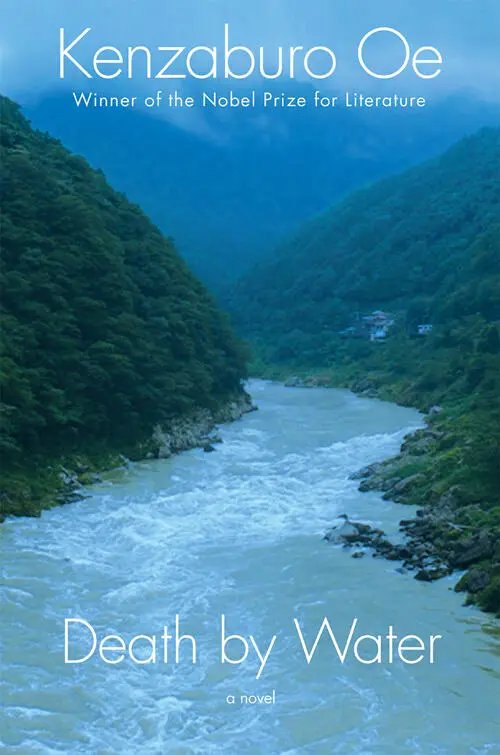
- Название:Death by Water
- Автор:
- Издательство:Grove/Atlantic, Inc.
- Жанр:
- Год:2015
- ISBN:9780802190871
- Рейтинг книги:3 / 5. Голосов: 1
-
Избранное:Добавить в избранное
- Отзывы:
-
Ваша оценка:
Death by Water: краткое содержание, описание и аннотация
Предлагаем к чтению аннотацию, описание, краткое содержание или предисловие (зависит от того, что написал сам автор книги «Death by Water»). Если вы не нашли необходимую информацию о книге — напишите в комментариях, мы постараемся отыскать её.
, his recurring protagonist and literary alter-ego returns to his hometown village in search of a red suitcase fabled to hold documents revealing the details of his father’s death during WWII: details that will serve as the foundation for his new, and final, novel.
Since his youth, renowned novelist Kogito Choko planned to fictionalize his father’s fatal drowning in order to fully process the loss. Stricken with guilt and regret over his failure to rescue his father, Choko has long been driven to discover why his father was boating on the river in a torrential storm. Though he remembers overhearing his father and a group of soldiers discussing an insurgent scheme to stage a suicide attack on Emperor Mikado, Choko cannot separate his memories from imagination and his family is hesitant to reveal the entire story. When the contents of the trunk turn out to offer little clarity, Choko abandons the novel in creative despair. Floundering as an artist, he’s haunted by fear that he may never write his tour de force. But when he collaborates with an avant-garde theater troupe dramatizing his early novels, Kogito is revitalized by revisiting his formative work and he finds the will to continue investigating his father’s demise.
Diving into the turbulent depths of legacy and mortality,
is an exquisite examination of resurfacing national and personal trauma, and the ways that storytelling can mend political, social, and familial rifts.
Death by Water — читать онлайн бесплатно полную книгу (весь текст) целиком
Ниже представлен текст книги, разбитый по страницам. Система сохранения места последней прочитанной страницы, позволяет с удобством читать онлайн бесплатно книгу «Death by Water», без необходимости каждый раз заново искать на чём Вы остановились. Поставьте закладку, и сможете в любой момент перейти на страницу, на которой закончили чтение.
Интервал:
Закладка:
“It’s really rather uncanny, don’t you think? I mean, why was my mother so certain I would go up into the forest rather than heading downriver? (It was probably more of a gut feeling on her part, but her instincts still struck me as remarkable.) Some of the adults in our village had a habit of saying cruel, unpleasant things to the local children, and for a long time after my dramatic rescue they used to taunt me with remarks like “Hey, sonny boy, you were so obsessed with finding your imaginary friend that you got lost in the forest and caused a lot of trouble for the firemen. Shame on you!”
5
After the first official recording session ended, Masao Anai was in a supremely buoyant mood.
“Today was only supposed to be a run-through to test our system, but we ended up getting a full-fledged interview!” he said. “Of course, you’re about to tackle the major task of sorting through the materials in the red leather trunk, but if you could see your way clear to hanging out with us from time to time, just like this, before too long we should be able to create a bundle of interviews that can become a vital part of the play. And while you’re working on your own project, perhaps these sessions will provide you with some useful notes, as we say in the theater biz. I think that would be an excellent path, for all of us. We’ll come back next week, and in the meantime Unaiko will type up a transcript of today’s session. The first thing on the agenda next time will be to have you take a look at those pages.
“I know sometimes, when you give a lecture, you’ll polish your notes later on and publish them in a magazine. I usually make a point of reading those articles. But when it comes to our group’s approach to making art, smoothing things out too much wouldn’t be as enjoyable for the audience, since everything we do is aimed at creating drama. We aren’t asking you to remove the irrelevancies and divergences, but we would like you to elaborate a bit more, keeping in mind that we’ll be trying to transform your narrative into a physical form onstage.”
Unaiko picked up where Anai had left off, speaking in a manner noticeably calmer and more composed than that of her exuberant colleague. “Mr. Choko,” she began, “I wanted to talk to you about something I noticed toward the end of the interview. At one point you seemed to be in a bit of a quandary about how to proceed with your story; it seemed as if there were two possible directions, and you were trying to decide which one to choose.”
“Yes, that’s exactly what was going on,” I acknowledged. “You really are exceptionally observant, Unaiko.”
“Not really — I’ve just gotten into the habit of listening very carefully to what people are saying while I’m recording them,” Unaiko said modestly.
“You must have noticed that as I was talking, my eyes were fixed on the round stone beyond the big window. I was asking myself, ‘Should I start by making a connection between the first line of the poem, about Kogii, and the line about the river current? Or should I take the second fork in this road and go in an entirely different direction?’ Obviously, I ended up choosing number one,” I said.
“I’d like to hear more about the other option you mentioned,” Masao said. “Is that something you’ve already written about in your novels?”
“Yes, it is,” I said. “It’s related to the quote you read from one of my books the other day. I was wondering how my mother knew — or intuited — that the firemen ought to look for me in the hollow tree, and as I was trying to express my thoughts I remembered one of the more captivating tidbits of local folklore my mother used to share. She often talked about the ‘marvelous forest,’ and she said that while there were various ways of seeing the story, she had her own perspective. Her version appears virtually verbatim in my novel M/T and the Story of the Marvels of the Forest.”
“Hang on a sec, I’ve got it right here.” Masao Anai quickly paged through his large notebook, found the relevant quote, and began to read my mother’s words in a theatrical voice.
“We think now that our individuality is terribly important, but back in the time when we were in the marvelous forest, even though we were individual entities, we were all part of a greater whole. We were perfectly contented with our existences, perpetually awash in feelings of infinite nostalgia. However, at some point, we had to leave the mystical forest and venture into the outside world to be born as human beings. The way I see it, because each and every one of us possesses an individual life, or soul, no sooner do we leave the forest than we are scattered to the four winds. That’s my theory, for what it’s worth! But as we go about living our own lives, don’t we always feel a lingering sense of wistful nostalgia for the earlier time when we were all together, happily unborn yet alive amid the marvels of the forest?”
Unaiko had evidently talked about the marvels of the forest with Anai, and when he had finished reading my mother’s quotation, she added her own comments.
“The obvious assumption would be that the missing child had somehow fallen into the surging river,” she said. “But the child had a special sense of direction — not to mention a deep affinity with the forest — and those two things led him to head up (you could even say ‘head home’) into the marvelous forest. But before he could return to the universal forest-womb for good, his mother led the firemen to the large hollow tree near the entrance to the forest, and he was brought back to the world of the living. If that’s what we’re talking about, it makes perfect sense.”
Masao nodded his enthusiastic agreement, and I got a sense of how completely he relied on Unaiko’s artistic instincts. “Yes,” he said. “If it unfolds that way, the story of Kogii will be an absolutely perfect motif for our play.”
My sentiments exactly, I thought.
Chapter 2. The Rehearsal
1
I was originally thinking that the next step, after I’d settled into my digs in the mountain valley, would be to get my mother’s red leather trunk from Asa. However, Asa had mentioned in the presence of the Caveman Group that she would be happier if I took my time investigating the trunk’s contents. So the only things she gave me, for starters, were the rough draft of the prologue to my unfinished drowning novel and the auxiliary materials I’d sent to my mother and sister some forty years earlier when they were still living together in our family home. As she was handing over the tote bag containing those papers, Asa said there were some things in the red leather trunk she wanted to have copied, to remember our mother by, before I took that fabled piece of luggage to Tokyo once and for all.
When I peeked into the tote bag there seemed to be far fewer papers than I remembered. Aside from a number of preliminary jottings— esquisses, in French — the only remotely novel-like materials were twenty manuscript pages (at most), each with space for four hundred Japanese characters, and a clean copy of the opening lines of a prologue or introduction. I had sent those pages to my mother along with a polite request for access to any resources that might help me develop my embryonic book; I was especially interested in my father’s correspondence: both letters he had received and the rough drafts of his replies. In the bag I received from Asa there was also a bundle of letters I had sent from Tokyo over the years, which had evidently been stored in the red leather trunk.
Among those missives was a letter addressed to Asa in which I expressed my anger that not only had my mother ignored the rough draft of my drowning novel, she had also failed to respond to my inquiry regarding my father’s correspondence and other research materials.
Читать дальшеИнтервал:
Закладка:
Похожие книги на «Death by Water»
Представляем Вашему вниманию похожие книги на «Death by Water» списком для выбора. Мы отобрали схожую по названию и смыслу литературу в надежде предоставить читателям больше вариантов отыскать новые, интересные, ещё непрочитанные произведения.



Обсуждение, отзывы о книге «Death by Water» и просто собственные мнения читателей. Оставьте ваши комментарии, напишите, что Вы думаете о произведении, его смысле или главных героях. Укажите что конкретно понравилось, а что нет, и почему Вы так считаете.