Kenzaburo Oe - Death by Water
Здесь есть возможность читать онлайн «Kenzaburo Oe - Death by Water» весь текст электронной книги совершенно бесплатно (целиком полную версию без сокращений). В некоторых случаях можно слушать аудио, скачать через торрент в формате fb2 и присутствует краткое содержание. Год выпуска: 2015, ISBN: 2015, Издательство: Grove/Atlantic, Inc., Жанр: Современная проза, на английском языке. Описание произведения, (предисловие) а так же отзывы посетителей доступны на портале библиотеки ЛибКат.
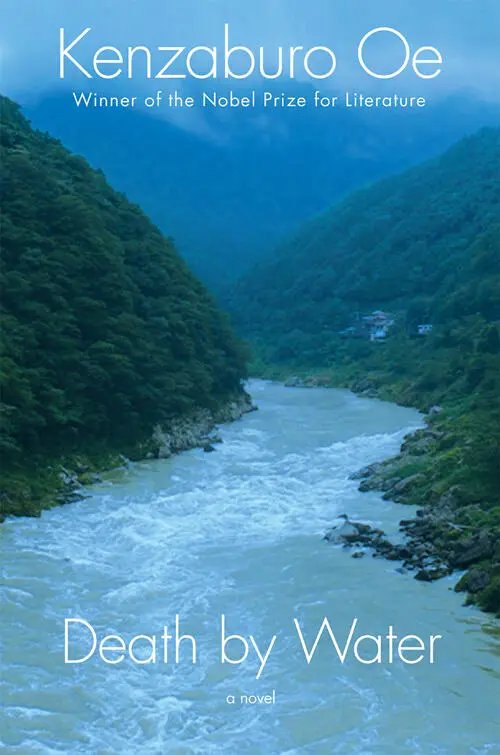
- Название:Death by Water
- Автор:
- Издательство:Grove/Atlantic, Inc.
- Жанр:
- Год:2015
- ISBN:9780802190871
- Рейтинг книги:3 / 5. Голосов: 1
-
Избранное:Добавить в избранное
- Отзывы:
-
Ваша оценка:
Death by Water: краткое содержание, описание и аннотация
Предлагаем к чтению аннотацию, описание, краткое содержание или предисловие (зависит от того, что написал сам автор книги «Death by Water»). Если вы не нашли необходимую информацию о книге — напишите в комментариях, мы постараемся отыскать её.
, his recurring protagonist and literary alter-ego returns to his hometown village in search of a red suitcase fabled to hold documents revealing the details of his father’s death during WWII: details that will serve as the foundation for his new, and final, novel.
Since his youth, renowned novelist Kogito Choko planned to fictionalize his father’s fatal drowning in order to fully process the loss. Stricken with guilt and regret over his failure to rescue his father, Choko has long been driven to discover why his father was boating on the river in a torrential storm. Though he remembers overhearing his father and a group of soldiers discussing an insurgent scheme to stage a suicide attack on Emperor Mikado, Choko cannot separate his memories from imagination and his family is hesitant to reveal the entire story. When the contents of the trunk turn out to offer little clarity, Choko abandons the novel in creative despair. Floundering as an artist, he’s haunted by fear that he may never write his tour de force. But when he collaborates with an avant-garde theater troupe dramatizing his early novels, Kogito is revitalized by revisiting his formative work and he finds the will to continue investigating his father’s demise.
Diving into the turbulent depths of legacy and mortality,
is an exquisite examination of resurfacing national and personal trauma, and the ways that storytelling can mend political, social, and familial rifts.
Death by Water — читать онлайн бесплатно полную книгу (весь текст) целиком
Ниже представлен текст книги, разбитый по страницам. Система сохранения места последней прочитанной страницы, позволяет с удобством читать онлайн бесплатно книгу «Death by Water», без необходимости каждый раз заново искать на чём Вы остановились. Поставьте закладку, и сможете в любой момент перейти на страницу, на которой закончили чтение.
Интервал:
Закладка:
I’ve given up hope on this [I wrote] , so you may as well burn the manuscript. If our mother is going to willfully deny me access to the materials I need, I’ll just have to take a different approach. I will abandon reality and simply write the book as a work of wild imagination, presented as the unhinged ramblings of a young man who is an inmate at a mental institution. And the father in the story will die not by drowning but from a gunshot wound. Because this story will appear to be so far from the truth, Mother won’t be able to prevent its publication by claiming I used my father as a model for the central character. However, the essence of what I say about the father (and his ideologies) will, in fact, be true.
I went ahead and wrote that novella in lieu of the drowning novel I really wanted to write, and it was published in a literary magazine as The Day He Himself Shall Wipe My Tears Away. My mother and sister were horrified and very, very angry, and the upshot was that I ended up being “disowned” (the quaint term we settled on to describe our reciprocal estrangement) and barred from returning home for a number of years.
Anyway, in the rough draft of the prologue to the drowning novel I wrote about something that had happened in 1945—an incident that, at the time, I had been dreaming about on a regular basis.
There is a place where, under normal conditions, the flow of the river is diverted around a protruding rock and the killifish congregate in the shallows. On this night, the flooding has turned the usually quiescent pool into a deep-water cove. That’s where the rowboat is moored, bobbing about on the high, choppy waves. My father is already on board the little boat, and I am standing at the base of a stone wall, facing in his direction. I take a step forward into the dark water and am shocked by how deep it is; I’m instantaneously submerged in the chilly water, almost up to my neck. To make matters worse, the skin of my chest is being pricked, rather painfully, by some aggressive flotsam: either the spines of grass berries, or some bird lice that have latched onto my skin. There’s no time to scrape off these unwelcome passengers, so I charge through the rushing water, chest first. The flood tide roars in my ears, loud as thunder.
It’s the middle of the night, and the rain has stopped falling. The full moon shines through a fissure in the clouds, illuminating my father, who is standing in the stern of the boat dressed in his civilian wartime uniform with his ramrod-straight back to me and his head hanging down at a precipitous angle. Beyond him the moonlight is reflecting off the mountainous wall of water as it surges downriver. In the plan I’ve been visualizing for a while now, I would paddle along through the murky water until I reached the boat and joined my father on board. But as I’m struggling to get to the boat, I find myself distracted by something that seems to need fixing, and I go back to tighten a storm-loosened rope that is looped around the big rock and tied to one of the wooden spider lily casks. Just as I finish securing the cask I see that the boat has been tossed into the raging current, and my father has apparently lost his footing and fallen down. Then I notice Kogii standing next to where I last saw my father, looking at me with a certain ineffable expression on his otherworldly face. It’s starting to feel as though the churning water might wash me away, too, and I’m clinging for dear life to the spider lily cask …
I’d forgotten how realistically I had described Kogii in the vignette I dashed off some forty-odd years ago. And when I reviewed the utterly familiar final image, I recognized anew that whenever I had the dream (it was essentially the same scenario every time, though there were small disparities depending upon my state of being on the night in question) Kogii was always present, and I was always watching him as he flashed me a look that I could only describe, vaguely, as a certain ineffable expression.
I considered this in the context of the point Masao had made about the significance of Kogii as an entity who seemed to exist as a regular person, but who also had a decidedly uncanny (or should I just say supernatural?) aspect to his nature. I felt certain Masao would be interested in reading these pages so I asked Asa to make a copy of the rough draft and give it to him, along with the photocopies she was having made of the other materials in the red leather trunk — materials on which I had pinned so many of my artistic hopes.
About a week later Masao, Unaiko, and Asa showed up in the theater troupe’s minivan, driven by a young man whom I hadn’t seen before. Both the driver and his young male colleague in the passenger seat were wearing such flashy clothes that I was momentarily dazzled, until Asa introduced the pair and explained that they were dressed for an important audition. Apparently there was a hall in Uwajima (a seaside town an hour away) that showcased up-and-coming performers in the hopes of attracting audiences from the main island of Honshu, who could now travel there by car via a recently opened bridge. That hall was the destination of the two dapperly turned-out young men. They were part of the Caveman Group, but also performed on their own as a comedy duo called Suke & Kaku — always with an ampersand, they solemnly informed me.
“The work they’re doing is very postmodern,” Asa explained. “Needless to say, their choice of a retro-sounding name was completely intentional. They borrowed their stage names, Suke & Kaku, from a couple of raffish sidekicks in the popular period drama Mito Komon, which has been running on television since these two first opened their eyes as infants.”
“Sometimes fans of Suke & Kaku’s postmodern skits will come to a public performance by the Caveman Group, and they’ll laugh uproariously at all the wrong places,” Masao said wryly. “It can be quite unnerving for everyone concerned — not just the actors, but the rest of the audience as well.”
I soon learned that Masao and his entire crew had read the transcript of the first interview, and they knew exactly what they wanted me to talk about next: my recurrent “Kogii dream.” Once again, Unaiko set up the recording equipment with her trademark swift yet painstaking professionalism.
“Until I reread the fragment recently, I wasn’t seeing much significance in the role Kogii played in the dream,” I began. “But from what you’ve said about your dramatization, it has become clear to me that his presence was a pivotal element. When we look at the phrasing of my mother’s haiku, where she says, And like the river current, you won’t return home, a question arises. After thinking obsessively about this matter for a very long time, endlessly refining those lines in her mind, is it possible all she wanted was to have them read and understood by her only son? I recounted my recurrent dream in the opening section of the prologue to my drowning novel, but Kogii was only mentioned briefly at the end. Now, though, I feel I’d like to delve further into the meaning of what Masao has called the ‘Kogii effect’ through these interviews with you, if only for my own enlightenment.
“At my boyhood home there was a rickety old military rowboat that had been retired from active duty and then delivered to our house by a young army officer, as a gift for my father. We called it, simply, ‘the boat.’ When the craft was launched into the floodwaters (and we’ll never know whether it was an accident) Kogii was at the rear of the boat, standing next to my father with one hand on the tiller. But why do I keep having the dream, even now? Well, when I stopped to think about it I seemed to be remembering Kogii’s presence in my father’s boat as something that actually occurred, in reality. In other words, it isn’t as if I dreamed a total fiction, then conflated the dream with reality, and eventually became convinced that the dream scenario had actually taken place in real life. No, I truly believe the dream was seeded by reality, and not the other way around.
Читать дальшеИнтервал:
Закладка:
Похожие книги на «Death by Water»
Представляем Вашему вниманию похожие книги на «Death by Water» списком для выбора. Мы отобрали схожую по названию и смыслу литературу в надежде предоставить читателям больше вариантов отыскать новые, интересные, ещё непрочитанные произведения.






Обсуждение, отзывы о книге «Death by Water» и просто собственные мнения читателей. Оставьте ваши комментарии, напишите, что Вы думаете о произведении, его смысле или главных героях. Укажите что конкретно понравилось, а что нет, и почему Вы так считаете.