Kenzaburo Oe - Death by Water
Здесь есть возможность читать онлайн «Kenzaburo Oe - Death by Water» весь текст электронной книги совершенно бесплатно (целиком полную версию без сокращений). В некоторых случаях можно слушать аудио, скачать через торрент в формате fb2 и присутствует краткое содержание. Год выпуска: 2015, ISBN: 2015, Издательство: Grove/Atlantic, Inc., Жанр: Современная проза, на английском языке. Описание произведения, (предисловие) а так же отзывы посетителей доступны на портале библиотеки ЛибКат.
- Название:Death by Water
- Автор:
- Издательство:Grove/Atlantic, Inc.
- Жанр:
- Год:2015
- ISBN:9780802190871
- Рейтинг книги:3 / 5. Голосов: 1
-
Избранное:Добавить в избранное
- Отзывы:
-
Ваша оценка:
Death by Water: краткое содержание, описание и аннотация
Предлагаем к чтению аннотацию, описание, краткое содержание или предисловие (зависит от того, что написал сам автор книги «Death by Water»). Если вы не нашли необходимую информацию о книге — напишите в комментариях, мы постараемся отыскать её.
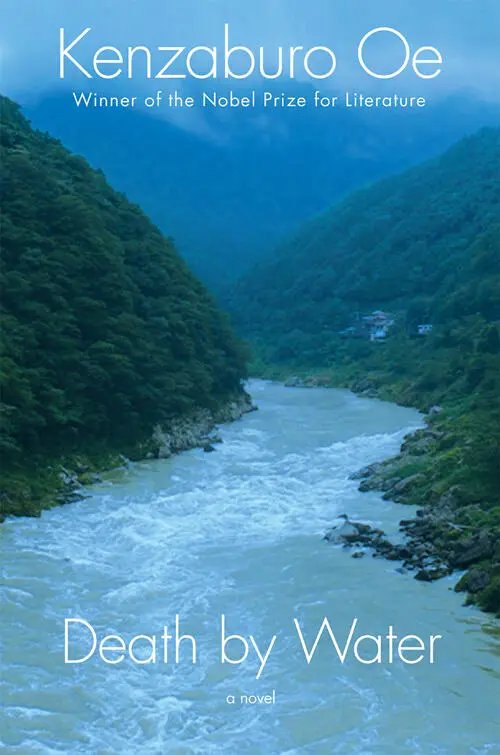
, his recurring protagonist and literary alter-ego returns to his hometown village in search of a red suitcase fabled to hold documents revealing the details of his father’s death during WWII: details that will serve as the foundation for his new, and final, novel.
Since his youth, renowned novelist Kogito Choko planned to fictionalize his father’s fatal drowning in order to fully process the loss. Stricken with guilt and regret over his failure to rescue his father, Choko has long been driven to discover why his father was boating on the river in a torrential storm. Though he remembers overhearing his father and a group of soldiers discussing an insurgent scheme to stage a suicide attack on Emperor Mikado, Choko cannot separate his memories from imagination and his family is hesitant to reveal the entire story. When the contents of the trunk turn out to offer little clarity, Choko abandons the novel in creative despair. Floundering as an artist, he’s haunted by fear that he may never write his tour de force. But when he collaborates with an avant-garde theater troupe dramatizing his early novels, Kogito is revitalized by revisiting his formative work and he finds the will to continue investigating his father’s demise.
Diving into the turbulent depths of legacy and mortality,
is an exquisite examination of resurfacing national and personal trauma, and the ways that storytelling can mend political, social, and familial rifts.
Death by Water — читать онлайн бесплатно полную книгу (весь текст) целиком
Ниже представлен текст книги, разбитый по страницам. Система сохранения места последней прочитанной страницы, позволяет с удобством читать онлайн бесплатно книгу «Death by Water», без необходимости каждый раз заново искать на чём Вы остановились. Поставьте закладку, и сможете в любой момент перейти на страницу, на которой закончили чтение.
Интервал:
Закладка:
“I do indeed,” I said.
“Of course, this was back when our group was still based in the suburbs of Tokyo,” Masao went on. “Our young members used to get up early every morning to do their outdoor exercise routines: walking, running, calisthenics to build core strength, and so on. (I know you’ve made a habit of going for walks, so you’ll understand.) Anyway, this was during the time when the trend of constructing local autonomous townships on the outskirts of Tokyo — what they call ‘bed towns’—was just getting off the ground. At the same time, there was a major boom in dog ownership among the residents of these new suburban communities, and some of the young people from our troupe started to clash with the ladies who were out for a leisurely stroll with their dogs. Our members were trying to get in a serious workout on the training course, but the dog-walking ladies were constantly stopping to gossip right in the middle of the track, blocking traffic for the oncoming runners. Naturally, the athletes were annoyed, and they complained about this basic lack of consideration. They didn’t take their objections any further than that, but Unaiko, who was there both for her own training and as a group leader, observed the behavior of the women and their dogs with great interest. She had a fantasy about how the problem of the lollygagging ladies with their dogs might be resolved with a judicious show of power, and she turned that high-concept idea into a performance piece. Parts of the dialogue were probably based on things our young colleagues had actually said, but Unaiko gets all the credit for deciding to have the play focus on the dog-walking ladies and their over-the-top reactions to the confrontation. Her portrayal of the escalating hostilities between the entitled ladies with their froufrou dogs and the guys from our theater troupe, as the two factions hurled increasingly scurrilous insults back and forth, was nothing less than masterful. Because of the way the stage was arranged, our actors received a lot of vocal encouragement from a cheering section of ringers we’d planted in the audience. As for the group of women onstage, each clutching her own little boutique dog, their next step was to fling plastic bags full of dog poop in the general direction of our contingent. And then, as things continued to heat up, the women began throwing the dogs themselves at their adversaries, and that was the dramatic climax of the piece. Needless to say, both the ‘excrement’ and the ‘dogs’ were stage props: totally fake.
“The title Unaiko gave the piece, Tossing the Dead Dogs, is derived from the climactic ending. That title cracks me up — ha ha ha! I still can’t help laughing every time I hear it.”
At this point, I volunteered a dog-related anecdote of my own. Back in the 1960s, during the time when the popular protests in Europe against the Vietnam War were reaching a crescendo, Günter Grass had published a novel in the form of an on-site report about the youth movement in West Germany. One of the book’s most harrowing sections, which I still remembered vividly, told of a young student called Scherbaum who was threatening to burn his pet dachshund alive in public as a consciousness-raising demonstration against the war.
“If a university student had actually done such a thing in Berlin — I mean, presumably it wouldn’t have been beyond the realm of possibility — it probably would have created a major uproar,” Masao said. “Our group’s production of Tossing the Dead Dogs provoked quite a bit of protest from dog lovers’ groups, too, and as the person in charge of the theater group I was called onto the carpet to defend the piece against the absurd charges that it somehow condoned or even promoted cruelty to dogs. I tried to be circumspect about expressing my personal feelings, but Unaiko and her cohorts weren’t nearly so restrained, and they couldn’t resist the temptation to speak out. Even after I decided to pull the controversial piece and substitute something less incendiary they were there in the theater, lobbying for their right to freedom of expression. They were so mad at me for knuckling under to outside pressure that I wouldn’t have been surprised if they’d hurled some ‘feces’ and ‘dead dogs’ at me — I’m sure they must have wanted to! It was a very difficult and stressful time, but fortunately the storm eventually blew over, and we actually ended up receiving some positive publicity as a result.”
“Did it ever reach the point where it looked as if the Caveman Group might have to disband?” I asked.
“Oh, no, it never went that far. The male members of the troupe, in particular, found the whole turn of events immensely amusing, and they seemed to get a kick out of all the excitement and notoriety. As for Unaiko, she’s someone who lives by the maxim ‘Never stop striving.’ It’s just one of the things that make her so unique, and so powerful.”
“My sister, Asa, has some similar traits, and surely that’s part of the reason she and Unaiko have hit it off so well,” I remarked. “I’m quite certain that whatever Unaiko chooses to do from now on, Asa will try to help in any way she can.”
“Unaiko has definitely found a strong ally in Asa,” Masao said, “though I can’t help thinking that at some point the dynamic duo may try to sway you to their alternative vision of this production. They may very well win the battle in the end — nothing’s set in stone. But one thing I’m sure of after talking this over with Unaiko is that I’ve finally found the key to the retrospective dramatization of your novels I’m working on now.
“As I’ve mentioned, my plan is to layer scenes from your books with the interviews in which we’ll be discussing your work. Even with the supernatural figure of Kogii cropping up throughout the piece as a sort of visual continuo, the focus will still be quite vague and scattered. However, Unaiko has a different idea. She thought we might try superimposing the Kogii theme directly over your progress on the novel you’re planning to write about your father.”
“Both approaches sound promising,” I said noncommittally. “Let’s wait and see how things develop, shall we?”
“I hope Unaiko doesn’t inadvertently cross any of your invisible lines — or ‘friendly barriers,’ to use Asa’s term,” Masao said playfully. “I mean, I have to admit that her willfulness and adventurous spirit haven’t caused any major problems for the activities of the Caveman Group — at least not yet. And I’m pleased to report that she hasn’t broached the idea of staging an abbreviated performance of Tossing the Dead Dogs on the hallowed grounds of Yasukuni Shrine! Seriously, though, assuming you’re willing to cooperate, we’re all feeling very optimistic about forging ahead with the dramatization of the drowning novel, with Unaiko leading the way.
“But of course,” Masao concluded, shooting me a significant look, “we’re acutely aware that the whole project hinges on one crucial thing: what you find in the red leather trunk.”
Chapter 4. Joke Accompli
1
The moment Masao Anai handed me the envelopes, I began to feel uneasy. They weren’t nearly as bulging as I would have expected, and they were also suspiciously light. All the pages fit into three large square envelopes: both the color copies and the originals, which consisted mostly of folio-size sheets of handmade Japanese washi paper decorated with watercolor paintings, illustrations, and calligraphic annotations. (Adding such impromptu embellishments to correspondence was a long-standing tradition among cultured people in Japan.) The photocopies were so precise that they had even captured the attractively blurry places where the ink or paint had run, but I was disappointed because I had been hoping more than anything that the envelope would contain some actual letters, but there wasn’t a single one.
Читать дальшеИнтервал:
Закладка:
Похожие книги на «Death by Water»
Представляем Вашему вниманию похожие книги на «Death by Water» списком для выбора. Мы отобрали схожую по названию и смыслу литературу в надежде предоставить читателям больше вариантов отыскать новые, интересные, ещё непрочитанные произведения.




Обсуждение, отзывы о книге «Death by Water» и просто собственные мнения читателей. Оставьте ваши комментарии, напишите, что Вы думаете о произведении, его смысле или главных героях. Укажите что конкретно понравилось, а что нет, и почему Вы так считаете.