Kenzaburo Oe - Death by Water
Здесь есть возможность читать онлайн «Kenzaburo Oe - Death by Water» весь текст электронной книги совершенно бесплатно (целиком полную версию без сокращений). В некоторых случаях можно слушать аудио, скачать через торрент в формате fb2 и присутствует краткое содержание. Год выпуска: 2015, ISBN: 2015, Издательство: Grove/Atlantic, Inc., Жанр: Современная проза, на английском языке. Описание произведения, (предисловие) а так же отзывы посетителей доступны на портале библиотеки ЛибКат.
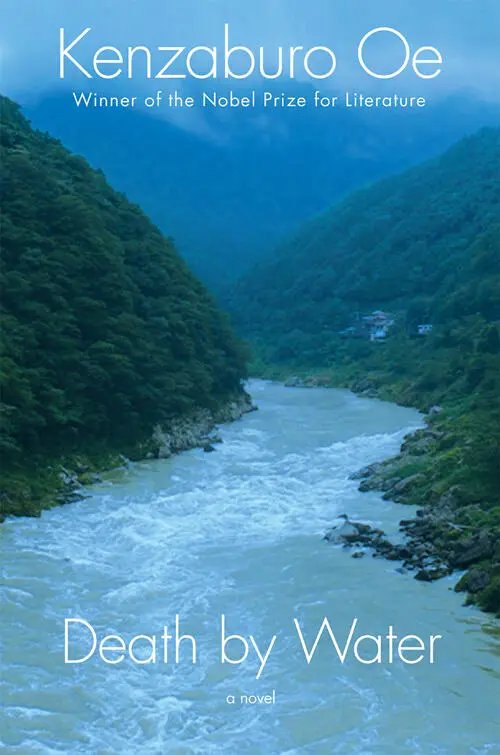
- Название:Death by Water
- Автор:
- Издательство:Grove/Atlantic, Inc.
- Жанр:
- Год:2015
- ISBN:9780802190871
- Рейтинг книги:3 / 5. Голосов: 1
-
Избранное:Добавить в избранное
- Отзывы:
-
Ваша оценка:
Death by Water: краткое содержание, описание и аннотация
Предлагаем к чтению аннотацию, описание, краткое содержание или предисловие (зависит от того, что написал сам автор книги «Death by Water»). Если вы не нашли необходимую информацию о книге — напишите в комментариях, мы постараемся отыскать её.
, his recurring protagonist and literary alter-ego returns to his hometown village in search of a red suitcase fabled to hold documents revealing the details of his father’s death during WWII: details that will serve as the foundation for his new, and final, novel.
Since his youth, renowned novelist Kogito Choko planned to fictionalize his father’s fatal drowning in order to fully process the loss. Stricken with guilt and regret over his failure to rescue his father, Choko has long been driven to discover why his father was boating on the river in a torrential storm. Though he remembers overhearing his father and a group of soldiers discussing an insurgent scheme to stage a suicide attack on Emperor Mikado, Choko cannot separate his memories from imagination and his family is hesitant to reveal the entire story. When the contents of the trunk turn out to offer little clarity, Choko abandons the novel in creative despair. Floundering as an artist, he’s haunted by fear that he may never write his tour de force. But when he collaborates with an avant-garde theater troupe dramatizing his early novels, Kogito is revitalized by revisiting his formative work and he finds the will to continue investigating his father’s demise.
Diving into the turbulent depths of legacy and mortality,
is an exquisite examination of resurfacing national and personal trauma, and the ways that storytelling can mend political, social, and familial rifts.
Death by Water — читать онлайн бесплатно полную книгу (весь текст) целиком
Ниже представлен текст книги, разбитый по страницам. Система сохранения места последней прочитанной страницы, позволяет с удобством читать онлайн бесплатно книгу «Death by Water», без необходимости каждый раз заново искать на чём Вы остановились. Поставьте закладку, и сможете в любой момент перейти на страницу, на которой закончили чтение.
Интервал:
Закладка:
“I have to say that Asa’s facial expression as she was telling me all this was something an actress of my generation would find difficult, if not impossible, to emulate. I don’t know whether to call it pain, or anguish, or grief, but it was clearly welling up from a very deep place. And this evening, too, when Asa was looking for the tape I just played for you, I noticed she was wearing the same expression. Oh dear, I’m afraid I’ve said more than I should have, again …”
“Please don’t worry about it,” I said. “I’m going to listen to my mother’s tape now, and I’ll make a point of imagining that Asa is sitting here beside me, wearing exactly the facial expression you’ve described. Well then, to top off the evening’s festivities, won’t you join me in a little drink?”
I was trying to be charming and persuasive, but my voice sounded pitiful in my own ears. I poured the shochu (which really was exceptionally good) into the large sake cup sitting on the table in front of Unaiko, but she stood up without even taking a token sip.
“Needless to say, Asa has been concerned about the effect listening to this tape might have on you. Masao’s been worrying, too. Anyway, please don’t overdo it with the booze tonight.” And with that, she vanished into the night.
Once I started drinking I had a bad habit (or perhaps it was a character flaw) of throwing back shot after shot, and as I wandered over to the chair in front of the speakers, I did pause for a moment to quaff the cup I had filled for Unaiko. However, I refrained from replenishing my own, and I left the bottle of liquor on the table.
4
The next morning I woke up early, after a rare night during which I didn’t have even the tiniest sliver of a dream. When I rolled out of bed and headed downstairs to get a drink of water — it was around six o’clock — I saw Masao Anai loitering in the back garden just outside the dining room. He was alone, and his bowed head was haloed by the gilded light streaming through the leaves of the pomegranate tree. There was something tentative and uncertain about the way he was perching atop the large, round poetry stone, as if he wasn’t sure he ought to be there.
I went into the dining room and sat at the table in a position that allowed me to keep a diagonal eye on Masao, who was off to one side. Everything was as I’d left it the night before. I picked up the plastic carafe, poured water into one of the large sake cups (which was still faintly redolent of Japan’s answer to vodka), and emptied it in a single gulp. I repeated the sequence several times until my morning-after thirst was quenched.
Beyond the big picture window, Masao raised his head and appeared to notice that I was up and about. He didn’t make any of the usual gestures of greeting, but a moment later he vanished around the west side of the house. I heard jingling as he unlocked the kitchen door, evidently using a bunch of keys entrusted to the theater group, and let himself in. After settling into the chair across from me, Masao sloshed some water into a cup he’d carried from the kitchen and drank it. Then he poured himself another draught and partially refilled my cup as well, after first hefting the plastic pitcher and thoughtfully calculating how much water remained so we would both get an equal amount.
“If the novel you came here hoping to finish ends up going down the drain, will that also spell doom for the drama project we were hoping to work on in tandem with your own writing and research?” he asked.
“I haven’t really had a chance to think that far ahead,” I said, “but it’s true my plan to stay down here and make a new start on my long-dormant novel, using the materials I’d expected to find in my mother’s trunk, has hit a brick wall.”
“So does that mean your current sojourn will be canceled as well? (I think you mentioned this was probably going to be your last visit, in any case.) To be honest, having your stay at the Forest House cut short would be a very regrettable development from our point of view, but wouldn’t it also be a major blow to the final stage of Kogito Choko’s career? Asa is very concerned about how you’re handling this setback, emotionally. I received a phone call from her early this morning while it was still dark, and she was talking about what a monumental letdown this must have been for you, and saying you’d mentioned that as you’ve grown older you seem to wake up every morning at the crack of dawn with your mind awash in pessimistic thoughts. She was worried about your being alone at a time like this, and — of course, I realize I’m not her brother’s keeper, so to speak, but here I am anyway, barging in on you uninvited at this ungodly hour.”
I didn’t reply. After a moment, I became aware of a kind of subliminal ringing in my ears. In the small forest that bordered the back garden and marked the perimeter of my mother’s property, there were still some ancient stands of broadleaf trees that hadn’t merged with the mixed groves of cedars and Japanese cypresses surrounding them. When I gazed up at the luxuriant foliage of those trees, their green leaves luminous in the early-morning sunshine, the sight was almost transcendentally dazzling.
During the past ten years or so, every time I had come back to the Forest House the uncanny quietude of the forest had always made me aware of the residual clamor in my ears, and I could almost feel myself being reunited with the mystical sound of the forest: that beautifully musical hush. Now, once again, I seemed to hear the living forest’s melodic vibrations amid the radiance of all that grand and glorious greenness. I was suddenly oblivious to the existence of Masao Anai, and I had an illusion that I (in my present guise of feeble, useless old man) was hearing my mother’s line of poetry —You didn’t get Kogii ready to go up into the forest —overlaid with the subtle music that seemed to be emanating from the same forest.
While I was in this trancelike state Masao had returned to his seat in the garden, under the pomegranate tree. He had an unusually large notebook open on his lap, but he didn’t appear to be looking at it. (I had seen the same tableau, featuring Unaiko and her own oversize notebook, any number of times.)
I went outside and joined him under the tree. “What’s that you’ve got there? Is it some kind of director’s notebook?” I asked.
“Not exactly,” Masao said. “I’ve read quite a few books written by the leaders of the New Drama movement in Japan — you know, adherents of the Stanislavski method — but my notes aren’t nearly so methodical or technique oriented. I jot things down as they occur to me; sometimes I’ll look at my notes later and I won’t even remember when I wrote them, or why. The funny thing is, the tidbits from various sources that I either transcribe or photocopy and paste onto these pages are often more useful than my original ideas. Maybe that’s because all my dramatic creations are basically just eclectic collages of quotations and allusions.”
My eyes were irresistibly drawn to the notebook lying open on Masao’s knees, and while he made no move to show those pages to me, he didn’t try to hide them, either. There were blocks of prose and neat lines of poetry, some written in roman letters, others in Japanese, and everything was annotated with red-ink underlinings and marginal notes in pencil. The pages were intricate and artistic-looking, and I got the feeling I was being allowed to glimpse another side of Masao Anai, the dynamic and innovative director.
“These are some excerpts from the manuscript of the drowning novel that you shared with us,” Masao said. “They don’t have to do with the dream scene, though. I was interested in the quotes from T. S. Eliot, both in the original and in Motohiro Fukase’s translation, which I know you’ve been studying since you were young. What surprised me was that the epigraph for the entire book, at least in the draft we saw, was in French — even though it was a quote from Eliot, who of course wrote in English.
Читать дальшеИнтервал:
Закладка:
Похожие книги на «Death by Water»
Представляем Вашему вниманию похожие книги на «Death by Water» списком для выбора. Мы отобрали схожую по названию и смыслу литературу в надежде предоставить читателям больше вариантов отыскать новые, интересные, ещё непрочитанные произведения.



Обсуждение, отзывы о книге «Death by Water» и просто собственные мнения читателей. Оставьте ваши комментарии, напишите, что Вы думаете о произведении, его смысле или главных героях. Укажите что конкретно понравилось, а что нет, и почему Вы так считаете.