Kenzaburo Oe - Death by Water
Здесь есть возможность читать онлайн «Kenzaburo Oe - Death by Water» весь текст электронной книги совершенно бесплатно (целиком полную версию без сокращений). В некоторых случаях можно слушать аудио, скачать через торрент в формате fb2 и присутствует краткое содержание. Год выпуска: 2015, ISBN: 2015, Издательство: Grove/Atlantic, Inc., Жанр: Современная проза, на английском языке. Описание произведения, (предисловие) а так же отзывы посетителей доступны на портале библиотеки ЛибКат.
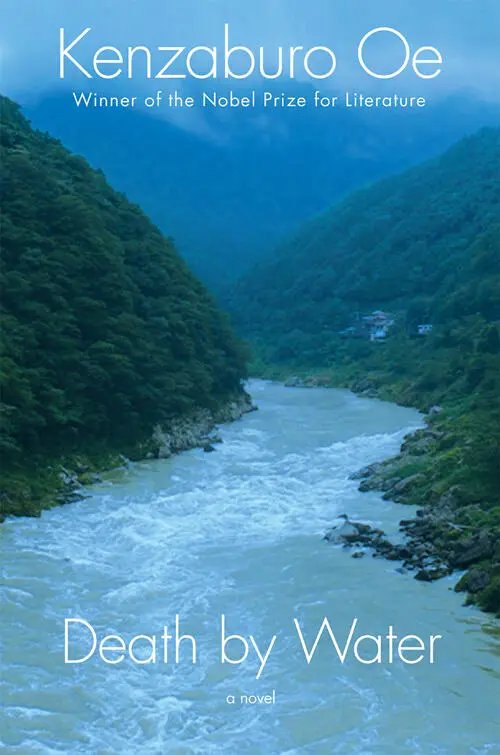
- Название:Death by Water
- Автор:
- Издательство:Grove/Atlantic, Inc.
- Жанр:
- Год:2015
- ISBN:9780802190871
- Рейтинг книги:3 / 5. Голосов: 1
-
Избранное:Добавить в избранное
- Отзывы:
-
Ваша оценка:
Death by Water: краткое содержание, описание и аннотация
Предлагаем к чтению аннотацию, описание, краткое содержание или предисловие (зависит от того, что написал сам автор книги «Death by Water»). Если вы не нашли необходимую информацию о книге — напишите в комментариях, мы постараемся отыскать её.
, his recurring protagonist and literary alter-ego returns to his hometown village in search of a red suitcase fabled to hold documents revealing the details of his father’s death during WWII: details that will serve as the foundation for his new, and final, novel.
Since his youth, renowned novelist Kogito Choko planned to fictionalize his father’s fatal drowning in order to fully process the loss. Stricken with guilt and regret over his failure to rescue his father, Choko has long been driven to discover why his father was boating on the river in a torrential storm. Though he remembers overhearing his father and a group of soldiers discussing an insurgent scheme to stage a suicide attack on Emperor Mikado, Choko cannot separate his memories from imagination and his family is hesitant to reveal the entire story. When the contents of the trunk turn out to offer little clarity, Choko abandons the novel in creative despair. Floundering as an artist, he’s haunted by fear that he may never write his tour de force. But when he collaborates with an avant-garde theater troupe dramatizing his early novels, Kogito is revitalized by revisiting his formative work and he finds the will to continue investigating his father’s demise.
Diving into the turbulent depths of legacy and mortality,
is an exquisite examination of resurfacing national and personal trauma, and the ways that storytelling can mend political, social, and familial rifts.
Death by Water — читать онлайн бесплатно полную книгу (весь текст) целиком
Ниже представлен текст книги, разбитый по страницам. Система сохранения места последней прочитанной страницы, позволяет с удобством читать онлайн бесплатно книгу «Death by Water», без необходимости каждый раз заново искать на чём Вы остановились. Поставьте закладку, и сможете в любой момент перейти на страницу, на которой закончили чтение.
Интервал:
Закладка:
Down by the river, there was a spot where the women from the hamlet on the north shore did their washing. Above it was a round outcropping of rock with pussy willows growing out of a fissure in the ledge. In the shadow of the boulder, along the riverbank, there was a triangular patch of water that formed a natural wallow. I used to wade along with the current, then throw myself down and settle into the little grotto until I was completely submerged. Using my legs for leverage, I would force my small body into the interior, with the rock jutting out over me like a protective roof.
This secluded part of the river was protected from the current, so there was a permanent accumulation of dissolved clay on the bottom. When I stretched out, my entire body would be enveloped in the soft, smooth, slippery mud. If I was lying flat, my presence couldn’t be detected by the women who were squatting at the water’s edge not far away, washing dishes or doing laundry. Once I had mastered the art of squeezing into that secret grotto without being seen, I would head there alone on a regular basis to luxuriate in the freedom of simply lying in the mud for hour upon blissful hour.
Whenever I was in early-morning remembrance mode the memory of this cozy hiding place would come flooding back, overlaid by a later but uncannily parallel memory that made it even more potent. As an adult, I had read a novel in which a French writer retold the Robinson Crusoe story, with a particular focus on the character of Friday. Crusoe, stranded on a desert island and exhausted by a daily life of endless toil and perpetual danger, had a hideaway not unlike mine where he could revel in submerging his weary body in a grotto of soft, wet clay. Every time I read the scene, I felt completely swept away — not only in my heart but somatically as well, on the deepest level. And now the memory of that book was permanently superimposed over the recollections of my muddy retreat.
When I reached the bank of the river on that day in August 1945, I took off my sweat-soaked clothes and laid them on a rock by the alfresco laundry spot. Wearing nothing but a skimpy Etchu-style loincloth, I immersed myself in the placid water of my hidden grotto. I lay there faceup, letting my body sink until the water started to fill my ears. I stayed that way for a long time, lost in reverie. After a while I stuck one arm out of the water and discovered that the afternoon air had turned chilly. I raised my torso and fixed my gaze on Myoto Rock, which reared above the glimmering flow of the river.
Suddenly, I knew what I had to do. Leaving the wallow, I swam toward the place where the river waves were crashing violently against the enormous rock, and as I approached the monolithic landmark I gave myself up to the current. It carried me along and deposited me on one side of Myoto Rock. Muscle memory took over then, and I knew exactly how to move. Using my arms and legs, I propelled myself forward, with the swirling current tickling my chest. When I reached my destination, I stuck my head through the underwater fissure in the giant rock. On the other side of the crack, diagonal rays of sunlight slanted down, illuminating the dark blue pool. In that space I could see dozens of silvery dace, brimming with latent power, suspended in the water in quiescent repose.
At this point, as remembrance merges with fantasy, I seem to see the naked body of a large man in the murky depths below the school of dace. There on the river bottom the corpse sways gently, nudged by the current. It’s my father, of course. And I — that is, my retrospectively imagined child-self — am trying to imitate the way the dead body moves.
Back in the present moment, I reached for an index card and my fountain pen. I love my father desperately, I wrote in Japanese. But even in my deeply moved state I felt compelled to add a little orthographic embellishment, so a moment later I spelled out the phonetically Japanized version of the English word “desperately” in the margin: de-su-pe-ree-to-rii.
3
Dear Kogii,
I received a very thoughtful letter from Chikashi. “Thoughtful” really is the only way to describe it, in every sense of the word. Not a single line was wasted on futile optimism or pointless pessimism; she simply gave a straightforward account of your current condition. However, since it’s entirely possible that my interpretation of what she said may have been colored in part by wishful thinking, I’m writing to ask if you would be so kind as to corroborate my conclusions.
1. The Big Vertigo wasn’t some freakish occurrence that happened once while you were visiting down here on Shikoku and never again. There have been three more episodes since you returned to Tokyo.
2. You’ve been taking it easy on order from your family doctor, but you haven’t followed up by going to a university hospital for an MRI and so on. Both your wife and daughter have encouraged you to do so, but you haven’t been receptive to their suggestions. Because the dizzy spell that knocked you for a loop on Shikoku took you completely by surprise, perhaps you’re afraid the results of the examination might be even more of a shock — anyhow, that’s our theory. If the tests show some irreparable abnormality in your brain, you probably wouldn’t be able to do your literary work, and we would all have to accept that you would never be the same.
When Professor Musumi refused to be screened for lung cancer even though he was aware that something was very wrong inside his chest, you took on the task — at his wife’s request — of trying to convince your longtime mentor to submit to treatment. He refused, with fatal consequences, and now it looks as though you’re borrowing the same excuses he gave you virtually verbatim. Chikashi is prepared to respect your choices, and I agree completely. No matter what happens I really feel as if your homecoming trip to our little valley in the mountains made you realize something important about everyone in our family, including yourself. If I’m mistaken, I hope we can laugh it off the way we’ve done with so many of your preconceived notions and misperceptions.
3. Whatever the diagnosis turns out to be, if you would simply take a break and get some rest, then you should be able to get back to your usual regimen of work — within your new limitations, of course — just as Professor Musumi did toward the end. However, if you remain mired in the denial stage and if your prose starts to show any degree of mental decline, it would be a very serious matter. To make sure that doesn’t happen, Chikashi has been thinking about creating a system whereby any manuscripts you produce from here on would be vetted by some of the editors you’ve been working with for years, before publication. And if they find significant problems, then we would have your publishers announce that Mr. Choko will be retiring from writing, effective immediately.
4. At the moment, even though you’re feeling rather low, I gather your life isn’t too different from when you were in good health, and while you’ve stopped work on the drowning novel, you’re still continuing to crank out a newspaper essay every month. I assume that your reading habits are pretty much the same as always, except that you’re being careful not to spend too much time reading books in foreign languages because constantly stopping to look things up in dictionaries can be a strain.
Another reason I’m writing this letter is to figure out the best way for us to stay in touch now that the Big Vertigo is part of the equation. (Needless to say, if an emergency should arise Chikashi would telephone me at home.)
There isn’t much news to report on my end, aside from Masao and Unaiko’s theatrical activities. Ever since you returned to Tokyo they’ve been nice enough to keep me in the loop much more than before, and Unaiko, in particular, seems to have really opened up lately. She’s been confiding in me in a much deeper way, and I have a feeling our talks will raise some matters I’ll need to discuss with you at some point.
Читать дальшеИнтервал:
Закладка:
Похожие книги на «Death by Water»
Представляем Вашему вниманию похожие книги на «Death by Water» списком для выбора. Мы отобрали схожую по названию и смыслу литературу в надежде предоставить читателям больше вариантов отыскать новые, интересные, ещё непрочитанные произведения.


Обсуждение, отзывы о книге «Death by Water» и просто собственные мнения читателей. Оставьте ваши комментарии, напишите, что Вы думаете о произведении, его смысле или главных героях. Укажите что конкретно понравилось, а что нет, и почему Вы так считаете.