Kenzaburo Oe - Death by Water
Здесь есть возможность читать онлайн «Kenzaburo Oe - Death by Water» весь текст электронной книги совершенно бесплатно (целиком полную версию без сокращений). В некоторых случаях можно слушать аудио, скачать через торрент в формате fb2 и присутствует краткое содержание. Год выпуска: 2015, ISBN: 2015, Издательство: Grove/Atlantic, Inc., Жанр: Современная проза, на английском языке. Описание произведения, (предисловие) а так же отзывы посетителей доступны на портале библиотеки ЛибКат.
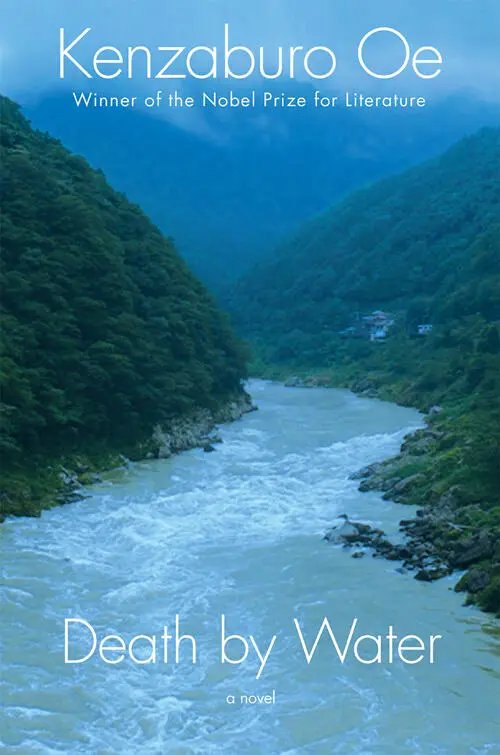
- Название:Death by Water
- Автор:
- Издательство:Grove/Atlantic, Inc.
- Жанр:
- Год:2015
- ISBN:9780802190871
- Рейтинг книги:3 / 5. Голосов: 1
-
Избранное:Добавить в избранное
- Отзывы:
-
Ваша оценка:
Death by Water: краткое содержание, описание и аннотация
Предлагаем к чтению аннотацию, описание, краткое содержание или предисловие (зависит от того, что написал сам автор книги «Death by Water»). Если вы не нашли необходимую информацию о книге — напишите в комментариях, мы постараемся отыскать её.
, his recurring protagonist and literary alter-ego returns to his hometown village in search of a red suitcase fabled to hold documents revealing the details of his father’s death during WWII: details that will serve as the foundation for his new, and final, novel.
Since his youth, renowned novelist Kogito Choko planned to fictionalize his father’s fatal drowning in order to fully process the loss. Stricken with guilt and regret over his failure to rescue his father, Choko has long been driven to discover why his father was boating on the river in a torrential storm. Though he remembers overhearing his father and a group of soldiers discussing an insurgent scheme to stage a suicide attack on Emperor Mikado, Choko cannot separate his memories from imagination and his family is hesitant to reveal the entire story. When the contents of the trunk turn out to offer little clarity, Choko abandons the novel in creative despair. Floundering as an artist, he’s haunted by fear that he may never write his tour de force. But when he collaborates with an avant-garde theater troupe dramatizing his early novels, Kogito is revitalized by revisiting his formative work and he finds the will to continue investigating his father’s demise.
Diving into the turbulent depths of legacy and mortality,
is an exquisite examination of resurfacing national and personal trauma, and the ways that storytelling can mend political, social, and familial rifts.
Death by Water — читать онлайн бесплатно полную книгу (весь текст) целиком
Ниже представлен текст книги, разбитый по страницам. Система сохранения места последней прочитанной страницы, позволяет с удобством читать онлайн бесплатно книгу «Death by Water», без необходимости каждый раз заново искать на чём Вы остановились. Поставьте закладку, и сможете в любой момент перейти на страницу, на которой закончили чтение.
Интервал:
Закладка:
“But what’s the practical meaning of this unforgettable lesson? You shouldn’t betray your friend and drive him to suicide? Really, who doesn’t know that already? It’s just common sense. I think the situation depicted in this novel is personal and unique, rather than universal.”
“All right, fair point. Let’s say there’s a girl you aren’t particularly interested in, but when your friend ends up falling for her you’re surprised to discover that you’re upset about losing someone you didn’t even realize you wanted. When you confess your newfound interest the girl is very receptive, but your friend is so shattered by this development that he kills himself. Do you think such a thing would happen in real life? I mean, seriously, are you guys really so intense at this age? Let’s suppose that scenario did take place, and the woman in question agreed to marry you. If you never got your act together, don’t you think she would eventually leave you? And before that happened, would you really hatch a plan to express the spirit of the modern age by committing ritual suicide?”
The high school students — both the fifteen or so who were onstage and the larger group still sitting in the audience — responded to this fusillade of questions by roaring with laughter. Amid the merriment there was only one person who stood by in disgruntled silence, glowering at the young woman who had subjected him to those queries. That glum-looking person wasn’t a student at all, but rather a member of the comedy duo Suke & Kaku (whom you may remember meeting at the Forest House). Beside him on the stage was the other half of the duo, laughing at his partner’s discomfiture. The woman who had been questioning Suke or Kaku — in the dim light, I couldn’t tell who was who — wasn’t a student, either; it was actually Ricchan, the Caveman Group’s music director. (She has been a friend and mentor to Unaiko ever since Unaiko joined the troupe, and now she’s a friend of mine as well. Despite her seniority, she’s a very low-key, unassuming person, the kind you can always count on in a pinch.) Anyhow, Ricchan — in a costume and hairstyle that made her look much younger — was doing such a convincing job of playing the part of a schoolgirl that I couldn’t help myself. I just had to shout, “Ricchan, you look so cute!”
After a moment, Unaiko came forward and joined the conversation. “Even if it seems a bit ludicrous to describe our modern condition as the ‘spirit of the Heisei Era,’ the famous spirit of Meiji mentioned in Kokoro really is important, so let’s discuss it a bit more later on,” she said. “First, though, I’d like to ask everyone who believes that the book’s narrator (the never-named ‘I’) didn’t learn anything of value from Sensei’s suicide note to assemble on the right side of the stage. Everybody else: left side, please.
“All right, now I have a question for the group on the right. Am I correct in thinking that you don’t believe Sensei was an educator in any real sense of the word, even though he basically staked his life on sharing the lessons you dismiss as useless? If that’s the case, why do you think he made a point of writing a long, confessional letter? Was it just an empty act on his part?”
The person who responded to Unaiko’s question was either Suke or Kaku; it was still too dark for me to tell the two men apart.
“To me, at least, it doesn’t seem to have been an empty act,” he said. “Sensei felt he was living his life as if he were already dead and perpetually beset by the strange, terrible force he talks about so eloquently. After all those years of living with his guilt, maybe he had reached a point where dying seemed to him to be the most natural course of action.”
“Point taken,” Unaiko said. “But if — as some of you believe — Sensei wasn’t acting as a teacher, shall we talk about what you think he was trying to accomplish with the letter he left behind for his young friend?”
At that point, Masao Anai, who had been sitting in the audience, stood up and signaled his desire to speak. I think the gesture might have been a bit of spontaneous ad-libbing on Masao’s part, but I’m not completely sure. Watching this new tactic of dividing the participants into two camps and then revitalizing the discussion by introducing a third line of thought, I got the feeling it was all part of the continuing evolution of the technique they’d used in Tossing the Dead Dogs.
“I’m probably closer to your fathers’ generation than to yours, and I definitely have a lot more years under my belt than you do,” Masao began. “I’m a playwright and a director, and just as the author Kogito Choko, who originally hails from this part of the country, expresses himself through novels, I use the theater as my vehicle for self-expression. I’m constantly thinking about the phenomenon of expression, day in and day out, so if you don’t mind I’d like to talk a bit about the suicide note written by the Sensei character in Kokoro.
“As you know from reading the book, Sensei is hoping his death will kindle a new spark of life in the breast of the young man who is reading his posthumous letter. I was very moved when I read this for the first time as a young man, and I asked myself, ‘Do people really say this sort of thing when they’re about to die?’ Obviously, I was identifying with the narrator and projecting my own thoughts and feelings onto him. And I couldn’t help wondering: ‘How would I feel if someone on the threshold of death was kind enough to write down something like this just for me?’
“But the thing is, as the years have gone by I’ve suffered a sort of sea change, and I’ve noticed that when I reread Kokoro these days I’m not as receptive as I used to be. I find myself asking questions like: ‘Is Sensei giving any thought at all to the effect his words, and his death, will have on this young man who looks up to him and considers him a friend?’ I really don’t think he is; it doesn’t seem to me as if Sensei is ever thinking about anyone except himself. And what’s with the sudden suicide drama, anyway? Until then, Sensei had been quietly living out his years, systematically shutting himself off from society — as we say today, he was holed up like a hermit. By his own admission he was never much of a writer, and this suicide note is his one and only attempt at self-expression. In other words, the only reason he picked up brush and paper was to write his final communiqué.
“Even so, you have to wonder how he could have believed that reading his suicidal confession would cause a new life to be sparked in the heart of the young. This passage has been read aloud already, but for me, the highlight of the farewell note is I’d like you to remember something. This is the way I have lived my life.
“You see, this is how Sensei expresses himself: by basically oversharing with someone who isn’t even part of his inner circle. To be honest, the more I thought about this behavior, the less I liked it. I’m sure some of you must have had the same reaction. Or maybe not?”
At this point, Masao Anai (who had struck a dramatic pose at the end of his monologue) began to be pelted from all sides with “dead dogs.” As the toys rained down on him Masao picked up the stuffed animals that had bounced off his body and landed at his feet. He made a great show of examining them carefully, one by one. Then, clutching a double armload of dogs, he docilely resumed his seat, bowing to the audience around him as if to acknowledge his defeat.
Once again, the audience burst into laughter. Masao’s deliberately bombastic tone had captured the students’ attention, and his pretense of having been both intrigued and humbled by the onslaught of “dead dogs,” too, was a skillful way of neutralizing the tension by making them laugh. They were still chuckling when Unaiko, evidently deciding it was time to intervene, strode down to the front of the stage. Projecting the kind of unruffled dignity you’d expect from an experienced teacher, she attempted to calm the antic, exuberant crowd.
Читать дальшеИнтервал:
Закладка:
Похожие книги на «Death by Water»
Представляем Вашему вниманию похожие книги на «Death by Water» списком для выбора. Мы отобрали схожую по названию и смыслу литературу в надежде предоставить читателям больше вариантов отыскать новые, интересные, ещё непрочитанные произведения.


Обсуждение, отзывы о книге «Death by Water» и просто собственные мнения читателей. Оставьте ваши комментарии, напишите, что Вы думаете о произведении, его смысле или главных героях. Укажите что конкретно понравилось, а что нет, и почему Вы так считаете.