Kenzaburo Oe - Death by Water
Здесь есть возможность читать онлайн «Kenzaburo Oe - Death by Water» весь текст электронной книги совершенно бесплатно (целиком полную версию без сокращений). В некоторых случаях можно слушать аудио, скачать через торрент в формате fb2 и присутствует краткое содержание. Год выпуска: 2015, ISBN: 2015, Издательство: Grove/Atlantic, Inc., Жанр: Современная проза, на английском языке. Описание произведения, (предисловие) а так же отзывы посетителей доступны на портале библиотеки ЛибКат.
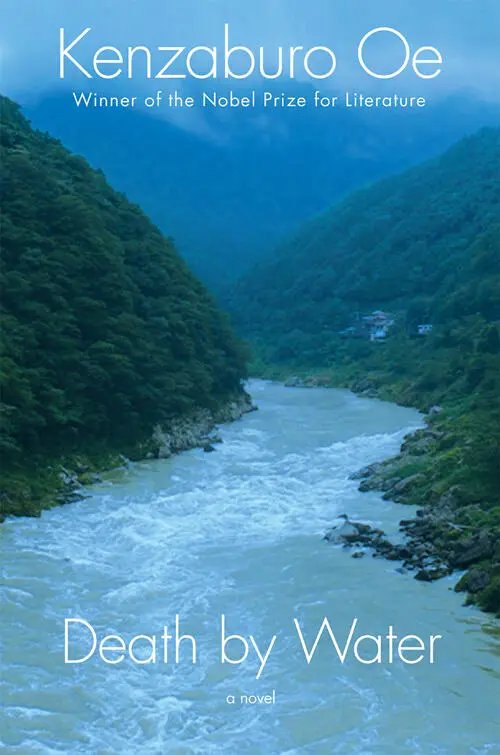
- Название:Death by Water
- Автор:
- Издательство:Grove/Atlantic, Inc.
- Жанр:
- Год:2015
- ISBN:9780802190871
- Рейтинг книги:3 / 5. Голосов: 1
-
Избранное:Добавить в избранное
- Отзывы:
-
Ваша оценка:
Death by Water: краткое содержание, описание и аннотация
Предлагаем к чтению аннотацию, описание, краткое содержание или предисловие (зависит от того, что написал сам автор книги «Death by Water»). Если вы не нашли необходимую информацию о книге — напишите в комментариях, мы постараемся отыскать её.
, his recurring protagonist and literary alter-ego returns to his hometown village in search of a red suitcase fabled to hold documents revealing the details of his father’s death during WWII: details that will serve as the foundation for his new, and final, novel.
Since his youth, renowned novelist Kogito Choko planned to fictionalize his father’s fatal drowning in order to fully process the loss. Stricken with guilt and regret over his failure to rescue his father, Choko has long been driven to discover why his father was boating on the river in a torrential storm. Though he remembers overhearing his father and a group of soldiers discussing an insurgent scheme to stage a suicide attack on Emperor Mikado, Choko cannot separate his memories from imagination and his family is hesitant to reveal the entire story. When the contents of the trunk turn out to offer little clarity, Choko abandons the novel in creative despair. Floundering as an artist, he’s haunted by fear that he may never write his tour de force. But when he collaborates with an avant-garde theater troupe dramatizing his early novels, Kogito is revitalized by revisiting his formative work and he finds the will to continue investigating his father’s demise.
Diving into the turbulent depths of legacy and mortality,
is an exquisite examination of resurfacing national and personal trauma, and the ways that storytelling can mend political, social, and familial rifts.
Death by Water — читать онлайн бесплатно полную книгу (весь текст) целиком
Ниже представлен текст книги, разбитый по страницам. Система сохранения места последней прочитанной страницы, позволяет с удобством читать онлайн бесплатно книгу «Death by Water», без необходимости каждый раз заново искать на чём Вы остановились. Поставьте закладку, и сможете в любой момент перейти на страницу, на которой закончили чтение.
Интервал:
Закладка:
2
Dear Kogii,
I’m absolutely thrilled that you agreed to my big request! How can I ever thank you enough? Since my previous letter ended up being a shameless plea for assistance, I’d like to try to make up for that by telling you about what’s been going on, theater-wise, since the beginning of the year, following last fall’s boffo performance at the theater in the round.
After the resounding success of the Kokoro play, Unaiko immediately got to work on a revised version targeted at a more adult audience. She staged the play at a small venue in Matsuyama where avant-garde theater groups from Tokyo appear from time to time, and it was another smash hit. I was particularly impressed by the way Unaiko took some of the critiques of the earlier version of the play, which was tailored to appeal to students, and cleverly found a way to incorporate those responses into her revised script.
Until now, I’ve mostly been sending you brief descriptions and on-the-scene reports, but I’d like to give you a broader sense of what’s taking place in the theater during one of Unaiko’s plays. (Although I think it would be difficult for an accomplished journalist, much less an amateur like me, to write an account that does justice to the entire panorama; I mean, there are so many different things going on at the same time while the performance unfolds.) I would also like to try to evoke the distinctive atmosphere of freshness, openness, and unpredictability Unaiko brings to all her productions.
As I’ve mentioned before, lively, unscripted arguments and discussions often erupt spontaneously among the actors onstage and the animated interplay spills over into the audience as well, drawing the spectators into the action. Meanwhile, Unaiko is making a continuous effort to monitor everything that’s going on. (It’s truly phenomenal the way she’s able to focus on several conversations simultaneously; I can’t help being reminded of Prince Shotoku, with his legendary facility for listening to individual requests or complaints from ten citizens at once!) At any rate, she’ll usually beckon two or three interesting-looking participants from the audience to join her at the front of the stage. Then some of the established performers from the troupe will take the new arrivals under their wings and offer vocal support for whatever opinions the newcomers might be expressing.
Of course, this sort of interactive approach—’blurring the usually clear demarcation between performers and audience — is at the heart of Unaiko’s theatrical modus operandi. However, she runs a tight ship, and when a side discussion that seemed to be heading in an interesting direction begins to lose steam, the people in that group will soon find themselves the targets of a dismissive hail of stuffed animals.
On opening night at the cozy little theater in Matsuyama, one of the first audience members to be invited onstage by Unaiko was an acquaintance of mine, a high school teacher from Honcho. (He also came to see the initial Kokoro performance last fall.) The teacher started by pointing out that at the beginning of the play an actor was speaking as Sensei himself, in the first person. However, when it came time to quote from Sensei’s suicide note, the monologue was voiced in the third person. The teacher’s complaint was that because the Sensei character didn’t actively participate in the discussion, it simply wasn’t as effective or entertaining as when that pivotal character was speaking as himself.
My acquaintance was immediately heckled by people saying things like “Wasn’t that as it should be, since Sensei had already committed suicide?” He didn’t back down, though. “So what if Sensei had already killed himself?” he retorted. “Why couldn’t he be sent onstage as someone who’s dead, like the ghost in Hamlet? I mean, it’s a play, right?” He even offered a concrete suggestion: “I noticed a wheelchair out in the lobby,” he said. “Couldn’t you seat an actor representing Sensei in the wheelchair, with his head and face covered by a cloth to let us know he was supposed to be dead? Then when someone asked him a question, he could reply in his own voice! That would be some gripping theater. Personally, I’d like to call the deceased Sensei back to this dimension from wherever he is now and ask him some tough questions, and based on conversations I’ve had here tonight I don’t think I’m the only one who feels this way.” I’m not quoting verbatim, of course, but that’s the gist of what the teacher said.
And voilà—no sooner said than done! Seriously, I was amazed. It took Unaiko only a few minutes to implement the teacher’s suggestions, and in the interlude I could feel the audience’s growing excitement about this bit of improvised stagecraft. While we watched, the wheelchair was carried onstage, and after Suke & Kaku had thrown a white cloth over Unaiko’s head they seated her in the chair and pushed it into the center of the stage. From then on the high school teacher — whose request had set this impromptu scenario in motion — had no choice but to address his questions to the “corpse.”
“Sensei,” he said, “I’d like to ask about your final letter, or suicide note, which I’ve read many times along with my students. The thing is, when it comes to making statements about this nation of ours in a public high school in the twenty-first century, an educator has to be extremely circumspect. About six months ago, when this same play was staged in our little town for an audience that included both students and regular citizens — and I’d appreciate it if you would make a point of remembering that I used the word ‘citizens’ rather than ‘townspeople’—anyhow, while a number of students and citizens did participate in the performance, I decided to keep my comments to myself. Today, before I say anything, I’d like to emphasize the fact that I’m here on my own, as a theatergoer. I am not speaking as I would in the classroom.
“In case you might wonder to whom the disclaimer is addressed, the answer is: to the members of the school board in the town where I teach. They have made a special trip up here to Matsuyama this evening just to see this play. Because the previous performance at our local junior high gave rise to some very public controversy, I imagine the board members wanted to see for themselves what all the fuss was about. Take a good look at these people; I think you’ll agree that they aren’t the sort who would normally come to an experimental performance in a small theater like this.
“I’d like to begin by talking about what happened when this play was performed in the town where we live. The original plan was to combine the play with a lecture by Kogito Choko, the novelist who was one of the first students to enter the new postwar junior high in our village. However, because Mr. Choko was sidelined with an attack of vertigo — which was completely understandable, since whenever we try to read his convoluted sentences I think we all start to feel a bit dizzy, too [laughter]— anyhow, the planning committee decided to go ahead and present the play as a stand-alone event.
“From the perspective of the school board that outcome may actually have been preferable, politically speaking. Why? Because as a writer, Kogito Choko has shown a deep emotional attachment to the archaic version of the Fundamental Law of Education. Back in the prewar era there were students who were unable to advance to the next educational level because of family finances, and that’s why a new junior high was built in the village. Mr. Choko was one of the students who benefited. The school was created according to the postwar principles embodied in the New Constitution and the revised — some might say watered-down — version of the Fundamental Law of Education. At the time laws were being modified left and right, and Mr. Choko suggested that everyone ought to make the original Fundamental Law of Education into pamphlets, to carry around in our breast pockets. He even had a bunch of those booklets printed at his own expense, but apparently they didn’t sell too well — you know, not like novels. Or maybe I should say they sold about as well as Mr. Choko’s own novels. [Laughter.] I was one of the people who actually purchased some of those booklets, so if you don’t mind I’d like to read an excerpt from the one I just happen to have in my pocket.”
Читать дальшеИнтервал:
Закладка:
Похожие книги на «Death by Water»
Представляем Вашему вниманию похожие книги на «Death by Water» списком для выбора. Мы отобрали схожую по названию и смыслу литературу в надежде предоставить читателям больше вариантов отыскать новые, интересные, ещё непрочитанные произведения.


Обсуждение, отзывы о книге «Death by Water» и просто собственные мнения читателей. Оставьте ваши комментарии, напишите, что Вы думаете о произведении, его смысле или главных героях. Укажите что конкретно понравилось, а что нет, и почему Вы так считаете.