Kenzaburo Oe - Death by Water
Здесь есть возможность читать онлайн «Kenzaburo Oe - Death by Water» весь текст электронной книги совершенно бесплатно (целиком полную версию без сокращений). В некоторых случаях можно слушать аудио, скачать через торрент в формате fb2 и присутствует краткое содержание. Год выпуска: 2015, ISBN: 2015, Издательство: Grove/Atlantic, Inc., Жанр: Современная проза, на английском языке. Описание произведения, (предисловие) а так же отзывы посетителей доступны на портале библиотеки ЛибКат.
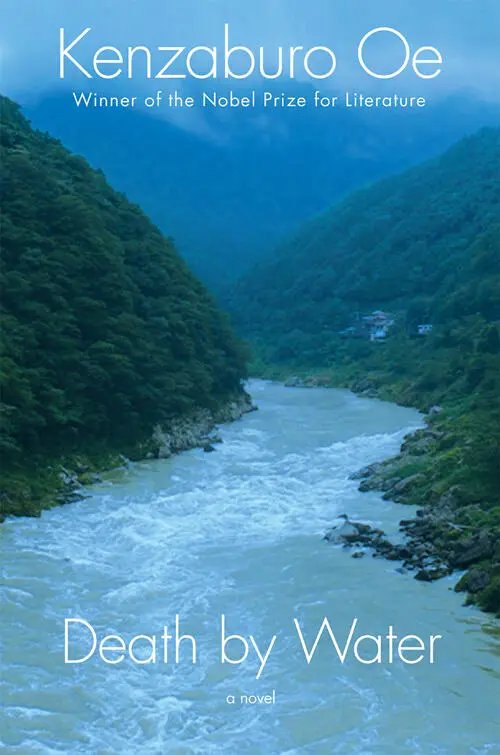
- Название:Death by Water
- Автор:
- Издательство:Grove/Atlantic, Inc.
- Жанр:
- Год:2015
- ISBN:9780802190871
- Рейтинг книги:3 / 5. Голосов: 1
-
Избранное:Добавить в избранное
- Отзывы:
-
Ваша оценка:
Death by Water: краткое содержание, описание и аннотация
Предлагаем к чтению аннотацию, описание, краткое содержание или предисловие (зависит от того, что написал сам автор книги «Death by Water»). Если вы не нашли необходимую информацию о книге — напишите в комментариях, мы постараемся отыскать её.
, his recurring protagonist and literary alter-ego returns to his hometown village in search of a red suitcase fabled to hold documents revealing the details of his father’s death during WWII: details that will serve as the foundation for his new, and final, novel.
Since his youth, renowned novelist Kogito Choko planned to fictionalize his father’s fatal drowning in order to fully process the loss. Stricken with guilt and regret over his failure to rescue his father, Choko has long been driven to discover why his father was boating on the river in a torrential storm. Though he remembers overhearing his father and a group of soldiers discussing an insurgent scheme to stage a suicide attack on Emperor Mikado, Choko cannot separate his memories from imagination and his family is hesitant to reveal the entire story. When the contents of the trunk turn out to offer little clarity, Choko abandons the novel in creative despair. Floundering as an artist, he’s haunted by fear that he may never write his tour de force. But when he collaborates with an avant-garde theater troupe dramatizing his early novels, Kogito is revitalized by revisiting his formative work and he finds the will to continue investigating his father’s demise.
Diving into the turbulent depths of legacy and mortality,
is an exquisite examination of resurfacing national and personal trauma, and the ways that storytelling can mend political, social, and familial rifts.
Death by Water — читать онлайн бесплатно полную книгу (весь текст) целиком
Ниже представлен текст книги, разбитый по страницам. Система сохранения места последней прочитанной страницы, позволяет с удобством читать онлайн бесплатно книгу «Death by Water», без необходимости каждый раз заново искать на чём Вы остановились. Поставьте закладку, и сможете в любой момент перейти на страницу, на которой закончили чтение.
Интервал:
Закладка:
At this point, the teacher began to read aloud, but the passage he’d chosen ventured so deeply into the intricacies of educational politics that the audience around me started to fidget in obvious boredom and impatience. He must have sensed this because he stopped reading and said, a bit sheepishly, “Anyhow, the bottom line is that we have to tread carefully whenever we talk about the topic of education. Why, tonight alone three people have already thrown ‘dead dogs’ at me, so I’ll move on to my main point before I get hit again.
“It has to do with the note Sensei left behind, in which he wrote: Then, during the height of the summer, Emperor Meiji passed away. I felt as though the spirit of the Meiji Era that began with the emperor had ended with him as well. I was overcome with the feeling that I and the rest of my generation, who had grown up in that era, were now left behind to live as anachronisms. I shared this epiphany with my wife, but she just laughed and refused to take me seriously. Then she said a curious thing, albeit in jest: ‘Well then, maybe you should just go ahead and commit junshi, and follow the emperor to the grave.’”
After he finished reading, the teacher addressed the shrouded figure in the wheelchair. “Sensei, when you said that to your wife she laughed at you and didn’t seem to take you seriously at all. She even teased you, saying, ‘Maybe you should just go ahead and commit junshi.’ On this point, I have to say I really — I don’t mean to give you a hard time about this, but it just struck me as extremely odd. And that’s why I would like to go back in time and ask for some clarification. You talk about how strongly you and your contemporaries were influenced by the spirit of the Meiji Era, but is that true? Your friend was driven to commit suicide as a direct result of your betrayal, yet that betrayal sprang from your own character and the choices you made, so you couldn’t really blame your behavior on the sensibilities of the Meiji Era, could you? And as a result of your youthful error, isn’t it true that you ended up more or less dropping out of society for personal reasons and then living for many years as if you were already dead, as you put it? In any case, I don’t believe your private motivations were shaped by the spirit of the era — although I wouldn’t presume to say you were entirely removed from the influence of the society and the era you were living in, either.
“No, I think what moved you to behave as you did was your own secret heart. You speak repeatedly of a strange and terrible force. But didn’t the force originate in your soul, or in your gut, rather than somewhere external? Even so, your conviction that the spirit of Meiji was alive in your psyche doesn’t seem far-fetched to me at all; I just don’t believe it was the primary motivation for anything you did.
“Then there’s the matter of your long-suffering wife. She may appear to be a rather unworldly and submissive person, but the fact is she’s still a full-fledged member of the sibylline tribe known as womankind. Think about her life for a moment: spending every day and night with a man who doesn’t go to work and stays cooped up at home, a man who is immobilized by a mysterious force he can’t talk about, even to his spouse. When a man like that blurts out something grandiose and melodramatic about killing himself, wouldn’t his wife simply laugh it off? I think she would. And when she says, ‘Well then, maybe you should just go ahead and commit junshi’— I mean, isn’t it possible she wasn’t joking at all? Maybe she was just fed up.”
Kogii, at this point, without thinking, I spontaneously stood up and started clapping. And I wasn’t the only one — at least a third of the spectators in the theater applauded too, and some even jumped up and waved their arms in the air. That was the kind of passionate response the teacher’s speech evoked.
However, in the very back of the theater (it was completely sold out for once) there were three or four men dressed in trench coats. They started swinging “dead dogs” in circles above their heads with an ominous whistling sound, evidently as a way of declaring their objections to what the high school teacher had said. (I don’t know; maybe they felt throwing the dogs right away would somehow diminish the impact of their protest?) I won’t say those men were members of the school board, but they were most likely from the same camp, ideologically speaking. I can say with certainty that they were people who had heard about what happened at the junior high school last fall and had come to see for themselves. To save time, I’ll compress their remarks and bundle the speakers into one, under the generic name “Citizen.”
“Are you questioning Sensei’s feeling that the Meiji Era began and ended with Emperor Meiji? I mean, Sensei stated clearly that he and his contemporaries were profoundly influenced by the essence of Meiji, didn’t he? So it rings true that he really did commit junshi out of solidarity with the spirit of his age. Are you trying to disparage this noble death?”
And with that, the citizens hurled their “dead dogs” in the direction of the high school teacher. However, most of the people in the audience (including a great many young people) apparently sided with the teacher’s point of view, because they responded by sending a hailstorm of stuffed animals in the direction of the citizens — an attack that had both numbers and energy on its side. In the midst of the jubilant chaos, Unaiko, who had been sitting motionless in the wheelchair, still in character as the late Sensei, suddenly leaped to her feet. She tore off the white cloth covering her head, revealing a corpselike face made up to appear, quite literally, deathly pale. A hush fell over the small theater as Unaiko began to speak, displaying her superb talent for recitation. Using the same voice she had employed when she was pretending to be Sensei, she started to talk about the character in the third person.
“I’ve been playing the role of Sensei, but I still don’t understand what’s in the ‘secret heart’ of this character whose costume I’m wearing right now. I’m not sure whether he even understood himself. For me, this quote says it all.”
Sensei : I read in the newspaper the words General Nogi had written before killing himself. I learned that ever since the Seinan War, when he lost his banner to the enemy, he had been wanting to redeem his honor through death. I found myself automatically counting the years that the general had lived, always with death at the back of his mind. The Seinan War, as you know, took place in the tenth year of Meiji, so he must have spent thirty-five years waiting for the proper time to die. I asked myself: “When did he suffer greater agony — during those thirty-five years, or at the moment when the sword entered his bowels?”
It was two or three days later that I decided at last to commit suicide. Perhaps you will not understand clearly why I am about to die, any more than I can fully understand why General Nogi killed himself. You and I belong to different eras, and so we think differently. There is nothing we can do to bridge the gap between us. Of course, it might be more accurate to say that we are different simply because we are two separate human beings. At any rate, I have done my best in the above narrative to make you understand the strange person that is myself.
After delivering this long quote, Unaiko addressed the crowd directly, in her own words. “Look, I think for Sensei … as this quote says, he was perpetually obsessed with the question of the human heart — of the individual, by the individual, for the individual — and after having done his best to make his young friend understand this, he took his own life. But how can it be seen as a sacrifice on the altar of the spirit of Meiji? I keep going back to the idea that Sensei ultimately committed suicide as a kind of belated atonement, which is to say he did it for himself. If you agree, please feel free to throw as many ‘dead dogs’ as you like at those citizens in the audience who take a different view. Go ahead, everybody — knock yourselves out!”
Читать дальшеИнтервал:
Закладка:
Похожие книги на «Death by Water»
Представляем Вашему вниманию похожие книги на «Death by Water» списком для выбора. Мы отобрали схожую по названию и смыслу литературу в надежде предоставить читателям больше вариантов отыскать новые, интересные, ещё непрочитанные произведения.





Обсуждение, отзывы о книге «Death by Water» и просто собственные мнения читателей. Оставьте ваши комментарии, напишите, что Вы думаете о произведении, его смысле или главных героях. Укажите что конкретно понравилось, а что нет, и почему Вы так считаете.