Kenzaburo Oe - Death by Water
Здесь есть возможность читать онлайн «Kenzaburo Oe - Death by Water» весь текст электронной книги совершенно бесплатно (целиком полную версию без сокращений). В некоторых случаях можно слушать аудио, скачать через торрент в формате fb2 и присутствует краткое содержание. Год выпуска: 2015, ISBN: 2015, Издательство: Grove/Atlantic, Inc., Жанр: Современная проза, на английском языке. Описание произведения, (предисловие) а так же отзывы посетителей доступны на портале библиотеки ЛибКат.
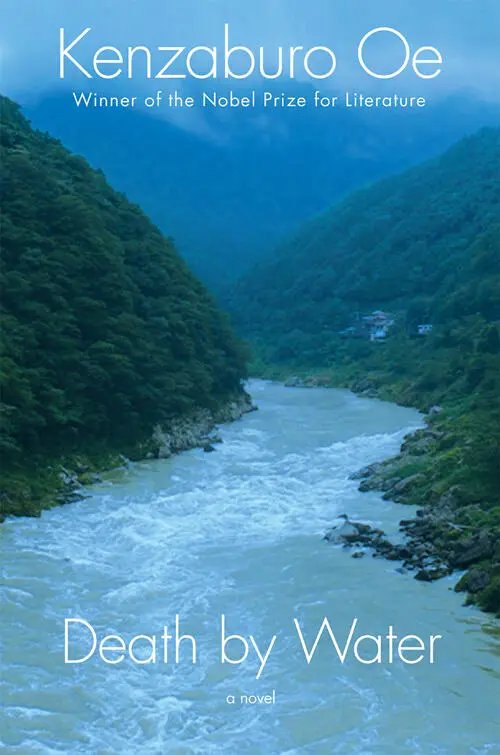
- Название:Death by Water
- Автор:
- Издательство:Grove/Atlantic, Inc.
- Жанр:
- Год:2015
- ISBN:9780802190871
- Рейтинг книги:3 / 5. Голосов: 1
-
Избранное:Добавить в избранное
- Отзывы:
-
Ваша оценка:
Death by Water: краткое содержание, описание и аннотация
Предлагаем к чтению аннотацию, описание, краткое содержание или предисловие (зависит от того, что написал сам автор книги «Death by Water»). Если вы не нашли необходимую информацию о книге — напишите в комментариях, мы постараемся отыскать её.
, his recurring protagonist and literary alter-ego returns to his hometown village in search of a red suitcase fabled to hold documents revealing the details of his father’s death during WWII: details that will serve as the foundation for his new, and final, novel.
Since his youth, renowned novelist Kogito Choko planned to fictionalize his father’s fatal drowning in order to fully process the loss. Stricken with guilt and regret over his failure to rescue his father, Choko has long been driven to discover why his father was boating on the river in a torrential storm. Though he remembers overhearing his father and a group of soldiers discussing an insurgent scheme to stage a suicide attack on Emperor Mikado, Choko cannot separate his memories from imagination and his family is hesitant to reveal the entire story. When the contents of the trunk turn out to offer little clarity, Choko abandons the novel in creative despair. Floundering as an artist, he’s haunted by fear that he may never write his tour de force. But when he collaborates with an avant-garde theater troupe dramatizing his early novels, Kogito is revitalized by revisiting his formative work and he finds the will to continue investigating his father’s demise.
Diving into the turbulent depths of legacy and mortality,
is an exquisite examination of resurfacing national and personal trauma, and the ways that storytelling can mend political, social, and familial rifts.
Death by Water — читать онлайн бесплатно полную книгу (весь текст) целиком
Ниже представлен текст книги, разбитый по страницам. Система сохранения места последней прочитанной страницы, позволяет с удобством читать онлайн бесплатно книгу «Death by Water», без необходимости каждый раз заново искать на чём Вы остановились. Поставьте закладку, и сможете в любой момент перейти на страницу, на которой закончили чтение.
Интервал:
Закладка:
Unfortunately, after having had my clumsy faux pas redeemed by Chikashi’s generosity of spirit — she is always so extraordinarily gracious, even in the midst of her own travails — I ended up saying something that I fear was even more irritating.
“You mentioned that there’s never before been such a serious rift between Akari and my brother, but hasn’t Kogii tried to repair the damage?” I asked. “In the past, if things had ever gotten to this point, it seems to me that everyone would have gone all out to get the situation back to normal. I mean, if you read Rouse Up O Young Men of the New Age! …” I trailed off.
Chikashi responded to my question in a tone I’d never heard from her before. Until then she had been referring to you as “Papa,” and hearing her suddenly switch to calling you “that man” made my blood run cold. The things she said were so rigorous and unforgiving that I must have somehow rearranged the words in my mind afterward as a defense mechanism. However, I haven’t been able to forget the underlying message.
In essence, this is what she said: “That man’s way of extending a conciliatory hand to Akari is shallow and superficial; I won’t go so far as to say it’s disingenuous, but even if such an approach has occasionally been effective in the past, hasn’t that man’s oppression of Akari been part of the problem all along? True, that man has some little tricks that have been useful for patching up minor rifts in the past, but if he tries to deploy them now, when his relationship with Akari has reached a complete impasse — well, the truth is it won’t work, and I don’t even want him to try. He sits around drinking and stewing about the situation, and does impulsive things like rushing out to buy new CDs he thinks might interest Akari and bringing them home as a peace offering. I really wish he would refrain from doing that sort of thing as well. As you know, music has been the single most important element in Akari’s life practically forever. The basic principle of listening to music of his own free will must be preserved no matter what. And in order to make sure his freedom to listen to music is protected, his freedom not to listen to music must be respected as well. To borrow one of that man’s favorite phrases — doesn’t it come down to fundamental human rights? If he somehow decided to force Akari to listen to music against his will, as yet another form of oppression, it could do irrevocable damage to Akari, psychologically. It’s even possible that Akari might express his opposition by violently lashing out at that man in an unprecedented way.
“By the way, what I said just now? I actually borrowed some of the phrasing from Maki, but the things she said echoed what I had been thinking on my own. If things go on like this Maki might end up taking Akari away to live at her house, and I’m not sure I could oppose such a plan, in good conscience.”
At this point Chikashi seemed to sense that my hands were trembling uncontrollably on the other end of the line, and she stopped referring to you as “that man,” which I had found extremely distressing.
“I’ve been going around saying that our house in Seijo is inhabited by two giant lumps of depression, and when I think of those two being alone together in their current state, it really frightens me,” she went on. “So before I check in to the hospital, I’d like to send them away to a place where they might have a better chance of figuring out how to live together with at least a modicum of peace and harmony. And for Papa, being on Shikoku surrounded by his beloved forest would be very restorative, don’t you agree? I’m afraid setting things up would involve imposing on you even more — I mean, I’m already asking you to come to Tokyo and nurse me through my recovery—’but if you don’t mind, that’s how I’d like to handle it.”
Chikashi’s courteous words at the end of our conversation made me feel better about the critical things she had said about you, but after I hung up the phone the sound of her fierce soliloquy was still ringing in my ears. I couldn’t bear to stay at home alone so I headed over to the Forest House, hoping to talk to Unaiko. However, she wasn’t there — apparently she and Ricchan were both taking care of some business matters — and the house was closed up tight. Since I hadn’t brought my key, I went around to the back garden, sat down in front of the poetry stone, and looked at the lines Mother wrote: You didn’t get Kogii ready to go up into the forest / And like the river current, you won’t return home.
Kogii, what you’re doing now is even worse than that, isn’t it? There’s no point in raking you over the coals, but we both know you’re in a far more dire situation now than when you wrote your part of that poem: In Tokyo during the dry season / I’m remembering everything backward, / From old age to earliest childhood.
I hope you’ll listen carefully to whatever Chikashi and Maki have to say, and please, please don’t even think about doing anything rash. When I mention the need for caution, I’m talking about two aspects of your current situation. First, now that the ill-fated drowning novel has come to naught, I’m afraid the resulting disappointment may have severed the only work-related bond connecting you to this world. Then, on the personal side of the equation, there’s the deplorable situation with Akari. The two of you have been practically joined at the hip for all these years, and that link seems to have been sundered as well. At this point, I’m worried that you may be asking yourself whether you have any ties to this life anymore. So I just want to ask you to be very careful not to fall into the kind of tediously nihilistic, self-destructive state of mind old people are especially vulnerable to, because we both know where it can lead.
Needless to say, I won’t be expecting an actual letter in reply to this. However, I will be looking forward to receiving Maki’s copies of any notes you might scribble on your ubiquitous index cards.
4
Some notes from my index cards:
 Basically, I think the way Akari has made it through life until now — it’s hard for me to believe, but he is already forty-five years old — is by creating a world where the interconnected activities of listening to classical music and creating his own brief yet beguiling compositions have formed a stable foundation for his daily existence … that is, until the recent catastrophic turn of events.
Akari has four successful CDs of original music to his credit, and his uncle Goro even made a film based on my novels about our home life, both of which (the life and the books) revolved around Akari. When Akari was taking music lessons from an expert in the field, he never shirked his studies. This process was interrupted when he took an extended break from composing, but after a couple of years he resumed his study of music theory with the same diligence. Every day the communal living area of our house was filled with the sound of recorded music, played at low volume: Bach, Mozart, Beethoven, Schubert, Chopin, and even some Messiaen and Piazzolla thrown into the mix from time to time. For years, the music Akari played was the sound track of our lives.
And now all that sublime classical music has completely vanished from our home. Oh, Akari still checks the program listings in the weekly FM radio guide, and he hasn’t abandoned his daily self-set task of correcting any misprints in the composers’ names or titles of works in the programming details at the back of the monthly music magazines. There has been no change in his customary routine of constantly reorganizing his shelves of CDs in accordance with the complex taxonomic principles he seems to keep in his head. However, during the past six months there hasn’t been a single moment when Akari enlivened the space we share with the sounds of classical music. As Chikashi put it, with her usual succinctness, our son has turned into a musical recluse. He listens to music only late at night when he is alone in his room, using headphones connected to his radio, as if he wants to keep it all to himself.
Интервал:
Закладка:
Похожие книги на «Death by Water»
Представляем Вашему вниманию похожие книги на «Death by Water» списком для выбора. Мы отобрали схожую по названию и смыслу литературу в надежде предоставить читателям больше вариантов отыскать новые, интересные, ещё непрочитанные произведения.






Обсуждение, отзывы о книге «Death by Water» и просто собственные мнения читателей. Оставьте ваши комментарии, напишите, что Вы думаете о произведении, его смысле или главных героях. Укажите что конкретно понравилось, а что нет, и почему Вы так считаете.