Kenzaburo Oe - Death by Water
Здесь есть возможность читать онлайн «Kenzaburo Oe - Death by Water» весь текст электронной книги совершенно бесплатно (целиком полную версию без сокращений). В некоторых случаях можно слушать аудио, скачать через торрент в формате fb2 и присутствует краткое содержание. Год выпуска: 2015, ISBN: 2015, Издательство: Grove/Atlantic, Inc., Жанр: Современная проза, на английском языке. Описание произведения, (предисловие) а так же отзывы посетителей доступны на портале библиотеки ЛибКат.
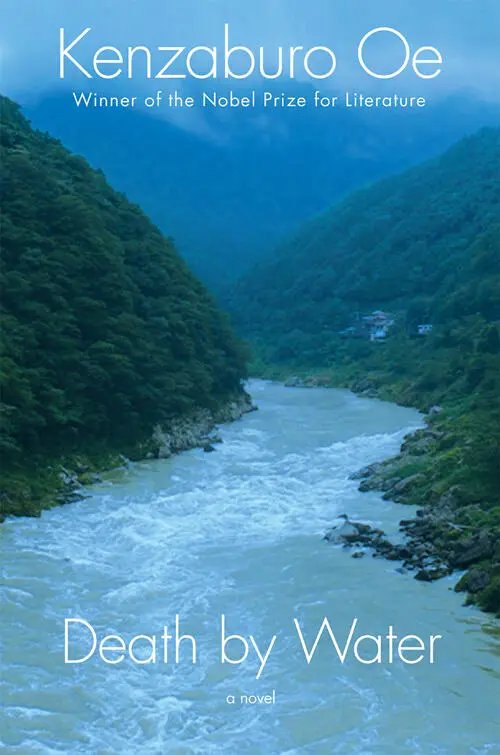
- Название:Death by Water
- Автор:
- Издательство:Grove/Atlantic, Inc.
- Жанр:
- Год:2015
- ISBN:9780802190871
- Рейтинг книги:3 / 5. Голосов: 1
-
Избранное:Добавить в избранное
- Отзывы:
-
Ваша оценка:
Death by Water: краткое содержание, описание и аннотация
Предлагаем к чтению аннотацию, описание, краткое содержание или предисловие (зависит от того, что написал сам автор книги «Death by Water»). Если вы не нашли необходимую информацию о книге — напишите в комментариях, мы постараемся отыскать её.
, his recurring protagonist and literary alter-ego returns to his hometown village in search of a red suitcase fabled to hold documents revealing the details of his father’s death during WWII: details that will serve as the foundation for his new, and final, novel.
Since his youth, renowned novelist Kogito Choko planned to fictionalize his father’s fatal drowning in order to fully process the loss. Stricken with guilt and regret over his failure to rescue his father, Choko has long been driven to discover why his father was boating on the river in a torrential storm. Though he remembers overhearing his father and a group of soldiers discussing an insurgent scheme to stage a suicide attack on Emperor Mikado, Choko cannot separate his memories from imagination and his family is hesitant to reveal the entire story. When the contents of the trunk turn out to offer little clarity, Choko abandons the novel in creative despair. Floundering as an artist, he’s haunted by fear that he may never write his tour de force. But when he collaborates with an avant-garde theater troupe dramatizing his early novels, Kogito is revitalized by revisiting his formative work and he finds the will to continue investigating his father’s demise.
Diving into the turbulent depths of legacy and mortality,
is an exquisite examination of resurfacing national and personal trauma, and the ways that storytelling can mend political, social, and familial rifts.
Death by Water — читать онлайн бесплатно полную книгу (весь текст) целиком
Ниже представлен текст книги, разбитый по страницам. Система сохранения места последней прочитанной страницы, позволяет с удобством читать онлайн бесплатно книгу «Death by Water», без необходимости каждый раз заново искать на чём Вы остановились. Поставьте закладку, и сможете в любой момент перейти на страницу, на которой закончили чтение.
Интервал:
Закладка:
 So what is at the root of this sadness and silence and turmoil? The words I rashly spoke to Akari in an unpardonable fit of anger: “You’re an idiot.” That short, simple declarative sentence … the epitome of unreflective cruelty.
Many years ago, in a grove of Erman’s birches in North Karuizawa, I was carrying Akari piggyback when he uttered the first words of his young life in response to hearing the call of a bird on a nearby lake. “It’s a water rail,” he said clearly. (He had already learned to recognize and mimic the songs of a variety of wild birds from a recording we had at home.)
From that point on Akari’s vocabulary grew at a rapid rate, and within three or four years he was able to understand the discriminatory slurs and insults the outside world flung his way. I remember one time when Maki came home from middle school and immediately ran into the kitchen to tell Chikashi about how she had gone to pick Akari up after his special education class and had found him being taunted by a menacing group of older male students. Akari, meanwhile, was in the living room listening to music, and when I peeked in I saw him with both hands clamped over his ears and his elbows sticking out at right angles, obviously trying to filter the unpleasant “noise pollution” of what his sister was saying while still continuing to listen to his beloved music.
And now Akari has evidently reclassified his own father from trusted protector to source of discordant noise and pain: someone who would hurl the most hurtful word imaginable at his own son more than once. This situation has already been festering for half a year, and it could easily continue for another six months — perhaps even a year or two. The truth is, at times even those rather bleak estimates seem wildly optimistic. There is a distinct possibility that Akari and I could go on sharing a living space in which the sound of music is never heard for the next ten or fifteen years, or more.
5
Dear Kogii,
Maki is always very accommodating and easy to deal with, and she kindly took your reflections on the rift between you and Akari, transcribed their index cards on her computer, and emailed them to me. I don’t know whether she was trying to balance the mournful tone of your contributions, but she also included some letters Chikashi wrote to you. I’m sure you read them at the time and wrote proper replies, but because Maki sent me the originals of those letters (rather than photocopies) you no longer have them at hand, so I’ll fax them back to you just in case you might want to take another look. Here’s the first one, which I found very interesting:
I recently remembered a day, many years ago, when you read a letter from one of your young readers and then went into your study without a word and stretched out on your army cot. The memory was triggered the other afternoon when I noticed a book you had been reading next to the chaise longue. (You had gone off to get a haircut while I was getting ready to head for the hospital alone to check myself in, as we’d agreed.) The book had a handmade dust cover, and when I opened it and took a peek at the title page, I saw that it was Soseki’s Kokoro.
Anyway, the young reader — this was when you were quite young yourself, so that person was probably only ten years your junior at most — was responding to a short essay of yours that appeared in one of those little publishing-company advertising brochures they give away at bookstores and university co-ops. The title was a quote from Kokoro: I’d like you to remember something. This is the way I have lived my life . Apparently after reading the essay (or, at least, after glancing at the title) the student scrawled some rude remarks — things like “Who do you think you’re talking to, anyway? Why should I waste my time remembering how you’ve lived your life? As if I cared!”—on a page torn out of a school notebook and mailed it to you. The student’s comments struck me as oddly reasonable and I inadvertently burst out laughing, which just made you more depressed. (I could tell, even though you didn’t say anything.)
Getting back to the present, before I left for the hospital I wandered around the rooms on the second floor of our house. As I was looking at the shelves in the library where all your books are lined up, I remembered the indignant reaction of the young reader (now presumably grown old) to your Kokoro quotation and it made me giggle again, even though it isn’t a particularly pleasant memory. In any event, my little tour of your bookshelves gave me an idea, and I’d like to ask for a favor. Would you please copy out the parts of your novels where you quote things Akari has said and send them to me? I thought maybe I could ask Maki to make those excerpts into a miniature book, using a nice, clean-looking Mincho typeface on her computer (which she insists is already outmoded). Then she could finish them by hand.
I have to say, I’m feeling very optimistic about our chances of weathering the current storm. In the past, whenever we’ve had to deal with a crisis of any magnitude I have always felt we would make it through somehow, and we’ve done just that, every single time. Upon reflection, everyone in our family, including Akari (aside from the disabilities he was born with), has been blessed with fundamentally healthy bodies. Do you remember the famous aphorism Musumi Sensei translated so precisely from the Latin, Mens sana in corpore sano, adding his own observation that a sound mind can easily coexist with an unhealthy body, and vice versa? That’s probably true, but — no, I’m going to resist the temptation to point out that we’re both growing old and before long our crises will be at an end. I would rather be positive and borrow a phrase of Céline’s that you once translated, aeons ago: “Let’s keep our chins up and be of good cheer!”
The truth is, when I glanced over those books in the library I couldn’t help thinking (like the young reader) that being told to “please remember all this” was, indeed, a rather tall order. Of course, I stopped reading your novels somewhere around the middle of Letters to a Nostalgic Time —though I did continue reading your essays, since I illustrated the bulk of them. But anyway … you know how Soseki writes that Sensei found himself automatically tallying the years on his fingers? Well, when I did that just now I realized it’s been twenty years since I decided to stop reading your fiction. And even now, to be honest, I don’t feel any desire to use my downtime in the hospital to catch up on your books.
That’s why I’d like to ask you to go through your work and extract the passages where you quote things Akari has said. I remember you once told me in all seriousness that you write down Akari’s comments verbatim, without embellishment, because you can’t very well hand over the rough draft and ask him whether he wants to make any corrections.
6
Dear Kogii,
Maki sent me a copy of the charming little My Own Words book she put together after you went through your novels and picked out a number of the quotes attributed to Akari. (Of course, his remarks would have been easy to spot because they were always in bold type — or in italics, in the English translations.)
Unaiko was completely enchanted with the compilation, from the very first page, and she’s been running around quoting from it ever since. However, Maki enclosed a note saying that she didn’t necessarily agree with the way you chose the excerpts, although I gather she hasn’t shared those thoughts with you directly.
Читать дальшеИнтервал:
Закладка:
Похожие книги на «Death by Water»
Представляем Вашему вниманию похожие книги на «Death by Water» списком для выбора. Мы отобрали схожую по названию и смыслу литературу в надежде предоставить читателям больше вариантов отыскать новые, интересные, ещё непрочитанные произведения.



Обсуждение, отзывы о книге «Death by Water» и просто собственные мнения читателей. Оставьте ваши комментарии, напишите, что Вы думаете о произведении, его смысле или главных героях. Укажите что конкретно понравилось, а что нет, и почему Вы так считаете.