Kathleen Alcott - Infinite Home
Здесь есть возможность читать онлайн «Kathleen Alcott - Infinite Home» весь текст электронной книги совершенно бесплатно (целиком полную версию без сокращений). В некоторых случаях можно слушать аудио, скачать через торрент в формате fb2 и присутствует краткое содержание. Год выпуска: 2015, Издательство: Riverhead Books, Жанр: Современная проза, на английском языке. Описание произведения, (предисловие) а так же отзывы посетителей доступны на портале библиотеки ЛибКат.
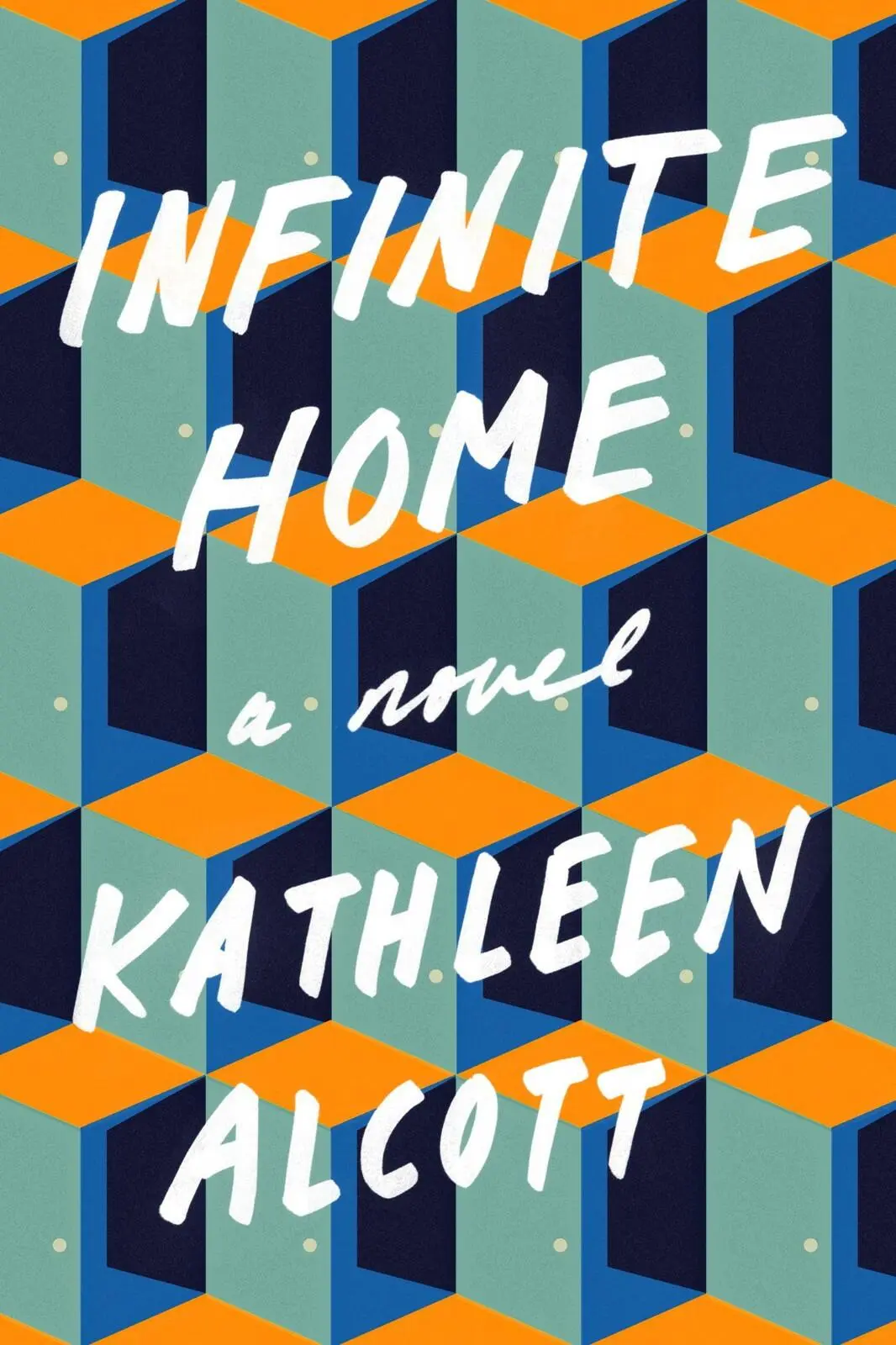
- Название:Infinite Home
- Автор:
- Издательство:Riverhead Books
- Жанр:
- Год:2015
- ISBN:нет данных
- Рейтинг книги:5 / 5. Голосов: 1
-
Избранное:Добавить в избранное
- Отзывы:
-
Ваша оценка:
Infinite Home: краткое содержание, описание и аннотация
Предлагаем к чтению аннотацию, описание, краткое содержание или предисловие (зависит от того, что написал сам автор книги «Infinite Home»). Если вы не нашли необходимую информацию о книге — напишите в комментариях, мы постараемся отыскать её.
Faced with eviction by Owen and his designs on the building, the tenants — Paulie, an unusually disabled man and his burdened sister, Claudia; Edward, a misanthropic stand-up comic; Adeleine, a beautiful agoraphobe; Thomas, a young artist recovering from a stroke — must find in one another what the world has not yet offered or has taken from them: family, respite, security, worth, love.
The threat to their home scatters them far from where they’ve begun, to an ascetic commune in Northern California, the motel rooms of depressed middle America, and a stunning natural phenomenon in Tennessee, endangering their lives and their visions of themselves along the way.
With humanity, humor, grace, and striking prose, Kathleen Alcott portrays these unforgettable characters in their search for connection, for a life worth living, for home.
Infinite Home — читать онлайн бесплатно полную книгу (весь текст) целиком
Ниже представлен текст книги, разбитый по страницам. Система сохранения места последней прочитанной страницы, позволяет с удобством читать онлайн бесплатно книгу «Infinite Home», без необходимости каждый раз заново искать на чём Вы остановились. Поставьте закладку, и сможете в любой момент перейти на страницу, на которой закончили чтение.
Интервал:
Закладка:
When his eye reached the page that concerned the property, he saw that she had been correct, had not in her confusion of decades forgotten the legacy she meant to bestow. The address that had housed the last decade of his life was meant to go to Jennifer Whalen of San Francisco, and the date of the document was more than ten years prior, shortly after Declan’s collapse. A vision came to him, of Edith alone for the first time in fifty years, adjusting her hat in the foyer of some lawyer’s office, ready to regulate the details of her own demise, and the heat left his body. He had never so badly wanted to protect someone, and never felt so thoroughly incapable.
~ ~ ~
PAULIE WAS IN FORT GREENE PARK and there were fireflies and he thought possibly they were the same ones that had winked at his mother in Connecticut and brought her outside on so many sunsets. He wondered if maybe each time they lit up they were remembering other places they’d been. Like, fwoosh , light, and here is the meadow that swelled around a little house left behind: fwoosh , and a real broad garden where the flowers reach out however they please just like the people sitting around growing into the grass: fwoosh , and the lake where reeds grew up tall and lived half their life underwater and half out.
Paulie knew the word bioluminescence and wished he could use it more, that it showed up in recipes, on the checks Claudia scrawled for his rent each month, on the change-of-service signs in the subway. How are you doing today? Bioluminescent! He would say this all the time if his body made light you could see. He would blink and blink for Claudia, he would summon all his bioluminescent friends and surround her.
For years Paulie had been begging her to take him to see a natural phenomenon in Elkmont, Tennessee, which he knew from maps was in an area called the Smoky Mountains, which he definitely liked the sound of. Thousands of male fireflies lit up all at once and did a kind of dance for the females, who hid near the ground and flirted with little flashes, and it went on a while, all of them listening to each other, filling the sky with light all at once. It happened only once a year, and in two places in the entire world, and Paulie suspected if he got to see it his whole life would open. But he knew that Claudia became quiet and wet-faced at night, saw in the morning how she slept until the last minute she could. He tried not to mention it.
~ ~ ~
THE INFORMATION SAT with Thomas like a poor meal hardening in the stomach, resisting digestion, as he lay tensed on the couch in his apartment. He couldn’t determine whether his impulse to find Edith’s lost daughter in California was more rooted in his wish to save others or in his desire to see himself as capable, the kind of man who followed an idea down, clearing obstacles to make a path for it. Even with the full agency of his body, Thomas had never known himself to be a man of action. He had spent parties in low armchairs, allowed the conversation to drift to him, charmed people with the opinions he shared minimally and stoically, poured his time into canvases that he manipulated exactly as he wished, and cared little for the work of human relationships. The women he had fallen in with were always those slinking around corners to find him, prodding at his reticence, showing up late at his door without asking. He had given up on his parents, their silent TV dinners and failing bodies and shared misery, discarded an active connection to them as one might some faulty appliance.
A sharp, acrid sentiment bloomed in Thomas. His understanding of himself — that he’d grown cowardly since the stroke, had forsaken some former virility and honor — appeared, finally and absolutely, as a lie he’d told himself for comfort. Knowing this felt like watching the sand at his feet escaping and returning to the ocean, feeling the divots grow deeper and his balance melt, understanding that soon he’d need to move. He looked around his apartment now, at the few things lying around — two mugs left unwashed; a failing row of potted herbs; a box of childhood photos his mother had sent, which he’d never unpacked — and wondered what kind of life they indicated.
He got up and moved to the kitchen table, where his laptop sat open, displaying articles he’d only half read: an economist’s half-baked ideas about what the on-demand consumption of pop culture meant for minor artists, a biographical entry about a middling starlet, the obituary of a childhood acquaintance who had drowned. He brought the computer screen to full brightness and began his search for an airplane ticket, and the immediacy of it, the options rippling open in new windows, moved through him like a chill.
~ ~ ~
ON THE AIRPLANE Thomas brushed thoughts of Adeleine away like mosquitoes in a high-ceilinged room, their buzzing becoming softer but never vanishing. He looked out at the modest oval of sky and considered Edith, who’d been so kind in the months after the stroke, who had brought him meals without any mawkish sympathy and hadn’t stared while he taught himself how to use his body in a different way. Later, she had taken grocery bags from his unsteady grip without discussion while he unlocked the front door or checked his mail, and when he blushed had told him, “Thomas, helping you with what you need isn’t embarrassing for me, so it shouldn’t be embarrassing for you.”
Turned confident by thoughts of his newfound generosity, he had made the mistake of reaching out to his parents to tell them of his plans. He was interrupting a sports game — he was, infallibly, calling in the middle of the competitive event to end all competitive events — and his father had grunted and handed the phone off to his mother. He heard, in the interim, the fumbled transfer of the phone, her surprise at the contact from her faraway son, but she’d called him “honey,” asked how he was doing. He had perched on his locked suitcase and spoken without interruption, bubbling with the wild enthusiasm of a child with money to spend however he pleased.
“I’m just the person to help them,” he offered in summation. “It just sort of… aligned in a way that rang out.” He knew he sounded like someone who waved around tarot cards and looked to crystals for guidance, but the prospect of such concrete usefulness had left him upbeat and serene.
“Dear,” his mother said, “if you need another place to live… isn’t it easy online, now? You just put in your specific, uh…”—a pause as a cheering stadium filtered through and washed over his parents—“you just enter a price range and an area.”
“That’s not—”
“…”
“Thomas, we’ve got — this game is about to—”
“That’s okay, Mom. I’ve got a plane to catch.”
“Take care.”
—
THE CONVERSATION CAME BACK to him like an infection, worse and larger in its return — the distance between them amplified, the futility of his belated attempt to connect obvious — and he tried again to focus his head on the possibility of Jenny. He removed the photos he had taken from Edith’s box and saw, again, a child with a long braid who turned from the camera, her face always directed away: towards a window, a hot dog stand, the flat and gray Atlantic Ocean. Then a teenager wading into a subculture: as the dates scrawled in cursive on the backs of the pictures progressed, Jenny appeared in looser clothing, sitting on the opposite end of the couch as Declan and looking up with eyelids painted blue; on the edge of her unmade bed, surrounded by dried flowers in mason jars and carved wooden incense holders and pinned up photos of people yowling into microphones. On the back of the last, in which Jenny stood on the stoop of the building with a hand gripping a suitcase, looking directly into the camera as though daring it to capture her accurately, Edith had scrawled San Francisco or Bust .
Читать дальшеИнтервал:
Закладка:
Похожие книги на «Infinite Home»
Представляем Вашему вниманию похожие книги на «Infinite Home» списком для выбора. Мы отобрали схожую по названию и смыслу литературу в надежде предоставить читателям больше вариантов отыскать новые, интересные, ещё непрочитанные произведения.







Обсуждение, отзывы о книге «Infinite Home» и просто собственные мнения читателей. Оставьте ваши комментарии, напишите, что Вы думаете о произведении, его смысле или главных героях. Укажите что конкретно понравилось, а что нет, и почему Вы так считаете.