Kathleen Alcott - Infinite Home
Здесь есть возможность читать онлайн «Kathleen Alcott - Infinite Home» весь текст электронной книги совершенно бесплатно (целиком полную версию без сокращений). В некоторых случаях можно слушать аудио, скачать через торрент в формате fb2 и присутствует краткое содержание. Год выпуска: 2015, Издательство: Riverhead Books, Жанр: Современная проза, на английском языке. Описание произведения, (предисловие) а так же отзывы посетителей доступны на портале библиотеки ЛибКат.
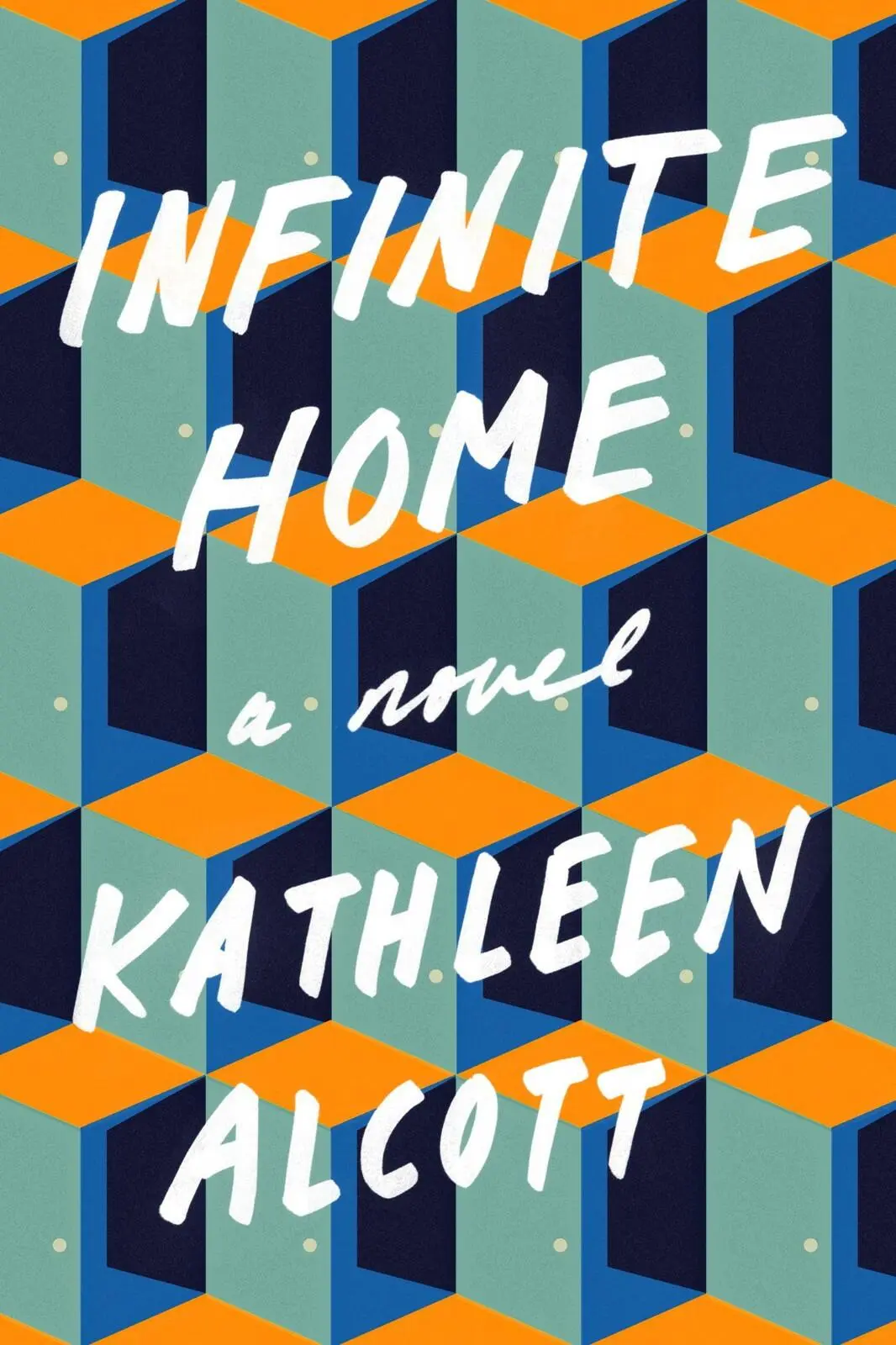
- Название:Infinite Home
- Автор:
- Издательство:Riverhead Books
- Жанр:
- Год:2015
- ISBN:нет данных
- Рейтинг книги:5 / 5. Голосов: 1
-
Избранное:Добавить в избранное
- Отзывы:
-
Ваша оценка:
Infinite Home: краткое содержание, описание и аннотация
Предлагаем к чтению аннотацию, описание, краткое содержание или предисловие (зависит от того, что написал сам автор книги «Infinite Home»). Если вы не нашли необходимую информацию о книге — напишите в комментариях, мы постараемся отыскать её.
Faced with eviction by Owen and his designs on the building, the tenants — Paulie, an unusually disabled man and his burdened sister, Claudia; Edward, a misanthropic stand-up comic; Adeleine, a beautiful agoraphobe; Thomas, a young artist recovering from a stroke — must find in one another what the world has not yet offered or has taken from them: family, respite, security, worth, love.
The threat to their home scatters them far from where they’ve begun, to an ascetic commune in Northern California, the motel rooms of depressed middle America, and a stunning natural phenomenon in Tennessee, endangering their lives and their visions of themselves along the way.
With humanity, humor, grace, and striking prose, Kathleen Alcott portrays these unforgettable characters in their search for connection, for a life worth living, for home.
Infinite Home — читать онлайн бесплатно полную книгу (весь текст) целиком
Ниже представлен текст книги, разбитый по страницам. Система сохранения места последней прочитанной страницы, позволяет с удобством читать онлайн бесплатно книгу «Infinite Home», без необходимости каждый раз заново искать на чём Вы остановились. Поставьте закладку, и сможете в любой момент перейти на страницу, на которой закончили чтение.
Интервал:
Закладка:
Thomas was rereading the final report from the private investigator Edith and Declan had hired, dated more than thirty-five years prior, when the pleasant ding of the seatbelt sign sounded and the flight attendant chirped of impending descent into San Francisco. The brittle paper revealed nothing more in Thomas’s fifth or sixth review: The man had found several people who had known Jenny casually, and one who’d slept with her once, but none had any idea where she’d gone. The document closed with a quote from one of those interviewed:
She was around a lot, sure, but I couldn’t tell you who she was close to, really. We shared drugs but not much else… that girl was either out of her mind high and dancing all over everything or curled up in a corner or on the fucking move… I would see her walking all around the city. She never talked about any kind of past — I didn’t know where she came from — and I don’t think she had any eye on the future.
~ ~ ~
EDWARD HAD SET OUT cardboard boxes preemptively, to tiptoe around the idea of leaving, so that when the time came to pack he could rise to the occasion without much effort. Meanwhile, he stepped around the empty cubes and cursed, sometimes sent them wheeling with his foot and felt satisfied watching their failed attempts at flight. He had bawled at the thought of moving and run his hand over doorways and faucets, remembering the person he’d been, nearly twenty years before, when he’d first signed the lease.
In those days, he’d spent most of his time in a T-shirt on which he’d drawn, in Sharpie, an empty pizza box. He’d moved in with little furniture and found two orange school chairs on the street, their nubbled plastic coating marred with profane carvings. He had sat on one and rested his feet on the other while he wrote his jokes, blissfully happy, happily alone.
For the first time in his recent memory, Edward was working on something, and the boxes around him, empty but designed for transitions, seemed to urge him forward. He had spent the first day trying to assemble a title for his memoirs and emerged with several possibilities: Friends and Enemas; Not Funny: A Life. The prospect of summing up his years had left him largely in thought-driven repose on the couch, periodically taking breaks from doodling tits to stand barefoot by the open fridge and shovel cold pieces of turkey into his mouth. He knew nothing about writing save the hustle and brevity of the screenplay, but his checking account held enough to pay the rent on possibly a bathroom somewhere in New York City, or to purchase a bus ticket to the Midwestern town where his brother sold life insurance, and so he had decided perhaps it was time to write and sell a book.
He was struggling to nail down words, already exhausted, when he heard the sounds in the hallway. He could tell from the approaching steps — the arrhythmic stabs of high heels worn by someone better suited for all-weather hiking boots — that it was Claudia, and when she knocked he rose from the empty screen, arranged his face as one pleasantly overwhelmed by too many erudite thoughts before opening the door.
Claudia settled her substantial frame horizontally onto Edward’s couch. They had drunk with each other until three in the morning the night before, and he had found himself talking again, in excess, about his late mother, and she had described what it meant to be the sister of Paulie.
“Because honestly,” she had said, gesturing on the crooked back patio of a local bar, a long-thriving dive where the money was always damp and the chairs slightly broken, “why should someone who does the most convincing impression of a Christmas tree, who calls me Rosebud right after I’ve lost my temper and wants to tell me he loves me through the bathroom door even while I’m shitting the worst shit that’s ever been shat — why should that person ever have to be alone?”
At that Edward had snorted into his meaty fingers and chucked her under the chin and cheered his fifth bitter ale at her; they had laughed all over the bar, out the doors, and all the way home. He remembered this fondly as he looked at her now, slumped in the work clothes that clung in unseemly shapes to her body. Two people in the bar had asked whether they were brother and sister, and it was true that they shared a stockiness, as well as deep-set brown eyes and a way of tipping up the chin to smile. Today in his apartment, the afternoon made her hangover visible: the side zipper of her skirt a few inches undone, the bun on her head dramatically crooked.
“I have to talk to him, right?”
“Who.”
“My husband .”
“Claudia,” said Edward, “did he give you a ring or a life sentence in a marriage-shaped prison? You know, Hitler had a gentle side, too. He painted .”
“He wants me to put Paulie in some kind of assisted living community. He won’t let him come live with us. My reaction thus far has been to ignore the issue entirely and sleep on Paulie’s couch which has, as you may know, three pillows shaped like daisies.”
With one hand Edward rearranged Claudia’s legs so that he could share the couch, then sat and sighed. “Not once,” he reasoned, “have you given me any indication that this guy is someone whose bullshit is worth sticking around for. Why stay?”
Claudia’s face was pressed between two cushions that muffled her speech. Her words moved through them slowly, traveling in thick surges to convey their message.
“He wasn’t always — he was softer. And, you know, our parents are gone and he — he wanted to be family.”
The admission set her whole body rippling. Her fingers worked the rounded edges of the throw pillow, searching for a steadier hold, and her lungs emptied themselves into the worn material. Edward lifted his hand as if to catch a fly; the motion’s inappropriate briskness struck him, and he remembered the slowness required by solace, lowered his palm to Claudia’s back and saw with shock that he had begun to rub it.
As Claudia’s bellows changed from uneven gasps to steady sobs, as though sliding from verse to chorus, he knew or learned to tuck a strand of hair behind her ear, to go to the sink for water and offer it without speaking. It was a strange moment to realize how glad he was she’d forgiven him for a blunder he’d made the night before, fueled by a surplus of stout and the thrill of making a woman laugh. In their hallway she had begun a search of her purse, first shaking it near her head to detect the jangle of keys, then emptying it item by item. Finally she had held them up, the grin on her face like that of a Labrador with a retrieved ball, and hiccuped, and thanked him for listening.
“No,” he had said. “Thank you ,” and reached out to touch her nose in a way that was meant to be avuncular, and folded her into a hug. The embrace, made sluggish with beer, had lasted longer than it should have, and Edward had made a miscalculation. His right hand shot up under her shirt, only the first knuckles making it beneath the taut underwire of her bra and becoming trapped there, wiggling a little, unsure whether to tunnel ahead or turn back. While he clumsily deliberated, Claudia squinted at the ceiling as though retrieving some once-memorized fact.
“I don’t think—” she said.
“What is completely inappropriate ?” Edward asked, feigning the earnestness of a Jeopardy contestant, then the heartening, fatherly reply of Alex Trebek. “You are correct !”
“I’ll see too yamorrow,” she had said, laughing, waving off the gaffe. “You, tomorrow.” From across the hall each had heard the other’s clumsy preparations for sleep, faucets going off at full strength and hands slapping at the walls to kill the light.
Читать дальшеИнтервал:
Закладка:
Похожие книги на «Infinite Home»
Представляем Вашему вниманию похожие книги на «Infinite Home» списком для выбора. Мы отобрали схожую по названию и смыслу литературу в надежде предоставить читателям больше вариантов отыскать новые, интересные, ещё непрочитанные произведения.






Обсуждение, отзывы о книге «Infinite Home» и просто собственные мнения читателей. Оставьте ваши комментарии, напишите, что Вы думаете о произведении, его смысле или главных героях. Укажите что конкретно понравилось, а что нет, и почему Вы так считаете.