Kathleen Alcott - Infinite Home
Здесь есть возможность читать онлайн «Kathleen Alcott - Infinite Home» весь текст электронной книги совершенно бесплатно (целиком полную версию без сокращений). В некоторых случаях можно слушать аудио, скачать через торрент в формате fb2 и присутствует краткое содержание. Год выпуска: 2015, Издательство: Riverhead Books, Жанр: Современная проза, на английском языке. Описание произведения, (предисловие) а так же отзывы посетителей доступны на портале библиотеки ЛибКат.
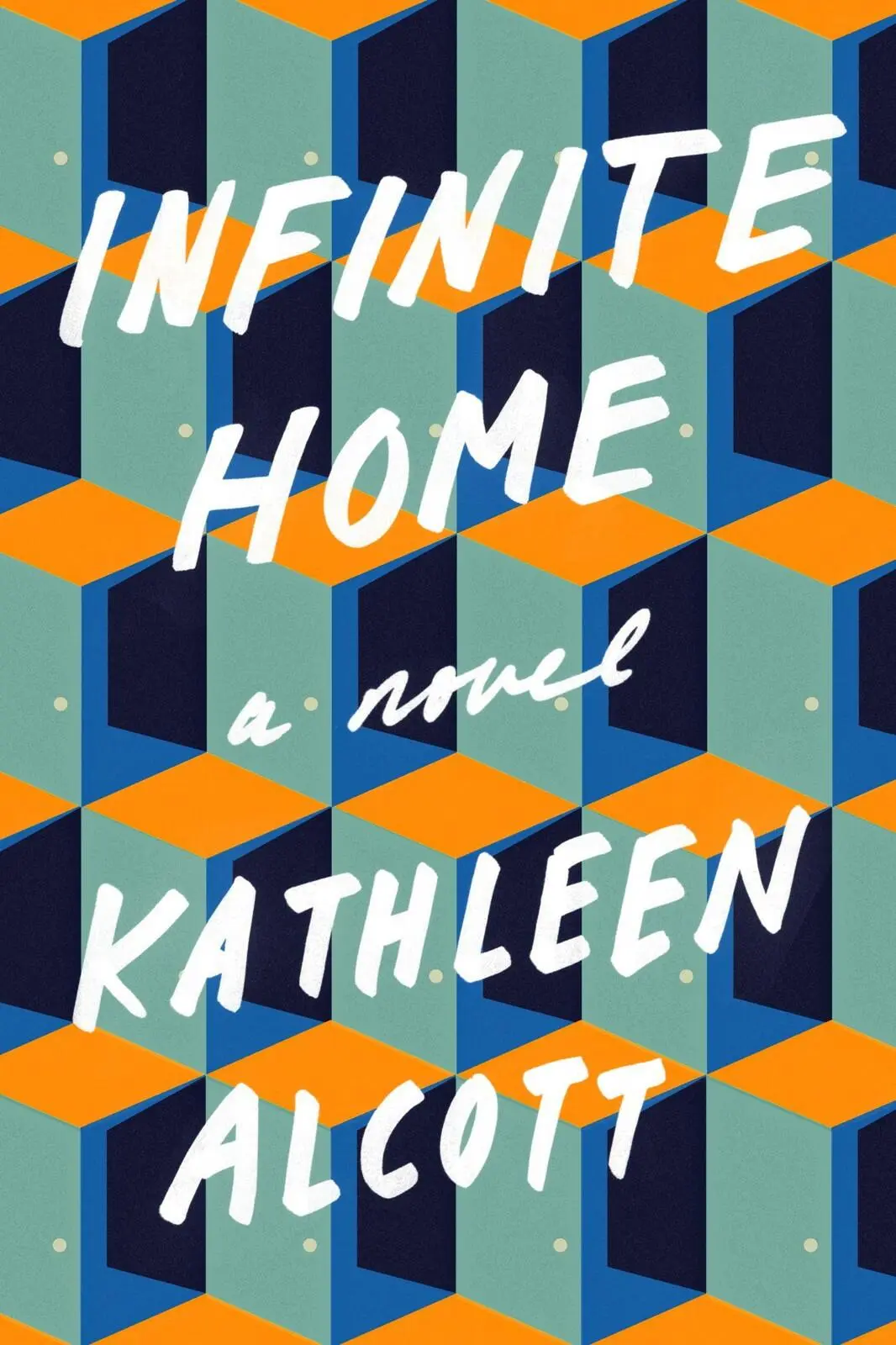
- Название:Infinite Home
- Автор:
- Издательство:Riverhead Books
- Жанр:
- Год:2015
- ISBN:нет данных
- Рейтинг книги:5 / 5. Голосов: 1
-
Избранное:Добавить в избранное
- Отзывы:
-
Ваша оценка:
Infinite Home: краткое содержание, описание и аннотация
Предлагаем к чтению аннотацию, описание, краткое содержание или предисловие (зависит от того, что написал сам автор книги «Infinite Home»). Если вы не нашли необходимую информацию о книге — напишите в комментариях, мы постараемся отыскать её.
Faced with eviction by Owen and his designs on the building, the tenants — Paulie, an unusually disabled man and his burdened sister, Claudia; Edward, a misanthropic stand-up comic; Adeleine, a beautiful agoraphobe; Thomas, a young artist recovering from a stroke — must find in one another what the world has not yet offered or has taken from them: family, respite, security, worth, love.
The threat to their home scatters them far from where they’ve begun, to an ascetic commune in Northern California, the motel rooms of depressed middle America, and a stunning natural phenomenon in Tennessee, endangering their lives and their visions of themselves along the way.
With humanity, humor, grace, and striking prose, Kathleen Alcott portrays these unforgettable characters in their search for connection, for a life worth living, for home.
Infinite Home — читать онлайн бесплатно полную книгу (весь текст) целиком
Ниже представлен текст книги, разбитый по страницам. Система сохранения места последней прочитанной страницы, позволяет с удобством читать онлайн бесплатно книгу «Infinite Home», без необходимости каждый раз заново искать на чём Вы остановились. Поставьте закладку, и сможете в любой момент перейти на страницу, на которой закончили чтение.
Интервал:
Закладка:
A memory came to him, teasing at some understanding: his grandfather dying in a mustard armchair, his mother whispering to her sisters, “He’s not eating, he won’t eat,” as though it were a political stance the old man had assumed with sudden conviction. In Adeleine’s bed, remembering this, Thomas knew, then tried to un-know: that trying to lead her outside, talking to her of spring, was like his mother crouched by her father, a fork in her hand, convinced that if only she could sneak in a little food through the clamped line of his mouth, the slow drift of his eyes would sharpen. She had stayed there days on end, failing to discern his total inability, speaking to him of the herbed meat loaves she had brought, the tangy quiches and rhubarb pies.
~ ~ ~
THE NOTICES, affixed with double-sided tape at all four corners, were smoothed and aligned so precisely that they nearly eradicated the tenants’ memories of the doors without them. It was Claudia, who had been unofficially living with Paulie for two months and four days, who saw them first. She slid down the door and remained there, leaning against it, unable to enter and tell her brother that she no longer knew what to do, that Edith had been the only landlord who hadn’t grown alarmed by the possible liabilities of Paulie living in a place alone. That the best solution she had designed, so far, had been to sleep on his couch and wake with pillow lines on her face and try to do her best at work and entirely avoid the question of her husband, who had stated in too many ways tacit and then not that the care of her frenetic and disabled brother had not featured in their vows.
In these hamstrung moments, she remembered how their mother had looked when she thought no one was watching, how she had peered out the window, a dishcloth hanging from her slack hand, her mouth parted as if to speak out to another life, as if to say, I could pack very quickly, I could be ready to go very soon.
Upstairs, Thomas used the arch of his back to push his door open. He barely managed to hold the items he carried: a voice recorder, a fifth of Scotch, and four tiny oranges. The latter items were meant as gifts to persuade Adeleine into letting him use the first, and they sat tenuously, the clementines lolling in his palm and the sweating glass wedged between his forearm and chest. The fruit was first to hit the floor, their waxed skins revolving on the dusty wood as he read of his imminent eviction.
He felt sure he could not enter the only space she had and inform her that soon it would cease to be hers, and so he didn’t; he placed the recorder and the Macallan on the floor, slid his fingers under the paper until it popped off: his door, then hers. It crossed his mind that by removing this piece of information in a minor way, he would need to excise it on a larger scale. He had two months. The thought settled and adjusted itself, scanning possible solutions, the question buzzing at his joints as he moved around his apartment, setting out ingredients for the simple meal that would fill him.
~ ~ ~
OVERNIGHT IT HAD TURNED to thick summer. The smells were large — chalky baked soil, barbecue smoke, discarded plastics, rush hour excess — and they squabbled and rivaled for dominance. Thomas and Claudia and Edward sat on the stoop together in light clothing, looking for the youthful feeling the setting and season had once suggested to them, as though soon they might jump in a taxi and pay the driver and meet someone singular and change their life in one night, as though any of them could sustain that kind of mobility and reinvention. Edith’s son had temporarily flown back to whichever place he came from, and it afforded them a short window in which to discuss things, develop a plan if there was one to be had. Thomas was the only one intent on action. Because he sat there full of thoughts of Adeleine and Edith and their need, his convictions were stronger than any that would have developed on behalf of his own well-being.
“Really, I could just move,” Edward said in a clipped voice. “We all could.”
Claudia released the sigh that had been growing, lowered her shoulders, and dragged a palm down her face.
“Right now,” she offered lowly, “right now I can’t—” She didn’t finish the sentence, and it remained unclear what it was she couldn’t do, but the hazy answer seemed to arrange itself in the clotted air between them: possibly anything.
Thomas wondered which angle to dance around first: his somewhat-reciprocated love for an unstable person who had cultivated a little false universe on the top floor, the deconstruction of which would mean a swift blow to her sanity, or his belief that the old woman with a bittersweet fever in her brain shouldn’t lose her last years to a son who didn’t care about how she lived them.
He chose the second, hoping that the people who shared the decaying staircase possessed the decency he suspected. He mentioned Owen and the loveless way he looked at Edith, reminded them of the open-door policy she kept for her tenants, how she had welcomed all of them for a bit of conversation or understanding silence, depending on what their lives were lacking. Did they remember that six-day blizzard, how on the fourth day she’d been the only one with groceries left and brought them all downstairs for dinner? Hadn’t they all relaxed in the circle of her generosity, the jingle of bells she’d hung on the door, the forgiving wave of her hand when rent was late?
“Listen,” interrupted Edward. “I’m not going to sit here and say that the old lady deserves to die in some home, playing nonsensical checkers with incontinent zombies. Or that her son’s a fantastic guy for rooting for her bucket to kick so he can put in granite countertops and make a cool several million. Clearly the man has a Laundromat for a soul. But I don’t see what we can possibly do besides put our little tchotchkes in little box-kes.”
Claudia, who had been hiding her red face in her dry hands, laughed loudly, and Thomas watched as any control he had over the conversation faded like the sounds of ambulances passing nearby, the urgency that turned to a whine before disappearing.
She sighed and spoke up with ironic brightness. “Paulie doesn’t own much but a set of coasters shaped like bugs and a couple cookies, anyway. Won’t be hard to pack.”
Edward snorted and brought his hands together, brushed them in two opposing up-down motions, the gesture that signified Our work here is done . The crags of his face, the sharp hook of his nose and the protrusion of his brow, were softened with the remaining light. Claudia leaned her head on his forearm and sniffed.
“We could fight him,” said Thomas. “We could—” He felt the acidic tension in his body dissolve. The defeat felt like the ten minutes after swimming, the leaking of warm water from the ears and the adjusting of limbs to a different way of moving.
Edward announced that he needed a beer. He got up and Claudia followed. Thomas watched them make their way down the street until they turned, wondered at how quickly he had failed to sway them. There was no one else on the street, no sounds save the ticking of the watch he still wore as though he were a man who didn’t let hours pass like the endless parade of cars on the Brooklyn-Queens Expressway.
~ ~ ~
Интервал:
Закладка:
Похожие книги на «Infinite Home»
Представляем Вашему вниманию похожие книги на «Infinite Home» списком для выбора. Мы отобрали схожую по названию и смыслу литературу в надежде предоставить читателям больше вариантов отыскать новые, интересные, ещё непрочитанные произведения.










Обсуждение, отзывы о книге «Infinite Home» и просто собственные мнения читателей. Оставьте ваши комментарии, напишите, что Вы думаете о произведении, его смысле или главных героях. Укажите что конкретно понравилось, а что нет, и почему Вы так считаете.