Kathleen Alcott - Infinite Home
Здесь есть возможность читать онлайн «Kathleen Alcott - Infinite Home» весь текст электронной книги совершенно бесплатно (целиком полную версию без сокращений). В некоторых случаях можно слушать аудио, скачать через торрент в формате fb2 и присутствует краткое содержание. Год выпуска: 2015, Издательство: Riverhead Books, Жанр: Современная проза, на английском языке. Описание произведения, (предисловие) а так же отзывы посетителей доступны на портале библиотеки ЛибКат.
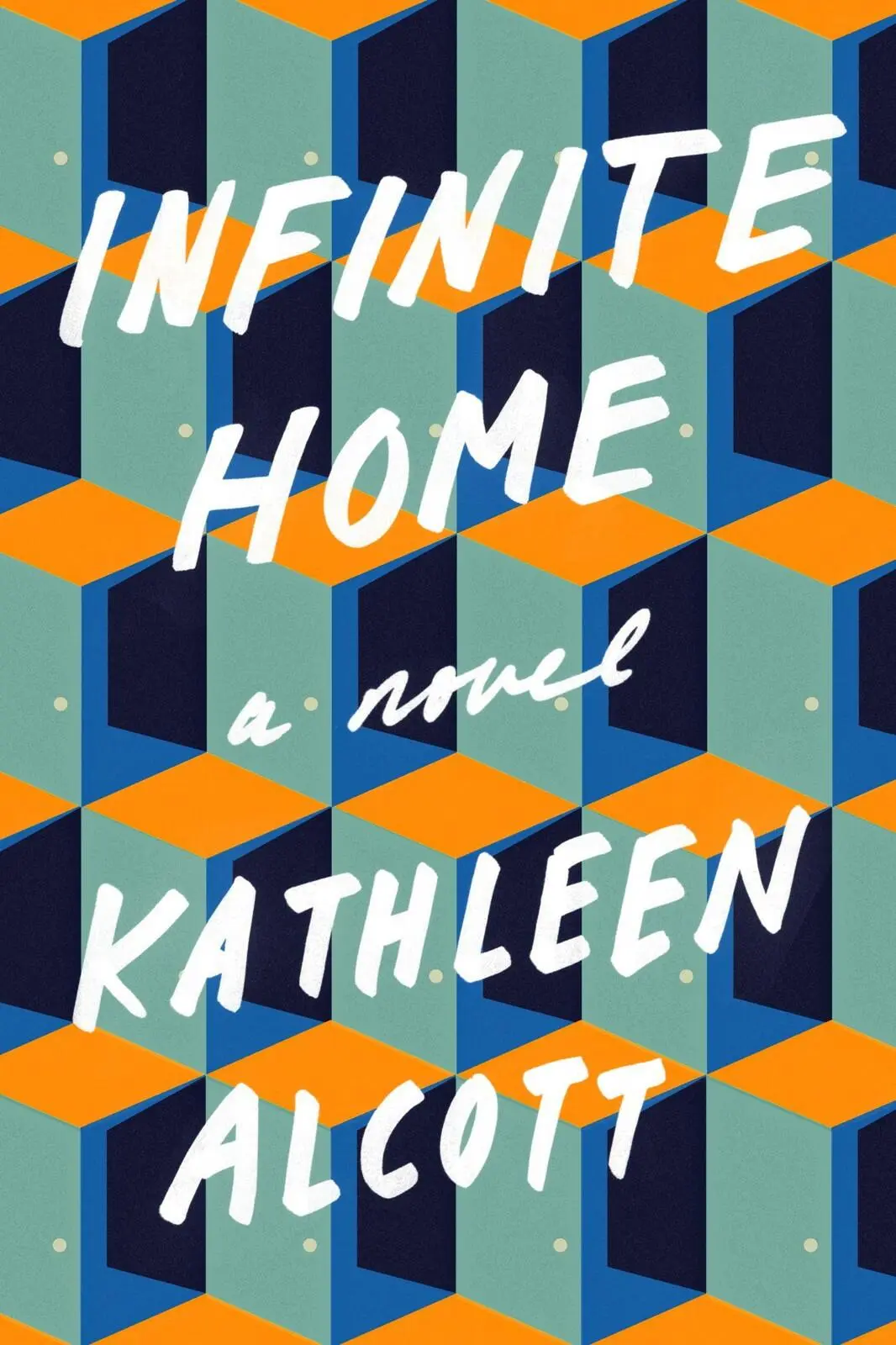
- Название:Infinite Home
- Автор:
- Издательство:Riverhead Books
- Жанр:
- Год:2015
- ISBN:нет данных
- Рейтинг книги:5 / 5. Голосов: 1
-
Избранное:Добавить в избранное
- Отзывы:
-
Ваша оценка:
Infinite Home: краткое содержание, описание и аннотация
Предлагаем к чтению аннотацию, описание, краткое содержание или предисловие (зависит от того, что написал сам автор книги «Infinite Home»). Если вы не нашли необходимую информацию о книге — напишите в комментариях, мы постараемся отыскать её.
Faced with eviction by Owen and his designs on the building, the tenants — Paulie, an unusually disabled man and his burdened sister, Claudia; Edward, a misanthropic stand-up comic; Adeleine, a beautiful agoraphobe; Thomas, a young artist recovering from a stroke — must find in one another what the world has not yet offered or has taken from them: family, respite, security, worth, love.
The threat to their home scatters them far from where they’ve begun, to an ascetic commune in Northern California, the motel rooms of depressed middle America, and a stunning natural phenomenon in Tennessee, endangering their lives and their visions of themselves along the way.
With humanity, humor, grace, and striking prose, Kathleen Alcott portrays these unforgettable characters in their search for connection, for a life worth living, for home.
Infinite Home — читать онлайн бесплатно полную книгу (весь текст) целиком
Ниже представлен текст книги, разбитый по страницам. Система сохранения места последней прочитанной страницы, позволяет с удобством читать онлайн бесплатно книгу «Infinite Home», без необходимости каждый раз заново искать на чём Вы остановились. Поставьте закладку, и сможете в любой момент перейти на страницу, на которой закончили чтение.
Интервал:
Закладка:
Before the accident Paulie had gone up most afternoons and sometimes handed Thomas the things he needed and tried not to breathe very loud and watched the pieces get bigger slowly and sometimes poured tall cool glasses of water and carried them across the room as if in religious procession. In Paulie’s very favorite piece Thomas drew a whole life in figures that grew and then shrank. Every afternoon he watched. Egg zygote toddler kid teenager, all the way to a bent-over old man. It took four months and more kinds of whites and creams and blushing pinks than Paulie had ever seen in concert. The change from day to day was never obvious and that was what he liked so much about it. Even if he concentrated and stayed very quiet he couldn’t see everything, only the tuft of hair or the underside of a foot that Thomas was shading. It made him feel that waiting meant more than how it felt in the moment, that little seconds often combined and became something of weight and worth.
When Thomas took breaks from making his marks he would clear a space on the kitchen table as if cleaning a window to see out of and spread out a lunch of celery pieces and carrots and dried fruit, everything small enough to hold in their hands, and they would eat. Thomas asked Paulie questions about music and said things like “I could hear you playing last night, and it sounded a little bit like seaweed moving in the ocean” or “It made me feel like making a mess.” Paulie sometimes thought he loved Thomas more than anyone else, and it made him feel desperate and occasionally very quiet.
After the accident it was hard to know. Paulie saw him in the hall and Thomas explained that a stroke had done something to him. Paulie tried to hug him but Thomas felt like a dirty sponge slick with oil that wouldn’t take anything he tried to give it. His body was hanging wrong and it scared Paulie to look at it.
Paulie would go up to Thomas’s at the usual time but the door was always locked. He would do their usual knock that was just for them three little knocks plus scritchy-scratchy nails and then call out, “Tommy Tommy” but the sounds turned to ghosts in the hallway. Once or twice Thomas came to the door but didn’t open it and said, “I’m sorry, pal, not today.” Paulie wanted to say, “What about the seaweed, what about the music that feels like the right kind of mess, what about what you’re building and what about lunch with friends?” But Thomas wouldn’t even look through the milky peephole that changed the size of everyone outside.
In the afternoons when he missed Thomas he played music especially loud. He learned Randy Newman’s “You’ve Got a Friend in Me,” and he did that between four and six times a day. One night he got out the Christmas decorations Claudia had asked him to please leave in the closet for the rest of the year and he pulled out the string of white lights that pulsed. He brought them up to Thomas’s floor and bunched them into a knot and put them in a big glass jar and plugged them in right next to his door. He thought Thomas would like how he had put everything bright in one place and tangled all of it together.
But nothing happened and even his ribs and teeth hurt, and Paulie asked Claudia, who said, “Friendships are more like oceans than rivers. There are high tides and low tides but not a steady rush. You’re up against a lot of currents, not just one.” Paulie was wordless at that, so Claudia said, “Sometimes people have a hard time looking out of themselves and need to just be alone and listen to all the conversations in their head.”
He waited months. He felt proud and brave and thought: a number of currents, some unseen. Then one day he went up and knocked, and Thomas opened the door all the way and said, Hey, pal, and the crow’s foot by his right eye did the crinkle Paulie remembered, and he invited him in.
The tin cans with the brushes reaching out like strong arms were gone, and the layers of maybes on the walls were gone, and there were no slips of paper anywhere, and not even one color where it didn’t belong and not one idea growing. “Different, I know,” Thomas had said, and shrugged in a way Paulie didn’t recognize, and offered him tea. Paulie kept looking around the room for the easy way the two of them had been. He didn’t go up after that and had to make loud noises when he thought of Thomas surrounded by all that white and said hi in the hallway but not much else. In dreams he still balanced glasses on his long fingers and floated towards the wilderness of colors, eager to cure his friend’s thirst, to listen to the water slide down his fine throat.
~ ~ ~

AFTER TWO MONTHS of cloistered nights spent almost exclusively in her bed, surrounded by the encroaching assortment of archaic coin banks and cardigans embroidered with glass beads and shell-colored moth-eaten lampshades, Thomas prepared himself to broach the issue. It was, he decided, a matter of phrasing.
Do you ever get out of the house? was obvious on top of insensitive, he thought, but something that merely circled— Do you prefer to stay home? — was the kind of inquiry she would cleverly deflect. Her intelligence, unlike her sanity or income or background, was never in question.
In the end, he framed it as an announcement, took her face in his hand late at night in the dark and gave the words with guilt, as though returning something long borrowed to its rightful owner. “You never leave your apartment.”
“That’s true,” Adeleine replied. “And you’ve got scars up and down your arms, ones I assume not placed there by the grace of God, or any accident except yourself.”
Thomas had expected her to crumble at his examination, and the surprise of her competent reversal made him laugh.
“There’s plenty,” she said coldly, as if stabbing at a contract on a long, polished table, “that we haven’t discussed. Did you think I didn’t notice?” Instead of turning away, like he’d witnessed so often, Adeleine leaned over to switch on the golden light, then placed her excessively ringed hands on his shoulders.
“What would you like to tell me”—she ran her fingers down the scars—“about these?”
Her confidence had arrived without notice, and Thomas found the narrative he expected upended: she forged ahead on some mountain, beckoned him to hurry towards the view while he struggled with the bulk of what he’d carried.
“I haven’t,” he said, filled with quiet fear, “since you.”
Adeleine remained above him, wiping at his eyes without fanfare, pulling the blanket closer around them. “Would it help,” she said, “if I told you about me?”
—
THEY WATCHED the streetlamps going off, the doors on the street opening, the precision of morning sharpening the colors of leaves and fire hydrants. She explained to him about the perfectly placed pillows of psychoanalysts’ couches, and pills of different colors meant to regulate a spiked range of crippling emotions: they had told her she was bipolar but not about the specific horrors that made up a life swinging between the two extremes. Not about the manic afternoons in which she would change her clothing sixteen times, or the sheer cliff of the other side of her condition, the slide into bed and the passing of hours there only indicated by the light’s shift from gold to blue to black.
He wanted to know about before, the years preceding the saturation of lithium and various benzodiazepines, and she told him: about the tactical mechanics of waking up amid the belongings of someone months gone and in all likelihood deceased, and how afterward the Internet was filled with the pages he’d abandoned, the snapshots he’d taken of comical typos on deli signs, images of him laughing on stoops with a bottle of wine in one hand. The dissonance between the two, the manifold evidence of his life and the unrelenting fact of his absence, had become untenable to sift through anymore. Thirteen months after, finally gone from their apartment and in her own, armed with or destroyed by the new diagnosis, she still found herself looking for him whenever she left the house, and it was about that time, she told Thomas, that she began on her own kind of vanishing. It was then she began to pile up her nest of glittering curios and nonperishables, her angora sweaters and sundresses meant for extremes in weather she wouldn’t see again, and about that time she stopped leaving.
Читать дальшеИнтервал:
Закладка:
Похожие книги на «Infinite Home»
Представляем Вашему вниманию похожие книги на «Infinite Home» списком для выбора. Мы отобрали схожую по названию и смыслу литературу в надежде предоставить читателям больше вариантов отыскать новые, интересные, ещё непрочитанные произведения.











Обсуждение, отзывы о книге «Infinite Home» и просто собственные мнения читателей. Оставьте ваши комментарии, напишите, что Вы думаете о произведении, его смысле или главных героях. Укажите что конкретно понравилось, а что нет, и почему Вы так считаете.