Kathleen Alcott - Infinite Home
Здесь есть возможность читать онлайн «Kathleen Alcott - Infinite Home» весь текст электронной книги совершенно бесплатно (целиком полную версию без сокращений). В некоторых случаях можно слушать аудио, скачать через торрент в формате fb2 и присутствует краткое содержание. Год выпуска: 2015, Издательство: Riverhead Books, Жанр: Современная проза, на английском языке. Описание произведения, (предисловие) а так же отзывы посетителей доступны на портале библиотеки ЛибКат.
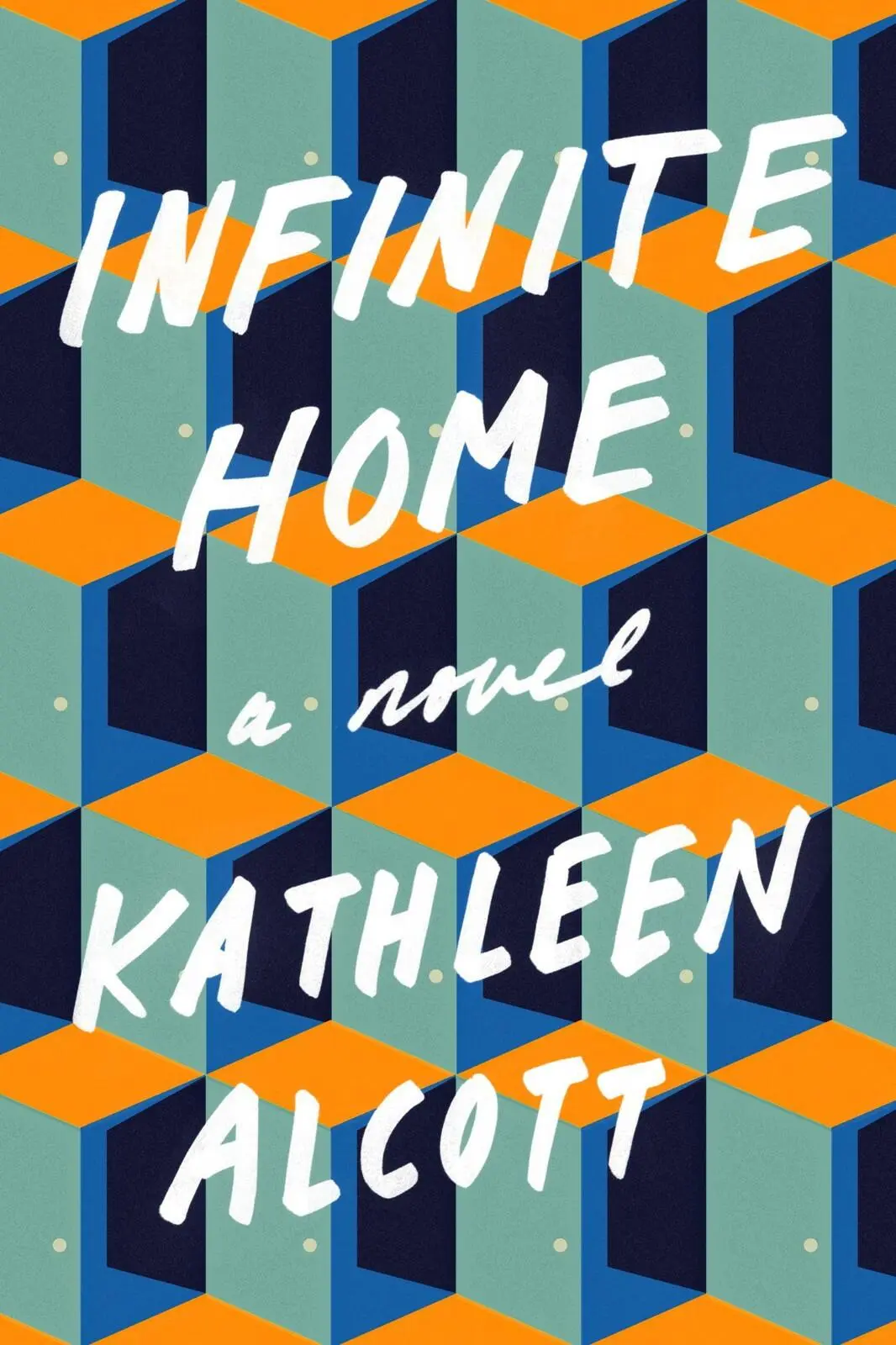
- Название:Infinite Home
- Автор:
- Издательство:Riverhead Books
- Жанр:
- Год:2015
- ISBN:нет данных
- Рейтинг книги:5 / 5. Голосов: 1
-
Избранное:Добавить в избранное
- Отзывы:
-
Ваша оценка:
Infinite Home: краткое содержание, описание и аннотация
Предлагаем к чтению аннотацию, описание, краткое содержание или предисловие (зависит от того, что написал сам автор книги «Infinite Home»). Если вы не нашли необходимую информацию о книге — напишите в комментариях, мы постараемся отыскать её.
Faced with eviction by Owen and his designs on the building, the tenants — Paulie, an unusually disabled man and his burdened sister, Claudia; Edward, a misanthropic stand-up comic; Adeleine, a beautiful agoraphobe; Thomas, a young artist recovering from a stroke — must find in one another what the world has not yet offered or has taken from them: family, respite, security, worth, love.
The threat to their home scatters them far from where they’ve begun, to an ascetic commune in Northern California, the motel rooms of depressed middle America, and a stunning natural phenomenon in Tennessee, endangering their lives and their visions of themselves along the way.
With humanity, humor, grace, and striking prose, Kathleen Alcott portrays these unforgettable characters in their search for connection, for a life worth living, for home.
Infinite Home — читать онлайн бесплатно полную книгу (весь текст) целиком
Ниже представлен текст книги, разбитый по страницам. Система сохранения места последней прочитанной страницы, позволяет с удобством читать онлайн бесплатно книгу «Infinite Home», без необходимости каждый раз заново искать на чём Вы остановились. Поставьте закладку, и сможете в любой момент перейти на страницу, на которой закончили чтение.
Интервал:
Закладка:
~ ~ ~
EVEN THOUGH HE WASN’T SUPPOSED TO, Paulie believed there was nothing wrong, not really, with going down to visit Edith when Claudia was off at work; if at first she was surprised to see him, he knew she enjoyed their games. Paulie had never witnessed anyone else play Go Fish so rigorously: she clapped and she slammed the stern kings and mischievous jacks on the table, she said fish like she meant every last one, of every size and color, in all the five oceans.
On a bright day that didn’t soften with afternoon, the sun at four still white and the heat closely packed, Edith’s attention to their game dwindled. Her fan of cards loosened until they slipped, one by one, onto the floor. She leaned into the table and wheezed.
“What do I look like to you? You haven’t got twenty-one,” she said, “not by a long shot!”
“What? Um?”
“Give me back that money!”
“Edith, please — I’m not — this isn’t—”
Her gnarled fingers made a fist that she waved as though it held a ticket, and she looked at him and saw a man she didn’t know: he had curly hair long enough for braids and a shirt printed with images of constellations, and he was crying from huge eyes. She turned away from him and bit the sides of her cheeks. The temperature felt like punishment.
They sat in silence for fifteen minutes. The last of Paulie’s tears emptied onto the galaxy of his shirt, and Edith focused on her surroundings, tried to place herself in them, burning all her energy in the attempt to recognize a chipped teapot or spiked plant or open door.
“We could play something else,” he said finally. “Let me just visit the men’s room.”
Paulie had loved the phrase “the men’s room” for as long as he could remember; it felt like a password into the world of suits and cars and wives that had otherwise rejected him. He closed the door behind him and splashed water on his face, sat down to pee as he’d been taught by the mishaps incurred by standing and aiming. He observed the shelves in front of him, their mysterious spectrum of jars and boxes and tubes and brushes, some dusty and some never used, the colors ranging from bright to earthy. He forgave Edith for yelling. The inflexible losses of games, the rules you couldn’t reason with, upset him too.
Back in the kitchen, with the cosmetics spread across the table, he kissed her forehead before he smeared on the first splash of blue.
When he finished Edith’s face, Paulie stepped back and regarded her with a hand on his chin, surveying his work from several angles. His hand-eye coordination had never been exquisite, and he had employed an abstract approach, marking Edith’s pores with meandering paths of red lipstick that met lush fields of green eye shadow. He felt particularly proud of her nose, an isolated bridge of shimmering cyan, and moved in and out of the late sunlight to observe it.
“It’s your turn,” he said finally. “Now you do me.” He pulled up a chair in front of her and closed his eyes. “Jungle cat preferred!”
An hour later, the people returning from jobs in the city paused to glance at the sight on the stoop: an old woman in an oversized sun hat and a grown man who sat with his legs splayed like a six-year-old in a sandbox, their faces altered by a mess of pigments. Beside them sat a time-yellowed cream-colored radio, the taped antennae resting on the lip of the stone step above, and they mouthed the words of the songs that came in over a base of static. The last of the commuters saw the nest of white hair bent into the neck of the man, who stroked the head and sang a thirty-year-old commercial jingle for squat, rounded figurines marketed as untippable.
Weebles wobble
Weebles wobble
Weebles wobble but they don’t fall down.
Multicolored and projecting a two-headed shadow, they were still sitting there when the streetlamps came on.
~ ~ ~
IN THOMAS’S ABSENCE, Adeleine felt a distinct anger: at the way he had entered her home and classified it as strange, at how he had decided her relationship with her possessions needed broadcasting: the night before he had boarded the airplane, he’d set up an array of recording devices and urged her to catalogue her songs.
“They should be heard,” he had said, posturing with an authority she found obnoxious. “The creation is only ever the first part of it. The next is letting it go.” She had started to buzz, was still buzzing, with the familiar anxiety that used to sound when someone urged her to do something with her talents. Songs were fine and good, she thought, but they were not the water that turned seeds to plants, or the materials that built steady houses, or the ointments that healed a wound. Once, when she had voiced concerns along these lines to a psychiatrist, he had asked her why she hadn’t become a farmer or a carpenter or a physician. She hadn’t had an answer, and had hated him for asking.
In an attempt to smother the old temper in her stomach, she washed the dishes and scrubbed the perpetually grimy bathtub, but the activity only heightened her heart rate. All she had ever wanted, she realized, since she was a little girl who turned away from doting cameras, was to be left alone.
Lying on the floor with her palms up, hoping to receive some wave of calm, Adeleine could hear, layered under the fluttering notes of Paulie’s keyboard, warped, feral sounds. She pressed her left cheekbone into the hardwood until it ached and listened until she recognized the noises as coming from Edith. Without further thought, she rose and approached the doorframe, watched her wrist and palm rotate the knob.
~ ~ ~
THOMAS HADN’T VISITED San Francisco since losing his old body, but there was a time he had flown out once or twice a year: he would casually tour the spectacular heights and views, stay with friends and spend unfocused hours on foggy rooftops. He had always arrived with no definite plans and found a city that didn’t require any. As he looked away from the airport’s organic grocery store, its rainbow bounty of produce, as the escalator carried him down from ARRIVALS to GROUND TRANSPORTATION, he reminded himself of the wholly different shape of this visit. Imagining himself as he’d last been on the same steel moving walkways — his linen thrift store slacks, his military-green duffel bag, his carefree stroll towards the line of cars outside and the warm way he’d greeted the friend who’d picked him up — he constricted and grabbed for the handrail.
There was no one pulling up in a car for him out front, no one waving and grinning: he hadn’t let anyone know he was coming, couldn’t imagine summing up the last two years or explaining his total lack of plans for the next few. He followed the signs to other transportation, fumbled with the unfamiliar ticketing system, pulled his rolling suitcase into the train car, and waited for motion.
—
HIS PLANS WERE VAGUE, loose as algae. He had wished — so hard that he’d begun to expect — that he would divine some clue or plan from the sea-brined air, the Victorians that seemed to lean crookedly uphill. Instead he was a man in a city not his own, holding the decades-old mementos of someone’s lost daughter, standing at the exit of an unfamiliar station with no itinerary besides a stop at the library. He had smothered such hatred of himself since meeting Adeleine, had distracted himself with the unfolding mystery of her, but now he felt the creep of fog under his light sweater and tugged at his sleeves, furious with himself for failing even to look after this basic aspect of survival.
Читать дальшеИнтервал:
Закладка:
Похожие книги на «Infinite Home»
Представляем Вашему вниманию похожие книги на «Infinite Home» списком для выбора. Мы отобрали схожую по названию и смыслу литературу в надежде предоставить читателям больше вариантов отыскать новые, интересные, ещё непрочитанные произведения.







Обсуждение, отзывы о книге «Infinite Home» и просто собственные мнения читателей. Оставьте ваши комментарии, напишите, что Вы думаете о произведении, его смысле или главных героях. Укажите что конкретно понравилось, а что нет, и почему Вы так считаете.