Kathleen Alcott - Infinite Home
Здесь есть возможность читать онлайн «Kathleen Alcott - Infinite Home» весь текст электронной книги совершенно бесплатно (целиком полную версию без сокращений). В некоторых случаях можно слушать аудио, скачать через торрент в формате fb2 и присутствует краткое содержание. Год выпуска: 2015, Издательство: Riverhead Books, Жанр: Современная проза, на английском языке. Описание произведения, (предисловие) а так же отзывы посетителей доступны на портале библиотеки ЛибКат.
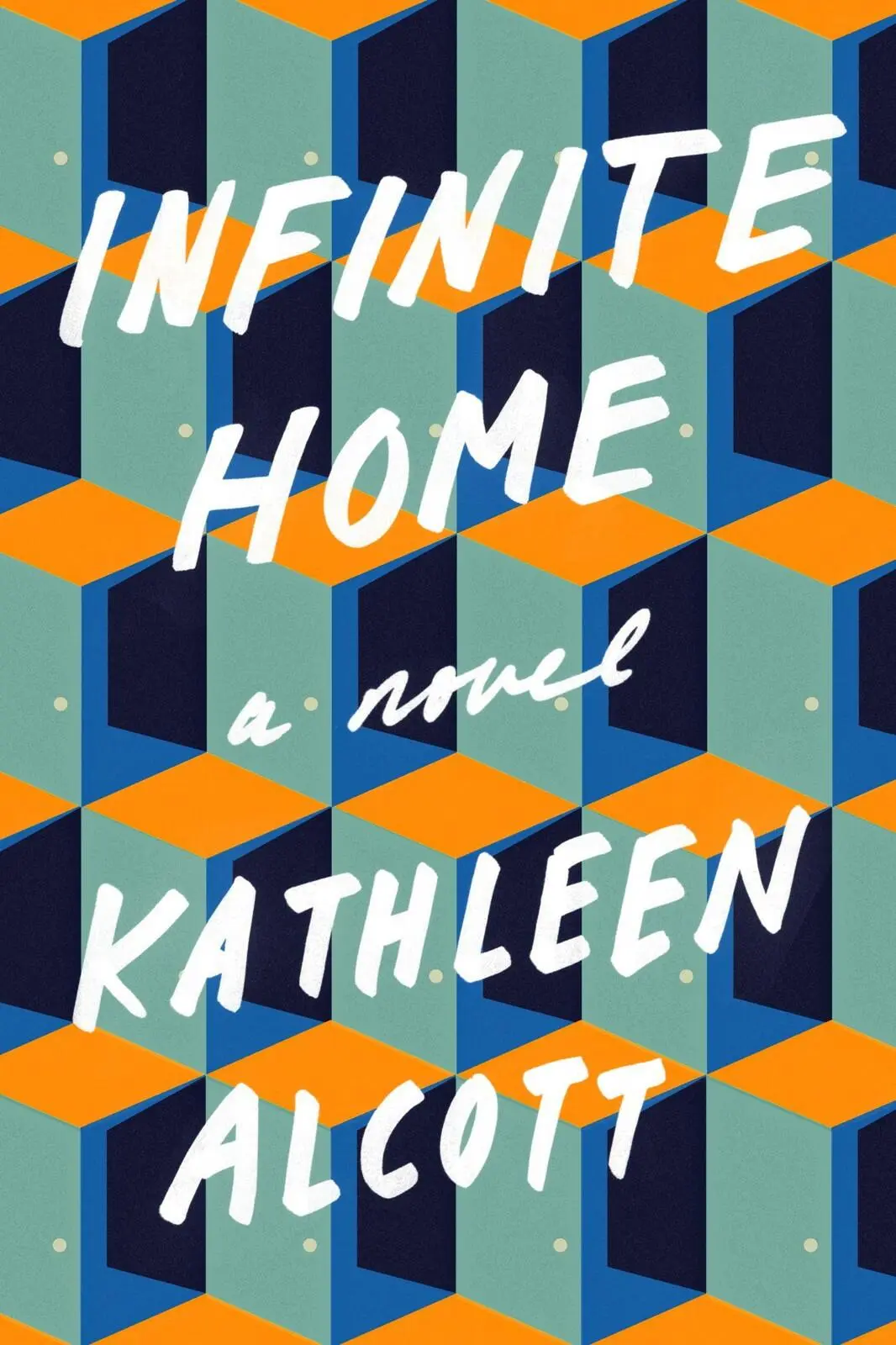
- Название:Infinite Home
- Автор:
- Издательство:Riverhead Books
- Жанр:
- Год:2015
- ISBN:нет данных
- Рейтинг книги:5 / 5. Голосов: 1
-
Избранное:Добавить в избранное
- Отзывы:
-
Ваша оценка:
Infinite Home: краткое содержание, описание и аннотация
Предлагаем к чтению аннотацию, описание, краткое содержание или предисловие (зависит от того, что написал сам автор книги «Infinite Home»). Если вы не нашли необходимую информацию о книге — напишите в комментариях, мы постараемся отыскать её.
Faced with eviction by Owen and his designs on the building, the tenants — Paulie, an unusually disabled man and his burdened sister, Claudia; Edward, a misanthropic stand-up comic; Adeleine, a beautiful agoraphobe; Thomas, a young artist recovering from a stroke — must find in one another what the world has not yet offered or has taken from them: family, respite, security, worth, love.
The threat to their home scatters them far from where they’ve begun, to an ascetic commune in Northern California, the motel rooms of depressed middle America, and a stunning natural phenomenon in Tennessee, endangering their lives and their visions of themselves along the way.
With humanity, humor, grace, and striking prose, Kathleen Alcott portrays these unforgettable characters in their search for connection, for a life worth living, for home.
Infinite Home — читать онлайн бесплатно полную книгу (весь текст) целиком
Ниже представлен текст книги, разбитый по страницам. Система сохранения места последней прочитанной страницы, позволяет с удобством читать онлайн бесплатно книгу «Infinite Home», без необходимости каждый раз заново искать на чём Вы остановились. Поставьте закладку, и сможете в любой момент перейти на страницу, на которой закончили чтение.
Интервал:
Закладка:
Edward sighed and narrowed his eyes. “Did you ask her?”
“Well no, but — I promise!”
Paulie held up The Muppet Movie soundtrack and Edward groaned, covered his face with a hairy hand and peered at him through two fingers. He gave a lackluster rendition of Miss Piggy’s trademark Hi-YA! , and Edward removed the perfect black circle from its sleeve, paused to secretly covet the soft colors of the album cover. Time had faded the pastels of Kermit and Miss Piggy, in a rowboat under a rainbow, supported by clouds and the suggestion of water. Edward had loved this record, and he held his breath as it opened and broadened: that familiar precipitous static, the first notes of “Rainbow Connection.” Paulie, the self-appointed minstrel of all things gleeful and airy, approached Adeleine with a mock-solemn pout. He bowed modestly and stretched out his hand. Thomas, trying not to laugh at the visible contraction of Adeleine’s frame, gave her a squeeze on the shoulder.
As it turned out, Adeleine was a practiced dancer, confident even with her eyes closed. She moved without hesitation, understood the relationship between the music and the body, allowed no delay between the first and the second. The rest of them watched as she and Paulie twirled and retreated. Thomas felt a loosening warmth, and when the song ended, he welcomed her return with an embrace that betrayed his longing. Claudia, sitting in the corner with a Vodka Collins — the viscous mix, she suspected, long expired — seemed more confident each moment of every tenant’s insanity, and returned the winks that Paulie, in a powder-blue tuxedo he had worn to a family wedding, kept sending her.
Edith, feeling girlish and opened as she never was in her memory, sidled up to Paulie’s sister and kissed her, wetly, on the cheek. “Move over, Muffin!” she said, settling on the couch, adjusting her knees and hips. Claudia, shocked and curious in equal measure, examined the source of the sticky saliva: she saw the slow turn and aim of the eyes, noted the misaligned buttons of the stiff shirt, and saw this was a woman with a rapidly receding grasp. Suddenly empowered by a feeling of goodwill and forgiveness, she took the gnarled hand and brought it into hers. “Declan and I just love a party,” said Edith, and Claudia nodded. She could hear but not see Paulie laughing. “Thank you for giving us this,” she said. “Edith.”
—
IN THE END, everyone drank enough to see double, except Paulie, who had altered his vision anyway with a pair of tortoiseshell prescription glasses found in a kitchen drawer. The light appeared to hold all the bits of old life unsettled and suspended by their dancing, so that a haze hung over the new circles of movement. Claudia and Edward sat on the musty couch making cruel fun of each other — his sullied sweatpants, her giant purse — before solidifying their bond and moving on to the ridicule of the others. Paulie taught Edith a dance he’d invented called The Slimiest Worm! and Adeleine sang with the songs coming from the stereo and eventually, in a momentous impulse, fetched her guitar from upstairs and led them all in a sing-along, her thumb and index and middle fingers tugging gently and confidently at the steel, as though beckoning someone shy closer. Thomas drew caricatures of everyone with his right hand — which was more talented than he believed — and taped them to their backs. Edith disappeared into her bedroom for a while and cried until she forgot why, exactly, and emerged wearing an enormous Sunday-at-church type hat, a monstrosity ringed by swirls of gauze that resembled a naive rendering of Saturn. Edward insisted on trying it on, and affecting a smug New England tone, dragging out his syllables. “I come from a long line of honorable Protestant people with sticks far up their anuses,” he said. “And as it happens, my family has culled those sticks over the years to build a lovely summer home on the Cape!” Claudia’s fingers dug into his wrists, begging that he continue to delight her. In that untouched space of four and a half hours, no one missed them and none of them missed anyone, and the sun went down and the streetlamps went on, and the phone never rang.
~ ~ ~
EDITH’S SON APPEARED again the next weekend, emerged from a taxi and paid the driver with pieces thumbed off the thick fold of his wallet, and soon there were men in the building, barrel-chested figures who took stairs two at a time and measured everything and nodded at Owen’s every word. Despite the gray of his hair and the wrinkles near his eyes, he moved through the space with the spry authority of someone young in the world. He pointed an arm in one direction and all the men followed, retrieved tools from their belts and pens from their breast pockets. He leapt towards points of interest and they mirrored him, pushing their faces close to imperfections in walls and doorframes and grunting, bringing stubby pencils across notepads the size of their hands.
Once an hour Edith surfaced, called to them where they spoke with their hands on their hips in front of a crack in the plaster or raised board. “What kind of people are you? Can you not hear me? I own this place! Stop!” she said, and more quietly, “Who are you. How could this have — Declan will—”
At first they looked back, but after several episodes they didn’t turn at all from where they trailed Owen, quoting figures, running their hands over the banisters. “Mother,” Owen said, when she stationed herself halfway between the first and second floors, sitting with one arm against the wall and the other against a spindle, and keened.
“You need your rest.” He went to her and sat a step below, so that her face was above his, and he looked up. The blood vessels in his eyes branched violently, and he appeared, briefly, like a beggar not yet desensitized to the act of asking, extending a cup and saying, anything .
“I’ll rest when it’s safe,” she rasped, and pounded the flat of her palm on the warped line of the stair.
~ ~ ~
WHEN IT FINALLY HAPPENED WITH HER, it felt to Thomas so circumstantial that he mentally thanked every minuscule factor involved — the plants for needing tending just then, the finicky shower for only supplying hot water in the afternoon. They had been sharing a bed, arranging their bodies together intricately, but still he didn’t know the clear shape of her, had never seen her bare hipbones or tasted her saliva or speculated about the likeness of a birthmark to a comet.
She opened the door in a towel, her nose and cheeks scrubbed and red, her hair wet and thoroughly unconsidered, the whole of her bold and undone as he had never before witnessed. The curtains, as always, were drawn, but the windows let in a breeze, and the bits of moisture that remained on her shoulders trembled. She didn’t linger in greeting him but returned to the united voices of a Carter Family record, sang along as she traced the room’s borders with a red tin watering can, checking the hidden angles of the plants, turning leaves gently to find and nurture any fading green. The precision of her hands, the slow path to gold that her hair waged as it lost water and gained light, compelled him to kiss her.
In an action he later classified as specifically unlike himself, Thomas removed the can from her hands, felt the heavy thud of water against its sides as he placed it on the windowsill, unfastened the towel from its tenuous grasp on her body, and began to move the rough cotton over her head. At this she began to breathe differently, as though adjusting to a higher altitude and the vantage of familiar things made tiny.
Читать дальшеИнтервал:
Закладка:
Похожие книги на «Infinite Home»
Представляем Вашему вниманию похожие книги на «Infinite Home» списком для выбора. Мы отобрали схожую по названию и смыслу литературу в надежде предоставить читателям больше вариантов отыскать новые, интересные, ещё непрочитанные произведения.






Обсуждение, отзывы о книге «Infinite Home» и просто собственные мнения читателей. Оставьте ваши комментарии, напишите, что Вы думаете о произведении, его смысле или главных героях. Укажите что конкретно понравилось, а что нет, и почему Вы так считаете.