Kathleen Alcott - Infinite Home
Здесь есть возможность читать онлайн «Kathleen Alcott - Infinite Home» весь текст электронной книги совершенно бесплатно (целиком полную версию без сокращений). В некоторых случаях можно слушать аудио, скачать через торрент в формате fb2 и присутствует краткое содержание. Год выпуска: 2015, Издательство: Riverhead Books, Жанр: Современная проза, на английском языке. Описание произведения, (предисловие) а так же отзывы посетителей доступны на портале библиотеки ЛибКат.
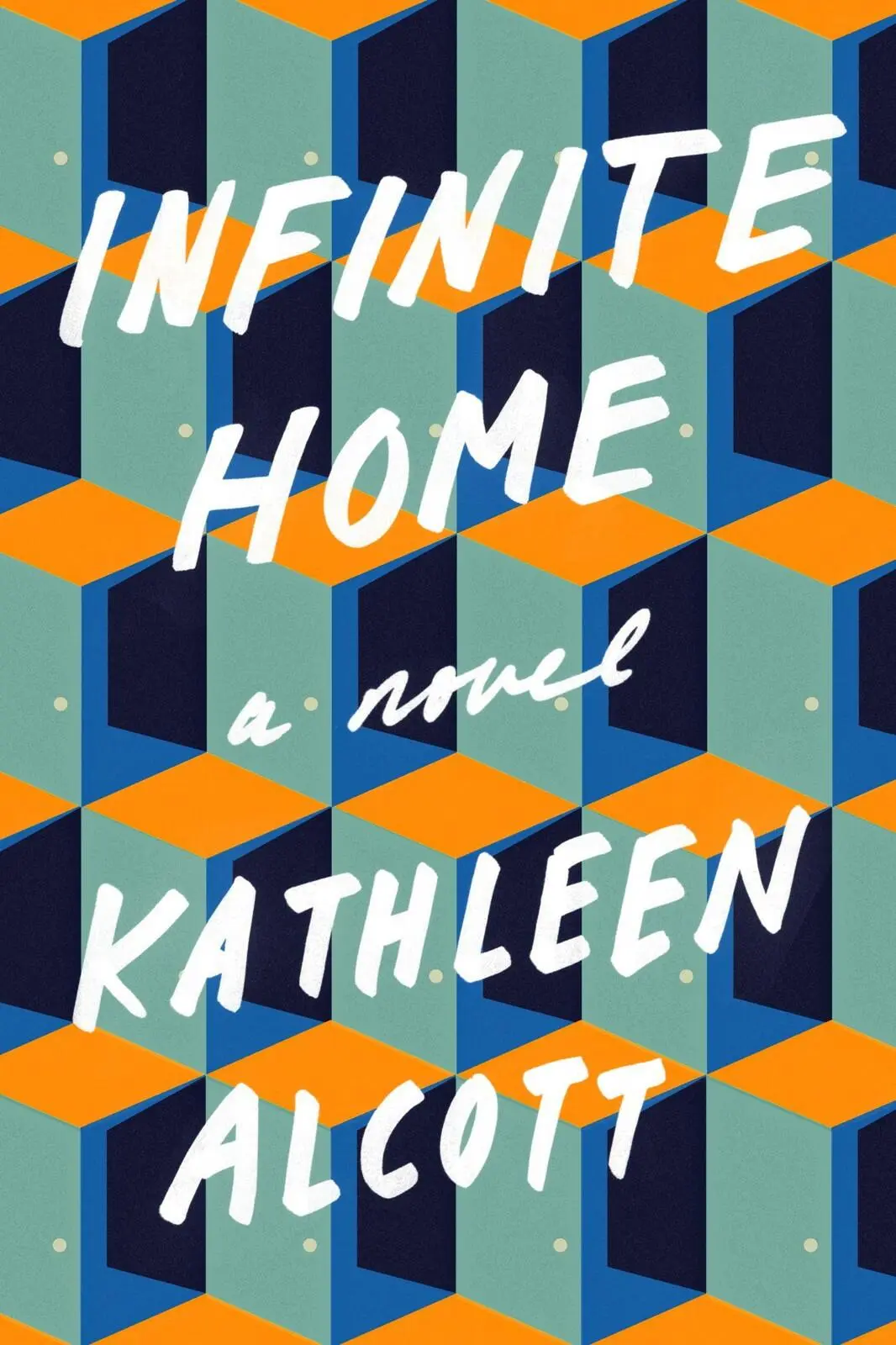
- Название:Infinite Home
- Автор:
- Издательство:Riverhead Books
- Жанр:
- Год:2015
- ISBN:нет данных
- Рейтинг книги:5 / 5. Голосов: 1
-
Избранное:Добавить в избранное
- Отзывы:
-
Ваша оценка:
Infinite Home: краткое содержание, описание и аннотация
Предлагаем к чтению аннотацию, описание, краткое содержание или предисловие (зависит от того, что написал сам автор книги «Infinite Home»). Если вы не нашли необходимую информацию о книге — напишите в комментариях, мы постараемся отыскать её.
Faced with eviction by Owen and his designs on the building, the tenants — Paulie, an unusually disabled man and his burdened sister, Claudia; Edward, a misanthropic stand-up comic; Adeleine, a beautiful agoraphobe; Thomas, a young artist recovering from a stroke — must find in one another what the world has not yet offered or has taken from them: family, respite, security, worth, love.
The threat to their home scatters them far from where they’ve begun, to an ascetic commune in Northern California, the motel rooms of depressed middle America, and a stunning natural phenomenon in Tennessee, endangering their lives and their visions of themselves along the way.
With humanity, humor, grace, and striking prose, Kathleen Alcott portrays these unforgettable characters in their search for connection, for a life worth living, for home.
Infinite Home — читать онлайн бесплатно полную книгу (весь текст) целиком
Ниже представлен текст книги, разбитый по страницам. Система сохранения места последней прочитанной страницы, позволяет с удобством читать онлайн бесплатно книгу «Infinite Home», без необходимости каждый раз заново искать на чём Вы остановились. Поставьте закладку, и сможете в любой момент перейти на страницу, на которой закончили чтение.
Интервал:
Закладка:
Armed with tobacco-yellow Scotch tape and a quiet feeling of use, Edith approached each of her tenants’ doors and eagerly pressed her thumb against the aged adhesive. She had decorated the lilac envelopes with stamps she’d found in the hall closet, a space cluttered with Declan’s tools and odd minutiae that remembered her children: Jenny’s beloved watercolor set, most ovals of color now craters that revealed white plastic bottoms; a rigid wooden archery kit, the green felt pouch and birch arrows, Owen had saved up to buy.
The inkpad had sprung back to life once she’d added a little water, which pleased her disproportionately, and the designs of the rubber appeared in clear and perfect reproduction. One, dating from the early sixties, said Friends! in a bubbly font — her daughter had pressed this on letters in middle school — and another featured a heart made of curling ribbons. This she had favored on Valentine’s Day, on which she had, for years, composed a rhyming poem for Jenny and for Owen and for Declan.
She’d been so thrilled to find them that she had stamped away to excess; Friends! appeared in no discernible pattern all over the purple trappings, and the hearts, which she’d meant to form a border around the edges, ended up glomming together and resembling an overgrown vine. Inside she had stuffed the invitations, written in her once-perfect calligraphy and angling upward as they moved across the page.
A Party!
You are formally invited
to an evening of
food, dance, and play
at Edith’s
(Landlord and Friend!)
Tomorrow
At Seven O’Clock
Edward was the first to find one, having woken uncharacteristically early and pulled on ratty, de-elasticized sweatpants in which he imagined he might exercise. He frowned at the note and left it hanging askew, but the uneasy slant of it came back to him on his jog, as he panted up hills, trying to locate some version of his body that was clear and refined. He clucked his tongue as he approached his door afterward, and realized, with the astonishment of someone recovering a long-shrouded memory, he would be attending. He remembered her arms roped around his neck, and he knew.
—
PAULIE, WHO HEARD EDWARD return and popped out to greet him, was next. He adored formal invitations of any kind and quickly attached it to his refrigerator with a saxophone-shaped magnet. He fingered the two objects, looked proudly at the life they represented, and called Claudia at work: Would she come? Did she think there would be punch? How exactly was punch made anyway — with fists or what?
Adeleine and Thomas, who had slept next to each other most nights since the first, opened her envelope together. Thomas’s expression moved from heartened to concerned, still marked as he was by the sight of Edith lost in another life’s dress. Adeleine began to feel nervous at even the prospect of a social gathering and closed her eyes.
“What is it?” he asked, then felt the patronizing potential; he knew full well what it was, could guess at how long it had been since she’d spent time outside her trinket-filled seclusion. But then she looked at him with newly scavenged poise, and bit down on her cheeks in mock anguish.
“And what will the recluse wear to her first outing in months?” she asked. “Sequins? Fur? Tinfoil?” He was touched by her humorous handling of her condition, and felt a small hope bob in his throat: if she could laugh about it, maybe the task of wrangling it was possible, and near.
~ ~ ~
THE AFTERNOON OF THE PARTY, Edith wrestled with the paper streamers she’d found in the closet. The meeting of the crepe, stiff with age, and her fingers, less agile by the day, made for a difficult task. Her initial plan, a network of twists and turns that would crown the apartment, was forgotten in favor of more simple designs: she wrapped paper around the bowls that held appetizers, hung it in vertical strips from the windowsills, formed an X on the bathroom door. She imagined herself making an “X marks the spot” joke to a warm reception, pouring drinks and recounting anecdotes in equal measure, as Declan had always done. As she set out various bottles of liquor her husband had left behind, most of them untouched since his death, Edith remembered the parties they’d held decades ago: her daughter skirting her ankles; her son carrying trays as though they were frangible artifacts; Declan always changing the record, hunting the perfect song for the moment; their guests, couples arm in arm, the men and women dividing more and more throughout the evening to talk about their spouses; the few people still single, a little more tipsy and loud, reminding those married of what they’d given up and gained; the phone calls to babysitters, requesting another hour; the good-bye of the last guest; the cleanup of stray peanut shells, half-drunk cocktails hiding in the bathroom, on windowsills, the beds of potted plants. How she and Declan held each other those nights after the parties, proud of their lives, how in the morning they laughed through their headaches, retelling the night before, asking each other, I said that ?
—
IT WAS PAULIE who ultimately convinced Edward to come. “You know I love being friends, Eddy,” he said, leaning against the hallway in a neon-green sweat suit belted by a strip of bright blue pleather that held a pair of drumsticks, “but maybe you could use some more!” Paulie had reached out and touched the tip of a drumstick to Edward’s nose, and it was in that repulsed moment he flinched and agreed.
Upstairs, Thomas reasoned with Adeleine, who had become skittish again, had begun taking things off shelves, souvenir pennies and brittle bonsai trees, and setting them elsewhere.
“You won’t even be leaving the building. If you start to feel like screaming, all you have to do is walk out the door and up two flights of steps.”
After a time she nodded and moved to her closet, where she stood vacant and inert, as though waiting for a late train.
Three blocks away, Claudia took privacy in the bathroom, a small space made smaller by the clutter of scented creams and violet sprays and aromatic candles that clung to every surface, and began to compile the essentials in a shoe box she would take to Paulie’s. She tried to ignore the leaden steps of her husband, who had hardly spoken to her since the hospital, and had walked around agape as she packed her things. “Whatever it is you’re telling yourself about me,” he had said in their darkened bedroom the night before, “you can’t edit out how much I wanted a life with you.” Claudia hadn’t contested this, and it was the last thing she’d heard before falling asleep.
She wound her hair in the bun she wore to work, nursed wispy flyaways into cooperation, and thought about the coming evening. That night, she was sure, she would corner Edith, puff up her chest, demand a change in the management of the building. The bar of light above the mirror buzzed softly, as though listening, considering the holes in her argument.
—
THE EVENT BEGAN with a great deal of circling, a recurrent rearrangement of positions that would have looked, from above, like a natural disaster drill. Paulie, too excited for his own good, bounced between dusty walls and gray windows, from Edward to Edith to Claudia. Music was his idea: watching Adeleine, who wasn’t speaking, and Edward, who was never more than a foot away from the crumbling crackers Edith had set out, Paulie thought everyone could use a song. He sprang laterally to the shelf where Edith kept her records and tried to control his excitement while he touched them, these things that breathed music in their rare way. Once he made his selection, he requested Edward’s help, knowing that the compelling alien arm might prove beyond his grasp. He had never touched one, though he had watched his mother, in her melancholy floating moods, get up from the couch where she sat with feet tucked, reading, flip the record and realign the needle with an accuracy and control he envied so much that he had felt starved.
Читать дальшеИнтервал:
Закладка:
Похожие книги на «Infinite Home»
Представляем Вашему вниманию похожие книги на «Infinite Home» списком для выбора. Мы отобрали схожую по названию и смыслу литературу в надежде предоставить читателям больше вариантов отыскать новые, интересные, ещё непрочитанные произведения.









Обсуждение, отзывы о книге «Infinite Home» и просто собственные мнения читателей. Оставьте ваши комментарии, напишите, что Вы думаете о произведении, его смысле или главных героях. Укажите что конкретно понравилось, а что нет, и почему Вы так считаете.