Kathleen Alcott - Infinite Home
Здесь есть возможность читать онлайн «Kathleen Alcott - Infinite Home» весь текст электронной книги совершенно бесплатно (целиком полную версию без сокращений). В некоторых случаях можно слушать аудио, скачать через торрент в формате fb2 и присутствует краткое содержание. Год выпуска: 2015, Издательство: Riverhead Books, Жанр: Современная проза, на английском языке. Описание произведения, (предисловие) а так же отзывы посетителей доступны на портале библиотеки ЛибКат.
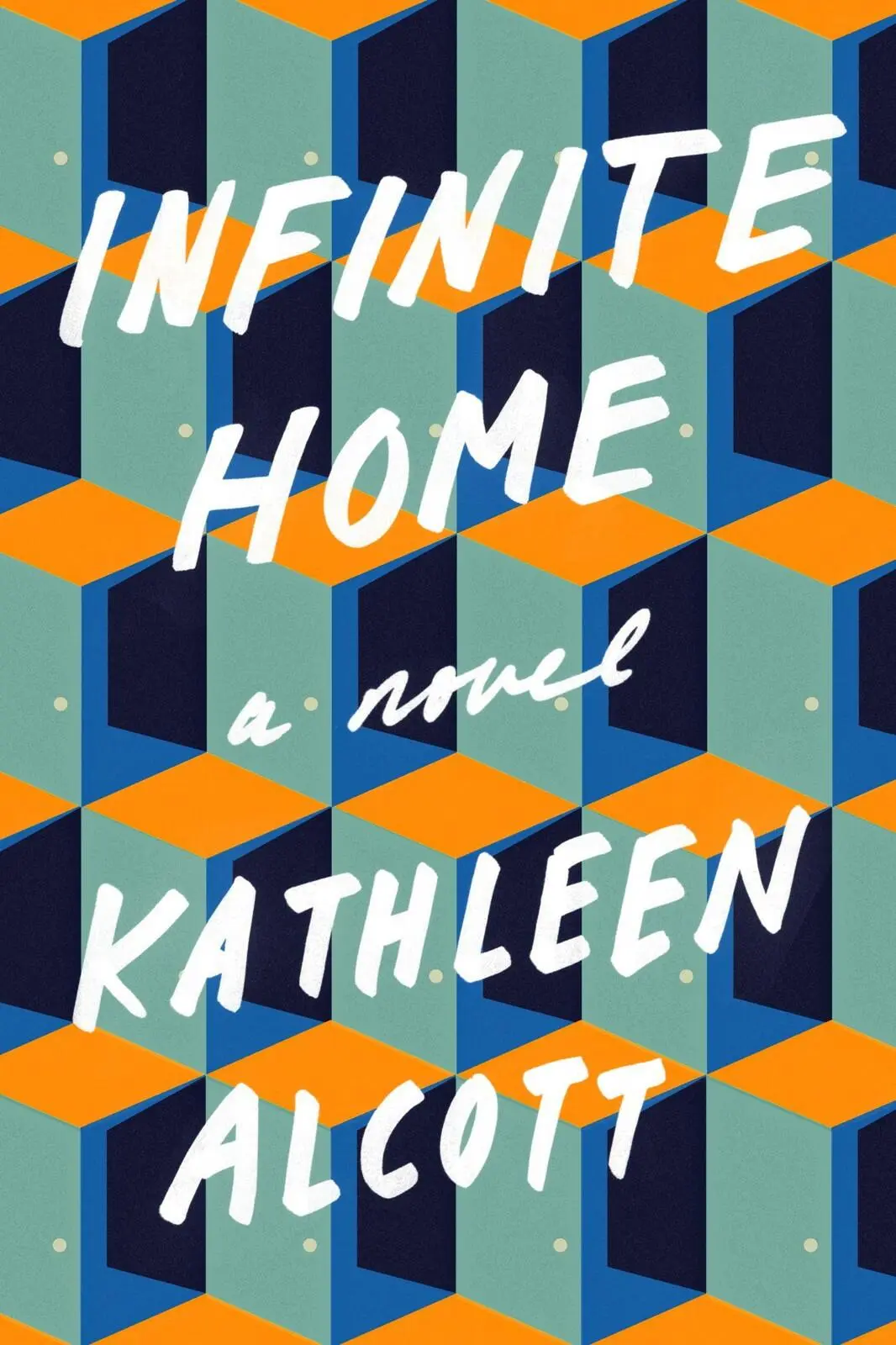
- Название:Infinite Home
- Автор:
- Издательство:Riverhead Books
- Жанр:
- Год:2015
- ISBN:нет данных
- Рейтинг книги:5 / 5. Голосов: 1
-
Избранное:Добавить в избранное
- Отзывы:
-
Ваша оценка:
Infinite Home: краткое содержание, описание и аннотация
Предлагаем к чтению аннотацию, описание, краткое содержание или предисловие (зависит от того, что написал сам автор книги «Infinite Home»). Если вы не нашли необходимую информацию о книге — напишите в комментариях, мы постараемся отыскать её.
Faced with eviction by Owen and his designs on the building, the tenants — Paulie, an unusually disabled man and his burdened sister, Claudia; Edward, a misanthropic stand-up comic; Adeleine, a beautiful agoraphobe; Thomas, a young artist recovering from a stroke — must find in one another what the world has not yet offered or has taken from them: family, respite, security, worth, love.
The threat to their home scatters them far from where they’ve begun, to an ascetic commune in Northern California, the motel rooms of depressed middle America, and a stunning natural phenomenon in Tennessee, endangering their lives and their visions of themselves along the way.
With humanity, humor, grace, and striking prose, Kathleen Alcott portrays these unforgettable characters in their search for connection, for a life worth living, for home.
Infinite Home — читать онлайн бесплатно полную книгу (весь текст) целиком
Ниже представлен текст книги, разбитый по страницам. Система сохранения места последней прочитанной страницы, позволяет с удобством читать онлайн бесплатно книгу «Infinite Home», без необходимости каждый раз заново искать на чём Вы остановились. Поставьте закладку, и сможете в любой момент перейти на страницу, на которой закончили чтение.
Интервал:
Закладка:
Throughout childhood and into adolescence, Thomas approached most human interactions imagining himself as the scientist studying them. He found many rituals strange, so he absorbed the information carefully, tried to map precisely what the different kinds of burning silences his father sent towards his mother at the dinner table meant. Two beats of quiet— one Mississippi, two Mississippi —after she laughed, for instance, meant “not funny,” while three beats after she’d told a story meant “not important.” At junior high, he watched the patterns of body language in both sexes and came to find their predictability amusing: a girl, when approached by a boy considered attractive, almost infallibly placed a thumb in her jeans belt loop and tucked her hair behind her ear.
Thomas had understood perfectly well what was to occur to him around age twelve, had acquired a comprehensive education on the matter, and he handled the changes with poise, keeping track of the increasing amount of pubic hair in a small graph paper journal, monitoring his armpits and applying deodorant as required.
It was sometime after these shifts assailed him, around his fifteenth birthday, that his attitude changed. He no longer enjoyed watching the patterns unfold, found no pleasure in sensing the exact moment during his mother’s banter in which his father’s eyes would glaze over, the certain phrase of his father’s Jarrod would cull to mock. Not only had he stopped relishing the fulfillment of his speculations, but also every time he was correct, he felt guilty, as though his having foreseen a bitter response or cold glare was the same as having extended one.
He had turned out rather sparkly-eyed and broad-chested and naturally athletic, and it was no relief. He couldn’t help but excel at basketball — he felt the intricacies and translated them to his body — but the smells and sounds of it, the squeal of rubber soles on the court and the rough talk between teammates in the locker room afterward, felt like a long life in prison. He would go home and put on Billie Holiday and press his improbably clear teenage skin to his pillow and weep. But soon he would rise and go to his desk, where the sharpened pencils lay arranged by length, and put one to paper. The thought of his tears muddling a line he’d pulled at so carefully disturbed him, and that formed the pattern of his next seventeen years, work chasing away any excess of feeling like a car that sends deer leaping back into the green.
~ ~ ~
THE BOILER IN THE BASEMENT, ancient and tall and dust-covered, gave its last hiss early one mid-January morning. Sometimes Adeleine grew so absorbed by the story of Miriam’s life, her perfect cursive and the talk of dinner parties and operas, that she forgot to eat. Slim and forever sensitive to the cold, she became more so on these forgotten afternoons, so the first day without heat she could only understand the chill as a failure of her own body. The thermostat, mounted on the yellowed wall of Edith’s living room and typically kept at a sturdy sixty-five degrees, crept backward into the evening. The snow outside piled on and obscured bushes, trash cans, bicycles, until they looked only like suggestions, nebulous shapes drawn by small children.
Distracted by a young Miriam’s description of her son’s first Christmas, the escalators in the department stores and how she accidentally forgot him under a rack of red felt coats, Adeleine put on another pair of wool socks and finally crawled into bed after fetching an extra quilt and afghan from the overflowing linen cabinet. She never had guests but always vaguely expected them, kept piles of folded warmth clean and ready, and when she slept that night, she dreamt of arrivals, doors opened and ready, mouths kissed and embraces shared.
At 2:15 she woke from shivering and saw her breath in clouds around her, the multiplied snow out the window through the thin ancient glass. She crossed into the living room and stood below the heating vents, spread her hands and finally realized. Her teeth clattered as she moved across the hall, and she knocked more loudly than she’d expected. As the creak of his mattress and lean rhythm of his gait sounded, she was surprised to find that the tremor the cold made in her body was nearly equaled by the thrill of his approach. When he answered, his face admitted a struggle: in opening the door with his good hand the blanket he’d wrapped around himself had slipped.
“Come here,” he said, wit and effort gone from his speech. She understood he was as glad to offer his body heat as she was to take it, and pressed into his shoulder a while before they spoke.
“I called her at six and knocked at nine — no answer. I think she was exhausted after that visit from her son — she’s finally catching up on sleep. Probably she accidentally nudged the tab on the thermostat in a hurry to lock the door.” His speculative optimism was like that of a mother attempting to diminish her own worry.
“Either that or she was scheming up a way to finally get us in bed together.”
His startled laughter at her bold joke lasted a while, and then she followed him through his apartment — bereft of life’s clutter, gleaming, dusted — into his bed. The whole night, they practiced various combinations, linking their bodies at an endless series of points. They were too cold and tired for anything but this, though still she felt briefly the stutter from between his legs. When the sun rose glacial and early, they absorbed the suggestion of it as filtered through four layers of blankets, but didn’t move to watch it. She never released his limp left hand.
Midmorning he grunted, spoke directly into Adeleine’s skin: “All right, enough. I’m going to find her.”
—
THOMAS KNOCKED with the volume of a man with a full body: nothing. He pressed his head, lightly, to the doorframe, and wished angrily to return to thirty-six hours before, when the situation hadn’t yet demanded he assume a position of competence. Or eight hours before, in the locked position with Adeleine, the moment so flawlessly lit and enfolded he believed he could bear the chill forever. The prospect of what might happen next exhausted him, brought a leaden weight, and he leaned still more heavily on Edith’s door.
It opened, had been unlocked all along.
He found her in the bedroom, hands tightly clasped in her lap, sitting in an unevenly stuffed armchair, covered minimally by a cocktail dress, which, he realized with dread, he could smell: the odor, like the damp underside of rotted wood, rushed in and out of his nostrils. Its blue lace, variously faded, held a raised system of wrinkles, and from under it came forth a jagged spray of tulle. The back, undone, struggled to remain on the shoulders, and her flesh fell slack, in lumps, to the root of the zipper.
“Oh! I’ve been waiting for you,” she said with a choked warmth, as though practicing words recently acquired in a foreign language, emphasizing syllables arbitrarily. “A little chilly for summer, huh!”
Thomas moved closer, aware of his irregular heartbeat.
“Dear,” she said. “It’s about time we make it to the market, or they’ll be out of the things you like.”
He finally understood, with an uneasiness that made his ears ring, how lost she was. Thomas crouched down and began to speak, articulating each sound.
“Edith.” She leaned forward and clutched her elbow around his neck, placed a tremor-ridden hand on his cheek.
“I knew you were just down the street the whole time—”
“Edith.”
“And I said that to June, but she said, ‘Oh, probably out carousing again, charming the world and leaving his own house empty.’ Long distance she calls to say!”
Читать дальшеИнтервал:
Закладка:
Похожие книги на «Infinite Home»
Представляем Вашему вниманию похожие книги на «Infinite Home» списком для выбора. Мы отобрали схожую по названию и смыслу литературу в надежде предоставить читателям больше вариантов отыскать новые, интересные, ещё непрочитанные произведения.











Обсуждение, отзывы о книге «Infinite Home» и просто собственные мнения читателей. Оставьте ваши комментарии, напишите, что Вы думаете о произведении, его смысле или главных героях. Укажите что конкретно понравилось, а что нет, и почему Вы так считаете.