Kathleen Alcott - Infinite Home
Здесь есть возможность читать онлайн «Kathleen Alcott - Infinite Home» весь текст электронной книги совершенно бесплатно (целиком полную версию без сокращений). В некоторых случаях можно слушать аудио, скачать через торрент в формате fb2 и присутствует краткое содержание. Год выпуска: 2015, Издательство: Riverhead Books, Жанр: Современная проза, на английском языке. Описание произведения, (предисловие) а так же отзывы посетителей доступны на портале библиотеки ЛибКат.
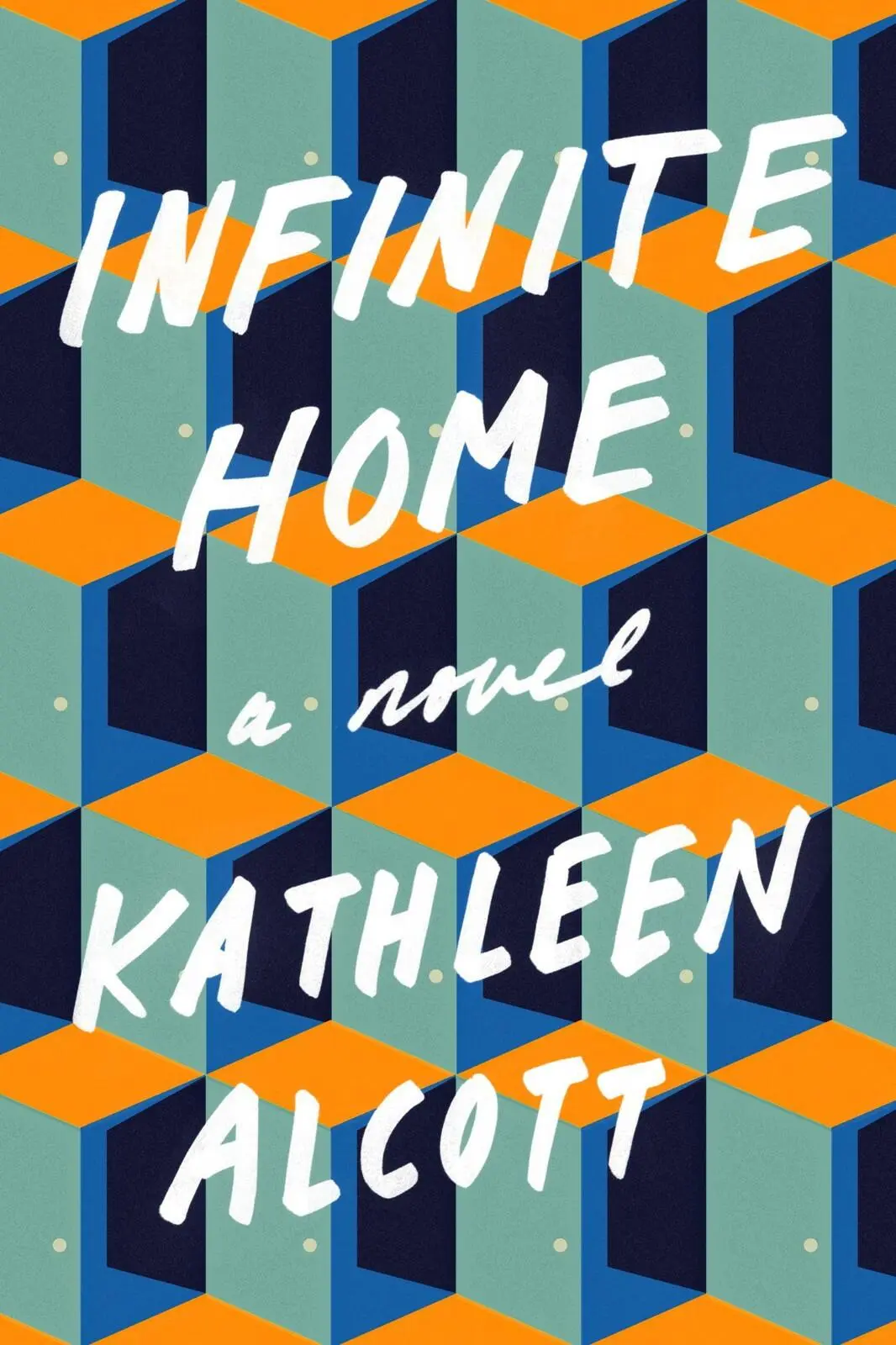
- Название:Infinite Home
- Автор:
- Издательство:Riverhead Books
- Жанр:
- Год:2015
- ISBN:нет данных
- Рейтинг книги:5 / 5. Голосов: 1
-
Избранное:Добавить в избранное
- Отзывы:
-
Ваша оценка:
Infinite Home: краткое содержание, описание и аннотация
Предлагаем к чтению аннотацию, описание, краткое содержание или предисловие (зависит от того, что написал сам автор книги «Infinite Home»). Если вы не нашли необходимую информацию о книге — напишите в комментариях, мы постараемся отыскать её.
Faced with eviction by Owen and his designs on the building, the tenants — Paulie, an unusually disabled man and his burdened sister, Claudia; Edward, a misanthropic stand-up comic; Adeleine, a beautiful agoraphobe; Thomas, a young artist recovering from a stroke — must find in one another what the world has not yet offered or has taken from them: family, respite, security, worth, love.
The threat to their home scatters them far from where they’ve begun, to an ascetic commune in Northern California, the motel rooms of depressed middle America, and a stunning natural phenomenon in Tennessee, endangering their lives and their visions of themselves along the way.
With humanity, humor, grace, and striking prose, Kathleen Alcott portrays these unforgettable characters in their search for connection, for a life worth living, for home.
Infinite Home — читать онлайн бесплатно полную книгу (весь текст) целиком
Ниже представлен текст книги, разбитый по страницам. Система сохранения места последней прочитанной страницы, позволяет с удобством читать онлайн бесплатно книгу «Infinite Home», без необходимости каждый раз заново искать на чём Вы остановились. Поставьте закладку, и сможете в любой момент перейти на страницу, на которой закончили чтение.
Интервал:
Закладка:
“ Edith! ”
He put his arms around her and whispered the facts in her ear—“It’s me, Thomas, I live upstairs, it’s Thomas from upstairs, you’re Edith and we drink tea together sometimes on my sofa by the window, I ask you about your life, Declan isn’t here anymore but I am, it’s me Thomas”—and continued in spite of her warbling, gripped the limp, gelid skin, the bones of her shoulders, tried with every portion of available energy to focus. Finally, she stilled and looked up at him, horrified, as though surveying a car she’d just crashed from the driver’s seat. On her nightstand was a dingy legal pad, open to a blank page, and a sponge and some keys; around her feet were a series of shoes, a lone violet heel, vinyl yellow rain boots, braided leather sandals. He pulled a faded rose blanket from her unmade bed and wrapped it around her.
~ ~ ~

IN THE DAYS THAT FOLLOWED, Edith arranged for the boiler’s quick repair, and asked Thomas not to phone her son, though he assured her it had never been his intention. She apologized recursively for the “incident,” as she liked to refer to it — her language for catastrophe made mild by the era she’d come of age in — and branded it a onetime slip, simply the product of too much time on her hands. Indeed, she seemed, in some ways, renewed; she moved with new agency and a brand-new hot-pink feather duster, lifted vases and pots to get at their other angles. But he sensed an uptick in her speech and body that nagged at him: where was the slowness about her that had so comforted him before? One afternoon she put on a Bobby Darin record and insisted on dancing. The formal pose of the waltz was stiff and foreign to his body, but familiar as a prized memory on her light hands and proud back. Her eyes traveled with unfocused brightness as she pressed herself closer.
When that shark bites, with his teeth, babe.
“Oh you,” she murmured. “Let’s make a party!”
~ ~ ~
THE NIGHT EDITH HAD WONDERED blithely about Declan’s whereabouts and the heat had fled the building like a reluctant visitor, Edward had taken a rare stroll in Manhattan, determined to find the city that had once embraced him, and ended up on an old friend’s doorstep. He and Martin had told stale stories and drank most of a fifth of whiskey, and Martin insisted, in a maudlin show of brotherhood, that Edward sleep on the couch. So Edward had not been there when his neighbor came to the door in his Santa-red full-body pajama suit with buttons up the back, at which point Paulie had called his sister, who had not answered. Paulie then set to fort building, hanging blankets over couches and tables and layering pillows on cushions, and told himself out loud not to worry. The winter moonlight that managed to slip into his creation was a wonder, and the fact he’d managed to construct himself any kind of new home had cheered him, but it hadn’t been enough.
In the hospital six hours later, Claudia hung from her chair with guilt and told her husband, Drew — who had offered brightly that pneumonia fatalities were nearly nonexistent in the Western world — to go fuck off to the vending machines. At Paulie’s side she followed panicked thoughts in circles until she settled, after a long exhale, on a conclusion: Paulie would live with them, and if her husband didn’t like that, she would move in with Paulie.
Drew, whom she’d met and married within the dim year that followed Seymour’s death, had told her he wanted to be her family. Slowly, with a feeling like coming home and realizing she’d been robbed, she had understood that he meant: me, and no one else . He treated her brother like a feral animal, cautiously tousling Paulie’s hair and then hurrying to the bathroom to scrub his hands. They had eloped at a rambling Victorian resort that straddled the Catskills, sat out on rocking chairs that faced the lake and giggled with the splashes of oversized trout who seemed haughty and bored by performing. “Do you see how simple things can be?” he had said.
Underfed and sleep-deprived in the hospital, Claudia began to picture the elaborate dinners she would cook Paulie: pork chops with apricots and red wine vinegar, fried chicken with orange zest batter, salads with Brie and spinach washed in the coldest, cleanest water. Looking down at the perforated plastic bracelet on his wrist, the paper gown, she thought of his tendency to eat with slapdash enthusiasm, food ending up in his eyebrows and hair, and she began to cry with such force that several nurses gathered in the backlit doorway to watch her body refill and empty. She passed the rest of the morning like that, and when she finally rose, fastening her hair at the nape of her neck, the shadows on the bleach-scented tiles were lengthening rapidly, trying to reach something up ahead. “I’ll be back so soon,” she whispered to Paulie, who napped with a hand placed demurely on his cheek, as if hosting a tea or judging a dog show.
She found Drew in the cafeteria, where a few nurses took mid-shift breaks, bringing cartons of orange juice to their lips with gold-ringed hands and tapping at their phones with artificial nails.
“Hi!” he said, rising from the plastic table, his arms spread to catch her. “Are we ready to go?”
She sat and he followed. She put one hand on his and another over her eyes.
“It depends on who you mean when you say ‘we.’”
“Oh. Well, how much longer do they need to keep him?”
“Oh! Well! I guess I’m not only talking about today , Drew.” She had meant to conserve her anger, spread it as a foundation, but instead she had shown herself immediately.
“What is it now, Claudia? Huh? I came here with you, I held your hand, I waited here in this godforsaken cafeteria—”
“I need to be with him—”
“And he’s going to be fine, as I said he would. Very soon he’ll be calling you at all hours again to read you the weather report—”
“We need to find a bigger place, one where we can all be comfortable.”
“And then what, Claudia? And then you spend the rest of your life, our life, mothering your older brother? How do I fit in there? How about kids? What will you do when our children need help at the same time he does?”
“This isn’t a choice. Some decisions are made for you. This one was made a long time ago. You knew this when we met.”
“Claudia, when we met, you had your therapist on speed dial and a pharmacy of anti-everythings in your purse. How was I supposed to rank your priorities in the middle of all that?”
“I’ll be at my brother’s house if you need me.”
Drew worked his jaw and brought the heel of his hand to the table, the thud of the impact quickly drowned by the industrial hum of the room, the commercial refrigerators’ whir and the soft ticks of the row of neon soda machines. As Claudia turned onto the wide hallway, the floors so clean they reflected the recessed lighting and passing gurneys, she felt as she had when exiting an important exam, the answers, wrong or right, left behind in the room where she’d decided them.
~ ~ ~
EDITH PUT UP the invitations soundlessly and happily early in the morning, despite the stairs feeling somehow longer and taller, and recurring episodic flashes of the train station in hyper-color, and waking as she had today into questions of why and how . It took her most of a minute, sometimes, after gaining consciousness, to name all the objects in her room, and she did so ritually: Bed. Tongue. Lamp. Window. Fingers, lily plant, blood pressure pills, black-and-white photograph of Jenny on a bicycle.
Читать дальшеИнтервал:
Закладка:
Похожие книги на «Infinite Home»
Представляем Вашему вниманию похожие книги на «Infinite Home» списком для выбора. Мы отобрали схожую по названию и смыслу литературу в надежде предоставить читателям больше вариантов отыскать новые, интересные, ещё непрочитанные произведения.











Обсуждение, отзывы о книге «Infinite Home» и просто собственные мнения читателей. Оставьте ваши комментарии, напишите, что Вы думаете о произведении, его смысле или главных героях. Укажите что конкретно понравилось, а что нет, и почему Вы так считаете.